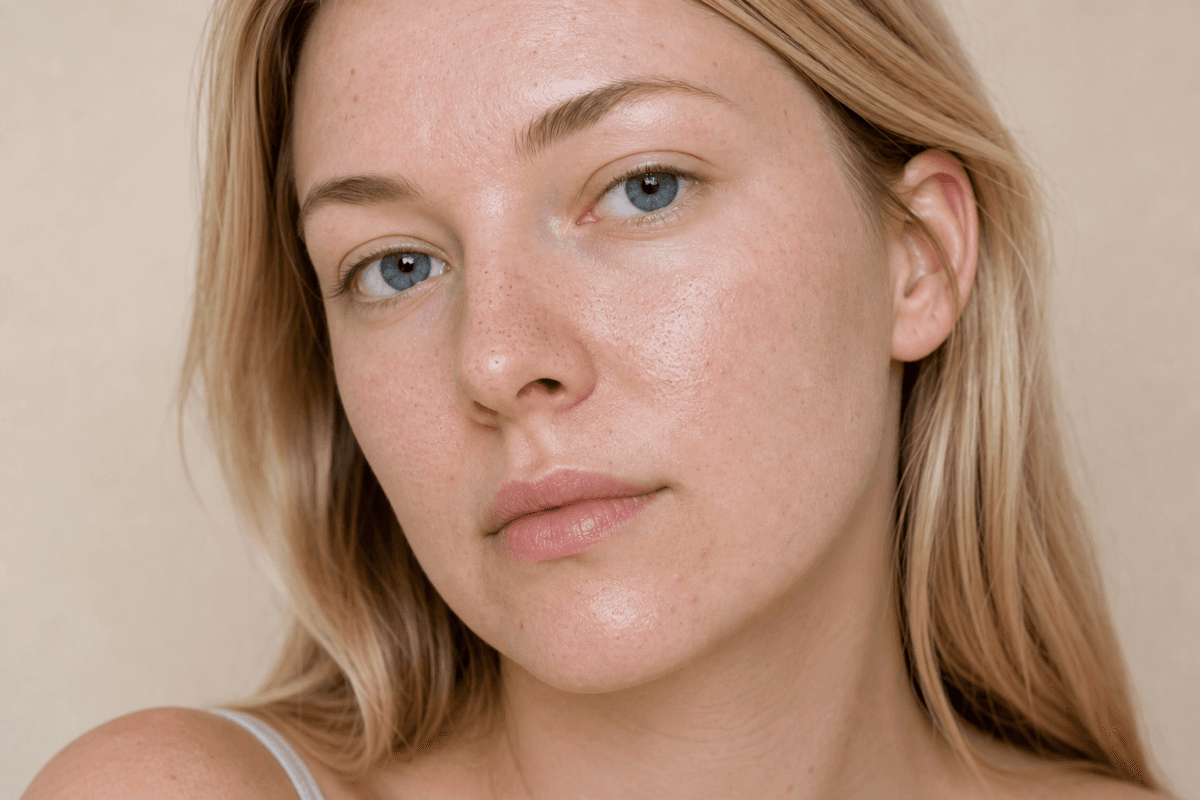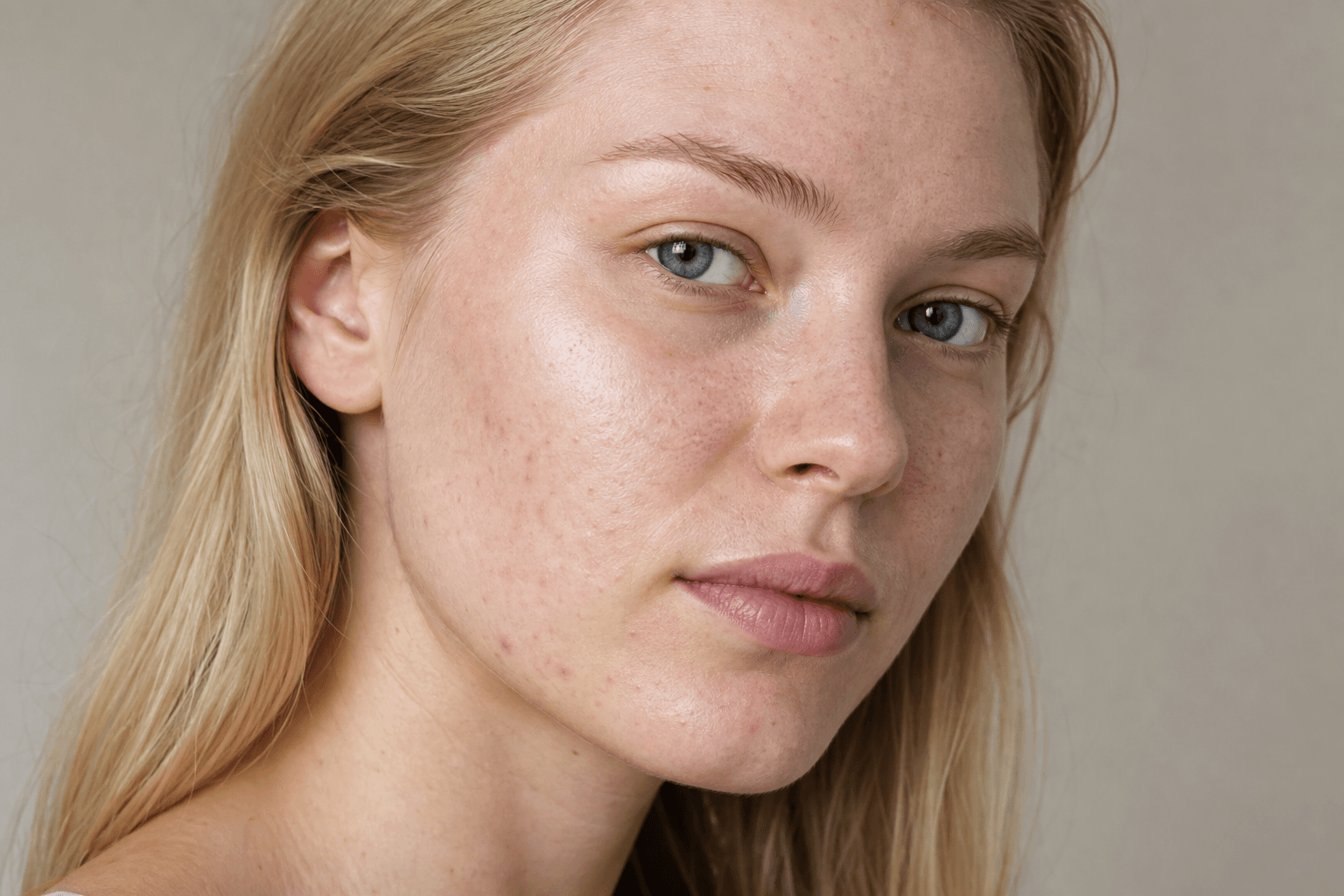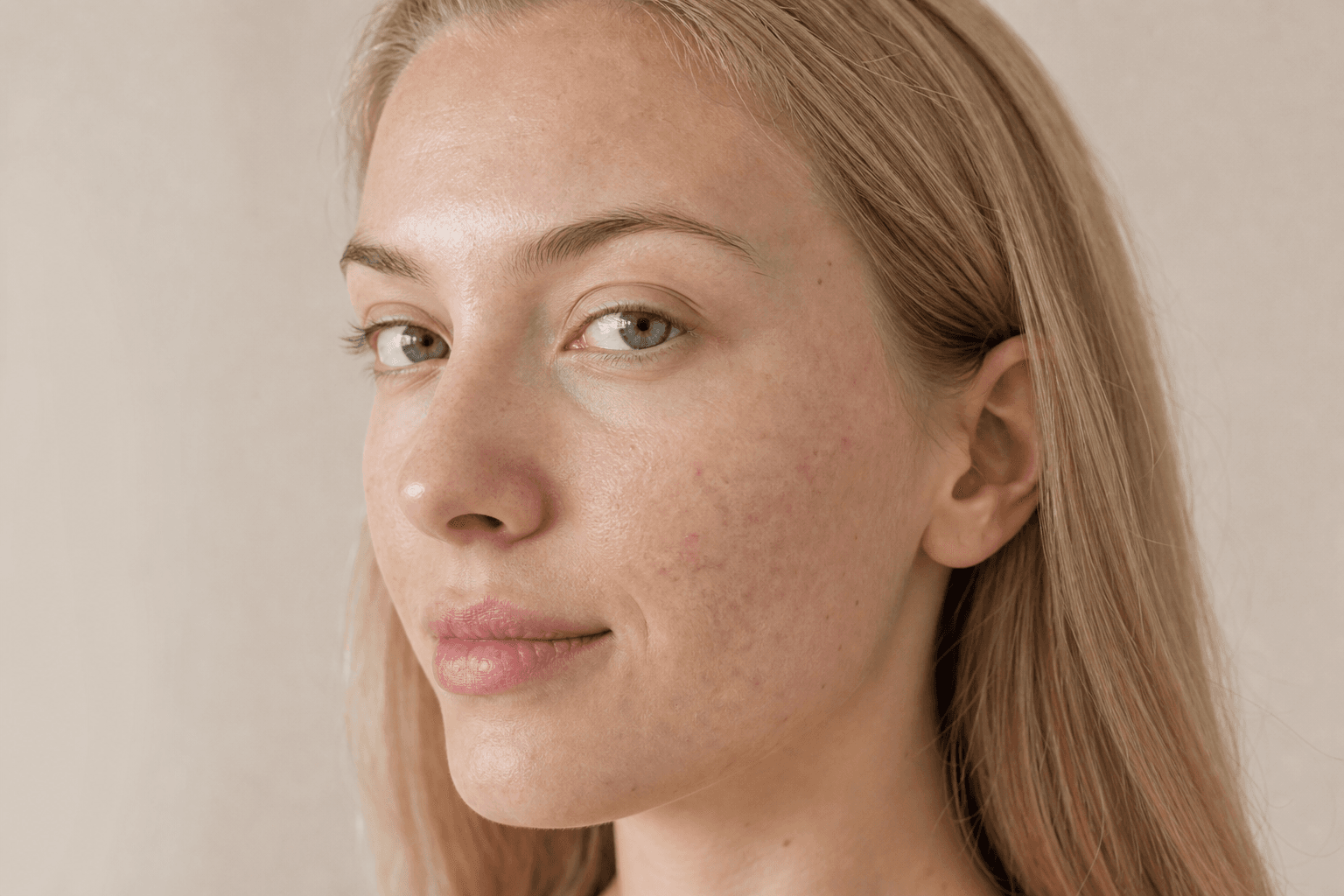
Acne and blemishes
A clear-headed guide to acne: what's actually happening in your skin, what the evidence says works, and a simple routine that doesn't make things worse.
On this page
What's actually happening in your skin
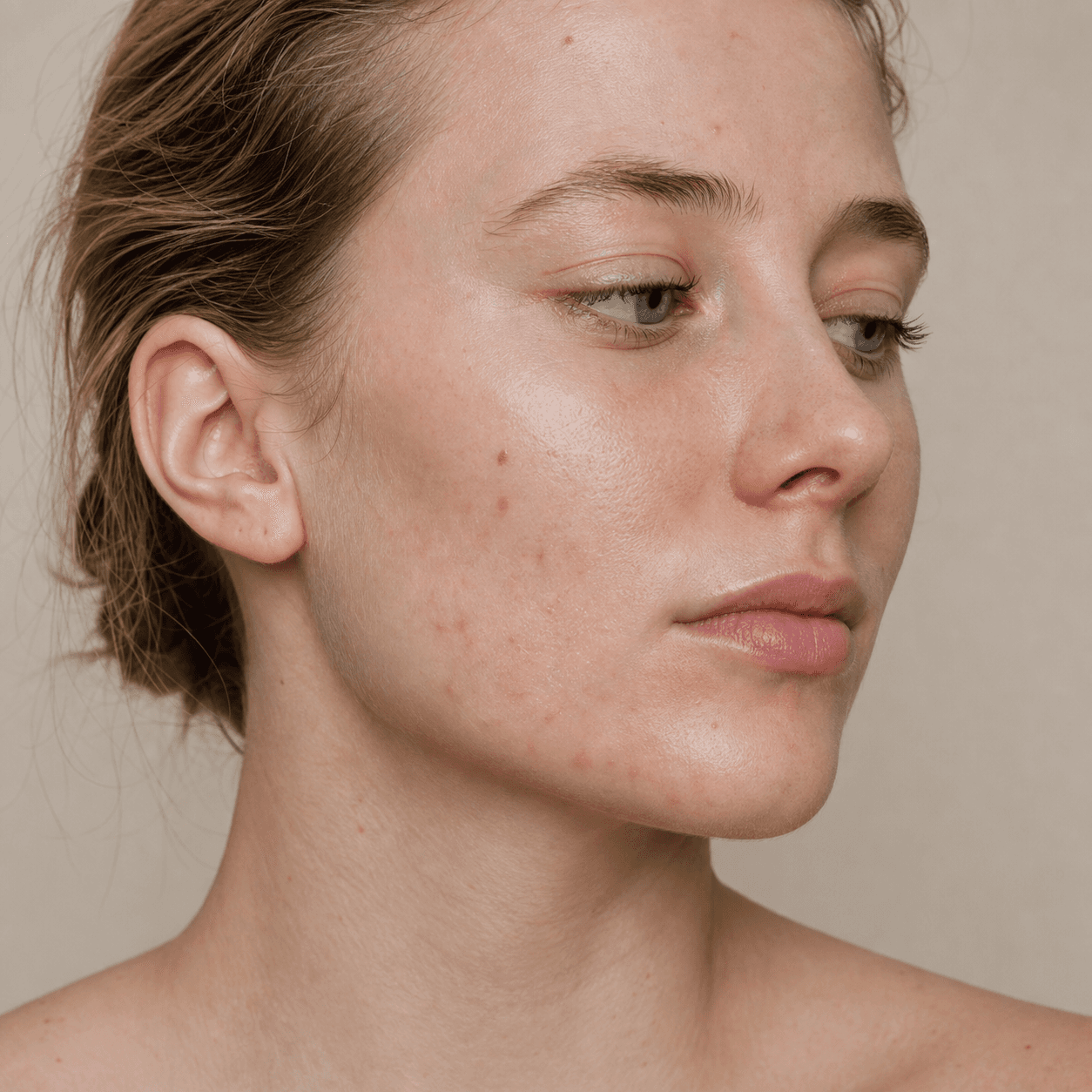
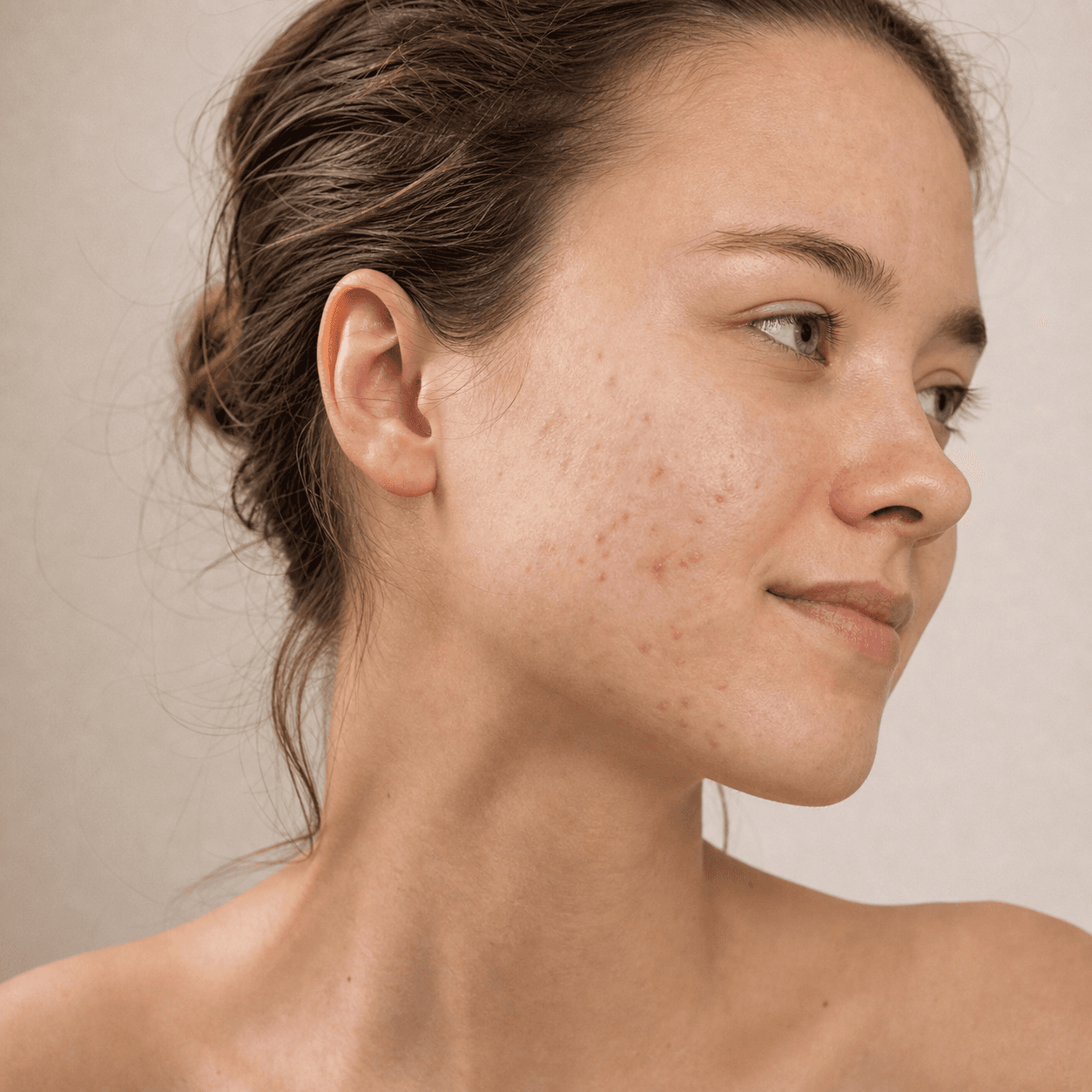
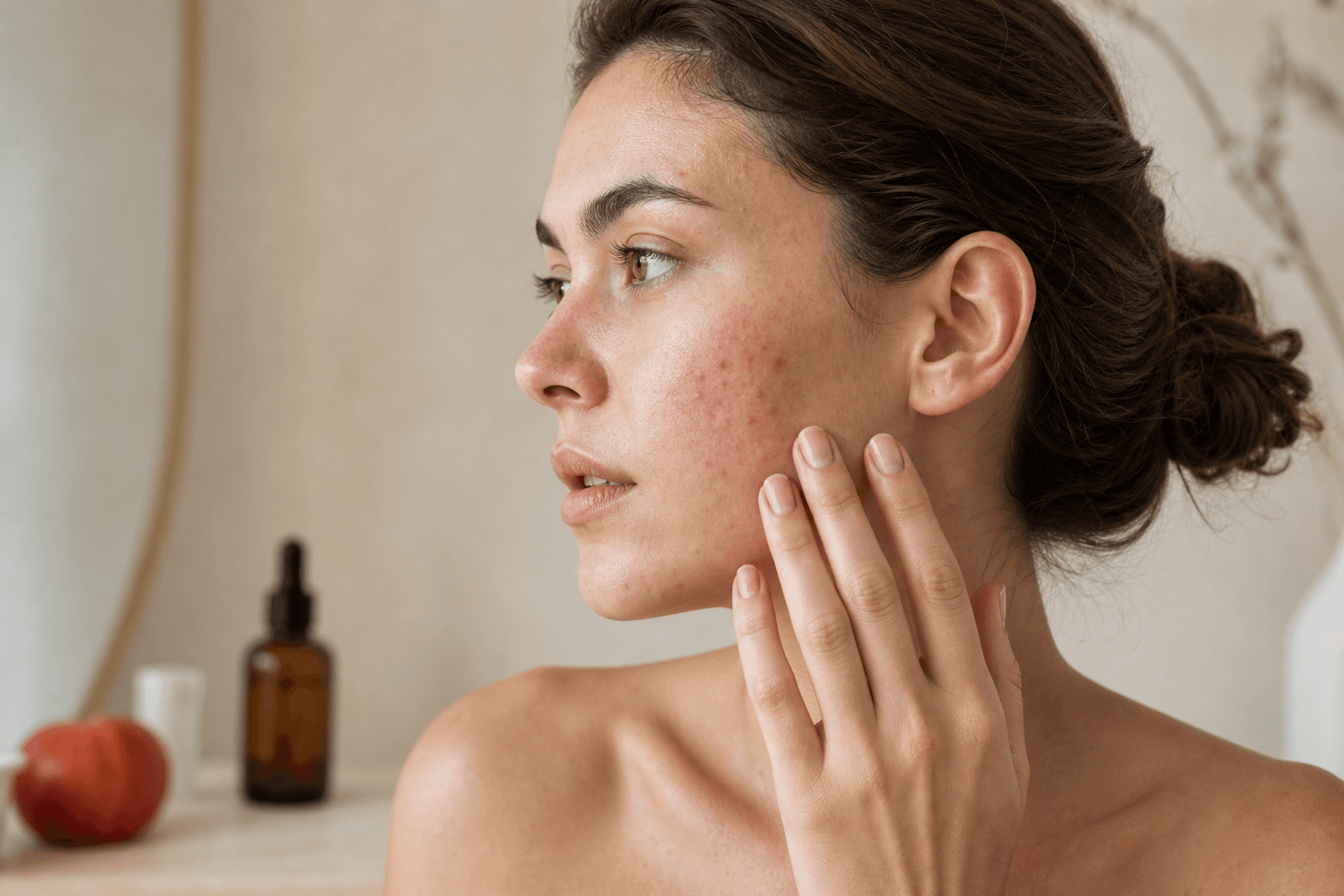
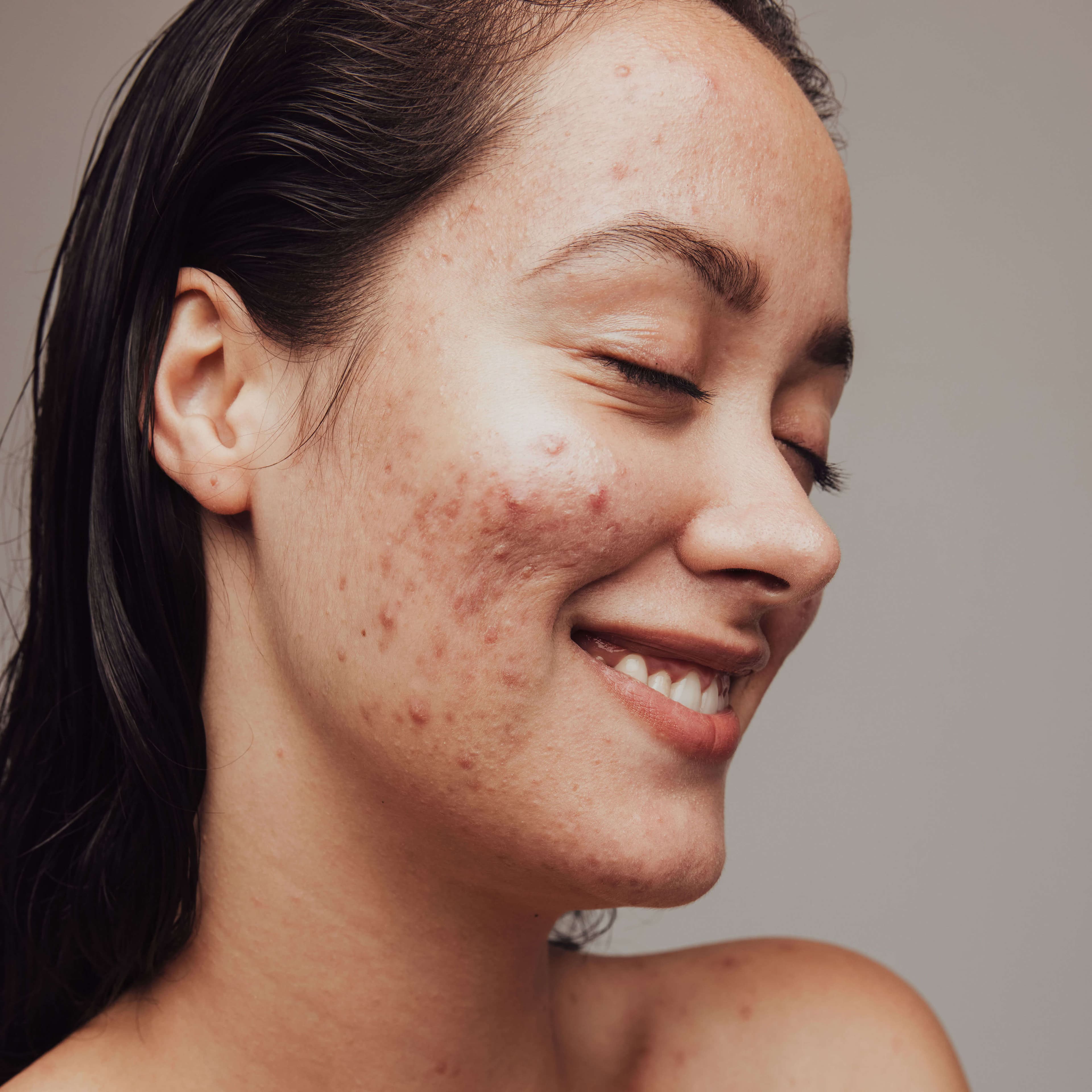
Acne is the most-searched skin condition in the world, and the most-misunderstood. It's not caused by being dirty. It's not as simple as blaming chocolate, milk, or sugar every time a pimple appears. It's not, despite a billion marketing dollars to the contrary, a "toxin" problem.
It's the interaction of four things, all happening in and around one tiny structure: the pilosebaceous follicle.
- Sebum. Androgen hormones turn up oil production. This is why acne peaks at puberty and around the menstrual cycle.
- Hyperkeratinisation. Dead skin cells stick together inside the follicle instead of shedding cleanly. The follicle gets blocked.
- Cutibacterium acnes. The bacterium feeds on the trapped sebum and produces inflammatory byproducts.
- Inflammation. Your immune system attacks the bacterium and the follicle. That's the redness and swelling.
Whitehead, blackhead, papule, pustule, cyst: all the same process at different depths and stages. The types of acne guide explains those names without turning them into panic labels. If the bumps are small, closed, and slow, the closed comedones guide walks through that specific pattern. If inflammation leaves red marks, brown marks, or texture behind, the acne scars and post-acne marks guide separates what skincare can fade from what usually needs professional treatment.
What actually works
The published consensus (Williams 2012, Reynolds 2024) still lines up with what I see clinically: the boring routine wins. A gentle cleanser. A treatment active, often a keratolytic like salicylic acid for clogged pores. The clogged-pore routine guide is the focused version of that plan. A barrier-supporting moisturiser. SPF every morning. Patience.
If the cleansing step is where things keep going wrong, the guide to washing your face when you have acne explains how to remove oil, SPF, and residue without turning the barrier into collateral damage.
Treatment tolerance is part of what works. The guides to allantoin for skin, aloe vera for acne, and panthenol for the skin barrier separate supportive ingredients from acne treatments. The potassium azeloyl diglycinate guide looks at the azelaic acid derivative, while the dictionary entry for anti-inflammatory explains what that label claim does - and does not - promise.
You can layer in additional actives - topical retinoids for stubborn texture, niacinamide for oiliness and post-inflammatory pigmentation support, benzoyl peroxide for inflamed papules, sulfur or tea tree oil for selected mild-acne formulas - but the foundation is unsexy and unchanging.
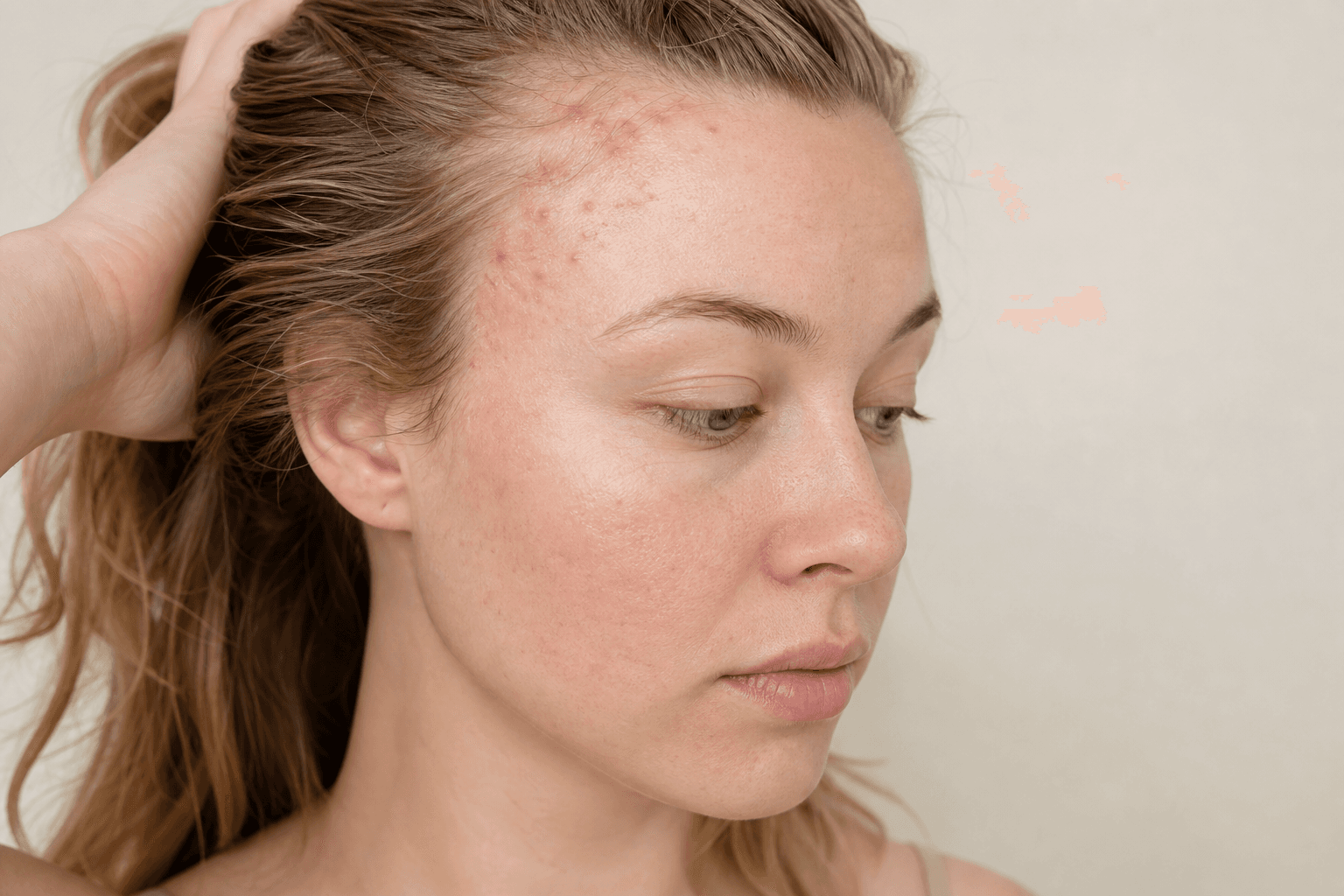
Location still matters in real life. Forehead acne often needs the same acne foundation plus a closer look at hair products, sweat, hats, helmets, and friction. Chin acne can need the same follicle care with a closer look at hormones, picking, and perioral dermatitis lookalikes. If bumps collect under the jaw, around collars, or after shaving, the guide to pimples on the neck is the more practical next read. If breakouts arrive on schedule before bleeding starts, the guide to pimples before your period explains the cycle pattern without turning skincare into hormone theatre. If the bumps sit exactly where conditioner, pomade, dry shampoo, or hair oil touches, the hair-product breakout guide is the more focused next read.
Food can matter too, especially high-glycaemic patterns. Dairy evidence is more mixed and appears to matter more for some groups than others. Use the nutrition guides as calm experiments, not as a reason to become afraid of eating. Skip harsher shortcuts such as apple cider vinegar for acne; irritation is not a treatment plan.
A simple routine to start
The routine above is deliberately minimal. Two things matter more than which products you pick:
- Consistency. Use it daily for 6–8 weeks before changing anything.
- Restraint. One new active at a time. Most "I've tried everything" stories are actually "I've changed product every 10 days for a year."
What to stop doing
The hardest advice in acne care is what to stop: stop picking, stop over-cleansing, stop using abrasive scrubs, and stop chasing the next viral recommendation. Inflamed skin needs less, not more.
When to see a dermatologist
Cystic, scarring, or hormonally-driven acne deserves a clinician, not a routine. If your acne is leaving marks or scars behind, painful under the skin, or simply not responding after 12 weeks of consistent topical care, book an appointment. The guide to red marks after pimples is useful when the bump has flattened but the colour stays. Prescription retinoids, hormonal therapy, and oral options exist for good reasons.
A simple routine
Morning
- Gentle cleanser — Once. Twice if you wore SPF the day before.
- Niacinamide — 2–5%, for sebum, redness, and post-inflammatory pigmentation.
- Light moisturiser
- Broad-spectrum SPF 30 or higher — Non-negotiable, especially if you're treating with retinoids or acids.
Evening
- Gentle cleanser
- Salicylic acid 2% treat — 2–4 nights per week to start.
- Moisturiser
What to avoid
- Scrubs, brushes, and "purifying" abrasives. They tear inflamed skin.
- Pore strips on active breakouts
- Toothpaste, lemon juice, or any internet remedy involving food
- Stacking multiple new actives in the same week
- Switching products before the previous one has had 6–8 weeks
Real results
From the Danish Skin Care community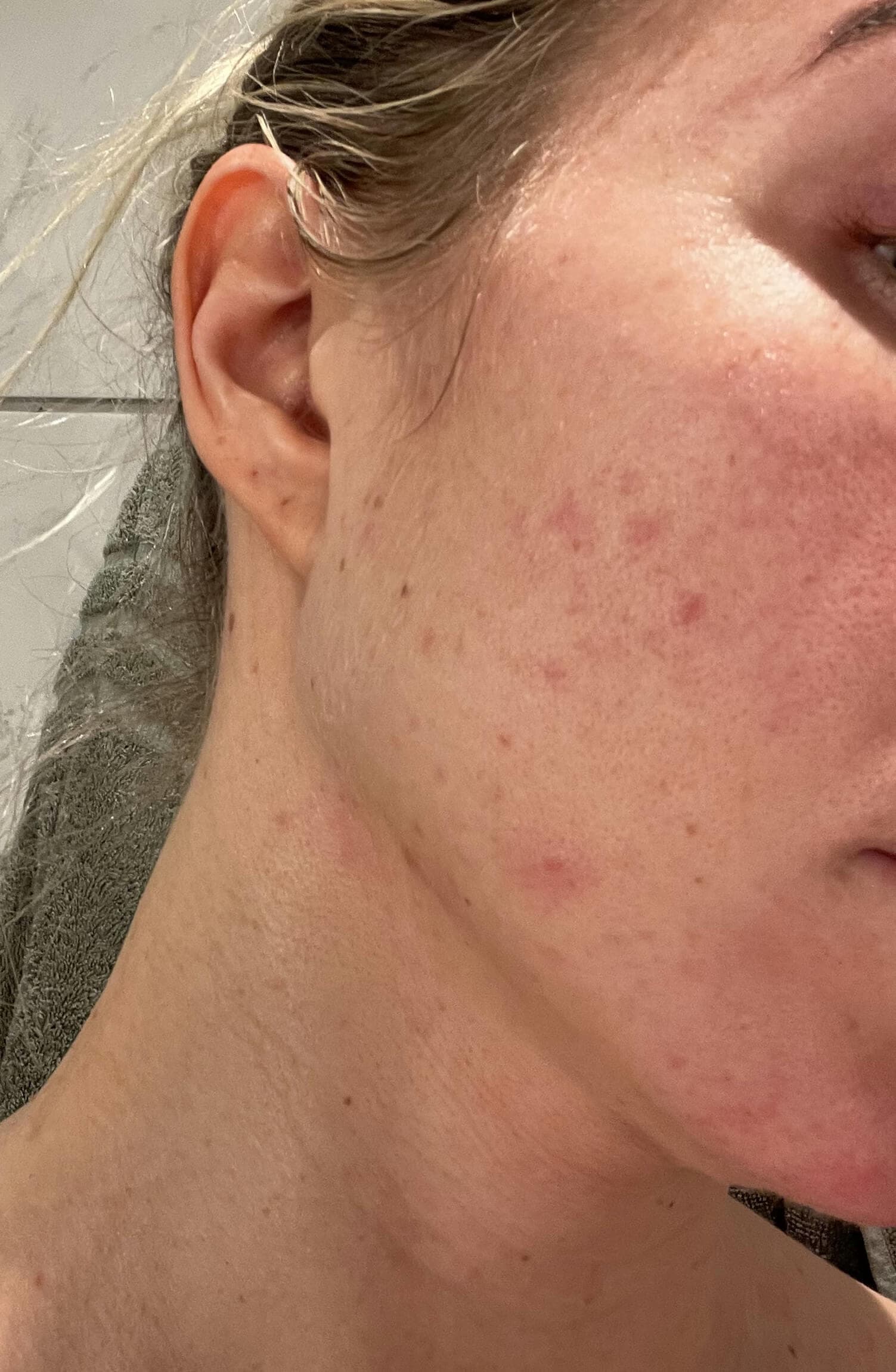 Before
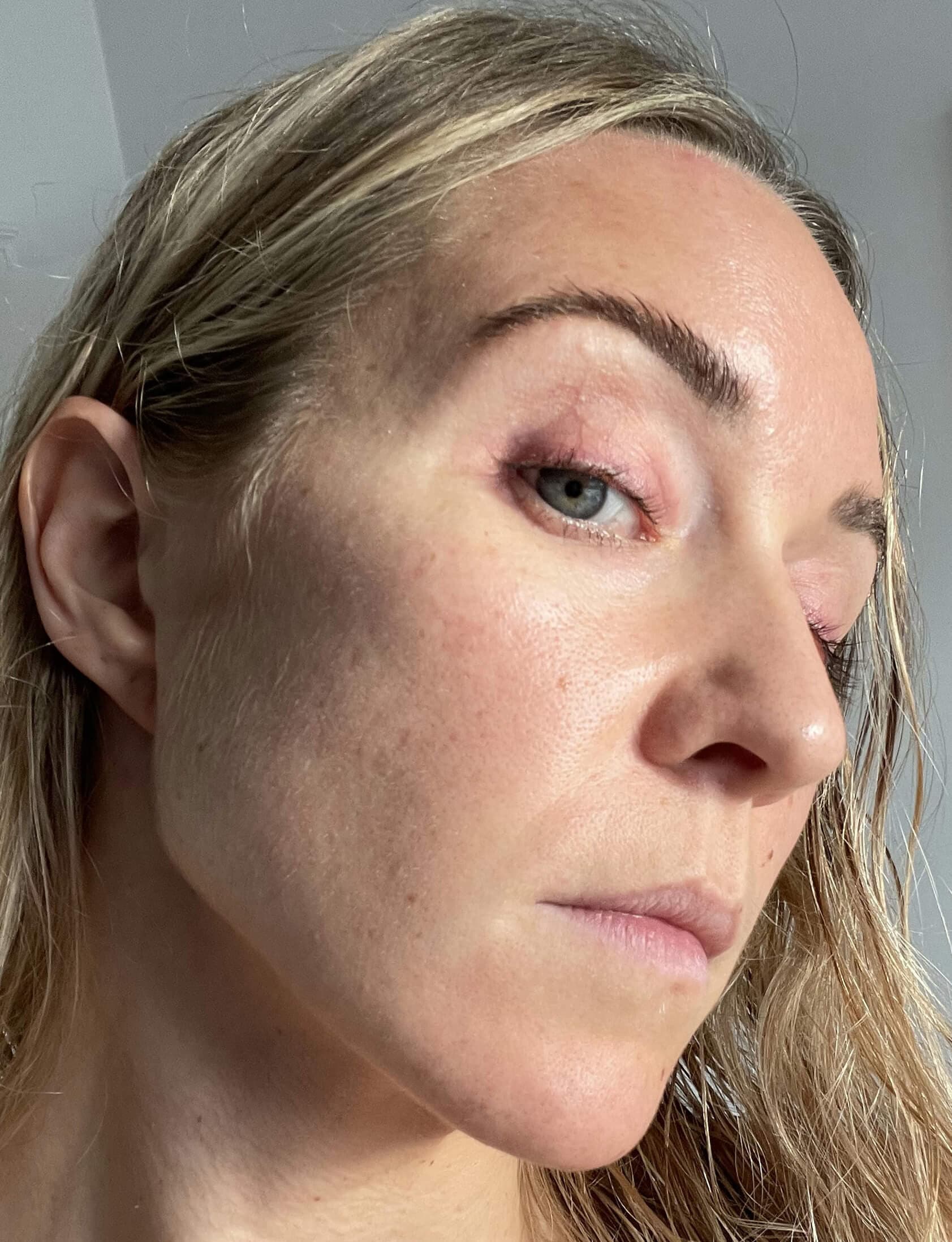 After
After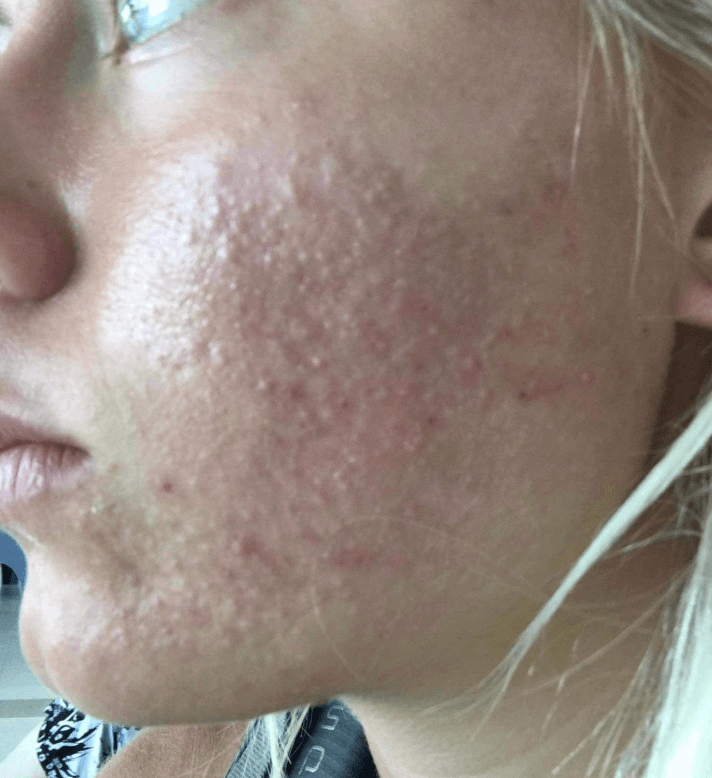 Before
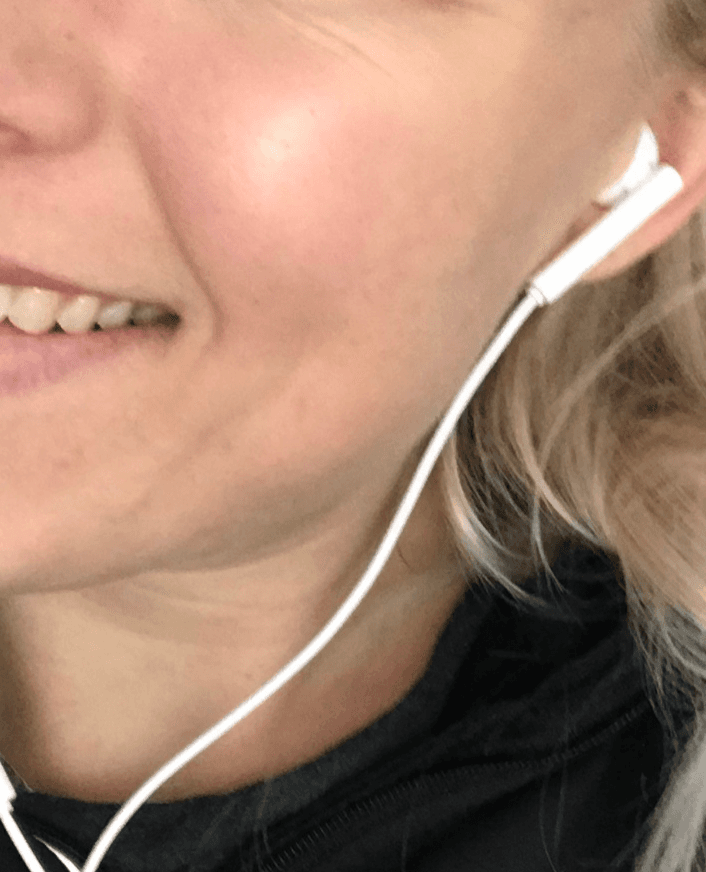 After
After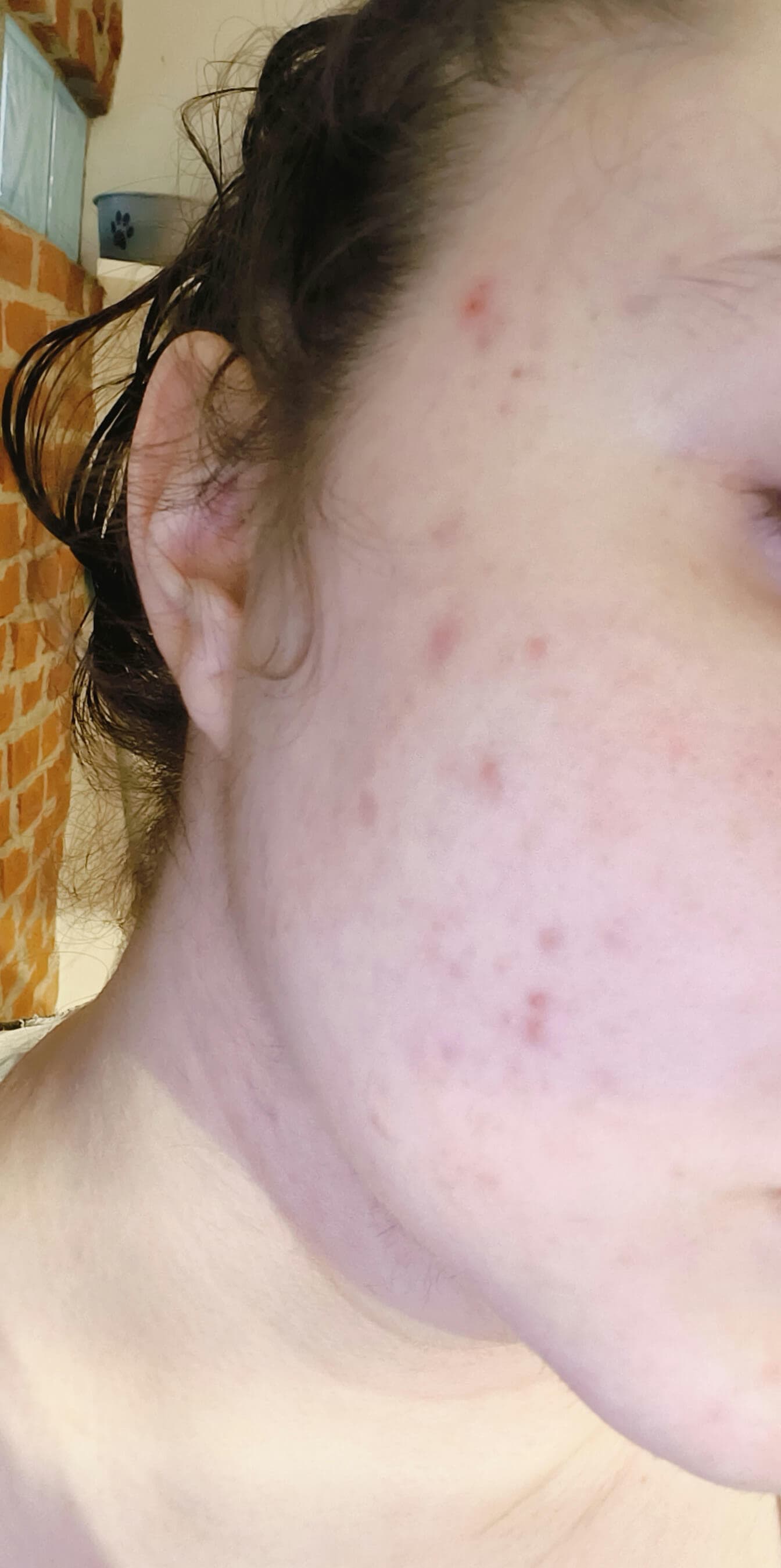 Before
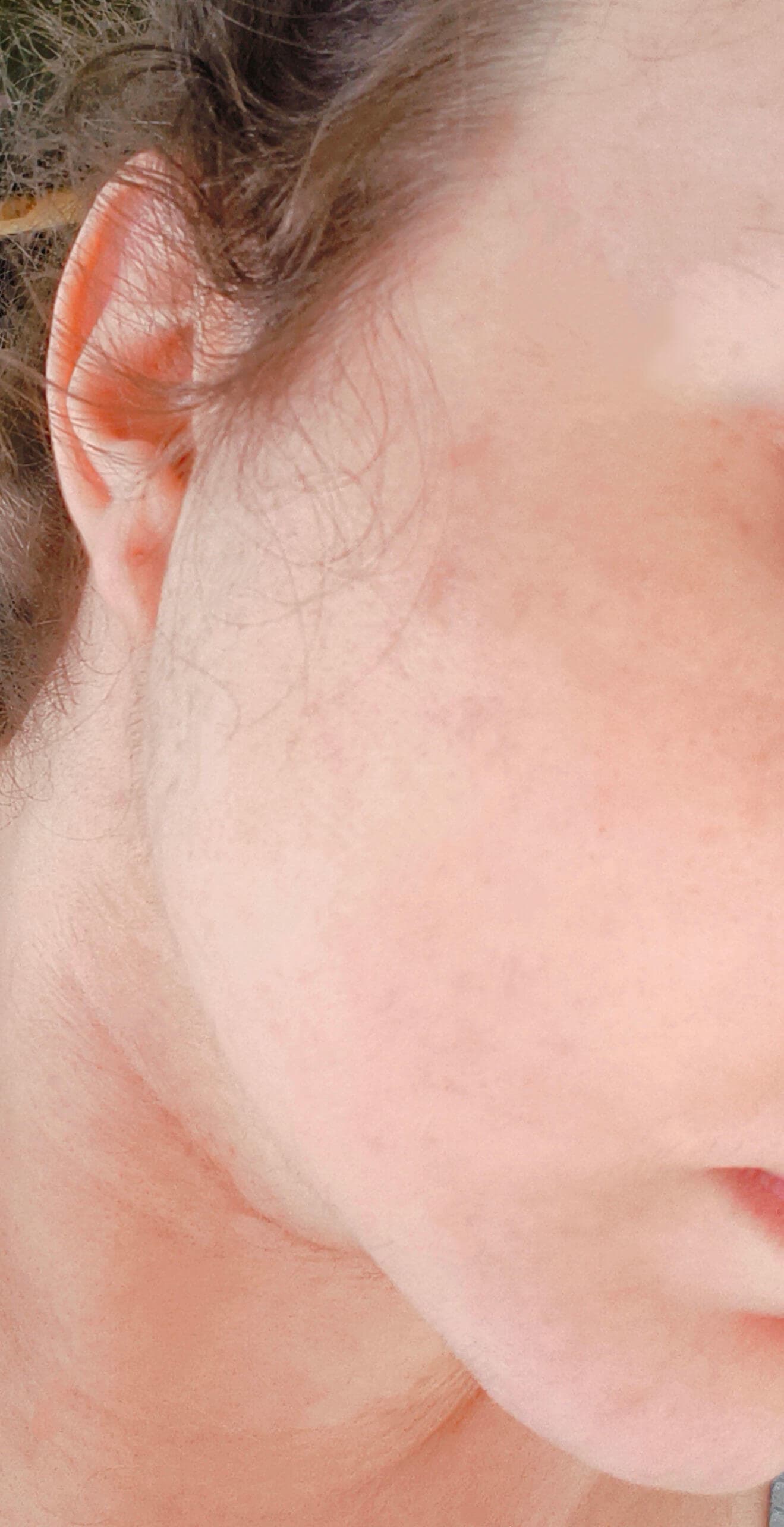 After
After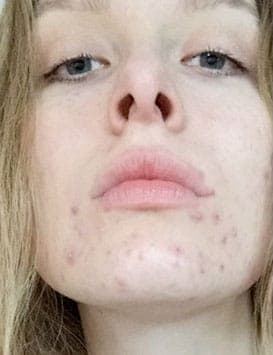 Before
 After
AfterRecommended Danish Skin Care routine

The complete routine in one box. Most people start here.

Gentle daily cleanser. Strips nothing, calms a lot.

Salicylic acid + niacinamide treat. The workhorse of this routine.

Barrier-supporting moisturiser that doesn't clog.

Daily SPF without the heavy, comedogenic feel.
Full transparency: Danish Skin Care is my own company — I formulated these products and earn from every sale. That's exactly why I only recommend them where they genuinely fit the condition described above.
Key ingredients to look for
Common questions
How long until I see a difference?
Inflamed pimples start to settle within 4–6 weeks of a consistent routine. Texture and tone take 12 weeks or more. Most people quit at week 3. Don't be most people.
Should I use benzoyl peroxide?
Benzoyl peroxide is one of the best-supported acne treatments, especially for inflammatory pimples, but it can irritate the barrier and bleach fabric. I often prefer starting gently with salicylic acid and niacinamide, then adding benzoyl peroxide if the acne pattern needs it.
Do I need antibiotics?
Antibiotic resistance is a real and rising problem in acne treatment. Modern guidelines discourage standalone oral antibiotics. They should be paired with topical therapy, used for a defined window, and supervised by a dermatologist.
Citations
- Williams HC, et al. Acne vulgaris. Lancet. 2012;379(9813):361–72. — PMID 21880356
- Reynolds RV, et al. Guidelines of care for the management of acne vulgaris. J Am Acad Dermatol. 2024;90(5):1006.e1–1006.e30. — PMID 38300170
- Dall'Oglio F, et al. Diet and acne: A systematic review. JAAD Int. 2022;7:95–112. — PMID 35373155