
Apple cider vinegar and acne: why I would not use it on your face
Apple cider vinegar sounds like a simple natural acne fix, but clinical evidence is weak and irritation risk is real. Here is the safer way to think about it.
On this page
Apple cider vinegar is the kind of acne advice that sounds convincing because it feels old-fashioned.
It is natural. It is cheap. It smells aggressive enough to seem serious. And if acne is making you desperate, the idea of a simple kitchen fix can be very attractive.
I understand the temptation. When I had acne and irritated skin, I tried to make breakouts obey. If something tingled, dried, tightened, or stung, I assumed it was working. Many people do the same. The problem is that irritated skin can feel busy while getting worse.
Apple cider vinegar is busy. That does not make it smart acne care.
The short answer
I would not use apple cider vinegar as an acne treatment on the face.
There is no strong clinical evidence that apple cider vinegar clears acne in real people. A 2022 diet-and-acne review[1] focuses the stronger nutrition evidence around glycemic load and dairy, not drinking vinegar or using it as a toner.
Topically, vinegar contains acetic acid. A 2022 dermatology review of vinegar and skin[2] discusses possible antimicrobial uses, but also highlights safety concerns such as irritation, burns, and contact dermatitis.
For acne, that trade is poor.
Why vinegar sounds helpful
Most apple cider vinegar acne claims come from three ideas:
- It is acidic.
- It may affect some microbes in lab settings.
- It feels like it "cuts through" oil.
Those ideas are not enough.
Your face is not a petri dish. Acne is not only bacteria sitting on the surface waiting for salad dressing. Acne happens inside follicles, where oil, sticky dead skin cells, Cutibacterium acnes, hormones, and inflammation interact.
If you irritate the barrier on top, you may make the whole situation angrier.
The pH problem
Healthy skin has an acidic surface, but that does not mean every acidic thing belongs on it.
This is where DIY skincare gets slippery. Lemon juice is acidic. Vinegar is acidic. Some professional exfoliating products are acidic too. But a formulated product controls the acid type, strength, pH, delivery, preservative system, and skin tolerance.
A homemade vinegar toner controls almost none of that.
Too strong, and it can burn. Too frequent, and it can slowly irritate. Used over picked pimples, retinoids, exfoliants, or a damaged barrier, it can sting like a personal insult and still not fix the acne.
What to use instead
If your acne is mild and mostly clogged pores, blackheads, whiteheads, or small inflamed pimples, I would rather use boring proven steps:
- Gentle cleansing.
- A leave-on 2% salicylic acid if your skin tolerates it.
- Moisturiser.
- Daily SPF.
- No picking, scrubbing, or DIY acids.
Acne guidelines[3] include established treatments such as benzoyl peroxide, retinoids, and topical antibiotics when appropriate. For over-the-counter skincare, salicylic acid is a much more controlled place to start than vinegar.
What if you already used it?
If apple cider vinegar made your skin red, tight, shiny, hot, flaky, or stingy, stop using it.
For a week or two, keep the routine painfully simple:
- Gentle cleanser.
- Moisturiser.
- SPF in the morning.
- No exfoliating acids.
- No retinoid.
- No scrubs.
- No "one more natural thing."
Let the barrier calm down before you treat acne again. If the irritation lingers, the guide to repairing your skin barrier after over-exfoliating is a better next step than another DIY acid. Inflamed skin listens poorly.
The bottom line
Apple cider vinegar is not a smart acne shortcut.
The evidence is weak, the irritation risk is real, and acne-prone skin usually needs more consistency, not more kitchen chemistry.
Use your vinegar on food. Your face deserves a better plan.
People also ask
Does apple cider vinegar clear acne?
There is no good clinical evidence that apple cider vinegar reliably clears acne. Lab antimicrobial ideas do not automatically translate into safe, effective acne treatment on human facial skin.
Can apple cider vinegar burn skin?
Yes. Vinegar is acidic, and case reports and dermatology reviews describe irritation and chemical burns, especially with improper or undiluted use.
Is drinking apple cider vinegar good for acne?
There is no reliable evidence that drinking apple cider vinegar treats acne. If acne is persistent, focus on a steady skincare routine and speak with a dermatologist rather than relying on vinegar.
Choose controlled acne care over kitchen acids
When acne feels stubborn, DIY acids become tempting. I built the Danish Skin Care Kit for the opposite reason: to make acne-prone skin care controlled, repeatable, and gentle enough that people can use it consistently instead of experimenting with whatever is in the kitchen.

A simple routine for acne-prone skin when DIY acids have made the skin more reactive.
Full transparency: Danish Skin Care is my own company — I formulated these products and earn from every sale. That's exactly why I only recommend them where they genuinely fit the guide you just read.
Real results from simple routines
A few real before-and-after cases from people using Danish Skin Care for skin concerns related to this guide. No filters, no miracle promise. Consistent skincare over time.
 Before
 After
After Before
 After
After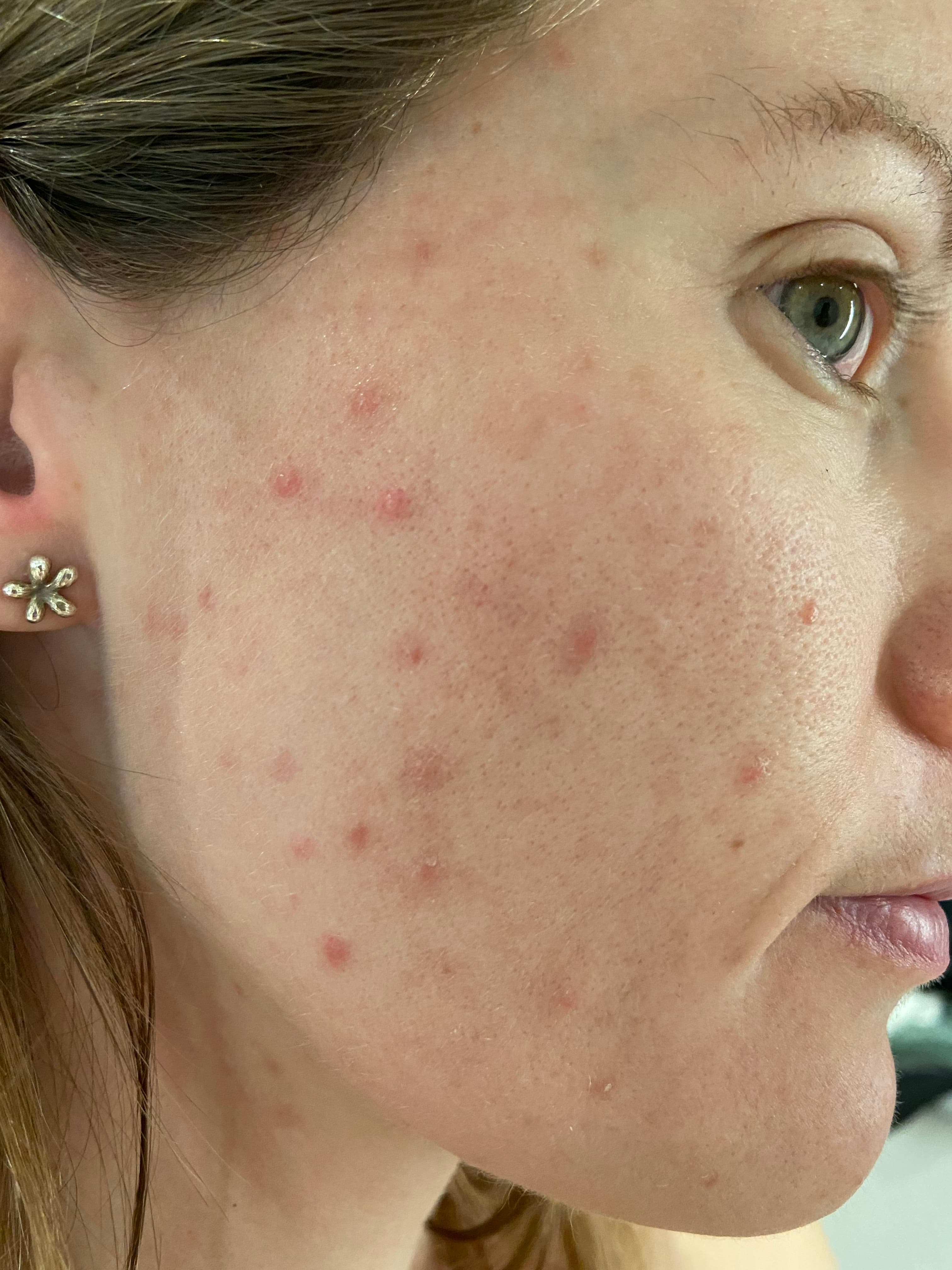 Before
 After
AfterKeep reading
Citations
- Dall'Oglio F, et al. Diet and acne: A systematic review. JAAD Int. 2022;7:95-112.PMID 35373155
- Elhage KG, St Claire K, Daveluy S. Acetic acid and the skin: a review of vinegar in dermatology. Int J Dermatol. 2022;61(7):804-811.PMID 34350993
- Zaenglein AL, et al. Guidelines of care for the management of acne vulgaris. J Am Acad Dermatol. 2016;74(5):945-973.PMID 26897386