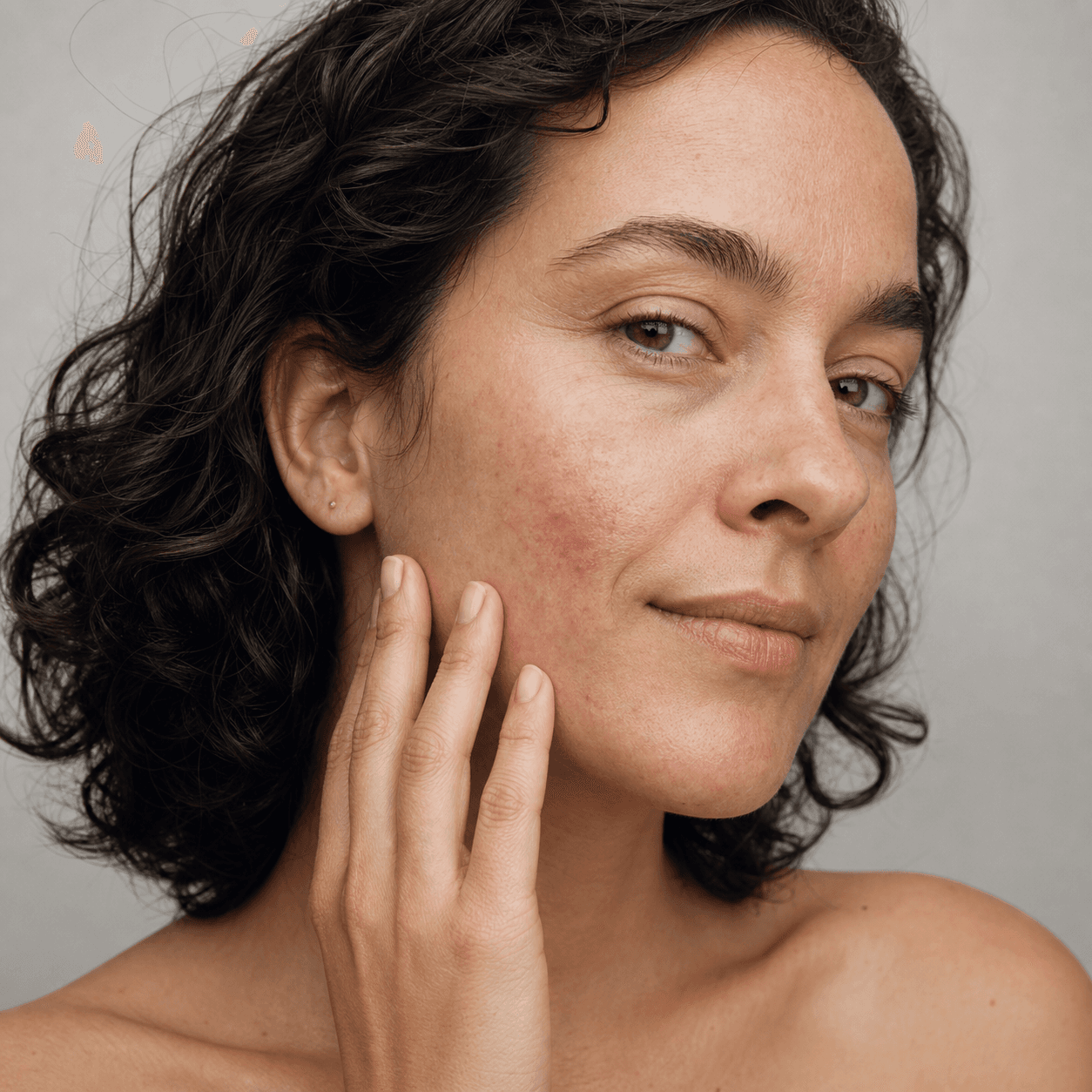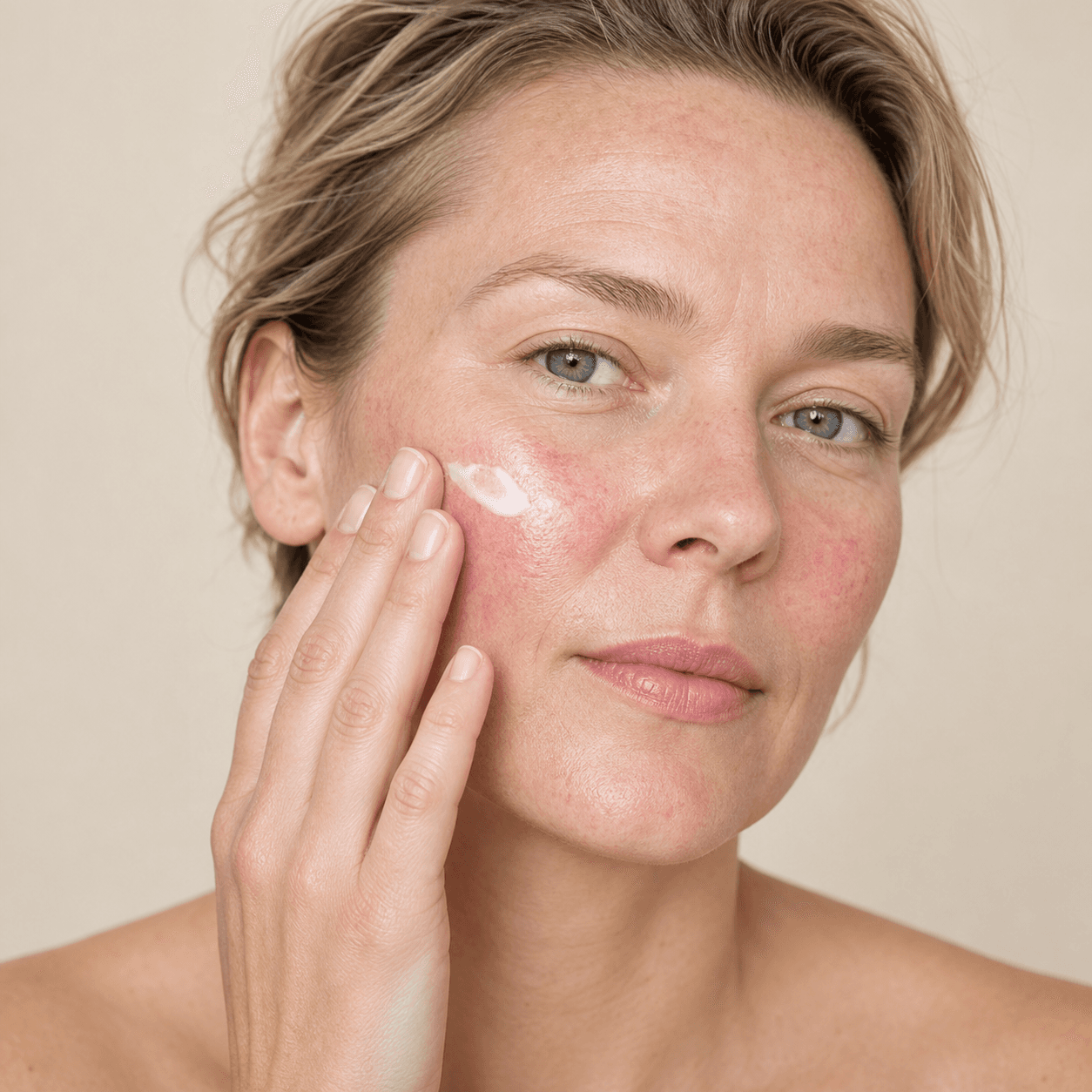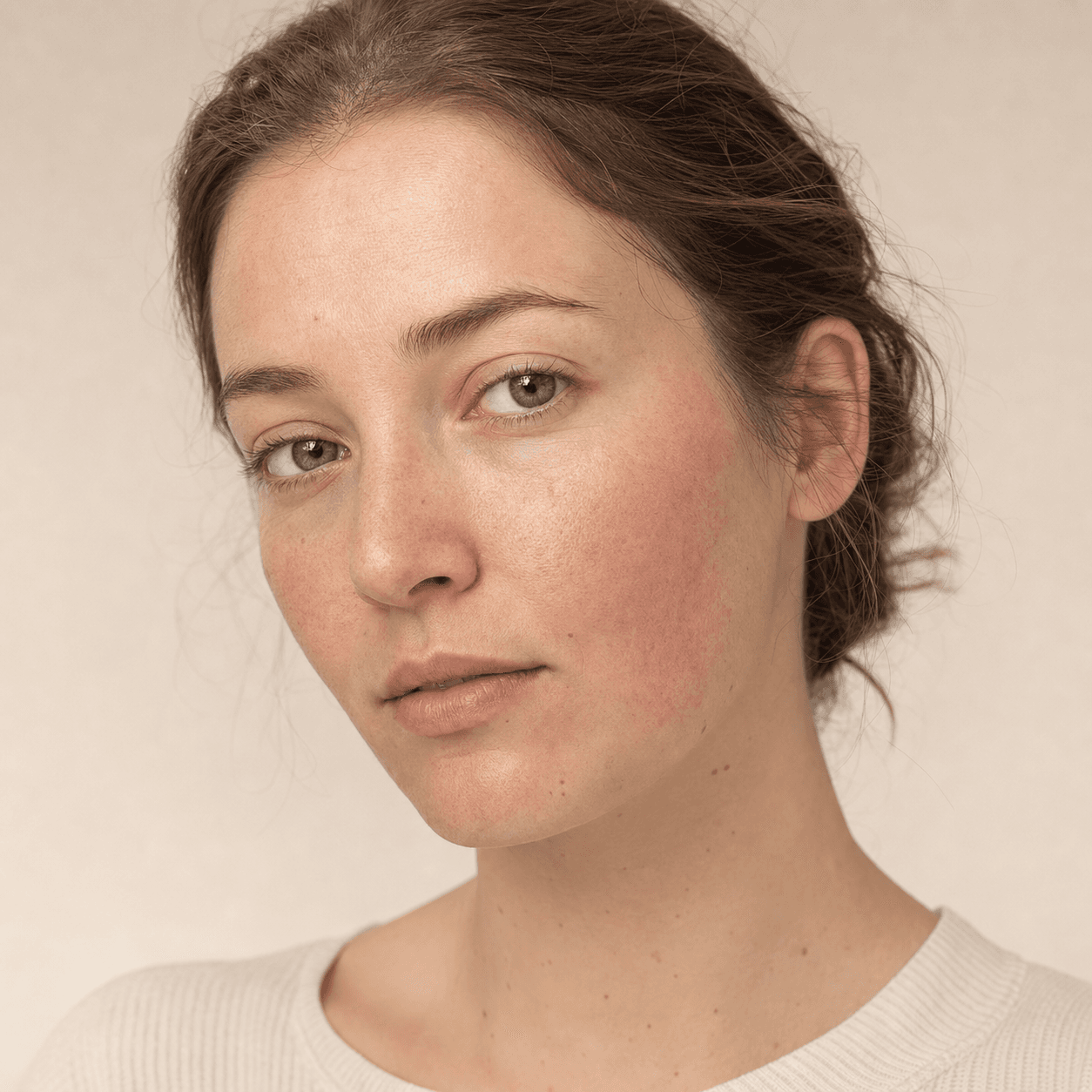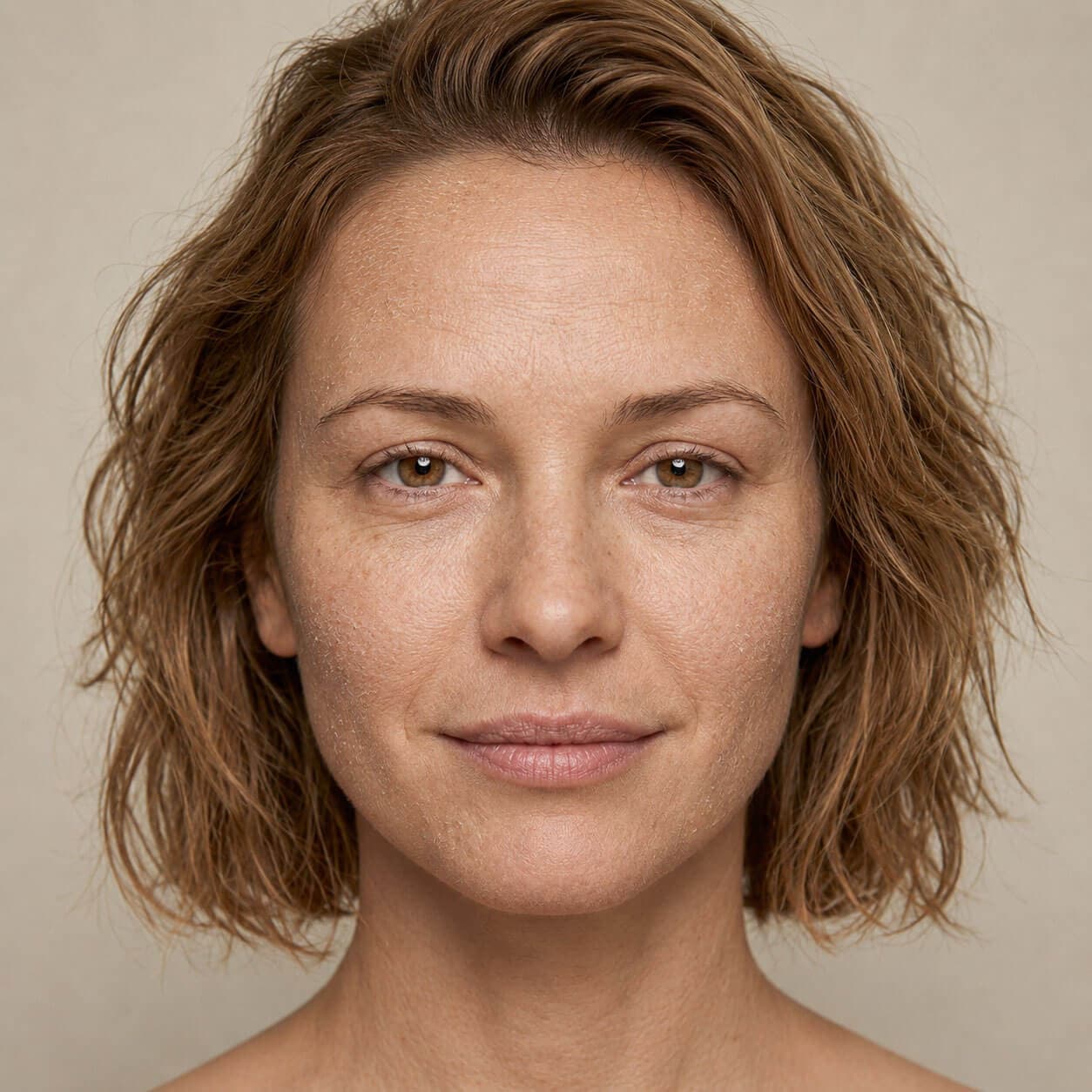
Combination skin
Oily T-zone, drier or normal cheeks, and a routine that has to address both without making either worse. Here's how to actually balance combination skin.

On this page
What combination skin really is
Sebum does not behave evenly across the face. The central T-zone (forehead, nose, chin) is usually a higher sebum area than the cheeks, and a 2014 study found higher androgen-receptor expression in T-zone sebaceous glands than in the lower-sebum cheek zone. For some people that difference is mild and the whole face behaves similarly. For others, it's pronounced enough that the T-zone is genuinely oily while the cheeks are normal or dry. That's combination skin, and the guide to skin that feels oily and dry at the same time explains the oil-versus-water difference in more detail.
It's not a disorder. It's a normal anatomy that happens to map awkwardly onto how skincare is sold. Most product lines force a choice ("for oily" vs "for dry") that doesn't match your reality.
The principle: target the actives, not the routine
You don't need two routines. You need one routine with targeted actives.
- Whole face: a gentle cleanser, a moisturiser matched to your dominant area, daily SPF. These get applied edge-to-edge.
- T-zone only: salicylic acid, BHA toners, anything aimed at sebum or congestion. Apply with a finger or cotton pad to the central face. Skip the cheeks.
- Cheeks only (when dry): an extra dab of moisturiser, or a richer cream on top of your daily one. Skip the T-zone.
This fits the same practical principle Goodman described for acne-prone skin care: keep cleansing and moisturising gentle, then match treatment to the area that needs it. Treat the actual oily zone, not the average of your whole face.
Variant choice in our line
Two of our products ship in "Normal to oily" and "Normal to dry" variants: the Moisturizer and the Day Protector. Pick the variant that matches your dominant area:
- T-zone heavy → "Normal to oily" (skips squalane, lighter)
- Cheeks dominant → "Normal to dry" (adds squalane and sodium hyaluronate)
You can swap between seasons. Most people drift toward the drier variant as they age and sebum production declines.
When the balance shifts
Combination skin isn't fixed. Hormonal cycles (especially perimenstrual and perimenopausal), climate changes, antibiotics, and ageing all shift the oily/dry balance. Don't be loyal to a single product setup. Re-evaluate every couple of months and switch the variant when needed.
A simple routine
Morning
- Gentle cleanse
- Niacinamide-supported SPF on the whole face — Niacinamide helps the T-zone's sebum control without compromising the cheeks.
- Optional. Drier areas get an extra moisturiser layer.
Evening
- Cleanse
- Salicylic acid on the T-zone 2–3 nights per week — Targeted application. Power Treat on the central face, not the cheeks.
- Moisturiser whole-face. Pick the variant that matches your dominant area. — "Normal to oily" if your T-zone runs heavy; "Normal to dry" if the cheeks dominate.
What to avoid
- Strong actives across the whole face when only the T-zone needs them
- Heavy facial oils on the central face
- Stripping cleansers in pursuit of "T-zone control"
- Constantly switching between oily-skin and dry-skin product lines
Recommended Danish Skin Care routine

Pick the variant for your dominant area. "Normal to oily" if the T-zone runs heavy, "Normal to dry" if the cheeks lead.

Salicylic acid. Apply only to the T-zone if the cheeks are dry. Targeted use beats whole-face exfoliation.

Niacinamide-supported SPF. Balances sebum on the T-zone without compromising the cheeks.
Full transparency: Danish Skin Care is my own company — I formulated these products and earn from every sale. That's exactly why I only recommend them where they genuinely fit the condition described above.
Key ingredients to look for
Common questions
Should I use two different routines for different parts of my face?
Targeted application matters more than two full routines. One cleanser, one moisturiser (matching your dominant area), one SPF, and targeted actives only on the parts that need them.
Will my combination skin become more oily/dry over time?
Often, yes. Hormonal changes, seasons, and ageing shift the balance. Most people drift toward drier as they age (sebum production declines from the late 30s onward). Adjust your variant choice when the balance changes.
Which Moisturizer variant should I pick?
Whichever area is more bothersome. If the T-zone is congesting and shiny, the 'Normal to oily' variant. If the cheeks are tight, flaking, or showing fine lines, 'Normal to dry'. You can always switch when seasons change.