
Hyaluronic acid (Sodium hyaluronate)
A reliable surface hydrator that draws water into the upper skin layers. Useful, low-risk, but routinely oversold as anti-aging.
At a glance
What Hyaluronic acid (Sodium hyaluronate) does for skin, and how to read the practical safety signals.
- Pulls water into the upper skin layers so skin feels softer, smoother, and less tight.
- Temporarily plumps fine surface lines, but does not rebuild collagen like a retinoid.
- Works best on damp skin followed by moisturiser, especially in dry weather or indoor heating.
- Type
- Humectant
- Rating
- Pregnancy
- Considered safe
- Comedogenic rating
- 0/5 (Won't clog pores)
- Vegan
- Yes
- Suited skin types
- All skin types
On this page
The short answer
Sodium hyaluronate is the salt form of hyaluronic acid that almost all skincare uses. Slightly more stable, slightly smaller molecule, same job. It's a humectant: it holds water in the upper layers of your skin like a sponge holds water at the kitchen sink. The skin feels plumper, softer, less tight, especially through the day in a dry office or a centrally-heated flat in February.
It is not a treatment. It does not rebuild your skin. It is, however, one of the safest, best-tolerated ingredients in cosmetic chemistry. Almost everyone can use it, and it sits comfortably in most routines.
If you've been sold an HA serum as the cornerstone of an anti-aging routine and quietly wondered why nothing changed: that's the marketing, not your skin. HA is the housekeeper, not the architect.
What the evidence actually shows
Surface hydration. Pavicic 2011 tested 0.1% hyaluronic acid creams of different molecular weights over 60 days and found better hydration and elasticity than vehicle. Bukhari 2018 is broader and includes fillers, oral products, and topical formulas, so I would use it as background rather than proof that every HA serum performs the same way. The reliable topical headline is simple: HA is good at making the upper skin layers feel more hydrated. Useful, not magical.
Modest wrinkle effects. Pavicic's work suggested that lower-molecular-weight HA penetrated slightly deeper and showed small but measurable reductions in wrinkle depth over 60 days. The effect size is modest and the photographs in the paper aren't dramatic. Don't expect transformation.
Endogenous HA and aging. Papakonstantinou's review documents that hyaluronic acid is a real and important component of the dermal extracellular matrix, and that its synthesis declines with age and UV exposure. But topical application doesn't meaningfully reach the dermis. The marketing that implies your serum "replenishes the HA you've lost with age" is overselling the mechanism. The molecule on your serum and the molecule deep in your dermis live in different postcodes.
How to use it
The one technique that actually matters: apply on damp skin.
A humectant doesn't make water. It holds onto the water available around it. On parched skin in a dry room, HA can feel less comfortable if you leave it sitting there without a moisturiser over the top. The fix takes two seconds: a fine mist of water (or a splash) before HA, then a real moisturiser sealed on top.
- Morning and evening is fine.
- Works with almost everything: niacinamide, retinol, vitamin C, salicylic acid. The cushion between actives and the rest of your routine.
- Especially useful in winter and on planes when ambient humidity drops below 30 percent.
What it won't do
- Rebuild collagen. That's retinol's lane.
- Fix dehydration if you're not also sealing it in with an occlusive layer. Otherwise the sponge dries.
- Replace a moisturiser for genuinely dry skin types. HA is a layer, not the whole routine.
- Help cystic acne, severe pigmentation, or photoaged skin in any meaningful way.
If a brand is marketing HA as a transformative anti-aging treatment, that's a marketing tell, not a clinical one. Treat it the way you'd treat a "miracle" headline in a tabloid.
The practical takeaway
My goal with this guide was to gather the useful science on hyaluronic acid in one place, so you can stop hunting for the next clever fix and do the simple, effective things your skin actually needs.
That is also why I made the Danish Skin Care Kit: a calm routine built around documented ingredients, and one that has helped more than 100,000 people with problem skin. If even the smallest question is still nagging you, send me an email at info@danishskincare.com.
Common questions
Should I apply hyaluronic acid to wet or dry skin?
Damp skin. HA is a humectant: it pulls water from wherever it can find it. On bone-dry skin in a dry room, it can pull moisture out of the deeper skin layers and make the surface feel tighter. Apply on damp skin, then seal with a moisturiser.
Does the molecular weight matter?
A bit. Higher molecular weights stay on the surface and reduce trans-epidermal water loss. Lower molecular weights can penetrate the upper layers and may have modest anti-wrinkle effects (Pavicic's study). Many serums use a blend. Don't overthink it. Both work as a hydrator.
Is hyaluronic acid anti-aging?
Honest answer: only modestly, by hydrating the surface and temporarily plumping fine surface lines. It does not rebuild the dermal collagen network the way retinol can. The 'fountain of youth' marketing is overblown.
Reading a real label?
Scan a product to see how it is formulated
Upload a photo of the ingredient list and get a quick ingredient-by-ingredient read against the evidence-led database.
Found in these Danish Skin Care products

Sodium hyaluronate sits alongside squalane, urea, retinol, and panthenol in our nightly moisturiser. Pick the Normal to dry variant for drier skin.

The "Normal to dry" variant of the Day Protector layers sodium hyaluronate under broad-spectrum SPF.

Both products above are inside the Kit. Pick the Normal to dry variants if hydration is the goal.
Skin conditions it actively helps with
Where the published evidence puts Hyaluronic acid (Sodium hyaluronate) on the short list of active ingredients worth reaching for.

Dry skin
Dry skin is usually a barrier problem, not simply a water problem. Here's the difference between dry and dehydrated, why it matters, and the routine that actually helps.
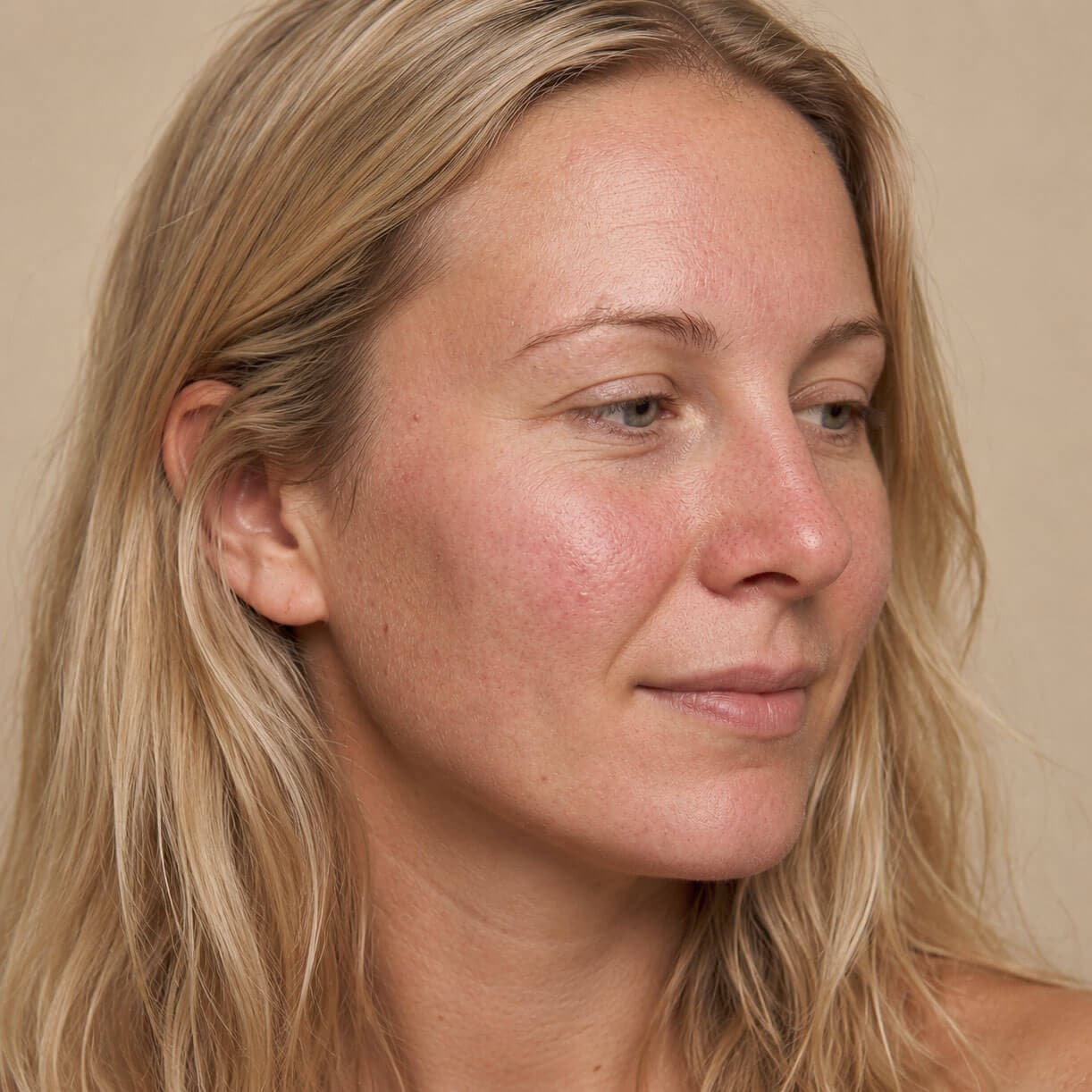
Sensitive skin
"Sensitive" is a symptom, not a diagnosis. Learn what drives reactive skin, the routine that calms it, and what to leave out.
Related ingredients
Citations
- Pavicic T, et al. Efficacy of cream-based novel formulations of hyaluronic acid of different molecular weights in anti-wrinkle treatment. J Drugs Dermatol. 2011;10(9):990–1000. — PMID 22052267
- Papakonstantinou E, et al. Hyaluronic acid: A key molecule in skin aging. Dermatoendocrinol. 2012;4(3):253–8. — PMID 23467280
- Bukhari SNA, et al. Hyaluronic acid, a promising skin rejuvenating biomedicine. Int J Biol Macromol. 2018;120(Pt B):1682–1695. — PMID 30287361