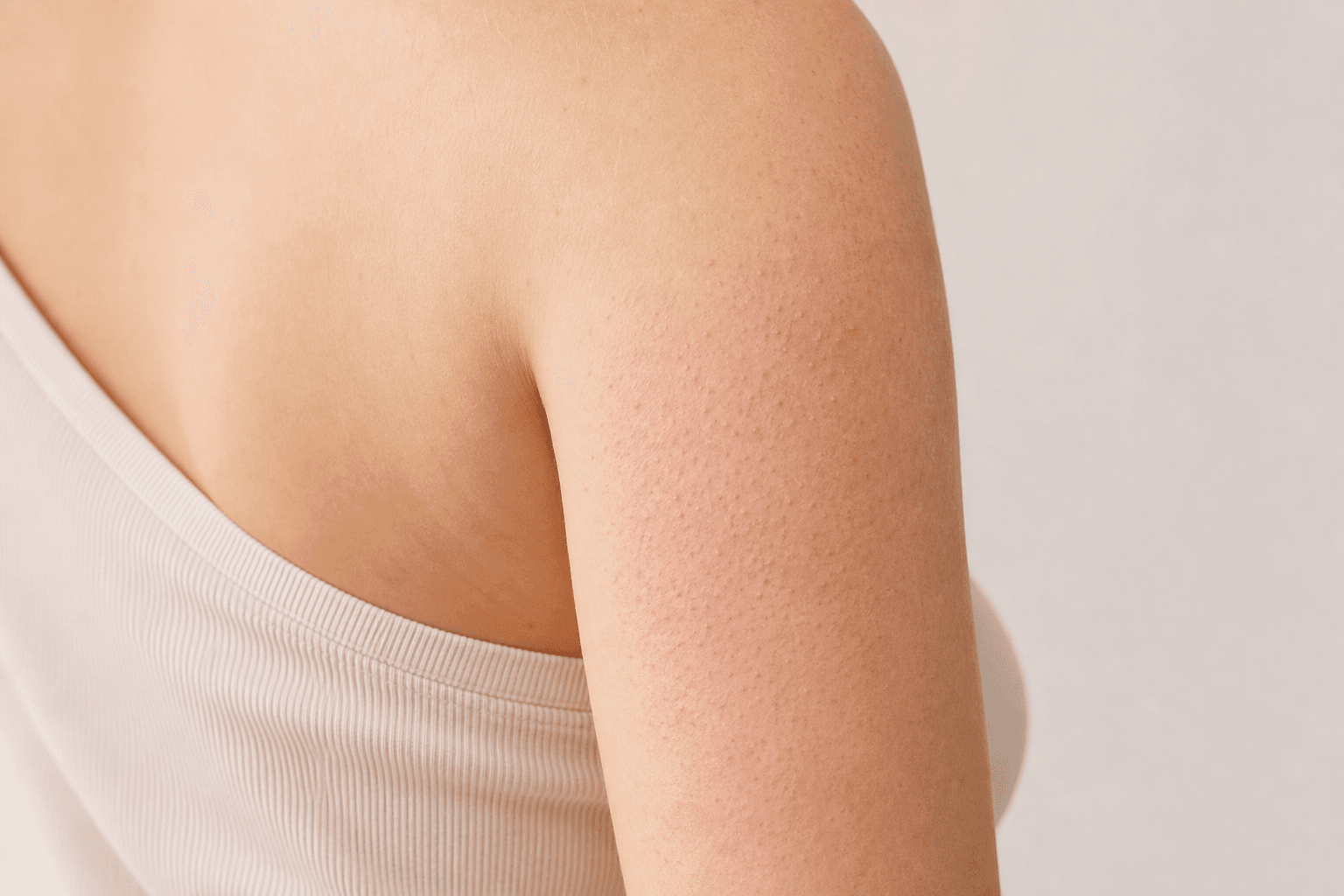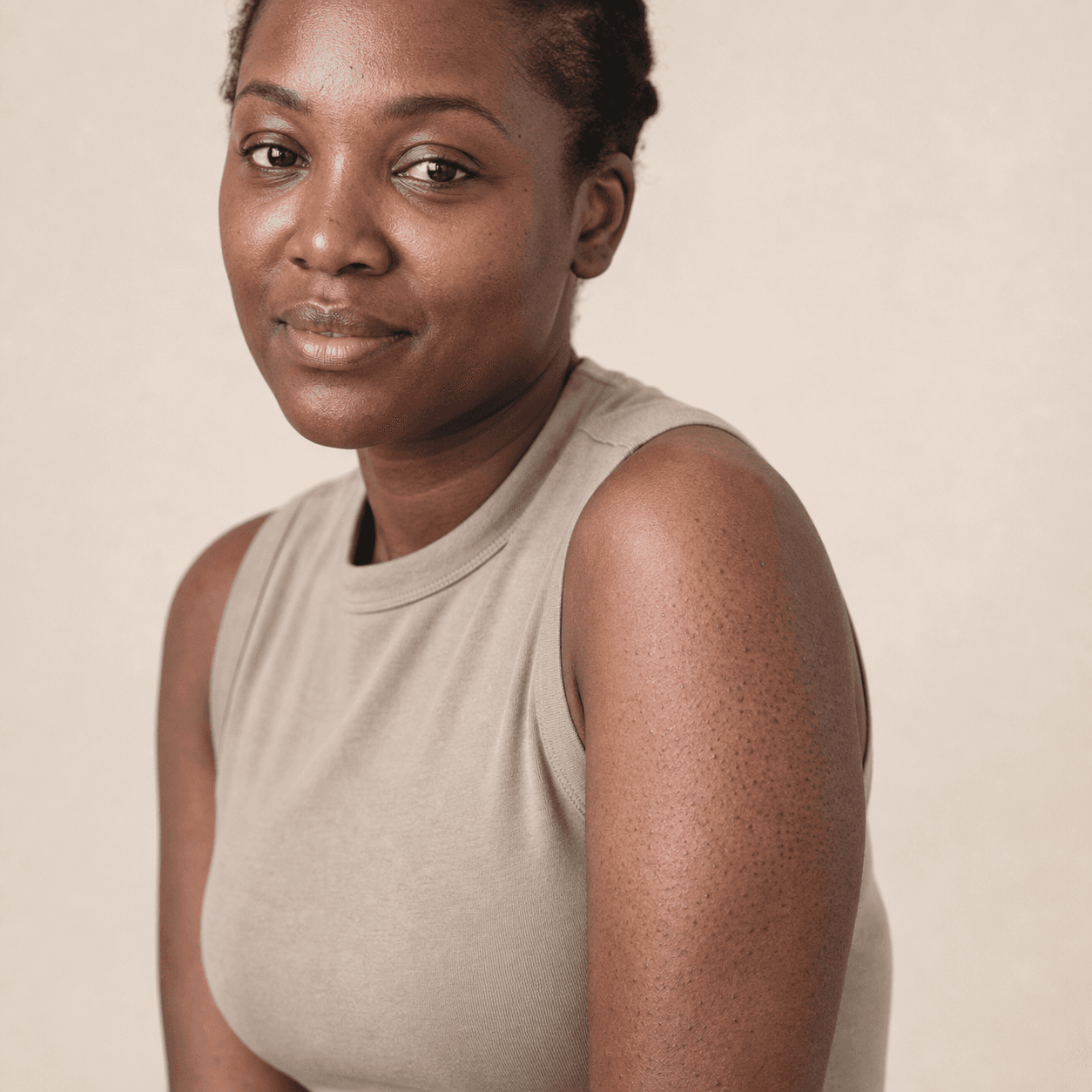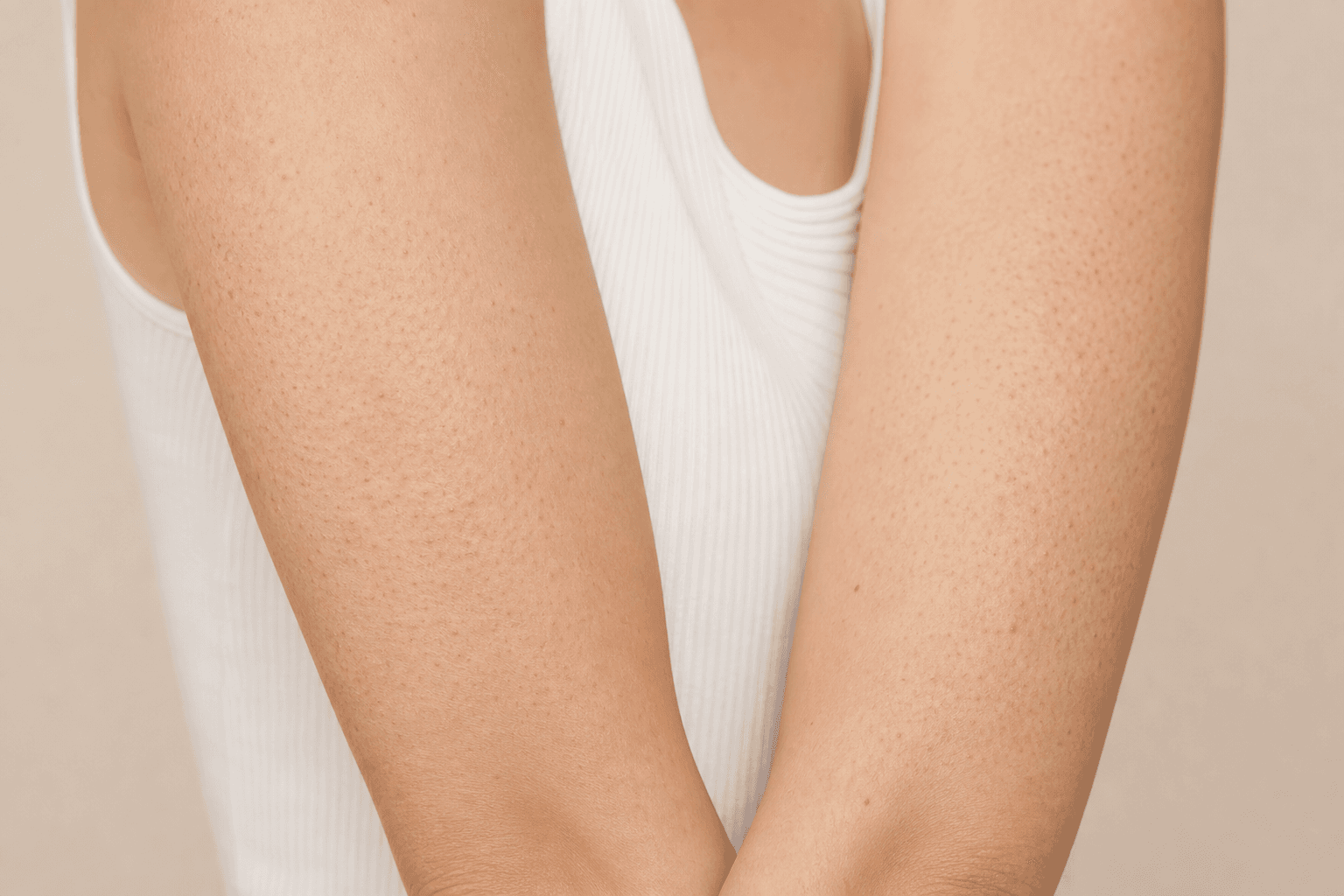
Keratosis pilaris ("chicken skin")
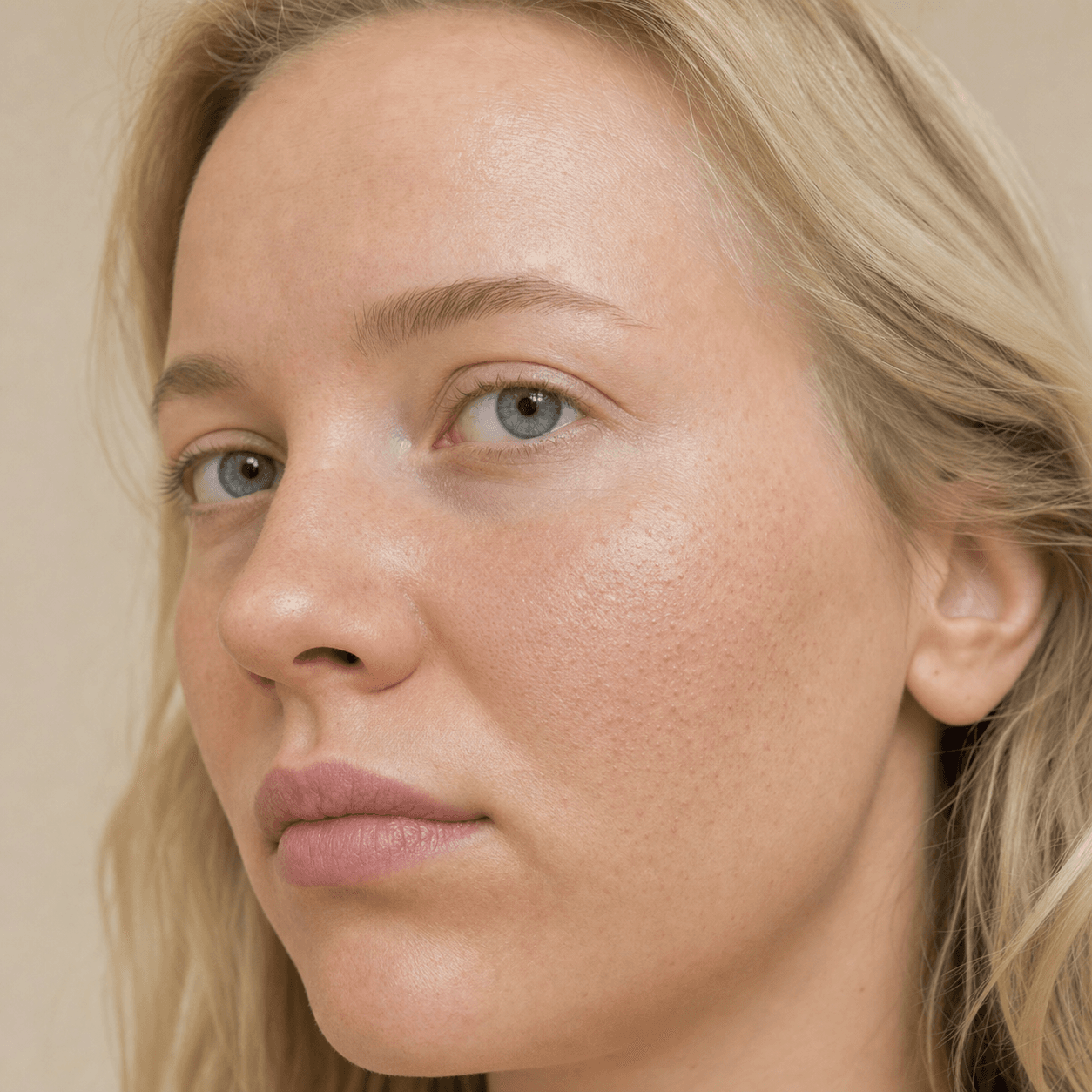
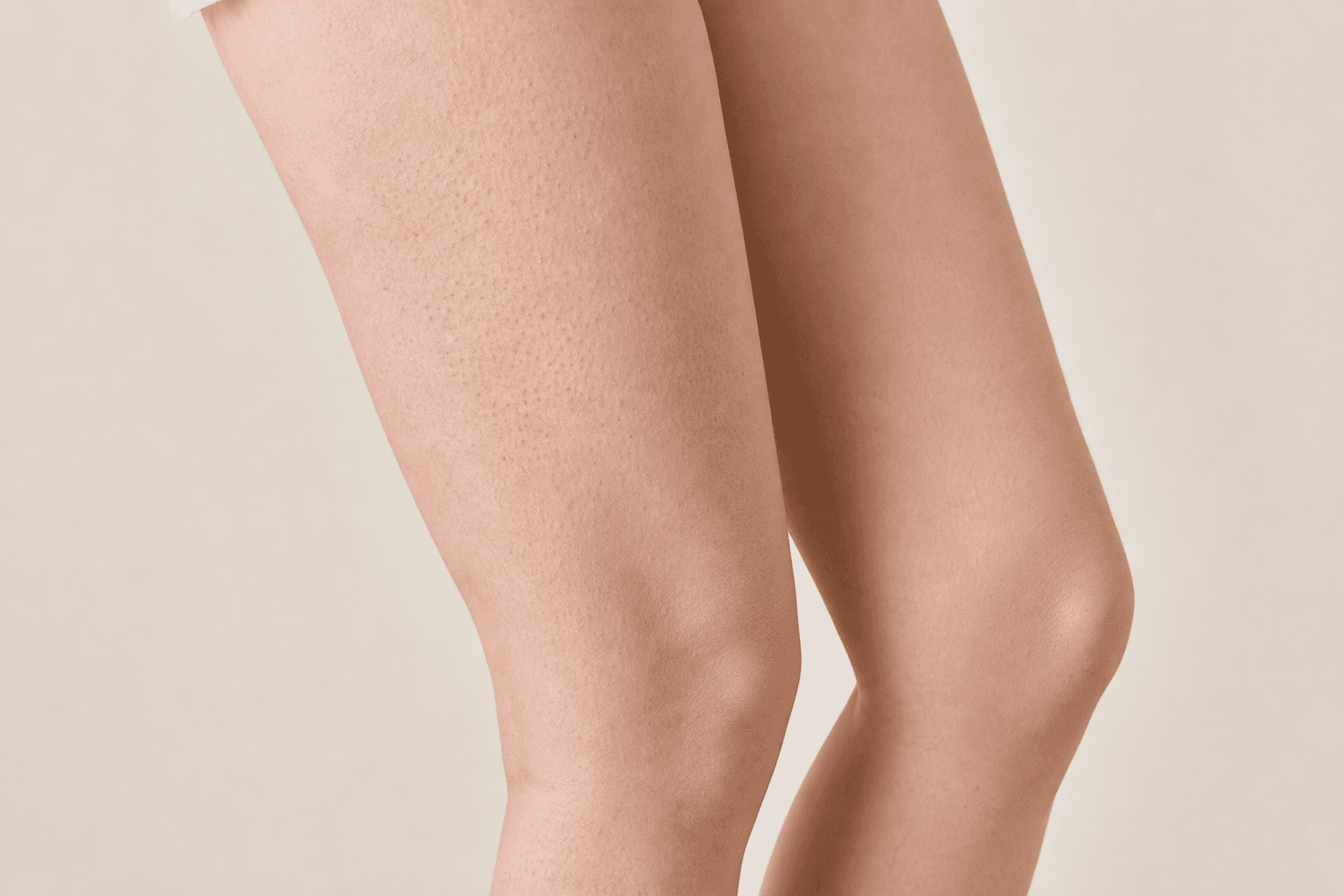
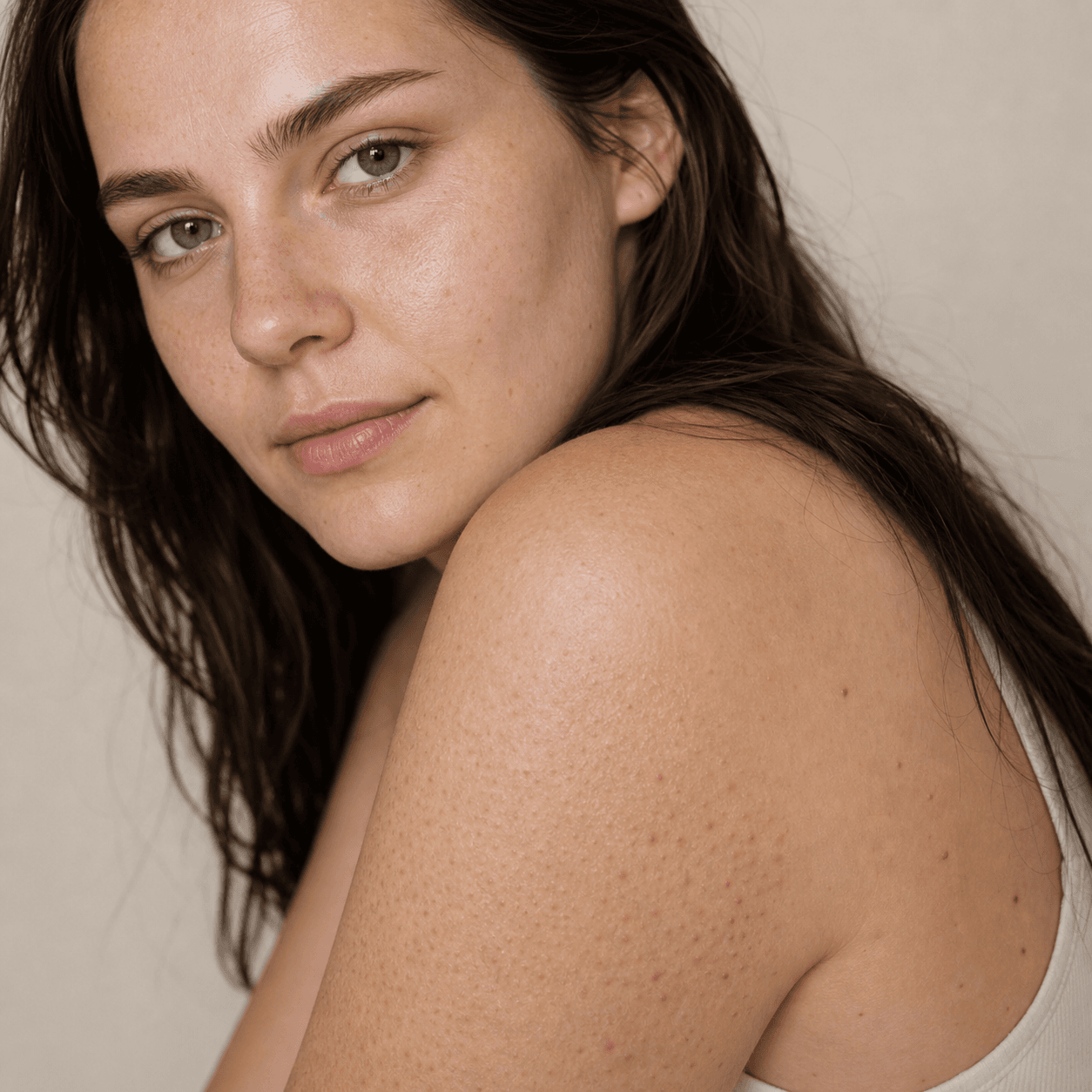
Keratosis pilaris (KP) is the small bumps on the backs of arms, thighs, and sometimes face. Here's what causes it, why scrubs make it worse, and what actually softens it.
On this page
What's happening inside the bumps
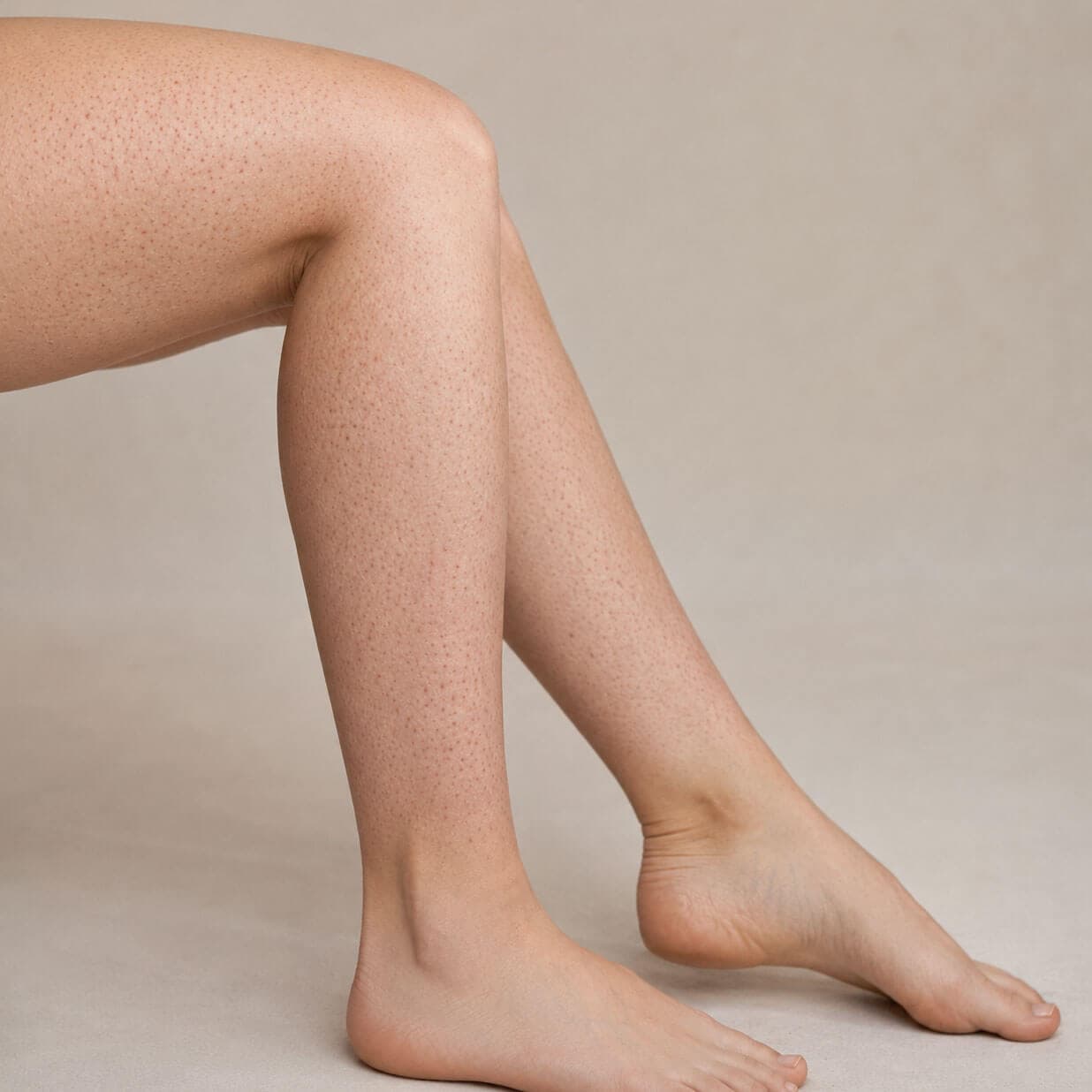
A keratosis pilaris bump is a tiny plug of keratin (the protein that makes up the surface of your skin) trapped inside a hair follicle. The follicle wraps around the trapped keratin, sometimes with a small inflammatory ring around it, sometimes pigmented in deeper skin tones. Hwang 2008 is a useful, brief clinical summary; Maghfour 2022 is a systematic review of treatment options.
KP often runs in families, is common during the teenage years, and usually improves with age. It's not infectious, not allergic, not a hygiene problem.
What works
Two categories of ingredients are the practical starting point:
- Keratolytics: chemicals that help loosen rough keratin. Urea, salicylic acid, and lactic acid are common options. Our Moisturizer carries urea; our Power Treat carries salicylic acid. The point is slow smoothing, not sanding the bumps away.
- Humectants and emollients: the surrounding skin often leans dry or atopic. Sodium hyaluronate, glycerin, ceramides, and squalane can make the surface less rough and less itchy. The Moisturizer "Normal to dry" variant is the better fit when KP sits on dry skin.
The details change with the pattern. Use the guide to facial keratosis pilaris for cheek-strength care, compare KP with folliculitis when bumps become sudden or pustular, and read the colour-specific guide to KP in darker skin when pigment lasts longer than texture. If a label calls an ingredient keratolytic, that means it loosens compact keratin; ammonium lactate is one hydrating body-lotion example.
What doesn't work, and often makes it worse
Mechanical scrubs and exfoliating mitts. They irritate the follicular opening without reliably removing the plug inside it. The better bet is patient chemical smoothing plus moisturiser.
Picking. Same as with blackheads: the plug comes back, and the picked spot pigments dark for months.
Detox and "purifying" body wraps. Unevidenced; usually contain ingredients that strip the barrier and make the surrounding dry skin worse.
What to expect
KP responds slowly. The guide on how to get rid of keratosis pilaris walks through that patient body routine. Most people see meaningful texture improvement at 8–12 weeks of consistent urea + BHA application. Many see significant natural improvement through their 30s and 40s. The genetic predisposition stays. Keep the maintenance routine, and don't expect to "cure" it.
A simple routine
Morning
- Lukewarm rinse, no scrubbing
- Body lotion with urea or lactic acid — Our Moisturizer carries urea, a clinically-evidenced keratolytic for KP. Pat onto damp skin.
- SPF on any KP areas the sun will reach (KP on the upper arms is sun-exposed in summer)
Evening
- Brief lukewarm shower. Avoid hot water and long soaks.
- Moisturiser within 3 minutes of towelling off, while skin is still damp
- Salicylic acid 2% targeted to bumpy areas, 2–3 nights per week — BHA inside the follicle clears the keratin plug. Don't scrub.
What to avoid
- Mechanical scrubs and brushes. They irritate without clearing the plug.
- Picking the bumps. Post-inflammatory pigmentation lasts months.
- Very hot showers and bubble baths
- "Detox" wraps and stripping body products
Recommended Danish Skin Care routine

For facial KP. The Moisturizer's urea + retinol pair is what softens bumpy follicular texture; pair with the Power Treat's salicylic acid targeted to bumpy areas.

Urea + sodium hyaluronate + retinol. The keratolytic-and-hydration combination KP responds to. "Normal to dry" variant for the body.

Salicylic acid for the bumps themselves. Targeted, not whole-area.
Full transparency: Danish Skin Care is my own company — I formulated these products and earn from every sale. That's exactly why I only recommend them where they genuinely fit the condition described above.
Key ingredients to look for
Common questions
Will KP ever go away completely?
Often it improves significantly with age. Many people see substantial improvement by their 30s and 40s. With a consistent urea + low-frequency BHA routine, the texture can become barely visible. The genetic predisposition stays, so manage it. Don't expect to eliminate it forever.
Are scrubs and exfoliating mitts good for KP?
No. Mechanical exfoliation can irritate the follicle without doing much for the plug inside it. The 2022 systematic review supports topical options such as salicylic acid and other keratolytic approaches for improving KP appearance, while scrubbing mainly adds friction.
My KP is on my face. Same routine?
Similar logic, gentler products. Urea-containing moisturiser, targeted salicylic acid, no scrubs. Facial KP is rarer than body KP but responds to the same actives at lower frequency.
Citations
- Hwang S, Schwartz RA. Keratosis pilaris: a common follicular hyperkeratosis. Cutis. 2008;82(3):177–80. — PMID 18856156
- Maghfour J, et al. Treatment of keratosis pilaris and its variants: a systematic review. J Dermatolog Treat. 2022;33(3):1231–1242. — PMID 32886029
- Purnamawati S, et al. The role of moisturizers in addressing various kinds of dermatitis: a review. Clin Med Res. 2017;15(3-4):75–87. — PMID 29229630