
Tea Tree Oil
A well-known antimicrobial essential oil with some acne evidence, but concentration, oxidation, and irritation risk matter. Useful for some people as a targeted step, not as a blanket natural antiseptic for the whole face.
At a glance
What Tea Tree Oil does for skin, and how to read the practical safety signals.
- Melaleuca Alternifolia Leaf Oil is the INCI name for tea tree oil from the Australian tea tree.
- Antimicrobial activity is real, but cosmetic formulas need sensible concentration and fresh, well-stored oil.
- A classic acne study compared 5% tea tree oil with benzoyl peroxide; both helped, with different side-effect profiles.
- Type
- Botanical extract
- Rating
- Pregnancy
- Discuss with a clinician
- Comedogenic rating
- 1/5 (Low clogging risk)
- Vegan
- Yes
- Suited skin types
- Oily,Combination,Acne-prone
On this page
The short answer
Melaleuca Alternifolia Leaf Oil is tea tree oil: the essential oil from the Australian tea tree Melaleuca alternifolia.
It is famous for a reason. It has real antimicrobial activity, and some clinical work supports its use in mild acne. It is also an essential oil, which means concentration, oxidation, and your skin's patience all matter.
Tea tree is not evil. It is also not a license to douse your entire face in "natural antiseptic" because TikTok said so.
Danish Skin Care does not put tea tree in our core formulas. When congestion is the problem, I usually steer people toward a leave-on salicylic acid step and a simple routine they can keep using for months, not days.
What the evidence actually shows
Acne compared with benzoyl peroxide. A 1990 study[1] compared 5% tea tree oil gel with 5% benzoyl peroxide in mild to moderate acne. Both groups improved. Benzoyl peroxide worked faster; tea tree caused fewer reports of dryness, scaling, and peeling. That is a useful trade-off conversation, not a crown ceremony for either ingredient.
Antimicrobial and medicinal properties. A 2006 review[2] of Melaleuca alternifolia oil summarises antimicrobial activity against bacteria, fungi, and some viruses, along with discussion of formulation, safety, and resistance concerns. The takeaway for skincare is simpler: tea tree can support acne-prone routines partly through antimicrobial action, but only when the product is well made and your skin tolerates it.
Commercial tea tree products vary. A 2011 survey[3] tested commercially available Australian tea tree oil products and found antimicrobial activity differed between brands and batches. That is a quiet but important reminder: quality, storage, and concentration matter as much as the label saying "tea tree."
What the evidence does not support is treating tea tree like a zero-risk cure-all for acne, blackheads, fungal issues, or rosacea.
How to use it
If you use tea tree at all, think targeted and temporary:
- Spot or small-area use on individual blemishes or very oily zones, not a full-face blanket unless your skin has proven it can handle that.
- Sensible concentration. Many studies use around 5% tea tree oil in a proper gel base. Random high-strength essential oil dabbed neat is how people end up with chemical burns and regret.
- Fresh product. Oxidised tea tree oil smells "off" and is more likely to irritate. Close the bottle, keep it cool and dark, and replace old bottles.
- Patch test on the jawline for several nights before you declare victory on your whole face.
Pregnancy and very reactive skin deserve extra caution. Essential oils are not automatically gentler because they are plant-derived.
Where it fits in a routine
Tea tree makes most sense beside:
- Salicylic acid: pore-focused exfoliation when blackheads and congestion are the main issue.
- Niacinamide and zinc PCA: calmer daily support for oily or blemish-prone skin.
- Benzoyl peroxide: when inflamed breakouts need antibacterial pressure; alternate or spot-treat rather than stacking everything at once.
Do not mix tea tree with every active you own on the same night and then blame your pillow for the stinging.
For oily skin, the bigger win is usually consistency: gentle cleanse, one proven leave-on treatment, moisturiser that does not fight you, SPF in the morning.
When it won't help
Tea tree will not fix dry skin, sensitive skin, or pigmentation on its own.
It can actively worsen rosacea-prone faces, eczema flares, and barrier-compromised skin because essential oils are irritants for many people, even when they are "natural."
It also will not replace prescription care for moderate or severe acne, and it is a poor substitute for sunscreen when signs of ageing and UV damage are the real concern.
If your skin burns, peels, or stays red after tea tree, stop. Your routine should feel boring enough to repeat, not dramatic enough to post about.
The practical takeaway
My goal with this guide was to gather the useful science on tea tree oil in one place, so you can stop hunting for the next clever fix and do the simple, effective things your skin actually needs.
That is also why I made the Danish Skin Care Kit: a calm routine built around documented ingredients, and one that has helped more than 100,000 people with problem skin. If even the smallest question is still nagging you, send me an email at info@danishskincare.com.
Common questions
What does Melaleuca Alternifolia Leaf Oil mean on a label?
It is tea tree oil, the essential oil distilled from Melaleuca alternifolia leaves. Strength, purity, and formula context decide whether it helps or annoys your skin.
Is tea tree oil as strong as benzoyl peroxide for acne?
A 1990 study found both 5% tea tree oil and benzoyl peroxide improved acne, but benzoyl peroxide acted faster while tea tree caused fewer drying and peeling side effects. Neither replaces a full, consistent routine.
Can sensitive skin use tea tree oil?
Sometimes, in low concentrations on small areas. Many sensitive or rosacea-prone faces do better with gentler options such as niacinamide or salicylic acid in a balanced base. Patch test first.
Reading a real label?
Scan a product to see how it is formulated
Upload a photo of the ingredient list and get a quick ingredient-by-ingredient read against the evidence-led database.
I recommend these products

We do not use tea tree oil in our formulas. Salicylic acid is the brand's leave-on congestion step when pores and blackheads are the main issue.

The Kit gives a stable cleanser-and-moisturiser foundation if you want to trial tea tree as a separate spot or occasional treatment without overcomplicating the routine.
Skin conditions it actively helps with
Where the published evidence puts Tea Tree Oil on the short list of active ingredients worth reaching for.
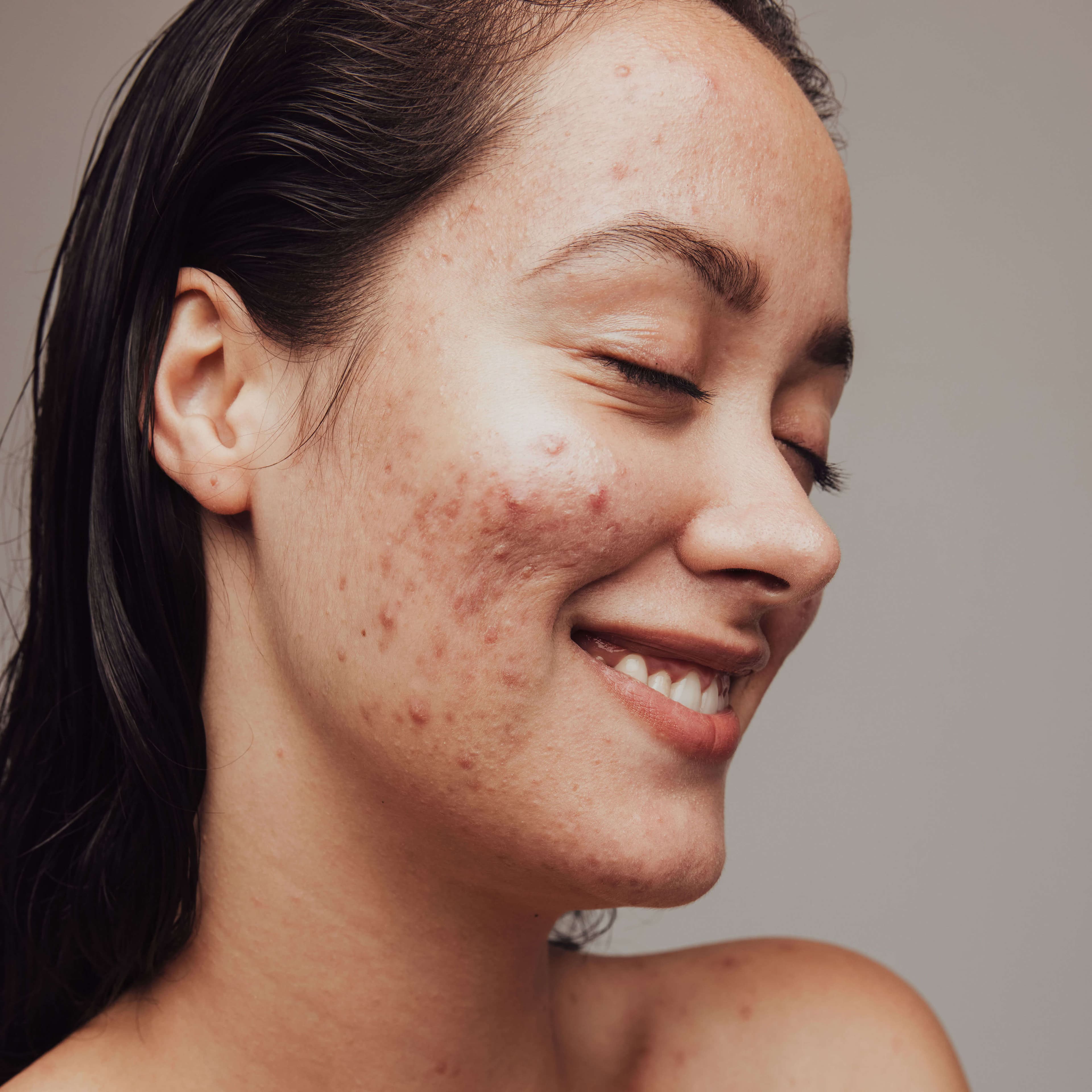
Acne and blemishes
A clear-headed guide to acne: what's actually happening in your skin, what the evidence says works, and a simple routine that doesn't make things worse.
Oily skin
Oily skin isn't a problem to "fix". It's a feature with trade-offs. Here's what actually controls sebum, what doesn't, and the routine that works without stripping.

Blackheads
Blackheads are oxidised sebum, not dirt. Here's what they actually are, why pore strips and squeezing make them worse, and the routine that genuinely clears them.
Related ingredients
Citations
- Bassett IB, Pannowitz DL, Barnetson RS. A comparative study of tea-tree oil versus benzoylperoxide in the treatment of acne. Med J Aust. 1990;153(8):455-458. — PMID 2145499
- Carson CF, Hammer KA, Riley TV. Melaleuca alternifolia (tea tree) oil: a review of antimicrobial and other medicinal properties. Clin Microbiol Rev. 2006;19(1):50-62. — PMID 16418522
- Thomsen PS, Jensen AB, Hammer KA, Riley TV. Survey of the antimicrobial activity of commercially available Australian tea tree (Melaleuca alternifolia) essential oil products in vitro. J Altern Complement Med. 2011;17(9):823-828. — PMID 21854197