
Why do I get pimples before my period?
Premenstrual pimples happen when normal acne biology meets hormonal shifts, usually on skin that is already acne-prone. The fix is a steady routine, not a monthly panic attack.
On this page
When I had acne, I knew the strange habit of trying to predict a breakout by feeling my face.
One sore bump on the chin could turn a perfectly normal morning into mirror mathematics. Is this stress? Did I eat something? Did I cleanse badly? For many readers, there is one extra clue: the same pimples arrive before a period, almost like they have a calendar invite.
I cannot pretend period acne is my own body story. But after helping more than 100,000 people with problem skin, I have seen how exhausting cyclical acne feels. You get a few calm days, then the chin or jaw starts its monthly performance.
The short answer
You get pimples before your period because normal acne biology can become more active around hormonal shifts.
A 2001 study of 400 women found that 44% reported acne flares before their period[1]. A 2014 study of adult women with acne found an even higher number: 65% reported acne symptoms worsening with menses, most often in the week before bleeding started[2].
So no, you are not imagining it.
The practical answer is not to punish your skin once a month. It is to keep the routine steady enough that your skin enters that week with fewer clogged pores, less irritation, and a barrier that is not already shouting.
Why the same areas flare again
Acne starts in the pilosebaceous unit - the hair follicle and oil gland. A Lancet review[3] explains the main pieces: sebum, sticky dead skin cells inside the follicle, Cutibacterium acnes, and inflammation.
Hormones can influence the oil side of that system. If your follicles are already acne-prone, a premenstrual shift can be enough to make the same areas clog and inflame.
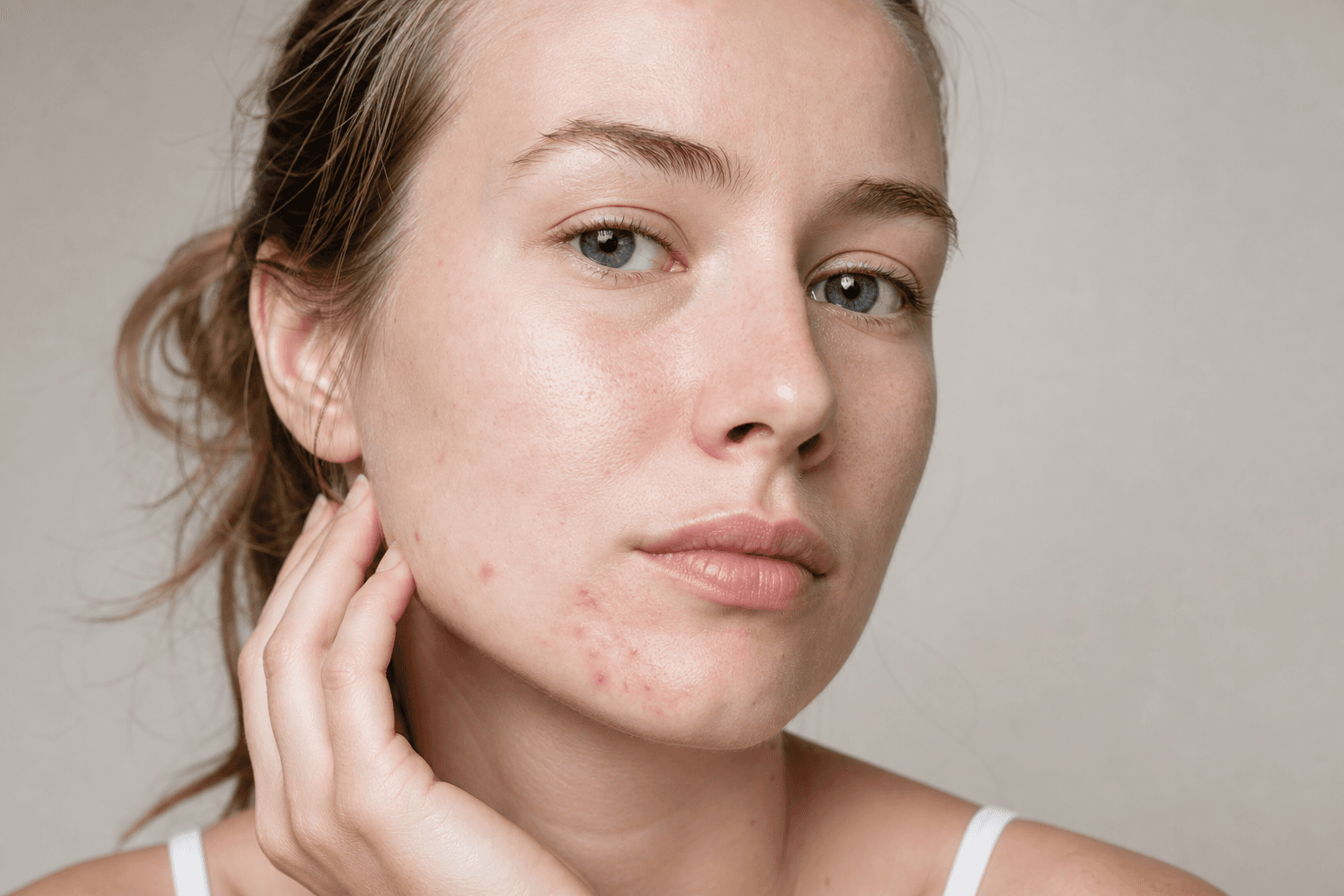
That is why period pimples often feel different from one random spot after a sweaty day. They may be:
- deeper or more tender
- clustered on the chin, jawline, lower cheeks, or neck
- recurrent in the same places
- slow to surface
- likely to leave red or brown marks if picked
The location is a clue, not a diagnosis. Chin and jaw acne can be hormonal-pattern acne, but it can also be friction, picking, heavy balms, perioral dermatitis, or hair removal irritation. If your main pattern is the lower face, the guide to chin acne is the useful next read.
What to do the week before
The week before a flare is not the time to audition five new products.
Keep the base steady:
- Cleanse gently at night.
- Moisturise even if you feel oily.
- Use SPF in the morning, especially if spots leave marks.
- Use one acne active if your skin tolerates it.
- Do not pick the early sore bump. I know. Rude advice, but correct.
For many people, a leave-on salicylic acid product 2 to 4 nights per week can help the clogged-pore part. Start before the usual flare window if your skin already tolerates it. Do not wait until the pimple is angry and then introduce your strongest product like a tiny fire extinguisher full of regret.
If your skin stings, flakes, or burns, reduce the active step and protect the barrier. Premenstrual skin does not need a monthly chemical argument.
What not to do
Please do not turn cyclical acne into a monthly emergency routine.
Avoid:
- alcohol-heavy spot treatments on the whole lower face
- scrubs, brushes, or aggressive washcloths
- drying masks every night before your period
- stacking salicylic acid, retinoids, benzoyl peroxide, and strong vitamin C at once
- changing cleanser, moisturiser, SPF, and makeup in the same week
When everything changes, you learn nothing. Worse, irritation can make the next cycle look like the original acne got stronger, when your skin may simply be inflamed from the rescue mission.
When hormones need medical help
Skincare can help the skin side. It cannot fully manage an internal hormonal driver.
The 2016 acne guidelines[4] include prescription options when over-the-counter care is not enough, including topical retinoids, benzoyl peroxide combinations, antibiotics in selected cases, hormonal therapies for some patients, and isotretinoin for severe acne.
Please involve a qualified clinician sooner if your acne is:
- deep, painful, or cyst-like
- leaving scars
- suddenly much worse
- tightly linked with irregular periods
- paired with increased facial hair or scalp hair thinning
- not improving after 8 to 12 weeks of consistent topical care
- affecting your confidence enough that you plan your life around your skin
Medical help is not admitting defeat. It is using the correct tool when skincare has reached its lane.
My final advice
If pimples show up before your period, treat the pattern, not the panic.
Keep your routine calm for the whole month. Use one tolerated active before the usual flare window. Protect the barrier. Leave the sore underground bump alone as much as humanly possible.
You may not control every hormonal shift with skincare. But you can make the skin around those shifts less irritated, less clogged, and easier to live with. That is not a miracle. It is better than a monthly war.
People also ask
Why do I get pimples before my period?
Many people flare before a period because hormone shifts can make acne-prone follicles oilier, stickier, and more inflamed. It is normal acne biology with a cycle pattern.
Where do period pimples usually appear?
They often show up on the chin, jawline, lower cheeks, or neck, but the pattern matters more than the exact map.
Can skincare stop hormonal acne before my period?
Skincare can help clogged pores, irritation, and marks, but it cannot fully override an internal hormonal driver. Deep, painful, scarring, or persistent cyclical acne may need medical treatment.
Should I use stronger acne products before my period?
Usually no. A steady routine and one tolerated active are safer than suddenly adding several strong products when the skin is already inflamed.
The monthly-flare routine I would keep boring
If pimples arrive before your period, I would not rebuild the bathroom every month. Danish Skin Care Kit gives acne-prone skin a steady base: gentle cleansing, salicylic acid for clogged pores when tolerated, moisturiser, and daily SPF. It will not control your hormones. It can help the skin handle the follicle, barrier, and mark-prevention side with less drama.

A simple acne-prone-skin base for the whole month: gentle cleansing, salicylic acid when tolerated, moisturising support, and SPF for post-pimple marks.
Full transparency: Danish Skin Care is my own company — I formulated these products and earn from every sale. That's exactly why I only recommend them where they genuinely fit the guide you just read.
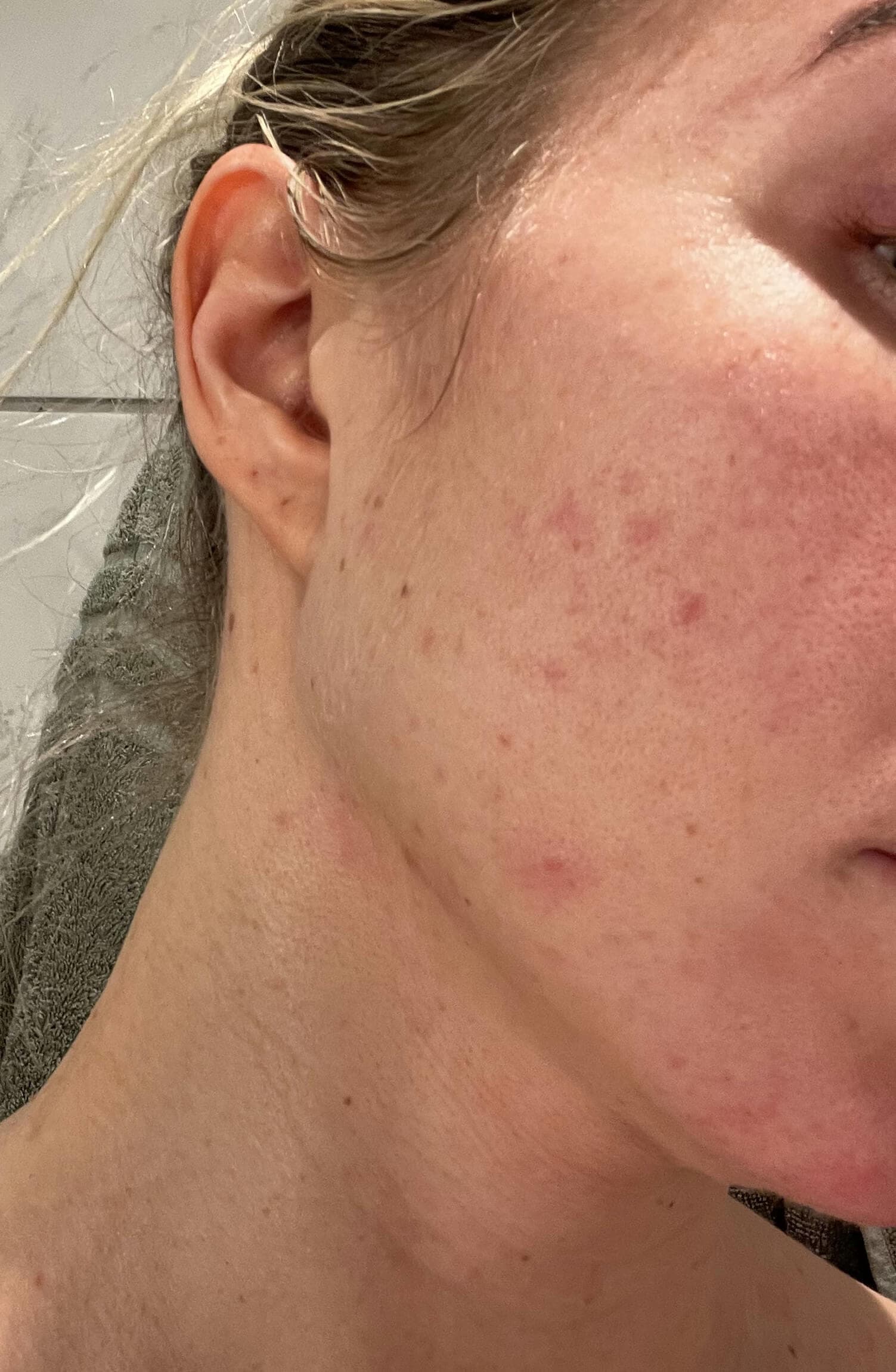
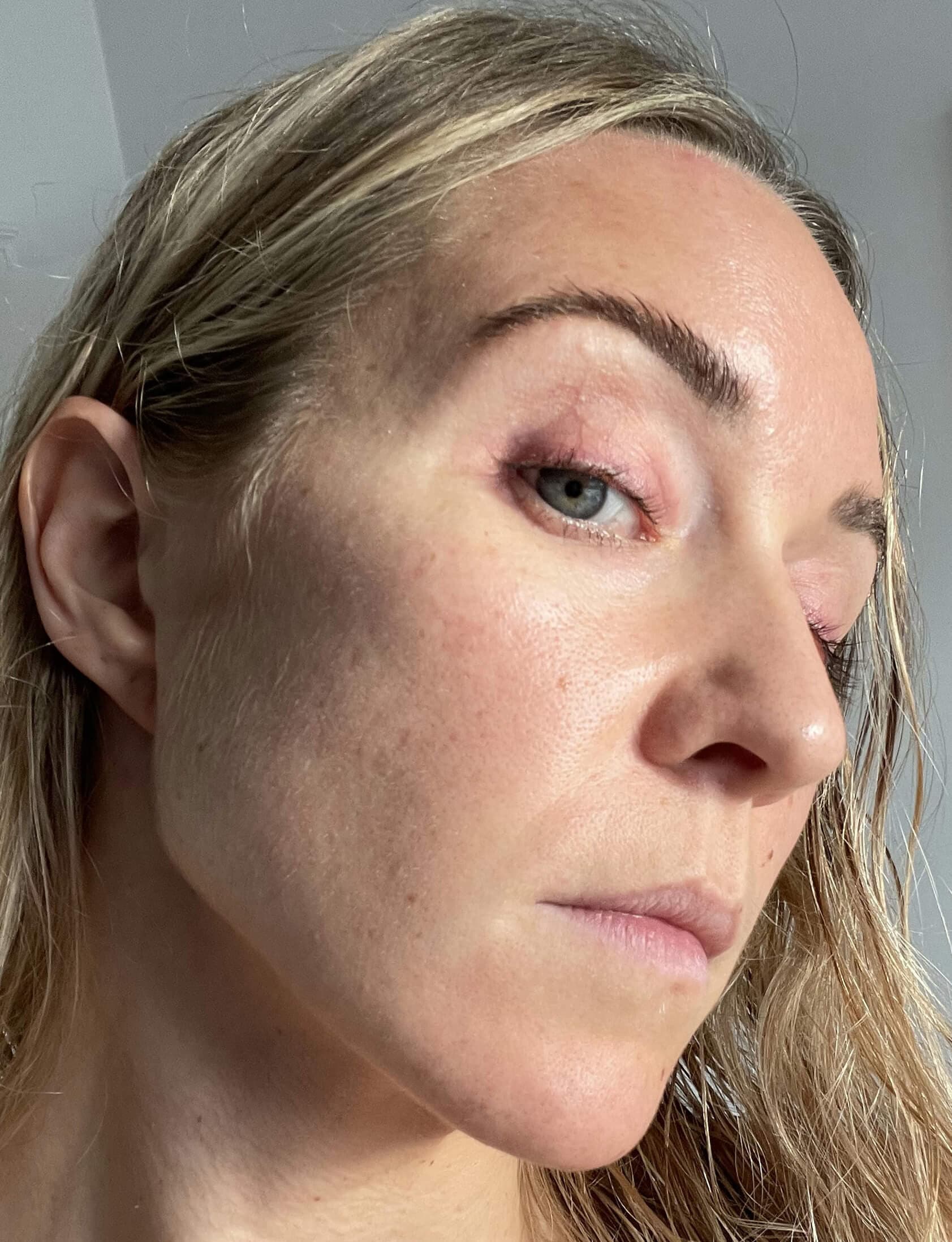
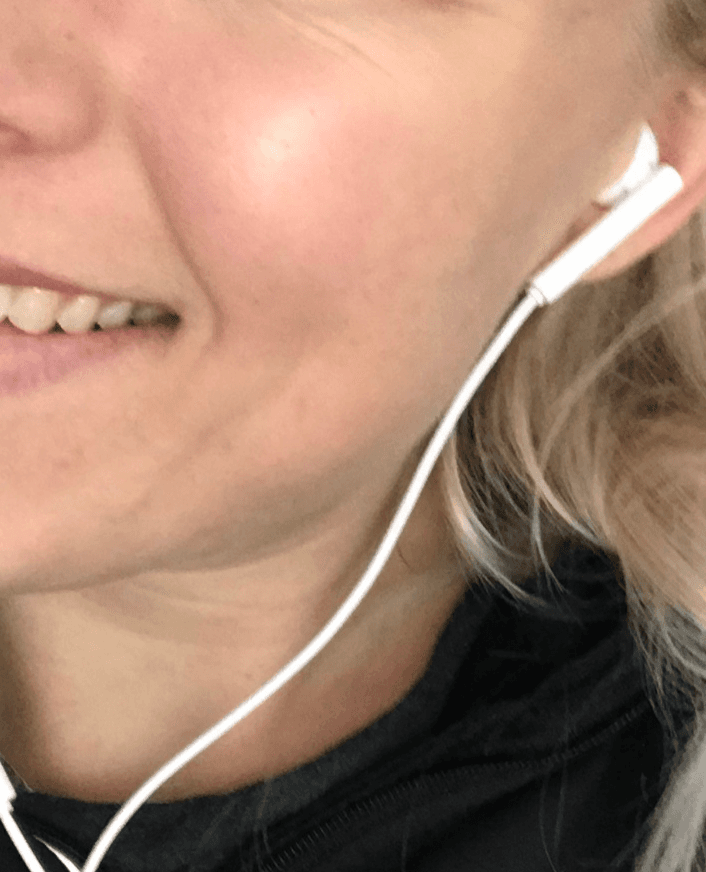
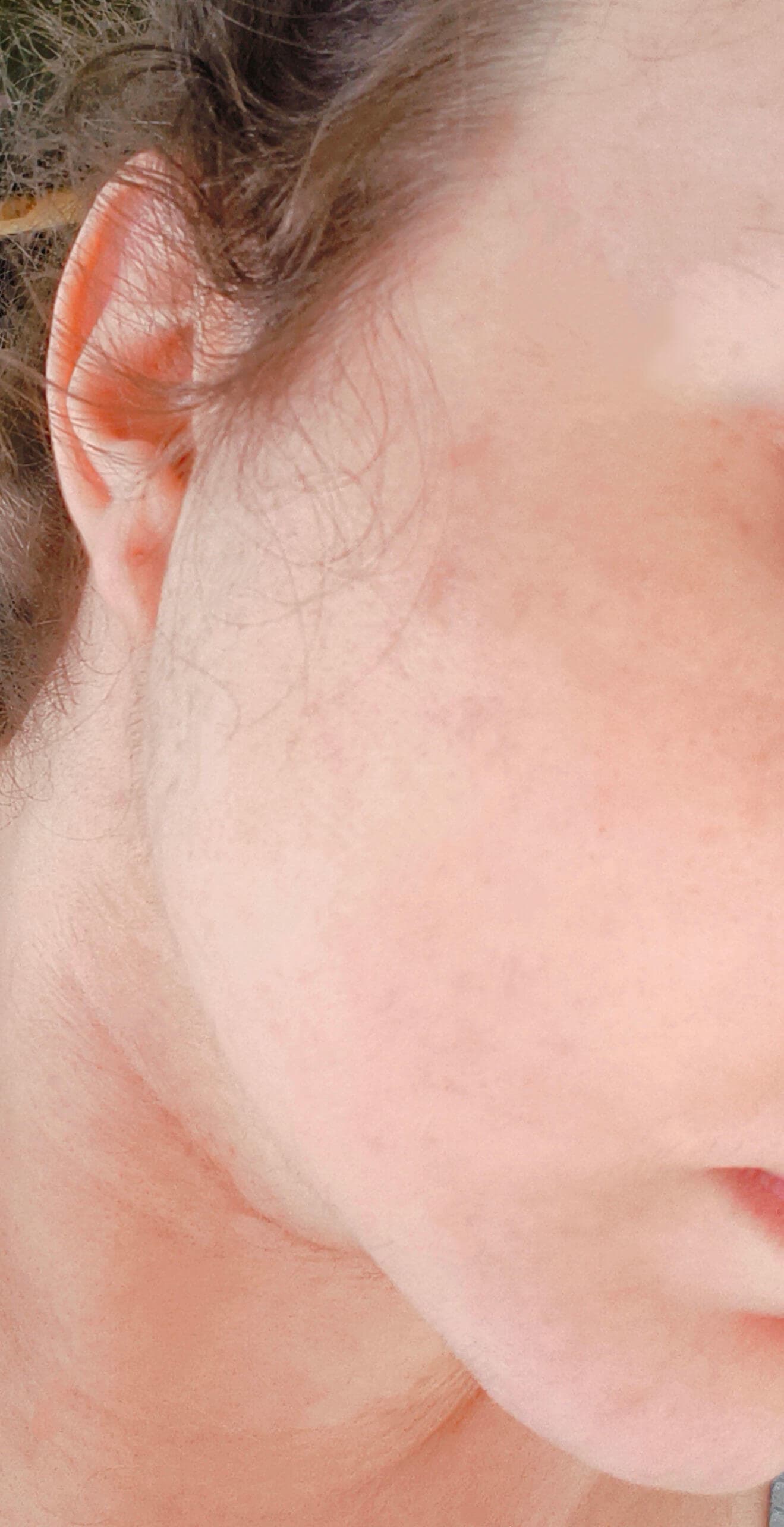
Real results from simple routines
A few real before-and-after cases from people using Danish Skin Care for skin concerns related to this guide. No filters, no miracle promise. Consistent skincare over time.
 Before
 After
After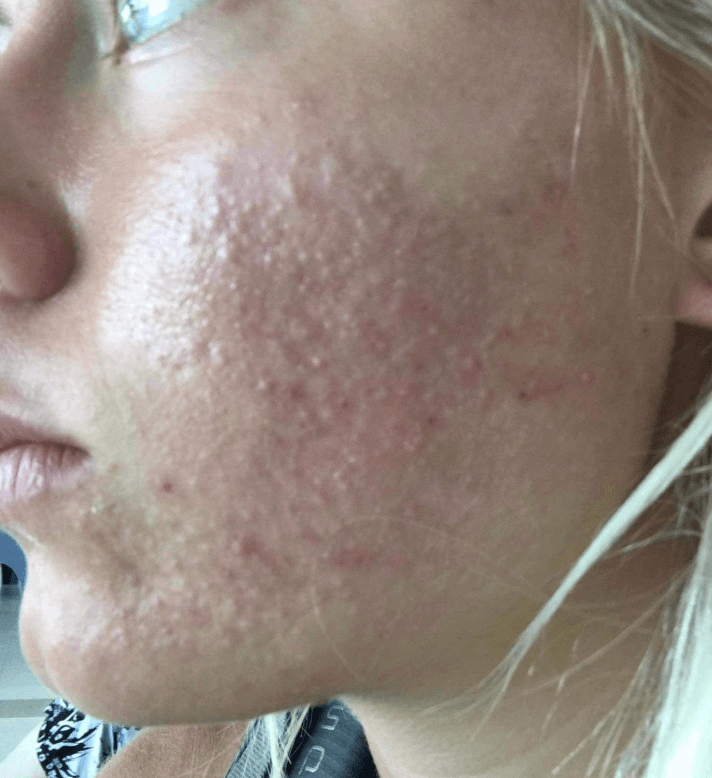 Before
 After
After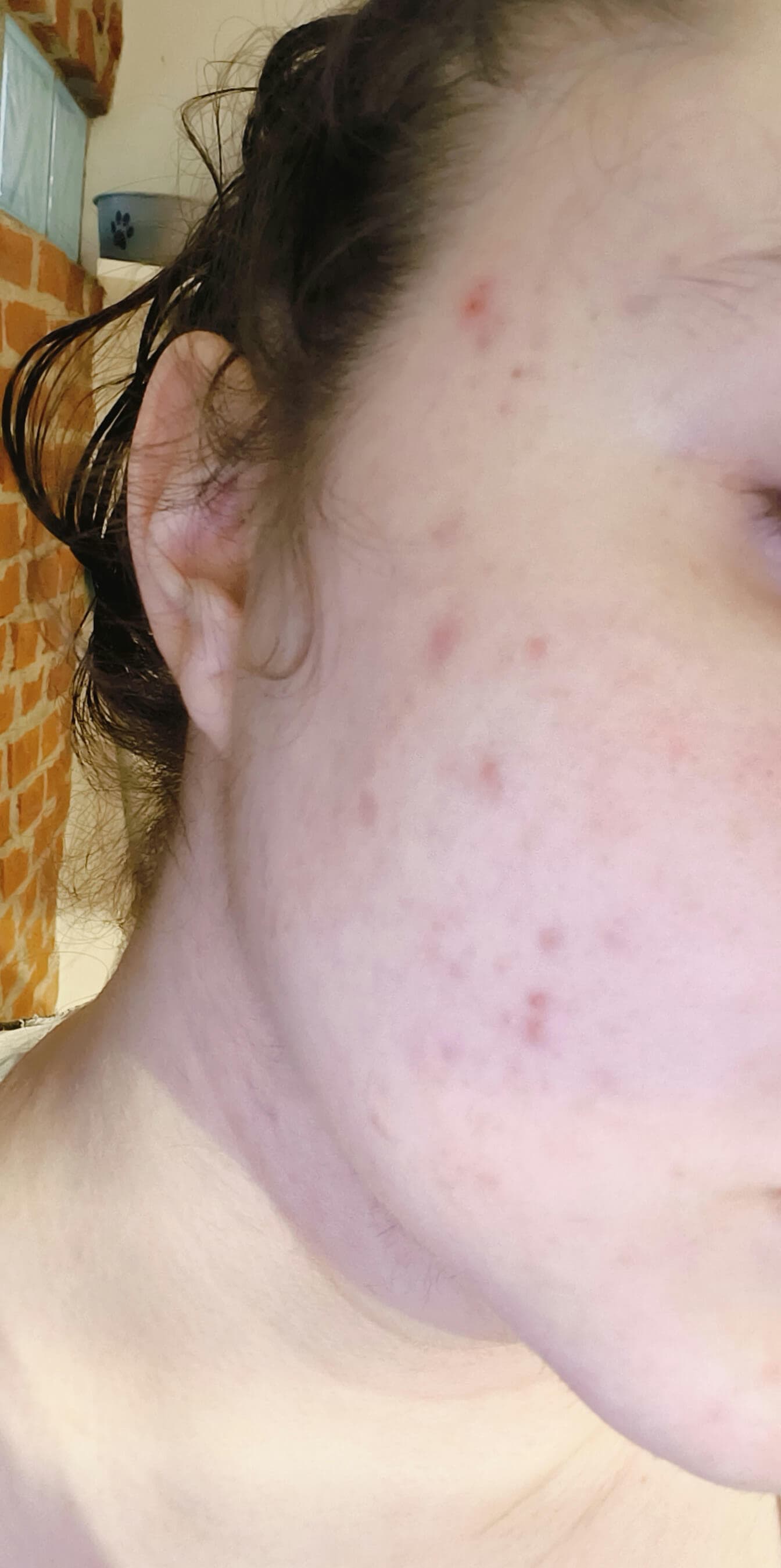 Before
 After
AfterKeep reading
- Ingredient · salicylic acid
- Ingredient · niacinamide
- Ingredient · zinc pca
- Ingredient · panthenol
- Ingredient · glycerin
- Condition · acne and blemishes
- Condition · oily skin
- Condition · acne scars and marks
- Condition · sensitive skin
- Read · how to get rid of chin acne
- Read · types of acne
- Read · how to get rid of pimples
- Read · best skincare routine for clogged pores
- Read · how to wash your face with acne
- Read · how to fade post acne marks
Citations
- Stoll S, Shalita AR, Webster GF, Kaplan R, Danesh S. The effect of the menstrual cycle on acne. J Am Acad Dermatol. 2001;45(6):957-960.PMID 11712049
- Geller L, Rosen J, Frankel A, Goldenberg G. Perimenstrual flare of adult acne. J Clin Aesthet Dermatol. 2014;7(8):30-34.PMID 25161758
- Williams HC, Dellavalle RP, Garner S. Acne vulgaris. Lancet. 2012;379(9813):361-372.PMID 21880356
- Zaenglein AL, et al. Guidelines of care for the management of acne vulgaris. J Am Acad Dermatol. 2016;74(5):945-973.e33.PMID 26897386