
Can stress cause acne?
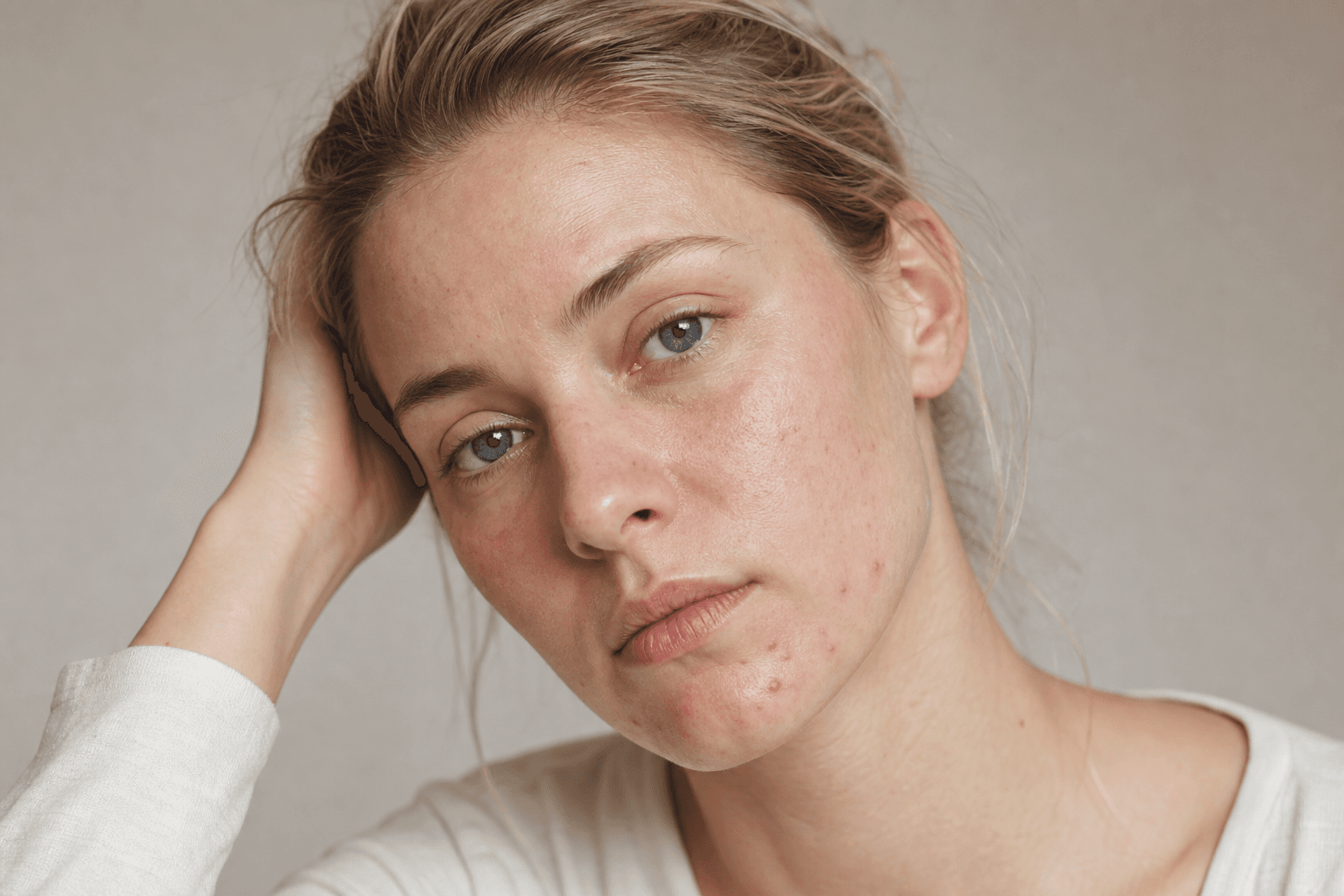
Stress can make acne worse for some people, but it usually works by nudging inflammation, habits, sleep, and picking - not by becoming the one villain behind every pimple.
On this page
When I had acne, stress did not politely ask where it should sit.
It arrived everywhere. In my sleep. In my patience. In the mirror math where one new pimple suddenly meant I had failed as a person. During busy weeks, I would also touch my face more, cleanse harder, skip the calm steps, and then blame the breakout on the most recent thing I ate.
Very scientific. Extremely relaxed.
After helping more than 100,000 people with problem skin, I see the same pattern often: stress may be part of acne, but it is rarely the only thing happening.
The short answer
Yes, stress can make acne worse for some people.
A study of 94 adolescents found that higher psychological stress was associated with more severe papulopustular acne, but the researchers did not find a significant increase in measured sebum during the high-stress period[1]. That matters because it keeps the explanation honest: stress is not always as simple as "more stress equals more oil."
Stress can also change the small daily behaviours that acne-prone skin notices. If late nights are part of your pattern, the guide to sleep and acne goes deeper into that specific overlap:
- less sleep
- more face touching
- more picking
- skipped cleansing or over-cleansing
- extra sugar, alcohol, or convenience food for some people
- stronger products because panic makes us brave
The skin does not care whether the trigger was emotional or practical. It only receives the stack.
What stress may do to acne-prone skin
Stress may nudge several parts of acne biology at once. It can affect inflammatory signalling, hormones, sleep, and how rough we become with our own face. One study among female medical students found a positive association between perceived stress and acne severity[2].
Acne still forms around the pilosebaceous unit - the hair follicle and oil gland - with clogged follicles, sebum, Cutibacterium acnes, and inflammation all involved. Acne guidelines describe that multi-factor biology clearly[3].
That does not mean stress is your fault.
It means your skin may be more reactive during weeks when your whole body is already carrying more load.
How stress acne usually looks in real life
Stress-related acne does not have one official shape. It often shows up as a pattern:
- breakouts during exams, deadlines, travel, grief, or busy work periods
- more inflamed pimples than usual
- picking that turns small bumps into longer-lasting marks
- flares that overlap with poor sleep or cycle changes
- skin that feels irritated because the routine became harsher
If your acne always appears in the week before your period, read the guide on pimples before your period. If it follows milk or high-glycemic eating, the milk and acne and sugar and acne guides are more useful.
What to do during a stressful breakout
Do the unglamorous thing first: stabilize the routine.
For the next two to four weeks:
- Use a gentle cleanser.
- Keep one acne treatment you already tolerate.
- Moisturise even if the skin is oily.
- Use SPF in the morning, especially if pimples leave marks.
- Do not add three new actives because the week is emotionally spicy.
If you already use salicylic acid, keep it at a frequency your skin tolerates. If your barrier is annoyed, reduce active nights before you intensify treatment.
Stress weeks are when simple routines earn their rent.
The habit that quietly makes stress acne worse
Picking.
I say that with no judgement. I know the mirror trance. You lean in to check one bump and somehow your hands start holding a tiny committee meeting on your chin.
But picking adds injury to inflammation. It can turn a short-lived pimple into a longer red or brown mark. If marks are already part of your pattern, read why pimples leave red marks next.
Try replacing picking with a boring interruption:
- step away from the mirror
- put on a hydrocolloid pimple patch if you use them
- keep nails short during flare weeks
- do skincare away from harsh overhead bathroom light
- press a cool cloth on itchy or hot areas instead of scratching
None of this fixes a stressful life. It does reduce the damage acne gets to do while life is stressful.
When stress is not the full answer
Do not let "stress" become a trash bin diagnosis.
See a dermatologist if acne is painful, cystic, scarring, sudden, or not improving with a steady routine. Stress may worsen acne, but medical acne still deserves medical help.
And if your skin is burning, peeling, or getting worse after every product, the problem may be irritation rather than stress. The sensitive acne-prone routine is a better next step there.
The practical takeaway
Stress can worsen acne. It does not mean your mind caused your skin problem, and it does not mean meditation is your acne treatment.
Keep the routine steady. Reduce irritation. Protect sleep when real life allows. Pick less, even imperfectly. Then judge the pattern over weeks, not one dramatic mirror moment.
Calm skin does not require a calm life. It requires fewer extra fights.
People also ask
Can stress really cause acne?
Stress can worsen acne in some acne-prone people, but it is usually one part of the stack: hormones, inflammation, sleep, picking, routine changes, and existing acne biology.
Does stress increase sebum?
One adolescent study found stress was linked with acne severity but not higher measured sebum, so the connection may involve more than oil alone.
How do I stop stress acne?
Keep your routine steady, avoid adding harsh products during stressful periods, reduce picking, protect sleep where possible, and get medical advice for painful or scarring acne.
Is stress acne always hormonal?
No. Stress and hormones overlap, but a flare can also involve inflammation, missed routine steps, sweating, sleep loss, or picking.
Keep reading
- Ingredient · salicylic acid
- Ingredient · niacinamide
- Ingredient · benzoyl peroxide
- Ingredient · panthenol
- Condition · acne and blemishes
- Condition · oily skin
- Condition · sensitive skin
- Read · milk and acne
- Read · sugar and acne
- Read · why do i get pimples before my period
- Read · how to get rid of pimples
- Read · best skincare routine for sensitive acne prone skin
Citations
- Yosipovitch G, et al. Study of psychological stress, sebum production and acne vulgaris in adolescents. Acta Derm Venereol. 2007;87(2):135-139.PMID 17340019
- Al-Hoqail IA. The association between stress and acne among female medical students in Jeddah, Saudi Arabia. Clin Cosmet Investig Dermatol. 2017;10:503-506.PMC5722010
- Zaenglein AL, et al. Guidelines of care for the management of acne vulgaris. J Am Acad Dermatol. 2016;74(5):945-973.e33.PMID 26897386