Dry skin
Dry skin is usually a barrier problem, not simply a water problem. Here's the difference between dry and dehydrated, why it matters, and the routine that actually helps.

On this page
What dry skin really is
Your skin's outermost layer (the stratum corneum) is structured like a brick wall: skin cells are the bricks, and the spaces between them are filled with a mortar of fatty acids, ceramides, and cholesterol. That mortar is the barrier. Its job is to keep water in and keep irritants out.
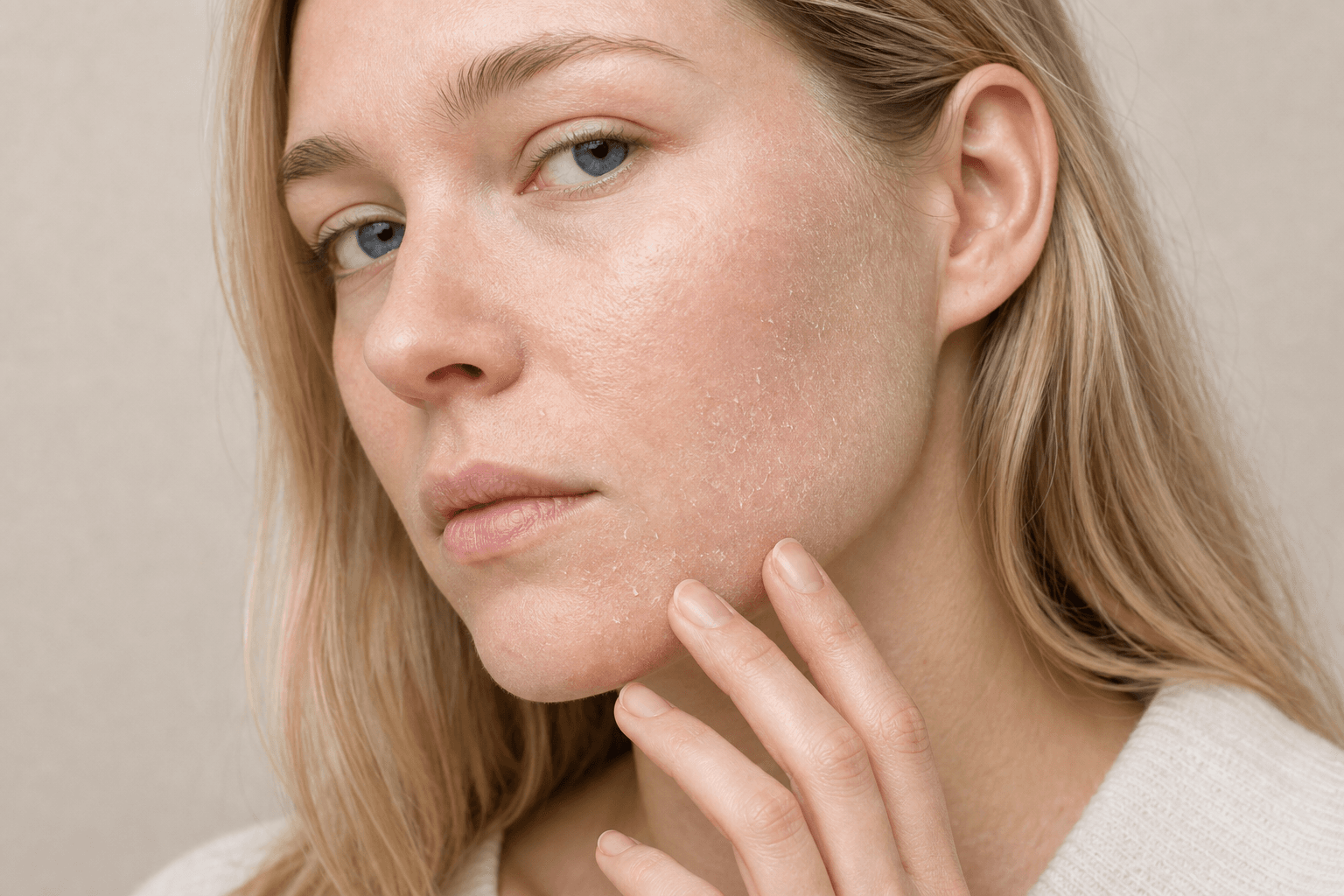
In dry skin, the mortar is thin, broken, or missing in places. Water evaporates faster than your skin can hold onto it; researchers call that transepidermal water loss. Irritants get further than they should. The visible result is flakiness, tightness, fine lines that look deeper than they are, and an itchy, reactive surface that responds badly to almost everything you put on it.
The published understanding here (Madison 2003, Danby 2022) lines up with what I see clinically: dry skin usually needs better barrier support, not a bigger water bottle.
What works
Three categories of ingredients matter, used together:
- Humectants: hyaluronic acid, glycerin, urea. They draw water into the upper skin.
- Emollients: squalane, fatty alcohols, plant oils. They sit between the skin cells and smooth the surface.
- Occlusives: petrolatum, dimethicone, ceramide-rich creams. They slow water from evaporating outward.
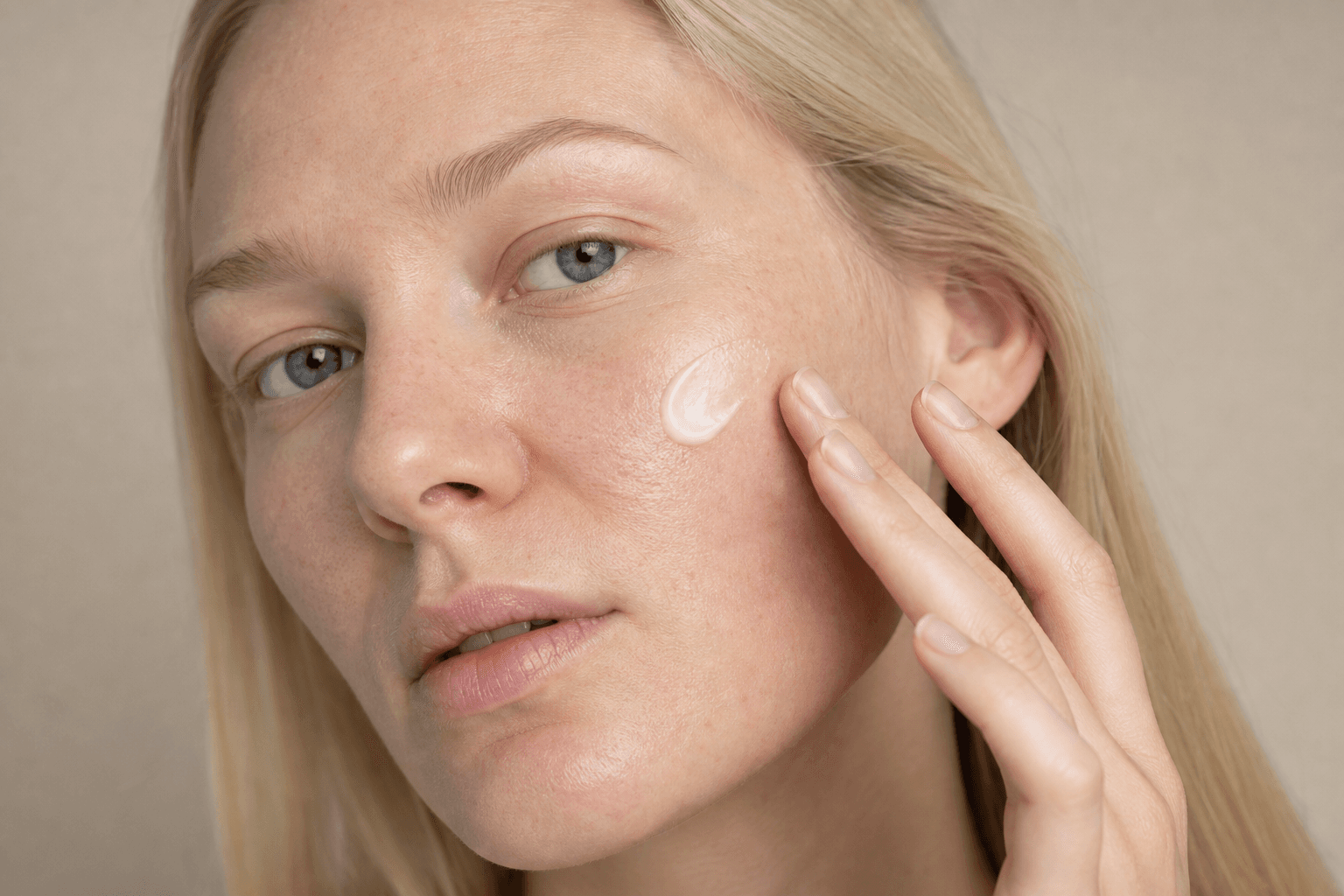
A barrier-rebuilding routine layers all three: humectant on damp skin, then a lipid-rich moisturiser, then (optionally, especially in winter) a thin occlusive layer to seal. If your dryness mainly arrives with cold air and indoor heating, the guide to winter-worse skin explains that seasonal pattern in more detail. If long-haul flights leave you tight and spotty, the guide to skin breaking out after flying separates dry-cabin irritation from acne triggers.
Danby's 2022 trial in adults with dry, eczema-prone skin found that a cream containing ceramides, triglycerides, and cholesterol improved measured hydration, transepidermal water loss, and signs of dryness over 4 weeks compared with a reference emollient. The practical lesson is simple: dry skin does better when the routine replaces barrier lipids instead of only adding water.
For care around specific activities, see the routines for skincare before and after swimming and dry hands from frequent washing. They cover the steps to take at the pool and at the sink.
Stop doing the things that broke it
Before you can rebuild a barrier, you have to stop ripping it down.
- Stop foaming sulfate cleansers. Switch to a cream or lotion cleanser.
- Stop hot showers on your face.
- Stop daily exfoliation. Once a week at most, while you're rebuilding.
- Stop layering retinol + AHA + vitamin C every night. Pick one, and add the others back later, slowly.
The simplest plan
Give a barrier-led routine 4–6 weeks. The guide to treating dry skin on your face turns this into a simple morning and evening routine. Most people see a meaningful change in the first 2 weeks (the tightness and flakiness ease first), and a structural change in skin feel by week 6.
If your skin is genuinely dry as a type (not a state), this becomes your baseline routine. Not a temporary fix.
A simple routine
Morning
- Gentle cleanser — A short cleanse with lukewarm water. Avoid scrubbing.
- Hydrating serum (hyaluronic acid + glycerin) on damp skin
- Rich moisturiser (squalane + sodium hyaluronate + urea) — Pick the "Normal to dry" variant of the Moisturizer; it carries squalane + sodium hyaluronate that the oily variant skips.
- SPF. Even more important when the barrier is compromised. — Day Protector "Normal to dry" includes squalane + sodium hyaluronate for the extra emollient layer.
Evening
- Gentle cleanse, once
- Hydrating serum on damp skin
- Rich moisturiser at night (retinol + squalane + urea) — The Moisturizer "Normal to dry" variant. Slow, low-frequency retinol for barrier-conscious renewal.
What to avoid
- Foaming sulfate cleansers and "squeaky clean" feel
- Hot showers on the face
- Daily exfoliation. Once a week is plenty when you're rebuilding.
- Stacking retinol, AHAs, and vitamin C in the same week while the barrier is healing
- Alcohol-heavy toners and "purifying" astringents
Real results
From the Danish Skin Care community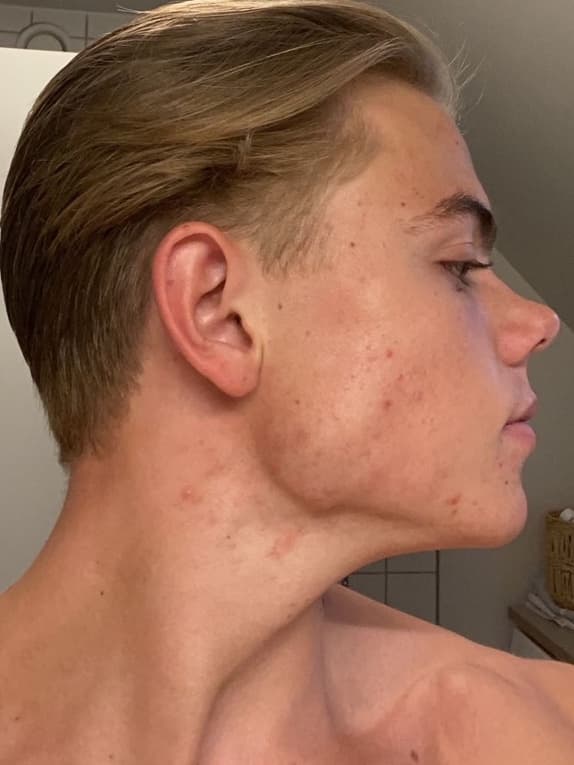 Before
 After
After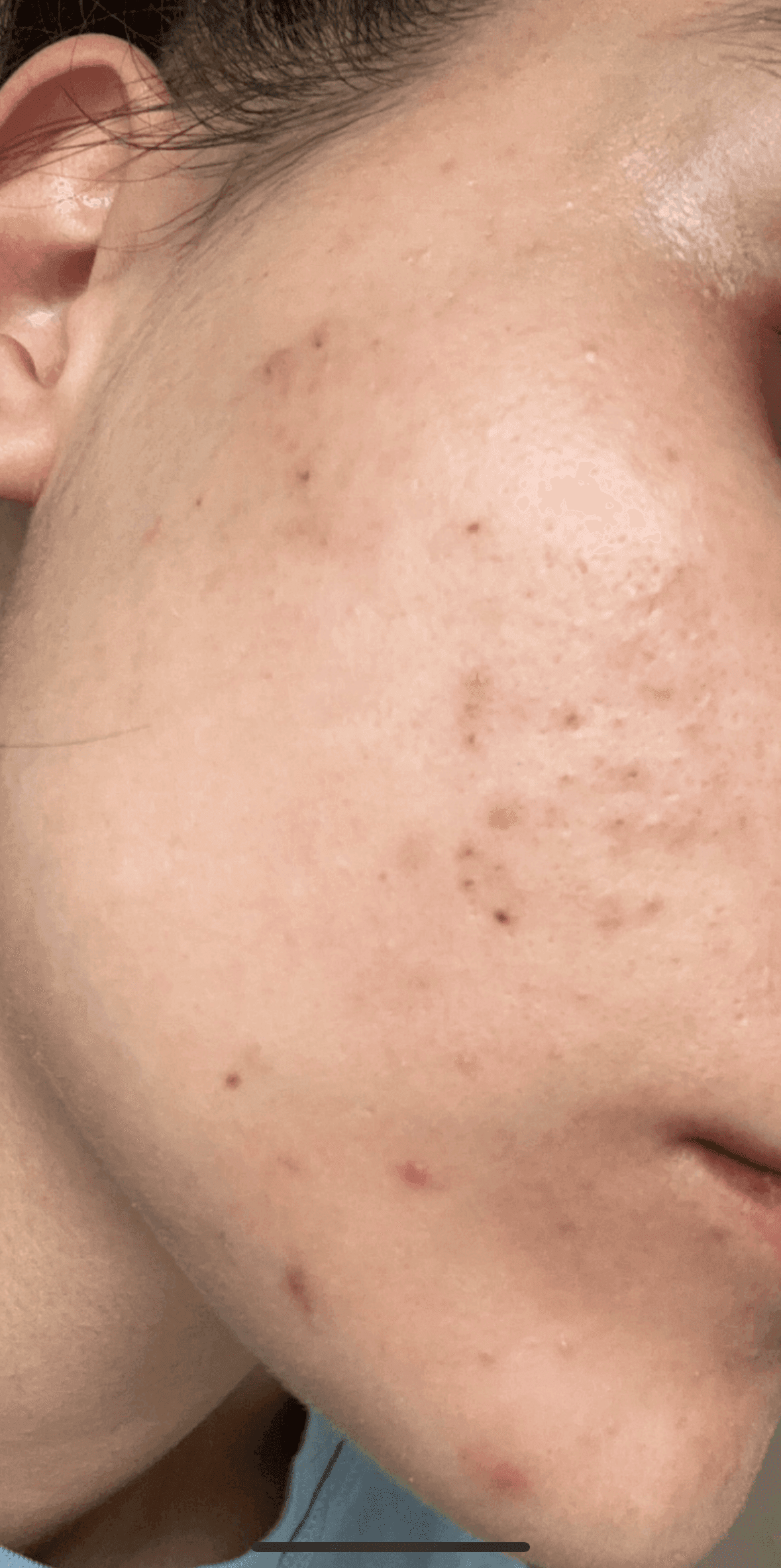 Before
 After
AfterRecommended Danish Skin Care routine

The complete routine. Pick the "Normal to dry" variants of Moisturizer and Day Protector for the squalane + sodium hyaluronate boost.

The workhorse for dry skin. Squalane + sodium hyaluronate + urea + retinol. The "Normal to dry" variant is the right pick.

SPF + squalane + sodium hyaluronate ("Normal to dry" variant). Barrier support with broad-spectrum protection.
Full transparency: Danish Skin Care is my own company — I formulated these products and earn from every sale. That's exactly why I only recommend them where they genuinely fit the condition described above.
Key ingredients to look for
Common questions
What's the difference between dry and dehydrated skin?
Dry is a skin *type*: chronically low sebum, lipids, and natural moisturising factors. Dehydrated is a skin *state*: temporarily low water content. You can have oily skin that's also dehydrated. Dry skin needs lipids (creams, oils, ceramides). Dehydrated skin needs humectants (hyaluronic acid, glycerin) sealed in by a moisturiser.
Will drinking more water fix dry skin?
Marginally, if you're chronically under-hydrated. But topical barrier care reaches the skin faster and more directly than any drinking strategy. Hydrate, sure, but don't expect water alone to fix a barrier problem.
Can I still use retinol if my skin is dry?
Yes, but cautiously. Rebuild the barrier first for 4–6 weeks. Then introduce retinol at the lowest concentration, twice weekly, buffered with moisturiser. If your skin can't tolerate it, bakuchiol or peptides are reasonable alternatives.
Citations
- Madison KC. Barrier function of the skin: 'la raison d'être' of the epidermis. J Invest Dermatol. 2003;121(2):231–41. — PMID 12880413
- Danby SG, et al. Enhancement of stratum corneum lipid structure improves skin barrier function and protects against irritation in adults with dry, eczema-prone skin. Br J Dermatol. 2022;186(5):875–886. — PMID 34921679
- Lynde CW, et al. Moisturizers and ceramide-containing moisturizers may offer concomitant therapy with benefits. J Clin Aesthet Dermatol. 2014;7(3):18–26. — PMID 24688622