Rosacea and redness
Rosacea is a chronic inflammatory condition, not a temporary flush. Here's what causes it, what calms it, and the routine that doesn't make the reactivity worse.
On this page
What rosacea is
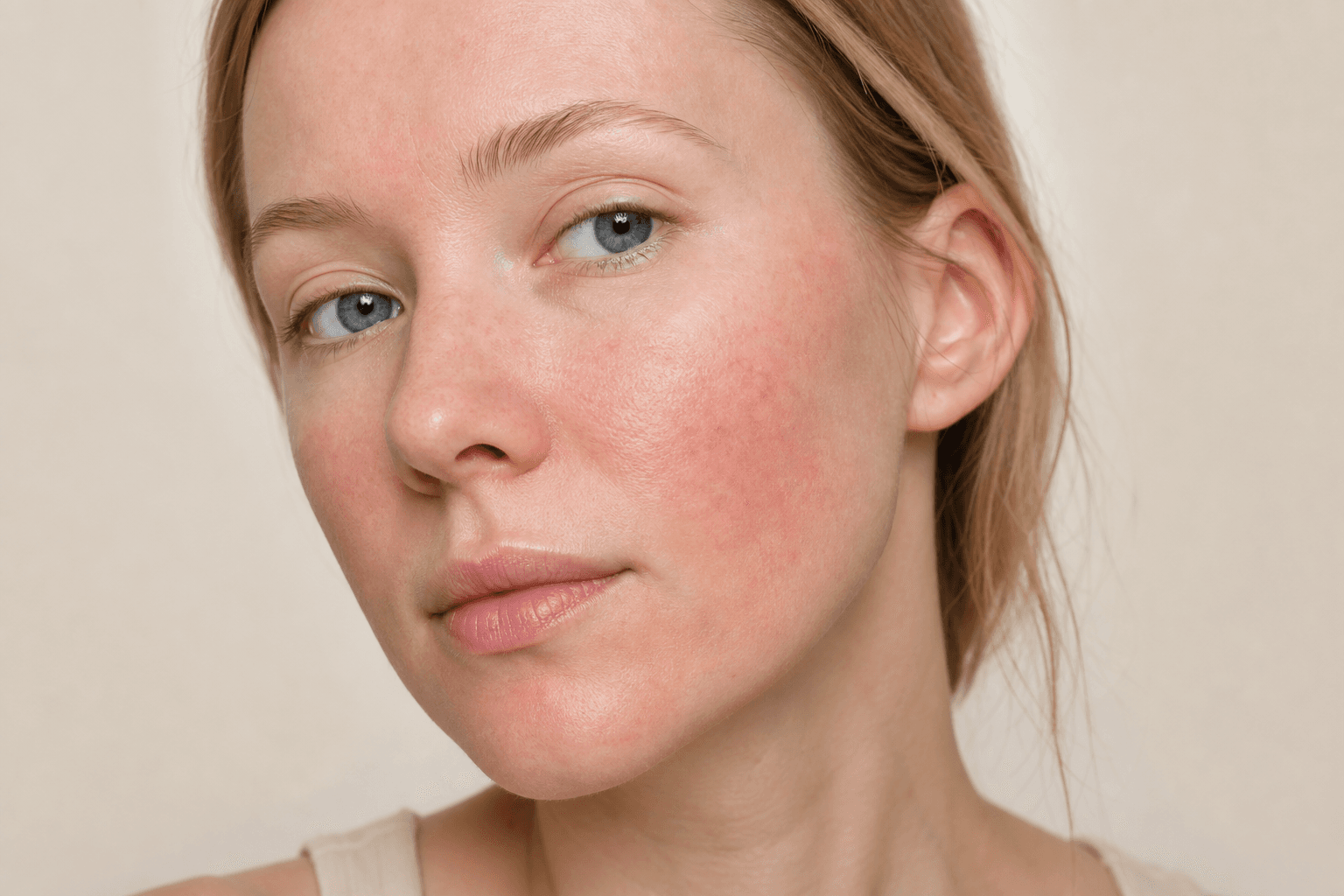
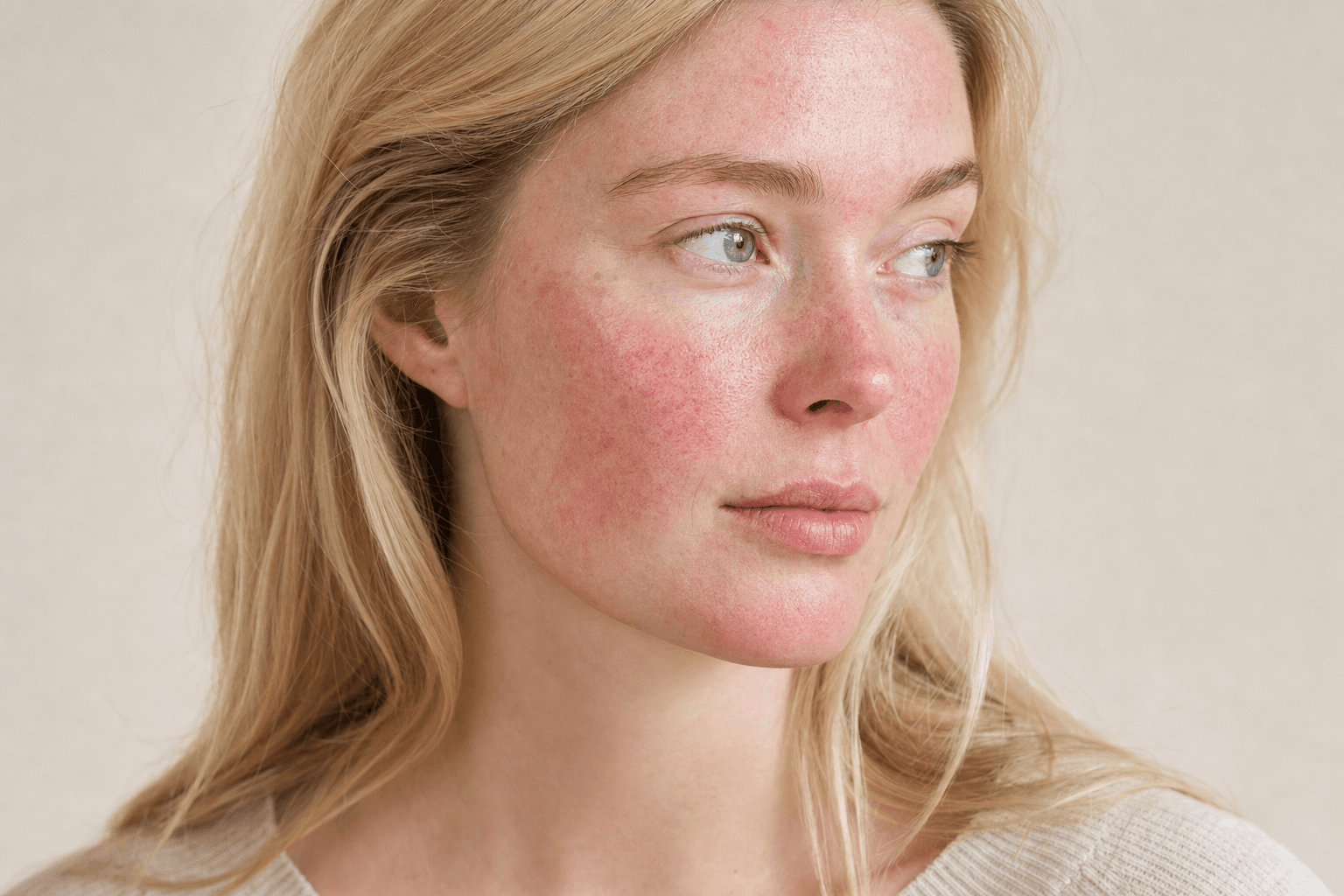
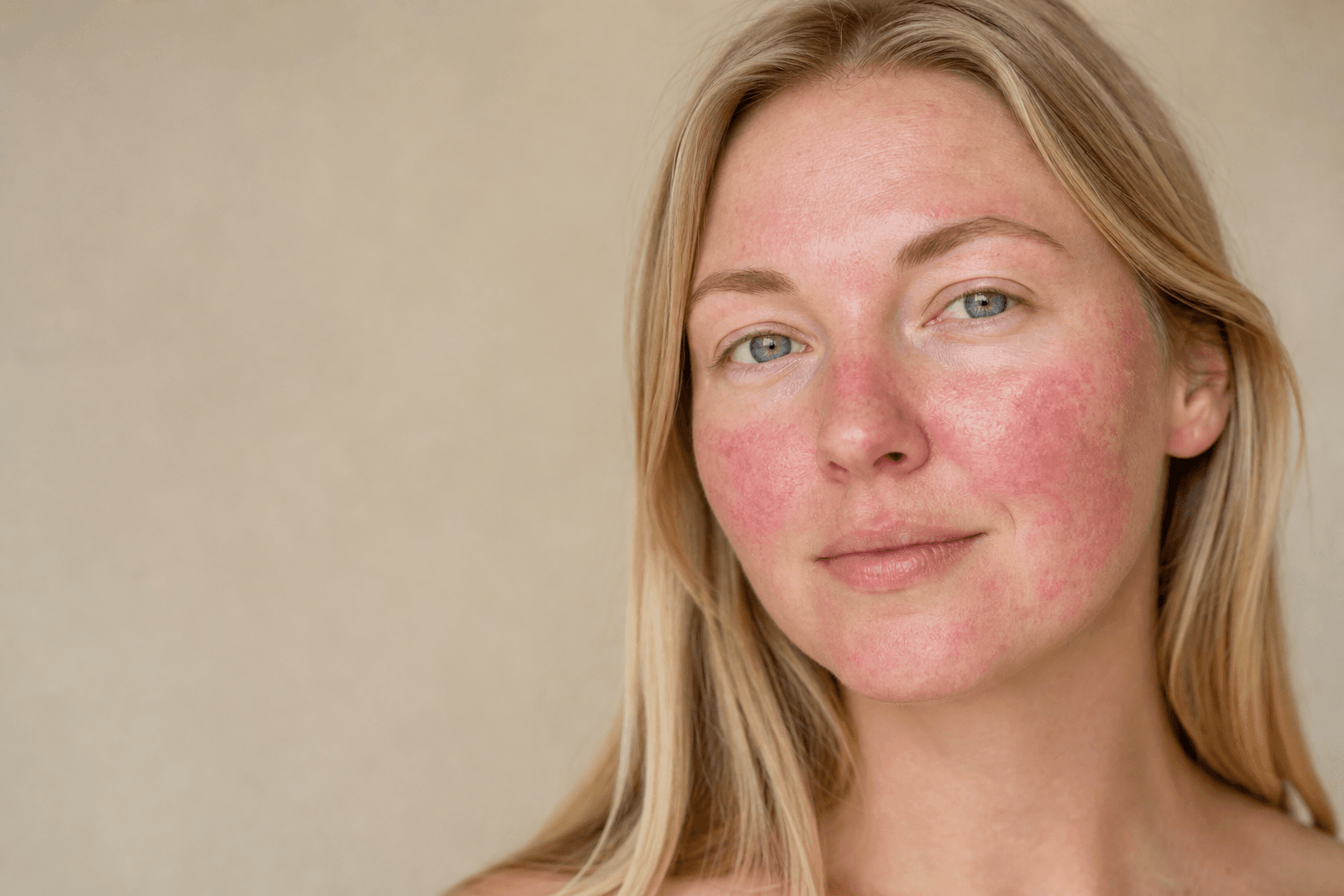
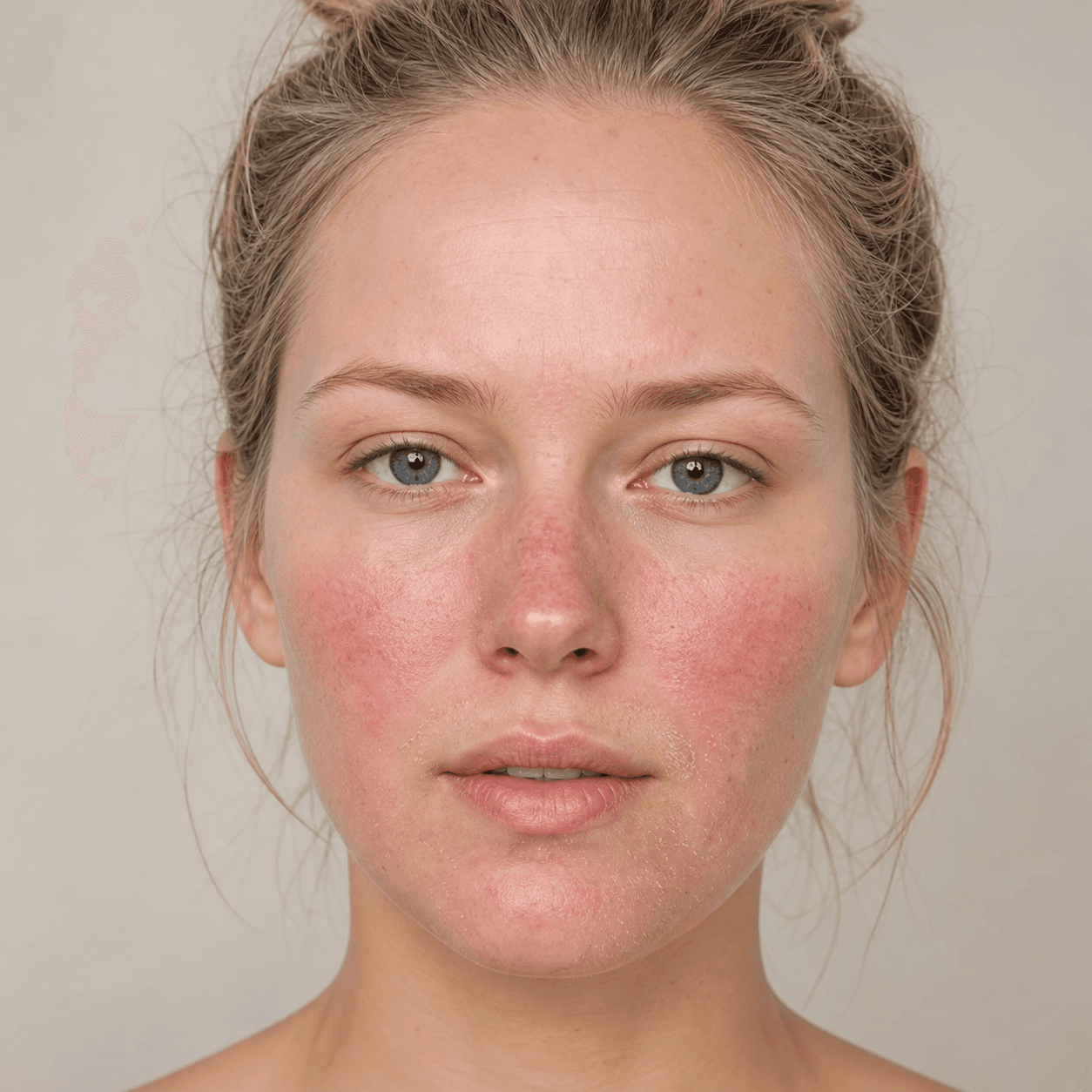
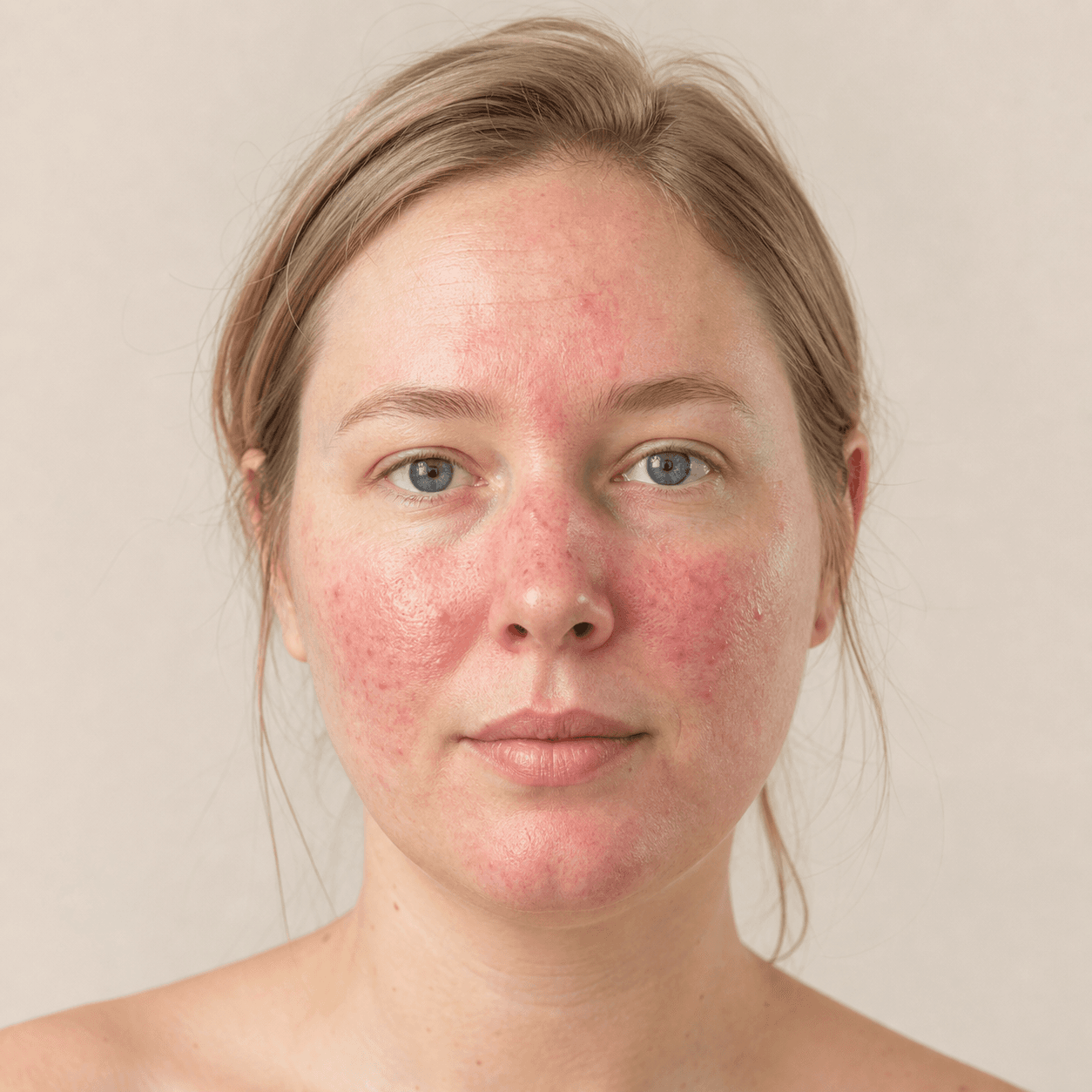
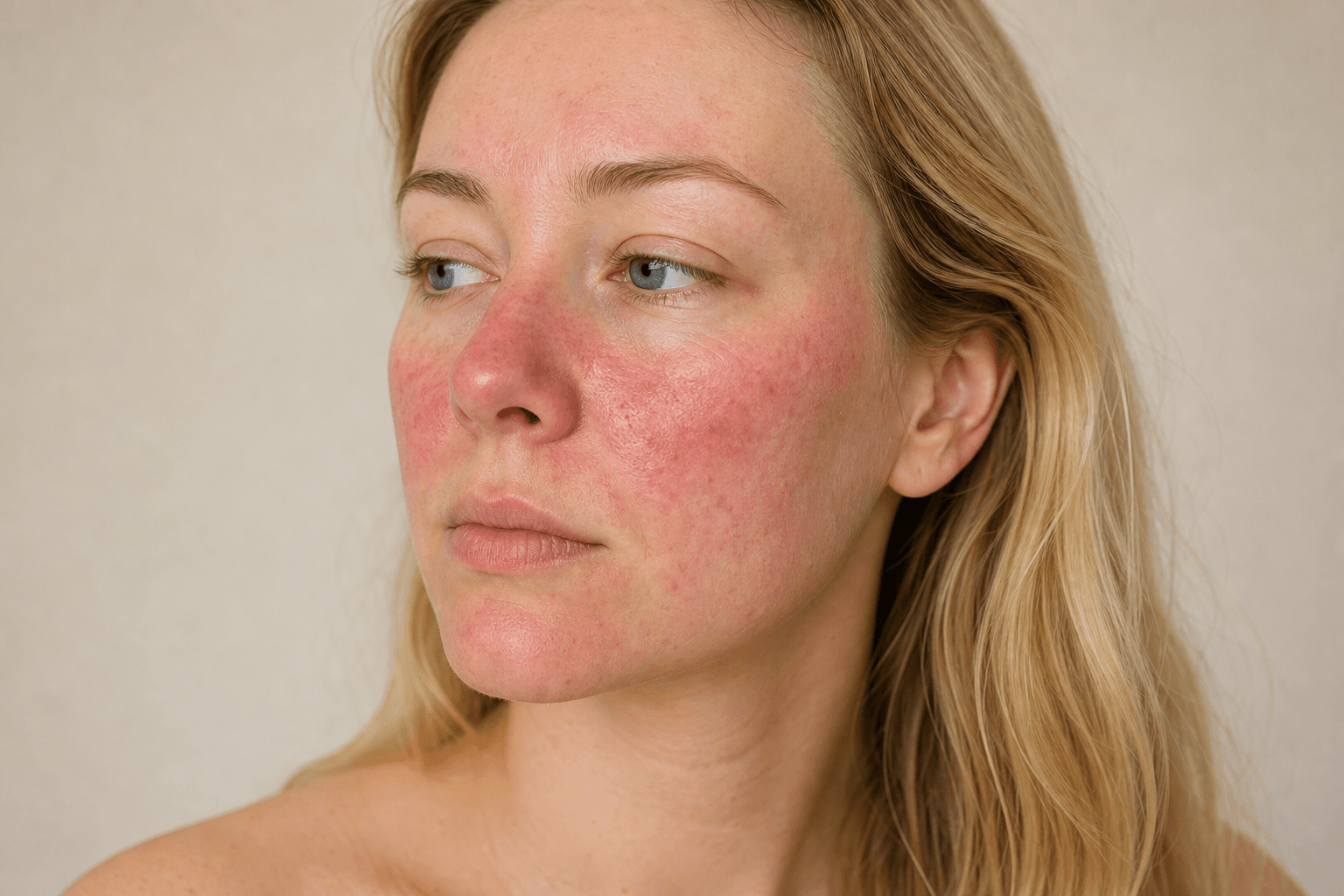
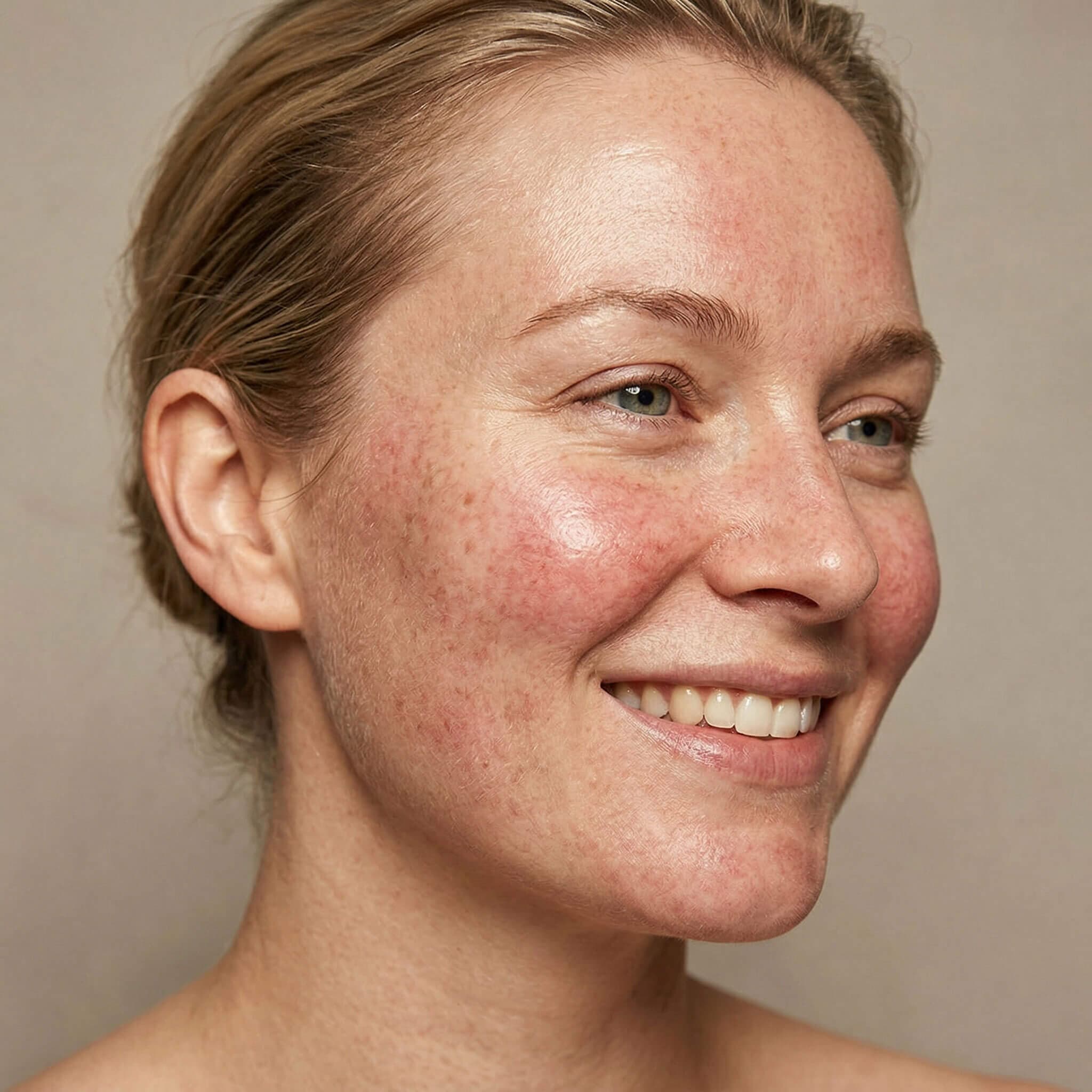
Rosacea is a chronic, relapsing inflammatory condition with two overlapping things going on in the same skin: blood vessels that dilate too easily and stay dilated too long, and an immune system that's tuned slightly too hot, overproducing inflammatory peptides like cathelicidin in response to triggers that wouldn't bother a non-rosacea face.
It's not adult acne (though both can coexist). It's not "sensitive skin" (though they share some features). And it's not something you can scrub or detox away. The underlying biology is inflammatory and vascular, with innate-immune pathways such as TLR2 and kallikrein activity involved in the reactivity. The van Zuuren 2017 review in NEJM is the clean clinical summary.
If you are still trying to understand whether the pattern fits, start with the practical rosacea symptoms guide before choosing treatments. If the bumps sit around the mouth or nose and you are wondering about a lookalike condition, use the rosacea vs perioral dermatitis guide. If you already know the pattern and need a simple order of steps, use the rosacea skincare routine as the calm AM/PM baseline.
Bright redness is not the only useful clue. The guide to rosacea in darker skin covers warmth, brown or violet colour change, bumps, and the diagnostic gap. If the skin suddenly became rough and every product stings, compare the pattern with a damaged skin barrier and rosacea.
When colour is concentrated beside the nostrils, use the guide to redness around the nose to compare rosacea with seborrheic dermatitis, perioral dermatitis, acne, and irritation. The focused guide to rosacea on the nose separates flushing, fixed vessels, inflammatory bumps, and progressive tissue change. During midlife, rosacea and menopause helps separate a short hot flash from rosacea signs that stay between heat episodes.
Persistent background colour is called erythema, while flushing is the temporary wave that rises and fades. For everyday care, the focused guides explain how to choose a cleanser for rosacea, interrupt the loop between rosacea and stress, and adjust a rosacea winter routine for cold wind, indoor heat, and rapid temperature changes.
If product tolerance is the daily difficulty, the guides to makeup with rosacea, retinol and rosacea, and what to avoid without building a fear list turn that uncertainty into practical decisions. The dictionary explains cosmetic camouflage, while the ingredient guide shows how Chromium Oxide Greens can visually correct redness without pretending a green pigment treats rosacea.
What works
The strongest rosacea-specific active here is azelaic acid. A 2023 systematic review found azelaic acid improved erythema severity, inflammatory lesion counts, and treatment success compared with vehicle after 12 weeks. Niacinamide belongs in a different bucket: it is not a rosacea prescription treatment, but a niacinamide-containing moisturiser study found barrier and hydration benefits in people with rosacea. For a calmer breakdown of what to use first, read the guide to the best ingredients for rosacea, then the focused guides to azelaic acid for rosacea and niacinamide for rosacea.
Both are in our Optimizer. That's the product I'd reach for first on a rosacea face.
When papules and pustules are the main problem, the Demodex and rosacea guide explains why mites may be one part of the inflammatory picture without making hygiene the villain. The matching ivermectin guide explains the prescription evidence and why treatment belongs with a qualified clinician.
The topical metronidazole guide covers another established prescription option for inflammatory papules and pustules. If the nose is becoming firmer, bumpier, or changing shape, read the short definition of rhinophyma and arrange a dermatologist assessment rather than escalating skincare.
The third foundation is sun protection. UV is one of the most common rosacea triggers you can control. A mineral or broad-spectrum SPF every morning is a high-leverage habit in this routine. If sunscreen tends to sting or feel too heavy, read the guide to choosing sunscreen for rosacea. If moisturiser is the step that keeps stinging or feeling too heavy, use the rosacea moisturiser guide. If you're still piecing the trigger pattern together, the dedicated guide to rosacea triggers helps you do that without turning life into one big elimination diet, and the guide to alcohol and rosacea covers wine, spirits, and flushing in more detail.
Two easily missed patterns deserve their own notes: sleep and rosacea can form a two-way loop, while weather changes often matter most when the face moves quickly between heat, cold, wind, and dry indoor air.
For the everyday overlap between food and heat, use the focused guides to spicy food and rosacea, rosacea diet myths, and hot showers with rosacea. The ingredient guide explains how capsaicin activates a heat-sensing channel, while the dictionary gives a short explanation of neurogenic inflammation without turning a mechanism into a self-diagnosis.
For everyday tolerance questions, the new guides explain makeup for rosacea, how to judge retinol with rosacea, and what to avoid without building a fear-based blacklist. The supporting references define cosmetic camouflage and place prescription tretinoin in its proper medical context.
For prescription treatment of persistent redness, the brimonidine guide explains the benefits and cautions of this vasoconstrictor.
What to avoid
Rosacea skin is reactive. Almost every well-intentioned over-treatment makes it worse.
- Acids, scrubs, and brushes, even gentle ones, often flare rosacea. Hold them.
- Alcohol-based toners and "purifying" astringents are out.
- Pure essential oils on the face (peppermint, eucalyptus, citrus) are common triggers.
- Hot water. Lukewarm only on the face. Saunas, very hot showers, and saunas-then-cold-plunge cycles often flare. If shower redness is a daily pattern, read why your face gets red after showering.
When to see a dermatologist
Rosacea responds well to topicals for many people, but some subtypes (especially papulopustular and phymatous) need prescription support: topical ivermectin, oral doxycycline at sub-antimicrobial doses, sometimes laser for persistent telangiectasia. If your rosacea is causing visible pustules, papules, skin thickening, or recurring eye irritation, see a dermatologist. The guide to ocular rosacea symptoms explains dry, gritty, swollen, light-sensitive, and blurry-eye warning signs that may also need ophthalmologist care. The routine on this page is a baseline that pairs well with most prescription regimens.
A simple routine
Morning
- Lukewarm rinse, minimal cleansing on a flared face
- Azelaic acid + niacinamide treatment — Azelaic acid has rosacea-specific evidence; niacinamide supports barrier comfort on reactive skin.
- Light moisturiser, fragrance-free
- Mineral or broad-spectrum SPF every morning (non-negotiable)
Evening
- Same gentle cleanse
- Azelaic acid serum (alternating nights at the start)
- Bland, calming moisturiser
What to avoid
- Alcohol-based toners and "purifying" astringents
- Mechanical scrubs and stiff brushes
- Pure essential oils (peppermint, eucalyptus, citrus) on the face
- Stacking strong retinoids and acids before the barrier has stabilised
- Hot showers on the face (lukewarm only)
Recommended Danish Skin Care routine

The full routine. Pick the "Normal to dry" variants of Moisturizer and Day Protector if your skin runs reactive and dry.

Azelaic acid + niacinamide, a practical pairing for redness-prone skin. The first product Mads reaches for here.

SPF + niacinamide + zinc PCA, calming UV defence. UV is the most common rosacea trigger you can directly influence.
Full transparency: Danish Skin Care is my own company — I formulated these products and earn from every sale. That's exactly why I only recommend them where they genuinely fit the condition described above.
Key ingredients to look for
Common questions
Is rosacea the same as acne?
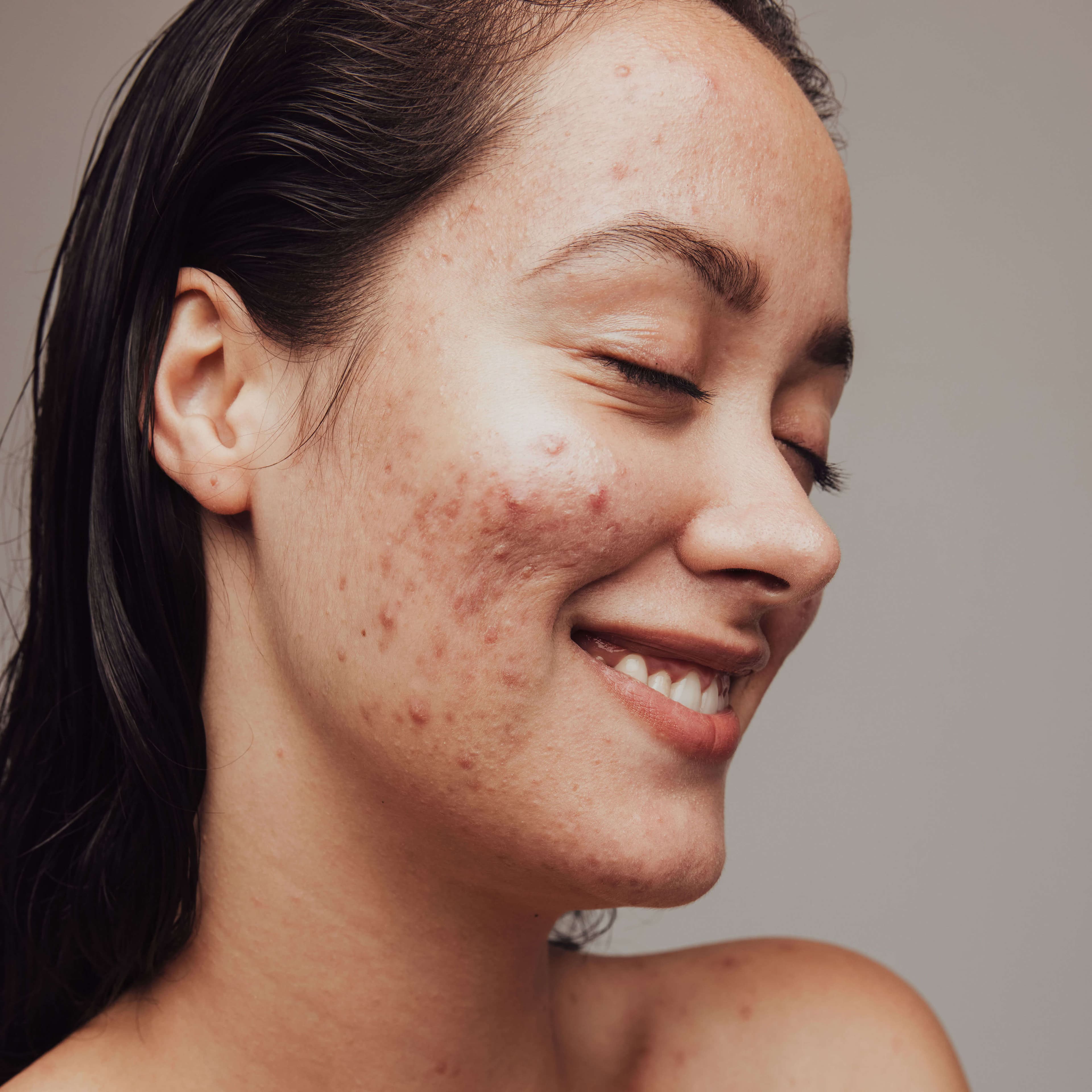
No. Acne is driven by sebum, hyperkeratinisation, and C. acnes inside the follicle. Rosacea is a chronic inflammatory and vascular condition. They can co-exist, but they need different treatment. Using acne-strength salicylic acid or benzoyl peroxide on rosacea often makes it worse.
Can I use retinol if I have rosacea?
Some rosacea patients tolerate low-frequency retinol well; others flare. Start by stabilising the barrier with azelaic acid + niacinamide for 8–12 weeks. Then, if you want to add retinol, twice a week buffered with moisturiser, and stop immediately if you flush.
Will my rosacea ever go away?
Rosacea is chronic. You can put it into long, quiet remission with the right routine and trigger management, but the underlying vascular and immune predisposition stays. The goal is control, not cure.
Citations
- van Zuuren EJ. Rosacea. N Engl J Med. 2017;377(18):1754–1764. — PMID 29091565
- Yamasaki K, et al. TLR2 expression is increased in rosacea and stimulates enhanced serine protease production by keratinocytes. J Invest Dermatol. 2011;131(3):688–697. — PMID 21107351
- King S, et al. A systematic review to evaluate the efficacy of azelaic acid in the management of acne, rosacea, melasma and skin aging. J Cosmet Dermatol. 2023;22(10):2650–2662. — PMID 37550898
- Draelos ZD, Ertel K, Berge C. Niacinamide-containing facial moisturizer improves skin barrier and benefits subjects with rosacea. Cutis. 2005;76(2):135–141. — PMID 16209160