
Ocular rosacea symptoms: eye signs you should not ignore
Ocular rosacea can feel like dry, gritty, burning, red, watery, or light-sensitive eyes. Here is how to spot the pattern and when to get clinician care.
On this page
The first time someone tells me, "My rosacea is in my eyes," I always slow the conversation down.
Not because it is dramatic.
Because eyes deserve a different level of respect than cheeks.
I have not had ocular rosacea myself, and I will not pretend otherwise. My own skin story was acne, oily skin, dehydration, clogged pores, and irritation. But with rosacea-prone skin, one pattern keeps coming back:
People often treat eye symptoms like a side note.
They are not a side note.
Dry, gritty, burning, red, watery, swollen, or light-sensitive eyes can be part of rosacea. They can also be something else entirely. Either way, they are not something to solve by buying another serum and hoping the eyeball appreciates your ambition.
The short answer
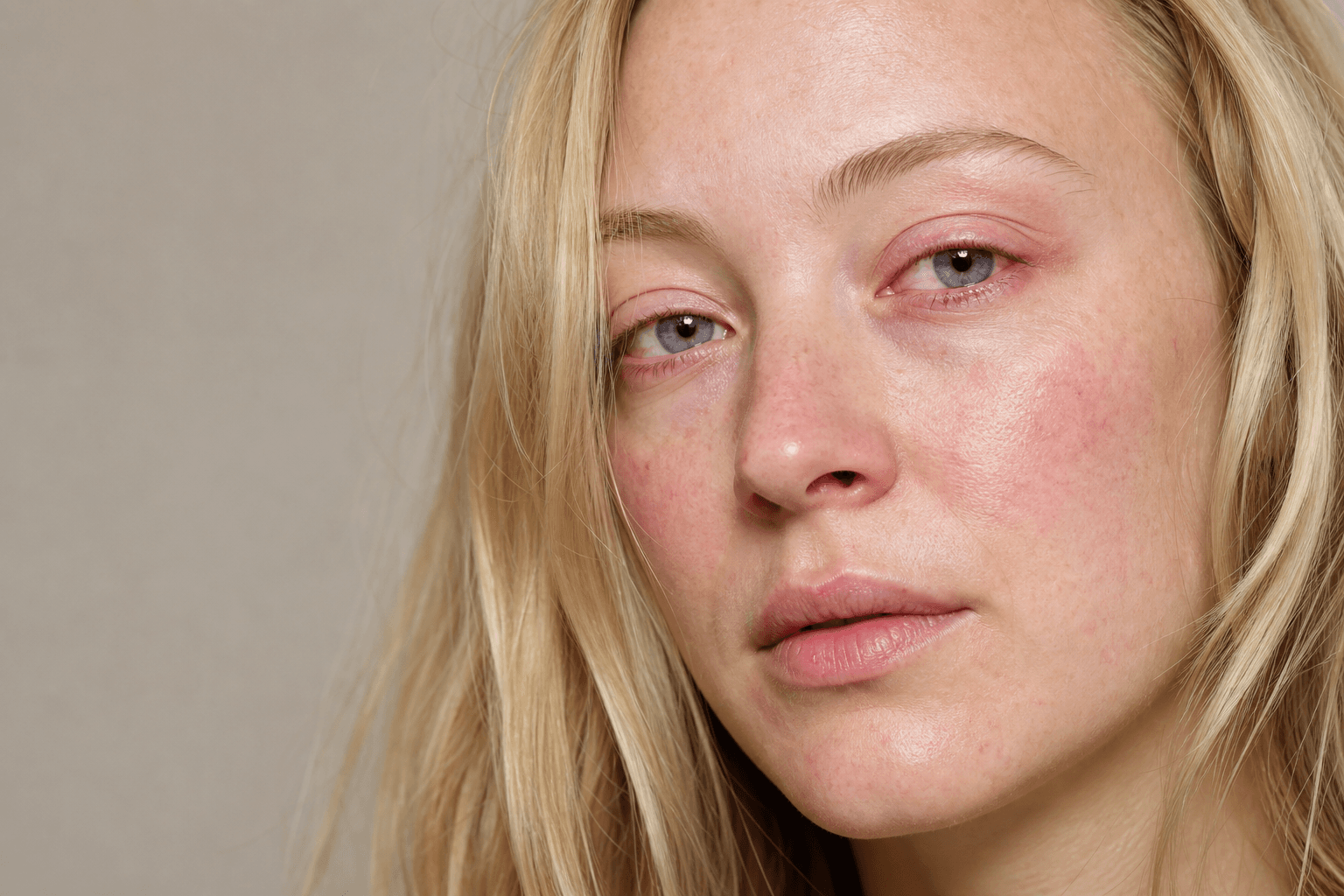
Ocular rosacea symptoms can include:
- Dry eyes.
- Gritty or sandy feeling, like something is in the eye.
- Burning, stinging, itching, or soreness.
- Watery or bloodshot eyes.
- Red or swollen eyelids.
- Crusting around the lashes.
- Repeated styes or chalazia.
- Light sensitivity.
- Blurry vision.
- Redness around the eyes or eyelid margins.
- Eye symptoms that come with facial flushing, redness, bumps, or burning.
A 2025 updated review of ocular rosacea lists watery or bloodshot eyes, foreign-body sensation, burning or stinging, dryness, itching, light sensitivity, blurred vision, eyelid margin changes, styes, chalazia, blepharitis, and conjunctivitis as possible signs and symptoms[1].
That is a long list.
The practical message is simpler: if your eyes keep feeling irritated and you also have rosacea signs on the face, do not treat it as ordinary dryness forever.
What ocular rosacea actually means
Ocular rosacea means rosacea-related inflammation is affecting the eyes, eyelids, or the surface around the eyes.
It often overlaps with:
- Eyelid inflammation.
- Meibomian gland dysfunction, where the oil glands along the eyelid do not support the tear film well.
- Dry-eye symptoms.
- Redness around the eyelid margins.
- Repeated styes or blocked glands.
- Irritation of the eye surface.
A 2021 clinical review describes ocular rosacea as a chronic inflammatory condition where common features include eyelid margin inflammation, meibomian gland dysfunction, and chronic blepharoconjunctivitis[2].
In plain language: the problem is not always the eyeball being "dry" in a simple way.
Sometimes the eyelid edge, tear film, oil glands, and surrounding inflammation are all involved. This is why random eye drops may help comfort but still not answer the bigger pattern.
Symptom 1: dry, gritty, sandy eyes
The classic description is:
"It feels like there is sand in my eyes."
That gritty feeling can happen when the eye surface is irritated or the tear film is unstable. Some people also describe:
- A foreign-body sensation.
- Dryness that returns quickly after drops.
- Tired eyes that feel scratchy by afternoon.
- More discomfort in wind, cold, heat, screen-heavy days, or bright light.
The American Academy of Dermatology includes dry, gritty-feeling eyes among rosacea signs and symptoms[3]. So if your face flushes or burns and your eyes keep feeling sandy, the pattern is worth taking seriously.
Do not panic.
Do not diagnose yourself from one dry day either.
But do notice repetition.
Symptom 2: burning, stinging, red, or watery eyes
Ocular rosacea can feel confusing because the eyes may feel dry and watery at the same time.
That sounds like bad design, but skin and eyes are not always tidy systems. When the eye surface feels irritated, watering can be a reflex response. It does not necessarily mean the eye is comfortably hydrated.
Possible clues:
- Red or bloodshot eyes.
- Burning or stinging.
- Itching.
- Watering that keeps returning.
- Soreness around the eyelids.
- Eye redness that appears during facial flushing.
NIAMS lists eye irritation and redness among rosacea symptoms and notes that eye symptoms should be discussed with a health care provider because untreated eye involvement can cause damage and vision problems[4].
That sentence is the important part.
This is where skincare content should stay humble.
Symptom 3: swollen eyelids, crusting, styes, and lash-line irritation
Ocular rosacea is not always only about how the eye feels.
Sometimes the clue is the eyelid:
- Swollen or puffy eyelids.
- Red eyelid margins.
- Crusting around the lashes.
- Recurrent styes.
- Chalazia, which are blocked oil-gland bumps in the eyelid.
- A sore, irritated lash line.
The 2025 ocular rosacea review[1] specifically includes eyelid margin changes, chalazia, styes, blepharitis, and conjunctivitis among common indicators.
If you keep getting "random" styes and your cheeks also flush, sting, or show rosacea-like redness, the word random may deserve a little investigation.
Not panic.
Investigation.
Symptom 4: light sensitivity or blurred vision
Light sensitivity and blurred vision are not symptoms I would casually monitor for months while adjusting moisturiser.
They can happen with ocular rosacea, but they can also signal eye-surface involvement that deserves proper assessment. The same 2021 clinical review notes that ocular rosacea can involve corneal complications such as vascularization, ulceration, scarring, and rarely perforation[2].
That sounds intense because it is the serious end of the spectrum. Most people reading this will not be there.
But the point is not fear.
The point is triage.
If you have eye pain, light sensitivity, new blurred vision, or symptoms that keep returning, get medical help. A dermatologist or ophthalmologist can tell the difference between ordinary dry eye, allergy, infection, blepharitis, ocular rosacea, and other eye conditions.
Your bathroom mirror cannot do that job.
Can ocular rosacea happen before skin symptoms?
Yes.
This is one reason ocular rosacea can be missed. Some people notice eye symptoms before facial rosacea is obvious. Others have facial flushing and bumps first. Some have both at the same time.
Modern rosacea guidance uses a phenotype approach, meaning care is based on the signs and symptoms actually present rather than forcing every person into a neat old subtype box. The 2019 global ROSCO update supports this symptom-led way of thinking[5].
In normal human language:
Your eyes do not have to wait politely for your cheeks to become textbook-red before they count.
What can look like ocular rosacea?
Many things.
This is why I do not want you diagnosing your eyes from an article, even this very charming article that has tried to behave itself.
Eye symptoms can also come from:
- Ordinary dry eye.
- Seasonal allergy.
- Contact allergy or irritation.
- Blepharitis not related to rosacea.
- Conjunctivitis.
- Makeup or lash product irritation.
- Contact lenses.
- Screen-heavy days and low blink rate.
- Medication effects.
- Infection.
- Autoimmune or inflammatory eye disease.
The overlap is real. Red, gritty, itchy eyes are not exclusive to rosacea.
The clue is the full pattern:
- Do you also flush easily?
- Do your cheeks or nose burn, sting, or stay red?
- Do you get acne-like bumps without many blackheads?
- Do heat, sun, alcohol, spicy food, stress, or hot showers flare your face?
- Do eye symptoms come and go with facial flares?
- Do eyelids keep swelling, crusting, or forming styes?
If several of those are true, ocular rosacea becomes more plausible. Still not self-diagnosed. Plausible enough to bring to a clinician.
What to do if you suspect ocular rosacea
Start with the responsible order of operations.
1. Book proper eye care if symptoms persist
If your eyes are dry once after a windy day, that is one thing.
If your eyes are repeatedly gritty, red, swollen, painful, light-sensitive, watery, burning, or blurry, please involve a qualified clinician.
That may be:
- An ophthalmologist.
- An optometrist, depending on your local health system.
- A dermatologist, especially if facial rosacea is active too.
- Your primary care clinician for initial guidance.
The main thing is this: persistent eye symptoms should not live in the skincare category forever.
2. Keep facial skincare extremely calm
While you are getting the pattern assessed, do not make the surrounding skin louder.
Use:
- A gentle cleanser.
- A simple moisturiser.
- Daily SPF that does not sting the eyes.
- No scrubs.
- No fragrance-heavy products.
- No strong actives close to the eyelids.
If your face is hot, burning, or flaring at the same time, use the rosacea flare guide and keep the routine quiet.
The goal is not to treat the eyes with skincare.
The goal is to stop the facial routine from adding more irritation around them.
3. Be careful with products near the lash line
The skin around the eyes is not the place for skincare bravery.
Avoid putting these close to the lash line while symptoms are active:
- Retinoids.
- Exfoliating acids.
- Strong vitamin C formulas.
- Benzoyl peroxide.
- Fragranced eye creams.
- Essential oils.
- Heavy creams that migrate into the eyes.
- Harsh makeup removers.
Even a good product can be a bad idea in the wrong location.
If something makes your eyes water, burn, itch, or blur after application, stop using it near the eyes and bring the pattern up with your clinician.
4. Track the pattern without turning it into a full-time job
For two weeks, note:
- Eye symptoms.
- Facial flushing.
- New skincare, makeup, lash products, or sunscreen.
- Contact lens wear.
- Sun, wind, heat, cold, and hot showers.
- Alcohol, spicy food, hot drinks, and stress.
- Screen-heavy days.
- Styes or eyelid swelling.
This helps because triggers can overlap. Maybe the problem is facial rosacea plus a stinging sunscreen. Maybe it is allergy. Maybe it is ocular rosacea. Maybe it is dry eye from screen time plus heat-triggered facial flushing.
Good notes make the clinician visit more useful.
Bad notes are still better than "I changed seven things and now my eyes hate Tuesday."
When to get help quickly
Please do not wait if you have:
- Eye pain.
- Light sensitivity.
- Blurred vision.
- A feeling that vision is changing.
- Significant swelling.
- One very red or painful eye.
- Repeated styes or eyelid bumps.
- Persistent gritty, burning, red, or watery eyes.
- Eye symptoms alongside an active rosacea flare.
- Symptoms that do not improve or keep returning.
This is not meant to scare you.
It is meant to put the right problem in the right room.
Skincare can support the facial barrier. It cannot examine the cornea.
The bottom line
Ocular rosacea can show up as dry, gritty, burning, red, watery, itchy, swollen, crusty, light-sensitive, or blurry eyes. It may appear with facial rosacea, before facial symptoms, or in a pattern that is not obvious at first.
The practical approach is simple:
Notice the pattern. Keep facial skincare gentle. Stop irritating products near the eyes. Track what repeats. And if symptoms persist, involve an ophthalmologist, dermatologist, or qualified clinician.
Your eyes are not a place for skincare guesswork.
They deserve boring routines around them and proper medical care when they keep asking for help.
People also ask
What are the symptoms of ocular rosacea?
Ocular rosacea can cause dry, gritty, burning, itchy, watery, red, or light-sensitive eyes. Eyelids may look swollen or irritated, and some people get repeated styes, crusting, or blurred vision.
Can ocular rosacea happen without facial rosacea?
Yes. Eye symptoms can appear before, after, alongside, or sometimes without obvious facial rosacea signs. That is why persistent eye irritation should be assessed rather than treated only as a skincare issue.
When should I see a doctor for ocular rosacea symptoms?
See an ophthalmologist, dermatologist, or qualified clinician for persistent dryness, redness, burning, pain, light sensitivity, blurred vision, swollen eyelids, recurrent styes, or any symptom that keeps returning.
Can skincare fix ocular rosacea?
Skincare can support the surrounding facial skin by reducing irritation, but it cannot diagnose or treat the eye surface. Eye involvement needs medical guidance, especially if symptoms are persistent or affect vision.
The facial routine I would keep calm around the eyes
If your eyes are involved, the most important product is not a product. It is proper medical advice. Around that, I would keep the facial routine extremely simple: gentle cleansing, moisturiser, and daily SPF that does not sting. The Danish Skin Care Kit is useful as the calm base for redness-prone facial skin, while an ophthalmologist or dermatologist handles the eye-specific care.

The simple facial routine I would keep around ocular rosacea-prone skin: gentle cleansing, barrier support, and daily SPF, while leaving diagnosis and eye treatment to a clinician.
Full transparency: Danish Skin Care is my own company — I formulated these products and earn from every sale. That's exactly why I only recommend them where they genuinely fit the guide you just read.
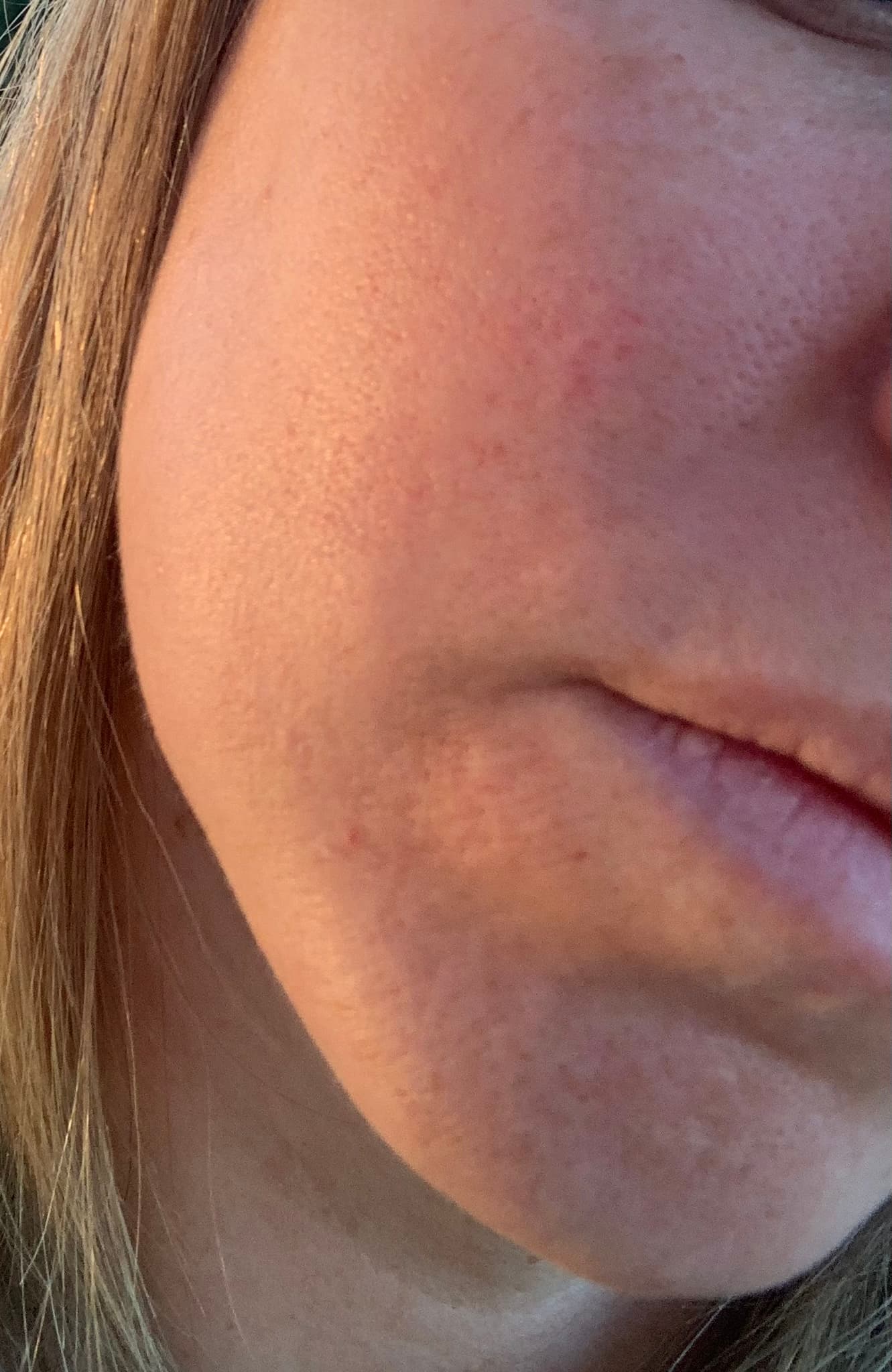
Real results from simple routines
A few real before-and-after cases from people using Danish Skin Care for skin concerns related to this guide. No filters, no miracle promise. Consistent skincare over time.
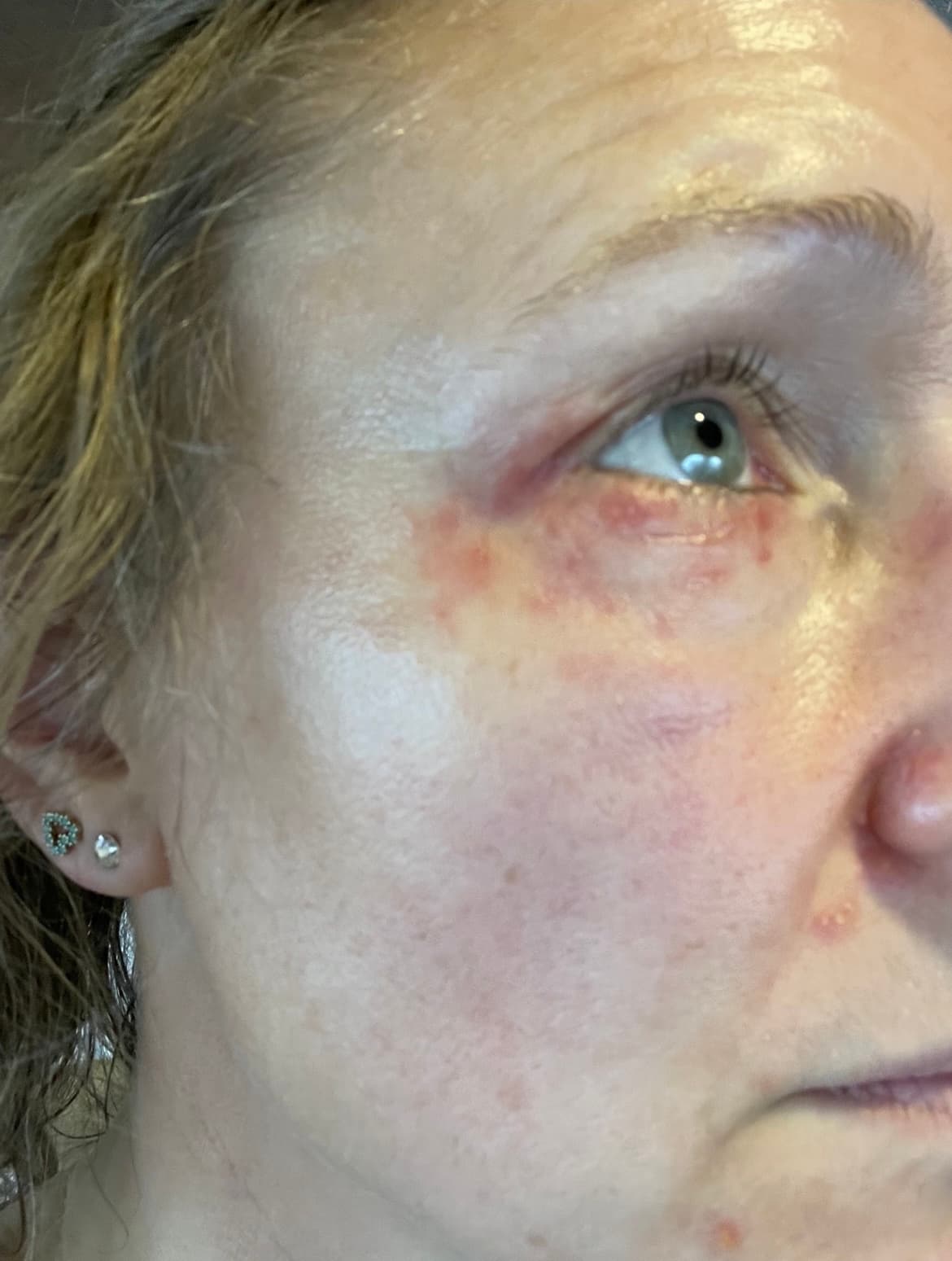 Before
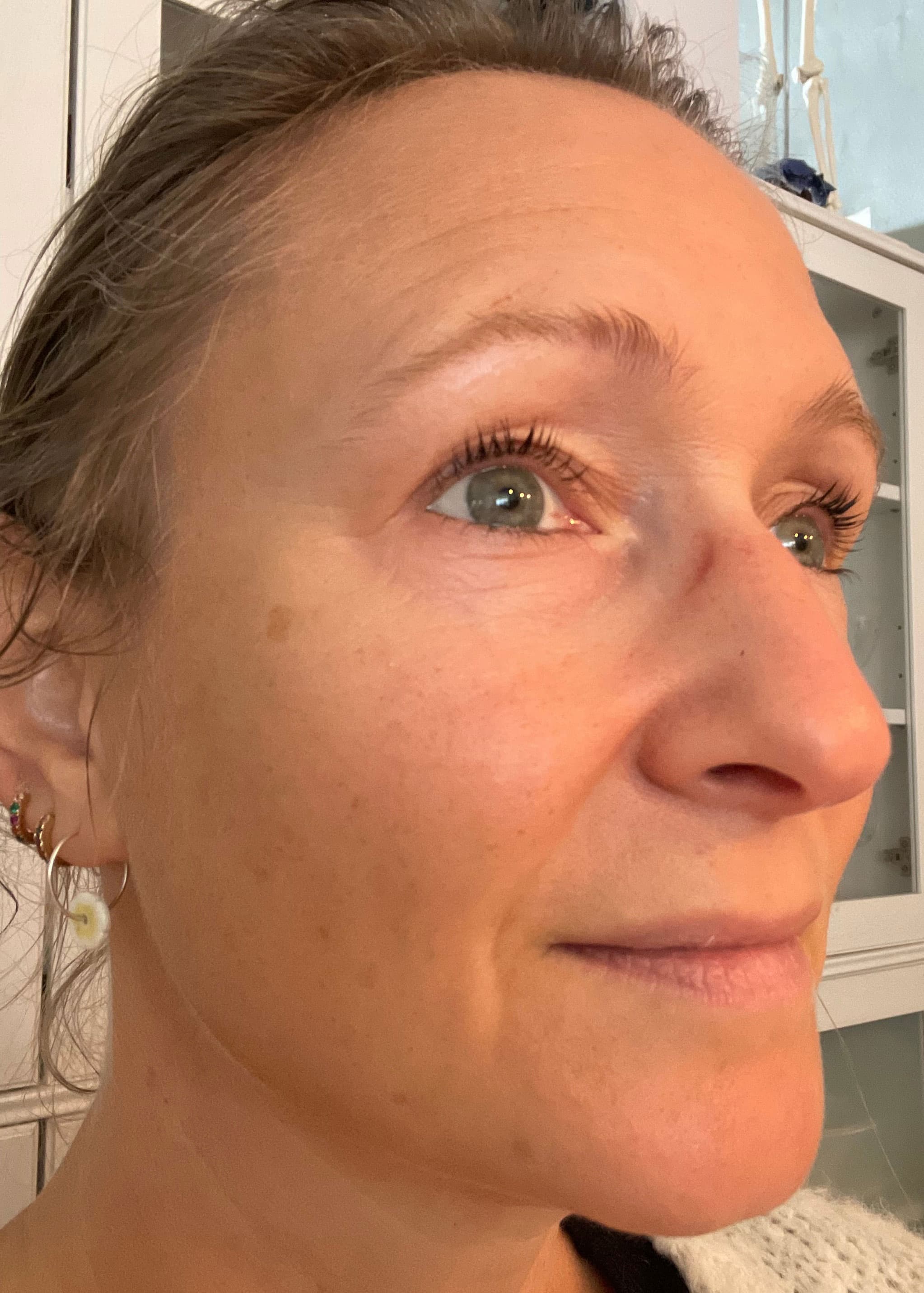 After
After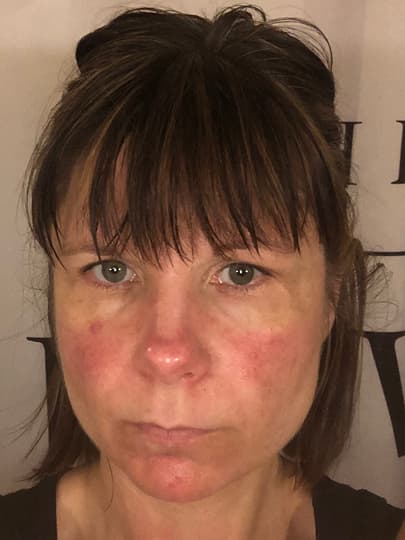 Before
 After
After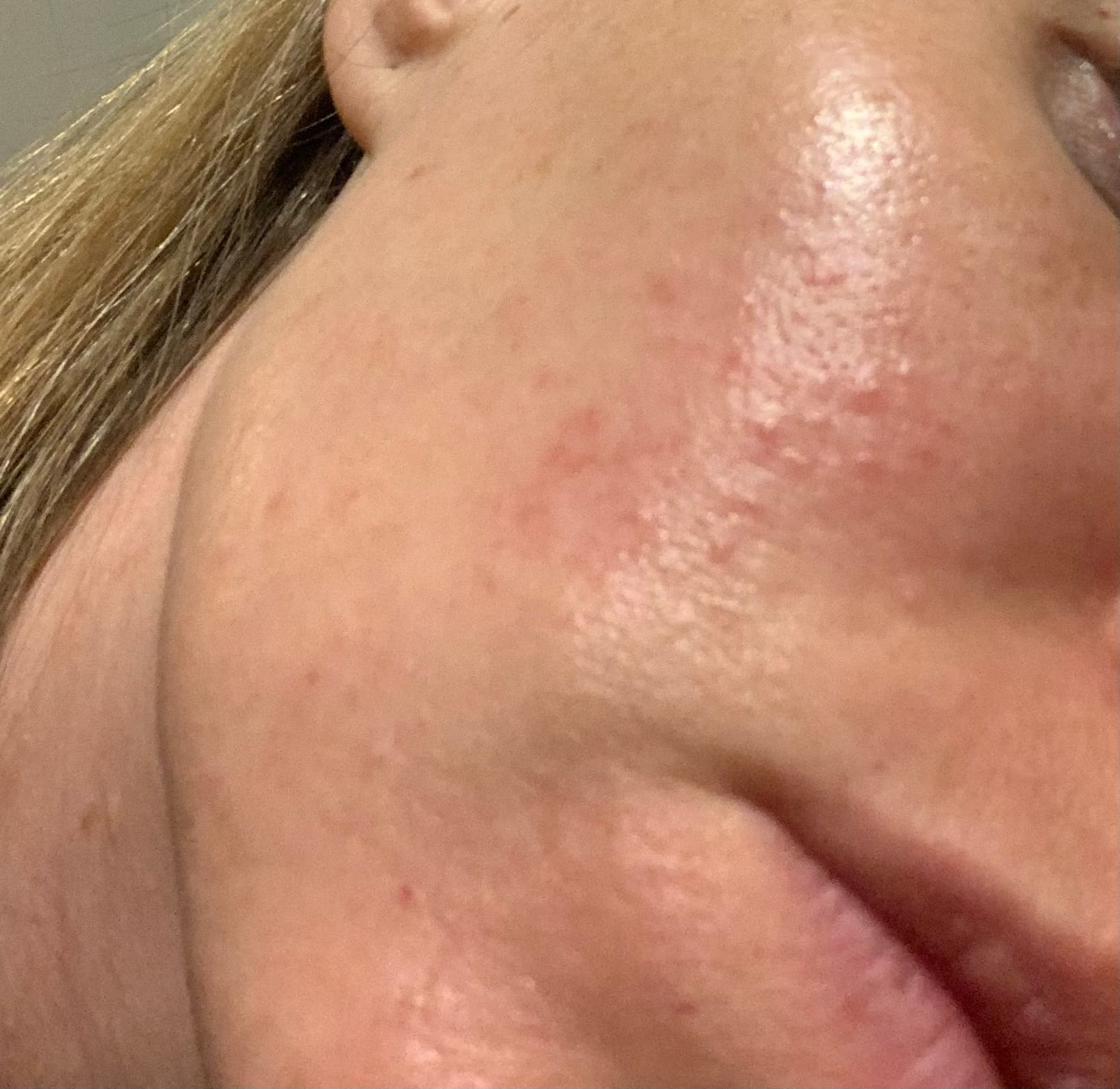 Before
 After
AfterKeep reading
Citations
- Oltulu R, et al. Ocular Rosacea: An Updated Review. Cureus. 2025;17(1):e78304.PMID 39808113
- Vieira AC, Mannis MJ. Ocular manifestations of rosacea: A clinical review. Eur J Ophthalmol. 2021;31(4):1517-1521.PMID 33403718
- American Academy of Dermatology Association. Rosacea: Signs and symptoms.AAD
- National Institute of Arthritis and Musculoskeletal and Skin Diseases. Rosacea.NIAMS
- Schaller M, et al. Recommendations for rosacea diagnosis, classification and management: update from the global ROSacea COnsensus 2019 panel. Br J Dermatol. 2020;182(5):1269-1276.PMID 31392722