
Glycerin
One of the most reliable, best-studied humectants in skincare — quietly effective in cleansers and moisturisers, and rarely the reason a formula fails.
At a glance
What Glycerin does for skin, and how to read the practical safety signals.
- Hydration workhorse: Draws water into the upper skin layers so skin feels softer and less tight.
- Formula-friendly: Appears in everything from cleansers to night creams without clogging pores.
- Not a solo treatment: Excellent support ingredient; will not replace moisturiser, SPF, or actives for specific concerns.
- Type
- Humectant
- Rating
- Pregnancy
- Considered safe
- Comedogenic rating
- 0/5 (Won't clog pores)
- Vegan
- Yes
- Suited skin types
- All skin types
On this page
The short answer
Glycerin is the humectant your skin has probably met a hundred times without you noticing the name. It pulls water into the upper layers of skin so the surface feels softer, smoother, and less tight — especially after cleansing or in dry indoor air.
It will never win Skincare Ingredient of the Year. That is partly why I trust it. Decades of use, piles of data, zero drama. The boring ingredients are often the ones that keep a routine usable long enough to actually work.
What the evidence actually shows
Hydration in real formulas. Spada's 2018 study[1] of a cream designed to mimic the skin's natural moisturising systems — including glycerin among its humectants — found significantly improved skin hydration compared with control. The point is not one magic molecule. It is that glycerin inside a sensible formula reliably increases measurable hydration.
Measured water content. Lodén's trial[2] compared a cream with 20% glycerin to its vehicle on healthy volunteers. Ten days of use significantly increased corneometer readings — objective proof of higher skin water content. The study did not show every barrier marker move, which is a useful reminder: glycerin's honest claim is hydration and comfort, not "repairs everything overnight."
Dry, compromised skin. Breternitz's 2008 atopic dermatitis study[3] found that a 20% glycerol emollient improved stratum corneum hydration and restored epidermal barrier function compared with placebo — even when clinical redness scores did not dramatically separate from vehicle. For everyday dry skin, that is the realistic promise: less tightness, better barrier behaviour, easier daily care.
How to use it
You rarely need a standalone glycerin product. It already does its job inside:
- Gentle cleansers — keeps cleansing from feeling like sandpaper.
- Treatment gels and serums — makes actives spreadable and tolerable.
- Day and night moisturisers — core hydration alongside lipids and occlusives.
Apply moisturisers to slightly damp skin when you can. Humectants bind water better when there is water available to bind. That is not skincare astrology; it is basic formulation physics.
Where it fits in a routine
Glycerin is the diplomatic humectant. It sits comfortably beside:
- Sodium hyaluronate: surface and slightly deeper hydration together.
- Panthenol and allantoin: soothing, barrier-friendly support.
- Niacinamide: barrier repair from a different mechanism.
- Salicylic acid and retinol: glycerin in the base formula helps active products feel less drying.
There is no famous ingredient feud with glycerin. If a product stings, look at fragrance, pH, exfoliant load, or your overall barrier — not glycerin first.
When it won't help
Glycerin will not treat acne, rosacea, or pigmentation on its own. It is infrastructure — the plumbing, not the architect. Severely compromised skin, eczema flares, or conditions that need prescription care require more than a humectant, however well studied.
It also will not replace a complete moisturiser for very dry skin. Humectants pull water in; you still need lipids and occlusives to keep it there. Glycerin alone on cracked winter skin is like opening the windows without fixing the roof.
The practical takeaway
My goal with this guide was to gather the useful science on glycerin in one place, so you can stop hunting for the next clever fix and do the simple, effective things your skin actually needs.
That is also why I made the Danish Skin Care Kit: a calm routine built around documented ingredients, and one that has helped more than 100,000 people with problem skin. If even the smallest question is still nagging you, send me an email at info@danishskincare.com.
Common questions
Is glycerin good for oily skin?
Yes. It is non-comedogenic and helps skin hold water without adding heavy oil. Oily skin can still be dehydrated; glycerin addresses the water side without greasiness.
Can glycerin dry out skin in low humidity?
In theory, a humectant on very dry skin in very dry air can pull water the wrong way if nothing seals it in. In practice, glycerin inside a proper moisturiser or used after cleansing and before a cream rarely causes that problem.
Is glycerin the same as hyaluronic acid?
Both are humectants, but different molecules. Glycerin is smaller, cheaper, and extremely well studied. Hyaluronic acid can hold more water per molecule at the surface. Most good moisturisers use both rather than forcing you to choose.
Reading a real label?
Scan a product to see how it is formulated
Upload a photo of the ingredient list and get a quick ingredient-by-ingredient read against the evidence-led database.
Found in these Danish Skin Care products

Glycerin in the cleanser helps remove dirt without leaving skin tight and stripped.

Part of the leave-on treatment base alongside salicylic acid and soothing botanicals.

Helps the azelaic acid and niacinamide serum feel lightweight and usable every morning.

Humectant support inside the morning moisturiser and SPF step.

Core hydration in both the Normal to oily and Normal to dry night cream variants.

Glycerin runs through the entire Kit — cleanser, treatment, day cream, and night cream.
Skin conditions it actively helps with
Where the published evidence puts Glycerin on the short list of active ingredients worth reaching for.

Dry skin
Dry skin is usually a barrier problem, not simply a water problem. Here's the difference between dry and dehydrated, why it matters, and the routine that actually helps.
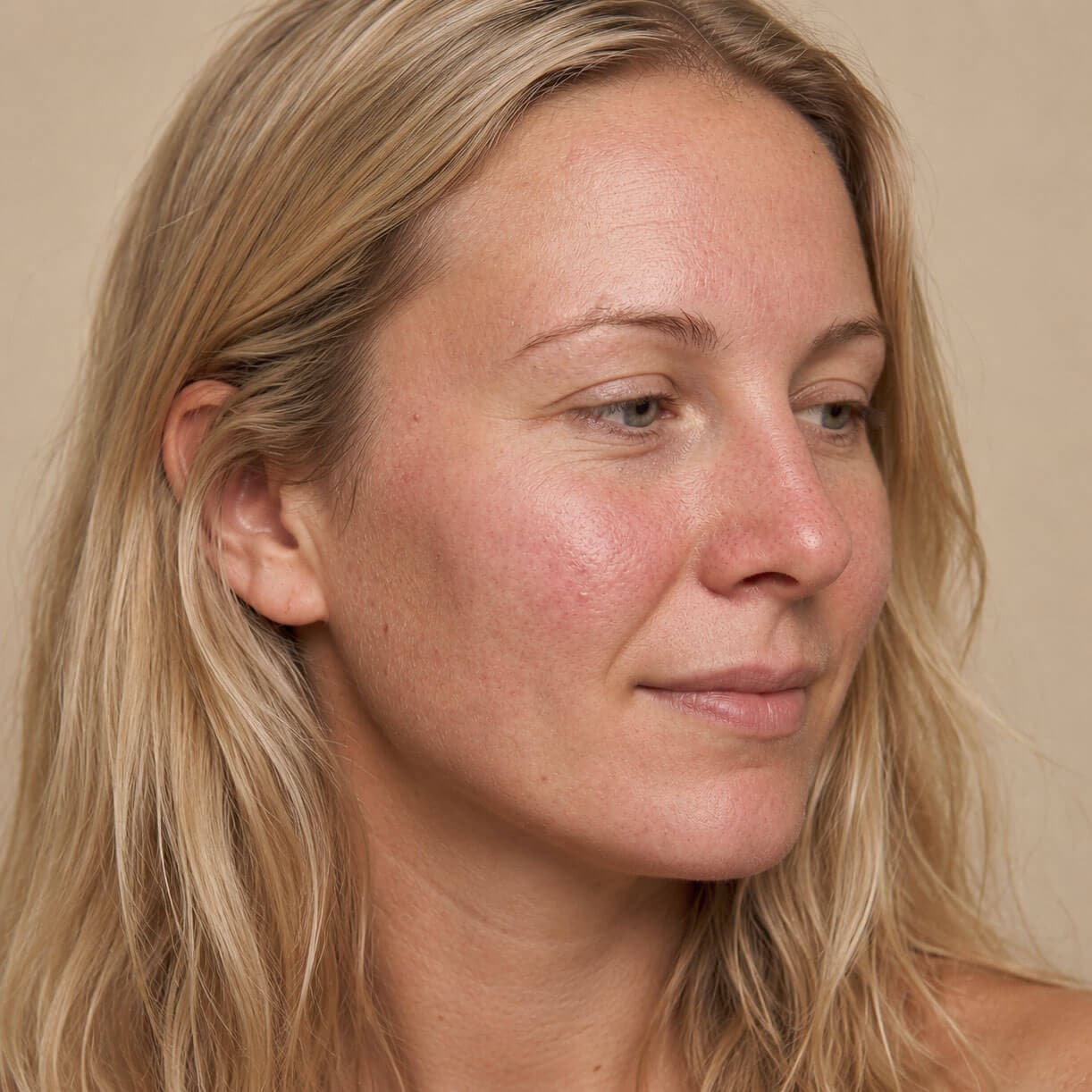
Sensitive skin
"Sensitive" is a symptom, not a diagnosis. Learn what drives reactive skin, the routine that calms it, and what to leave out.

Combination skin
Oily T-zone, drier or normal cheeks, and a routine that has to address both without making either worse. Here's how to actually balance combination skin.
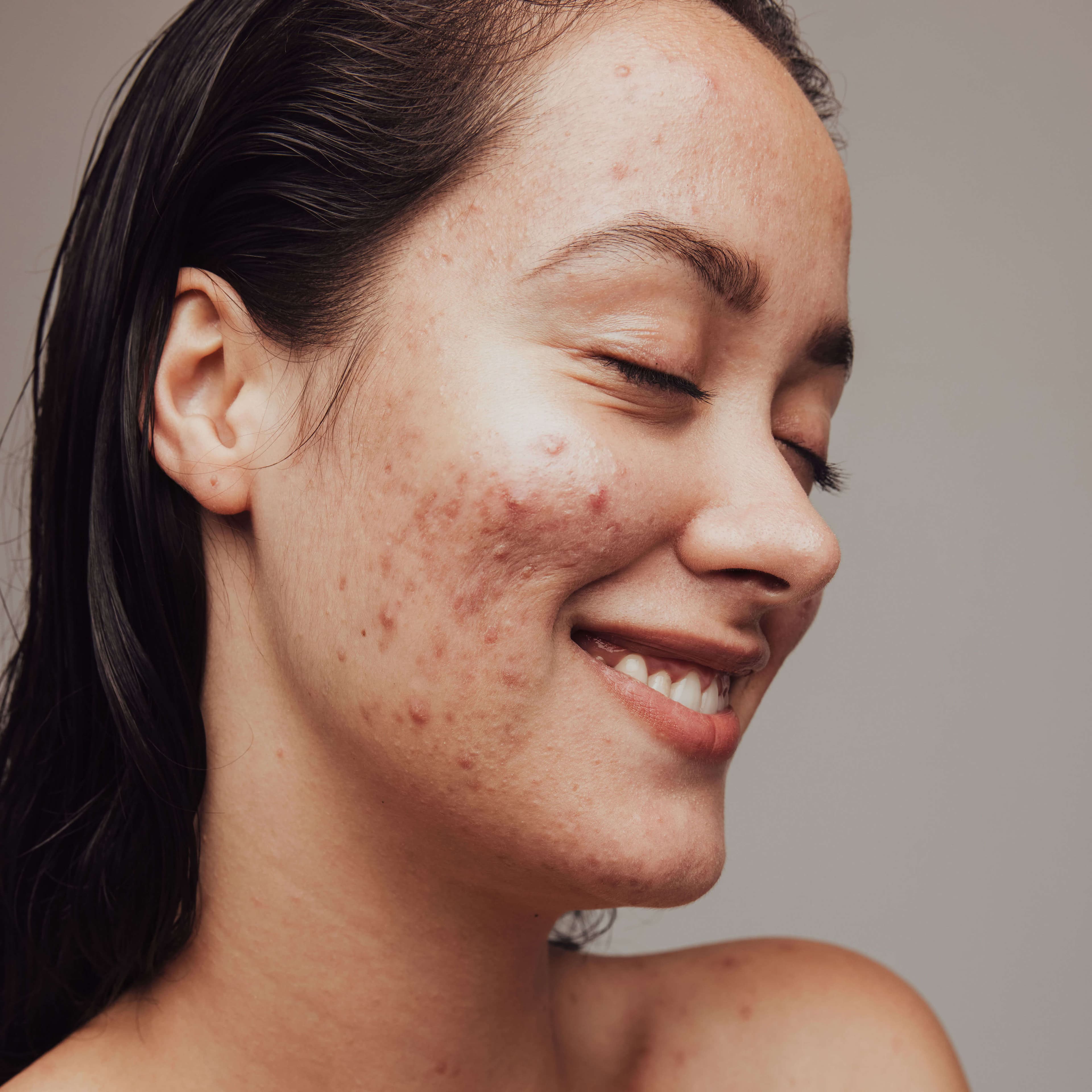
Acne and blemishes
A clear-headed guide to acne: what's actually happening in your skin, what the evidence says works, and a simple routine that doesn't make things worse.
Related ingredients
Citations
- Spada F, et al. Skin hydration is significantly increased by a cream formulated to mimic the skin's own natural moisturizing systems. Clin Cosmet Investig Dermatol. 2018;11:491–497. — PMID 30410378
- Lodén M, et al. The influence of a cream containing 20% glycerin and its vehicle on skin barrier properties. Int J Cosmet Sci. 2001;23(2):115–119. — PMID 18498456
- Breternitz M, et al. Placebo-controlled, double-blind, randomized, prospective study of a glycerol-based emollient on eczematous skin in atopic dermatitis: biophysical and clinical evaluation. Skin Pharmacol Physiol. 2008;21(1):39–45. — PMID 18025807