
How to get rid of oily skin without stripping your face
Oily skin is usually genetics, hormones, sebum, heat, and the wrong routine. Here's how to reduce shine and clogged pores without drying your barrier into a crisp.

On this page
I used to think oily skin meant I had to clean harder.
More foam. Stronger toner. That tight, squeaky-clean feeling that makes you think, "Good. I have removed the problem." Then two hours later, the shine would come back with the confidence of someone who owns the building.
If you have oily skin, you probably know that little cycle. You wash your face, it feels dry for 20 minutes, then your forehead and nose start reflecting light like a small Scandinavian fjord in July. If that pattern is specifically face oiliness by noon, the midday guide walks through the morning and lunch-hour adjustments.
Oily skin is one of the most common places people accidentally overdo it. I have seen that again and again after helping more than 100,000 people with problem skin. Not because they are careless. Usually because the beauty industry has convinced them that oil is dirt, and dirt must be punished.
It is not dirt.
It is sebum. And sebum needs managing, not warfare.
The short answer
You cannot permanently "get rid of" oily skin in the way you might get rid of an old sweater. A 2017 study[1] of oily-skin treatment options describes oiliness as a mix of sebaceous gland activity, genetics, hormones, environment, and the treatments people use to manage it.
But you can usually make it much calmer and less shiny.
The routine is simple:
- Cleanse gently, once or twice daily.
- Use niacinamide for oil regulation and barrier support.
- Use salicylic acid a few nights per week if oil comes with clogged pores.
- Moisturise with a light, non-greasy formula.
- Wear SPF, because oily skin still gets sun damage. Very unfair, I know.
- Stop stripping the skin with harsh cleansers, alcohol toners, scrubs, and "drying" routines.
The annoying truth is that oily skin usually improves when you stop trying to make it feel dry.
Why your skin gets oily
Oily skin happens when your sebaceous glands produce a lot of sebum, the lipid-rich substance that moves from the follicle onto the skin surface.
Sebum is not useless. A 2009 study[2] on sebaceous gland lipids explains that sebum contributes to the skin's surface lipid film and plays a role in barrier function, lubrication, and antimicrobial defence.
In normal human words: your skin makes oil because it is trying to protect itself.
The problem is not that sebum exists. The problem is when there is more than you want, especially around the forehead, nose, cheeks, chin, chest, or back.
Common reasons include:
- Genetics. Some people simply have more active sebaceous glands.
- Androgens. Hormones like testosterone and DHT can increase oil production.
- Age. Oil production often rises during puberty and can stay high into adulthood.
- Heat and humidity. Many people are oilier in summer or warm climates.
- Irritation. Harsh cleansing can make skin feel tight, then greasy.
- Acne tendency. More sebum can contribute to clogged follicles, especially when dead skin cells do not shed cleanly.
That last part matters. Oily skin and acne are not the same thing, but they often share the same room and refuse to leave quietly.
Is oily skin bad?
No. Oily skin is not bad skin.
It can be frustrating, especially when makeup slides, sunscreen feels heavy, or your face looks shiny by lunchtime. But oily skin also tends to tolerate some actives better, and sebum is part of normal skin protection.
The goal is not to turn oily skin into dry skin.
The goal is:
- Less unwanted shine.
- Fewer clogged pores.
- Fewer blackheads and small bumps.
- A calmer barrier.
- A routine you can actually keep doing.
This is where many people go wrong. They chase a matte finish so aggressively that they damage the barrier, then the skin becomes oily and dehydrated. That combination is deeply annoying. Like owning both an umbrella and wet socks.
What actually helps oily skin
The oily-skin evidence is useful because it separates the things that merely absorb oil from the things that may help regulate it.
Blotting papers and powders can help shine for a few hours. That is fine. We are not against practical little tricks.
But if you want the skin itself to behave more calmly, the best starting points are usually niacinamide, salicylic acid, light moisturising, and less irritation.
Niacinamide
Niacinamide is one of the most useful ingredients for oily skin because it does several boring-but-important things at once.
It can support the barrier, reduce visible redness, help post-breakout marks, and has evidence for reducing facial sebum. A 2006 clinical study[3] on topical 2% niacinamide found reductions in sebum measures over a few weeks, with some differences between the studied populations.
That nuance matters. Niacinamide is not a magic oil switch. It is more like a polite brake pedal.
Use it daily, ideally in the 2 to 5% range. More is not automatically better. Ten percent niacinamide is often five percent niacinamide wearing louder shoes.
Salicylic acid
If your oily skin comes with blackheads, whiteheads, clogged bumps, or enlarged-looking pores, salicylic acid is usually the cleanest over-the-counter active to start with.
It is oil-soluble, which is the whole point. It can move into the sebum-heavy follicle and help loosen the dead-skin-and-oil plug from inside.
For blackhead-specific choices - pore strips, squeezing, salicylic acid, or professional extraction - use the blackheads removal decision guide alongside this oily-skin routine.
A 1992 clinical study[4] of salicylic acid pads found that 0.5% and 2% salicylic acid solutions improved acne lesions and comedonal clogging. For oily skin, that makes it especially useful when the shine is paired with congestion.
Start with a 2% leave-on product 2 nights per week. If your skin stays comfortable, build to 3 or 4 nights per week.
Do not start with "every night plus a scrub plus a clay mask plus retinol because I have decided to become a project manager for my pores." Your skin did not request a quarterly performance review.
A light moisturiser
Skipping moisturiser is one of the classic oily-skin mistakes.
I understand the instinct. If your skin already feels oily, adding cream sounds like putting a sweater on a radiator.
But oily and hydrated are not opposites. Your skin can be oily on the surface and dehydrated underneath. When the barrier is unhappy, the skin often feels tight after cleansing, then greasy later. That oily-dry overlap is common enough that it deserves its own guide: why skin can feel oily and dry at the same time.
Use a light, non-comedogenic moisturiser. Gel-cream, lotion, or a "normal to oily" version is usually better than a rich balm. You want comfort, not a glazed pastry finish.
Sunscreen that does not feel like butter
Oily skin still needs SPF.
The trick is finding one you will actually wear. Many dermatologists prefer SPF 30+, especially for pigmentation and long-term UV protection. But consistency matters too. A light SPF you use every day is better than a theoretically perfect one that sits in your cabinet looking disappointed.
Look for:
- Lightweight lotion or gel-cream texture.
- Non-comedogenic claims if you are acne-prone.
- No heavy fragrance if your skin is easily irritated.
- A finish you can tolerate daily.
The morning routine
Morning is not where you fight oily skin. Morning is where you set the day up calmly.
1. Cleanse gently
Use a gentle cleanser for 20 to 30 seconds. If you are very oily, a light foaming cleanser can be fine. The issue is not foam itself. The issue is harsh surfactants, scrubbing, and washing until your face feels tight.
Once in the morning is enough. If your skin is not very oily when you wake up, even rinsing with water can be enough for some people.
2. Use niacinamide-supported daytime care
This is the best place for niacinamide because it helps during the exact part of the day when shine usually bothers people.
You do not need a separate serum if your moisturiser already contains niacinamide. This is a theme you will notice from us: fewer products, used consistently, usually beats a shelf that looks like a chemistry exam.
3. Apply SPF
Choose a lightweight SPF and apply enough to cover the face and neck. If your skin gets shiny later, use blotting paper or a little powder. That is allowed. Skincare does not need to be morally pure.
The evening routine
Evening is where you can treat clogged pores and excess oil more directly.
1. Cleanse
If you wear sunscreen or makeup, cleanse properly but gently. You do not need to double cleanse unless one cleanse genuinely does not remove what you wore that day.
If you double cleanse, keep both steps mild. Double cleansing with two aggressive products is over-cleansing with better branding.
2. Use salicylic acid 2 to 4 nights per week
Apply a thin layer after cleansing. Let it dry. Then moisturise.
Start low:
- Weeks 1 to 2: 2 nights per week.
- Weeks 3 to 6: 3 nights per week if comfortable.
- Weeks 7 to 8: 3 to 4 nights per week if your skin is still oily and congested.
If your skin stings, flakes, or feels tight the next morning, reduce frequency. That is not failure. That is data.
3. Moisturise every night
Yes, every night.
A light moisturiser helps keep the barrier stable while salicylic acid does the pore work. Without it, the routine often becomes too drying, and then people quit after two weeks and blame the ingredient.
Sometimes the product was fine. The routine was rude.
What to stop doing
If oily skin is not improving, the problem is often not what you are missing. It is what you are repeating.
- Stop washing your face five times a day. Twice daily is usually the ceiling.
- Stop using alcohol-heavy toners to feel matte. The matte feeling is often dehydration, not progress.
- Stop scrubbing your nose and forehead. You cannot sand a sebaceous gland into better behaviour.
- Stop using pore strips as a routine. They remove some surface material temporarily but do not change the clogging process.
- Stop switching everything weekly. Oil-control routines need several weeks.
- Stop avoiding moisturiser. Oily skin still needs barrier support.
- Stop layering every active at once. Salicylic acid, retinol, strong vitamin C, and exfoliating masks in the same week can become a tiny irritation festival. If you need structure, skin cycling is a calmer way to schedule active nights.
The boring routine is usually the one that works.
What about clay masks?
Clay masks made with absorbents such as kaolin, and black charcoal masks, can temporarily reduce surface oil. If you like them and they do not leave your skin tight, use one occasionally.
But they are not the foundation of oily-skin control. Think of clay as blotting paper with a spa soundtrack. Useful sometimes. Not the main strategy.
If you use a clay mask:
- Keep it to once weekly.
- Do not let it dry into a cracked desert.
- Moisturise afterwards.
- Skip salicylic acid or retinol the same evening if your skin is sensitive.
What about diet?
Diet can matter for some people, especially when oily skin overlaps with acne.
The strongest acne-related dietary signal is generally around high-glycaemic diets, and sometimes dairy for certain people. But oily skin itself is not usually solved by cutting one food and waiting for your sebaceous glands to write an apology.
A sensible experiment:
- Reduce high-sugar, ultra-processed foods for 8 weeks.
- Notice whether oiliness and breakouts change.
- Do not turn food into fear.
- If nothing changes, move on calmly.
Skincare already creates enough confusion. Dinner does not need to become a spreadsheet unless your clinician has asked for one.
When oily skin is actually acne-prone skin
Oily skin often comes with blackheads, small clogged bumps, and acne, because excess sebum can contribute to the blocked-follicle environment described in a 2012 Lancet study[5] of acne vulgaris.
If you mostly have shine, use the oil-control routine.
If the oiliness comes with tiny bumps across the T-zone or hairline, the guide to forehead acne explains the extra role of hair products, sweat, hats, and friction.
If you also have clogged pores, salicylic acid becomes more important.
If you have deep, painful, cystic, scarring, or sudden adult acne, do not try to solve it with stronger cleansing. That is where a dermatologist can help with prescription options like topical retinoids, benzoyl peroxide combinations, hormonal treatment, or isotretinoin in the right cases.
Prescription care is not "giving up". It is using the right tool when biology is being particularly dramatic.
The 8-week oily skin plan
Weeks 1 to 2
Cleanse gently morning and evening. Use niacinamide-supported moisturiser in the morning. SPF daily. Use salicylic acid 2 nights per week, then moisturise.
Do not add masks, scrubs, new serums, or panic.
Weeks 3 to 6
If your skin feels comfortable, increase salicylic acid to 3 nights per week. Keep the rest stable.
You are looking for:
- Less midday shine.
- Fewer clogged bumps.
- Less greasy-but-tight feeling.
- Better tolerance after cleansing.
Weeks 7 to 8
If things are improving, keep going. If your skin is still very oily but not irritated, you can use salicylic acid 3 to 4 nights per week.
If your skin is dry, flaky, burning, or suddenly breaking out more, reduce active nights and focus on moisturiser for a week.
Progress is not always adding more. Often it is doing less of the part your skin hates.
The bottom line
You do not get rid of oily skin by attacking oil.
You improve oily skin by respecting what sebum is, then guiding the skin with a simple routine: gentle cleansing, niacinamide, salicylic acid when pores are clogged, light moisturiser, and sunscreen you can wear every day.
After more than 100,000 skin conversations, the biggest lesson is still wonderfully unglamorous: calm consistency beats aggressive perfection.
If your skin is oily, clogged, and easily overwhelmed, start with the routine you can actually repeat tomorrow too.
People also ask
Can oily skin be permanently cured?
No, not in the sense of switching off sebum forever. Oily skin is strongly influenced by genetics, hormones, temperature, and age. The goal is to manage shine and clogged pores with a consistent routine, not punish the skin for producing oil.
Should I moisturise if my skin is oily?
Yes. Oily skin still needs barrier support. Choose a lightweight moisturiser instead of skipping moisturiser completely, because dehydrated or irritated oily skin often feels worse and can become harder to keep consistent.
How long does it take to reduce oily skin?
Give a calmer routine at least 6 to 8 weeks. Shine can feel better sooner when you stop stripping the skin, but clogged pores and texture need more time, especially if you are adding salicylic acid gradually.
A simple routine for oily skin
For oily skin, I want the routine to stay light, consistent, and difficult to overcomplicate. That is where the Danish Skin Care Kit makes sense, especially the Normal to oily variants: gentle cleansing, salicylic acid for congestion, lightweight moisture, and SPF support without turning shine control into a bathroom science project.

The simplest start for oily, clogged, easily-overdone skin. Choose the Normal to oily variants for a lighter morning and evening routine.
Full transparency: Danish Skin Care is my own company — I formulated these products and earn from every sale. That's exactly why I only recommend them where they genuinely fit the guide you just read.
Real results from simple routines
A few real before-and-after cases from people using Danish Skin Care for skin concerns related to this guide. No filters, no miracle promise. Consistent skincare over time.
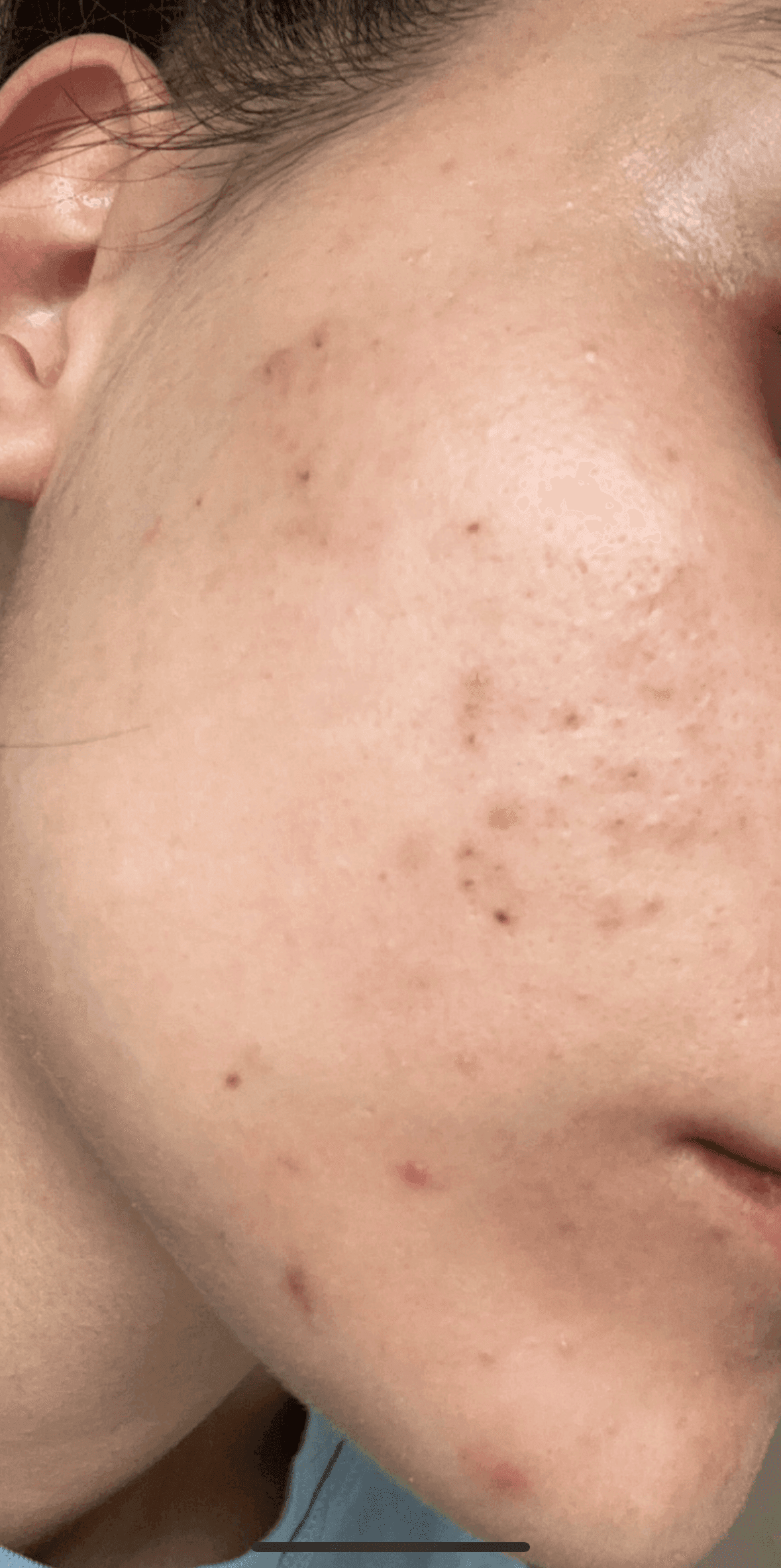 Before
 After
AfterKeep reading
- Ingredient · niacinamide
- Ingredient · salicylic acid
- Ingredient · sodium hyaluronate
- Ingredient · retinol
- Condition · oily skin
- Condition · combination skin
- Condition · blackheads
- Condition · acne and blemishes
- Read · blackheads removal
- Read · what are blackheads
- Read · how to get rid of pimples
- Read · sugar and acne
- Read · greasy foods and acne
- Read · how to get rid of forehead acne
- Read · how to get rid of chin acne
- Read · how to treat dry skin on face
Citations
- Endly DC, Miller RA. Oily Skin: A review of treatment options. J Clin Aesthet Dermatol. 2017;10(8):49-55.PMID 28979664
- Picardo M, et al. Sebaceous gland lipids. Dermatoendocrinol. 2009;1(2):68-71.PMID 20224686
- Draelos ZD, et al. The effect of 2% niacinamide on facial sebum production. J Cosmet Laser Ther. 2006;8(2):96-101.PMID 16766489
- Zander E, Weisman S. Treatment of acne vulgaris with salicylic acid pads. Clin Ther. 1992;14(2):247-53.PMID 1535349
- Williams HC, et al. Acne vulgaris. Lancet. 2012;379(9813):361-72.PMID 21880356