
Skin cycling: a calmer way to use retinol and exfoliation
Skin cycling became popular because it gives strong ingredients a schedule. Here is when the four-night routine helps, when it is too much, and how to adapt it to sensitive or acne-prone skin.
On this page
Skin cycling became popular because it gave people permission to stop using everything every night.
That sounds small. It is not.
When I struggled with acne, oily skin, and irritation, my biggest routine mistake was not laziness. It was enthusiasm. If salicylic acid helped, more must help more. If retinol was useful, surely my skin wanted ambition. If one product tingled, maybe that meant progress.
My skin did not see it that way.
After helping more than 100,000 people with problem skin, I see the same pattern constantly: people often need fewer active nights, not stronger active products.
That is why skin cycling makes sense as a concept.
Not because the name is magical. Because rest nights are underrated.
The short answer
Skin cycling is a rotating evening routine.
The classic version looks like this:
- Night 1: exfoliation.
- Night 2: retinol or another retinoid.
- Night 3: recovery.
- Night 4: recovery.
- Repeat.
The idea is to give active ingredients a clear job and give the skin barrier time to recover between them.
Retinol has real evidence behind it. A 2007 study[1] found that topical retinol improved fine wrinkles in naturally aged skin over 24 weeks, and a retinoid overview[2] explains why vitamin A derivatives remain important in skin ageing care.
Exfoliation can also be useful. A 2015 review[3] describes salicylic acid as a keratolytic peeling agent, which is why it is helpful for clogged pores and oily follicles.
The trick is using these ingredients often enough to help, but not so often that your barrier starts waving a tiny white flag.
Why skin cycling became so popular
Most people do not need more skincare information.
They need a schedule.
Skin cycling turns the chaos into a repeatable rhythm. Instead of asking "Can I use this with that?" every night, the routine decides for you.
That is useful because actives stack quickly:
- Salicylic acid for pores.
- Glycolic acid for glow.
- Retinol for texture.
- Vitamin C for tone.
- A mask because the bathroom shelf looked bored.
Then the skin gets tight, red, flaky, shiny, bumpy, or somehow all of those at once.
Skin cycling is basically a calendar telling your enthusiasm to sit down.
The four-night routine
Night 1: exfoliation
Choose one exfoliant.
For clogged pores, blackheads, and oily skin, I usually prefer salicylic acid. It is oil-soluble, so it makes more sense for clogged follicles than a random scrub.
For dry, dull, rough skin, some people prefer lactic acid, gluconolactone, or another gentle surface exfoliant. If dullness is the main concern, the guide to why skin looks dull helps you decide whether you need exfoliation, moisturising, or a calmer barrier first.
Do not add a scrub, a peel pad, a mask, and an acid serum in the same evening. That is not exfoliation. That is a committee meeting with no adult in the room.
Night 2: retinol
Retinol night is for long-term texture, tone, and signs of ageing.
Use a small amount. Apply to dry skin if your skin tolerates it. If you are sensitive, use moisturiser first, then retinol, then moisturiser again.
Retinol is not better because it hurts.
Mild dryness can happen when starting. Burning, angry flaking, swelling, or persistent redness means the routine is too much.
Nights 3 and 4: recovery
These are not wasted nights.
Recovery nights are where the barrier gets to behave like a barrier again.
A 2003 barrier study[4] explains how important the outer skin layer is for keeping water in and irritants out. When you keep irritating that layer, even good ingredients become harder to tolerate.
On recovery nights:
- Cleanse gently.
- Moisturise.
- Skip acids.
- Skip retinol.
- Do not sneak in a "gentle" peel because you got bored.
Boredom is often what your skin needed.
Who skin cycling suits
Skin cycling can be useful if:
- You own actives but keep irritating your skin.
- You want retinol but cannot tolerate nightly use.
- You get clogged pores and dryness at the same time.
- You are new to exfoliation.
- You need a simple plan for product timing.
- You tend to change routines too often.
It is especially useful for the person who does everything right for four days, gets excited, adds six things, then spends two weeks repairing the damage.
No judgement. Many of us have been that person.
Who should adapt it
The classic four-night cycle is not a law.
Sensitive skin may need:
- One exfoliation night every 7 to 10 days.
- One retinol night per week.
- More recovery nights.
- Moisturiser before actives.
- No exfoliation until the barrier is calm.
If the barrier is already stinging from too much active use, use the over-exfoliation repair guide before restarting the cycle.
Acne-prone skin may need:
- More consistent acne treatment.
- Prescription support.
- Benzoyl peroxide or adapalene instead of cosmetic retinol.
- A dermatologist if acne is deep, painful, scarring, or persistent.
Rosacea-prone skin may need:
- Less exfoliation.
- No aggressive retinoid start.
- Medical treatment for inflammation.
- A very plain barrier routine first.
The right cycle is the one your skin can repeat without drama.
What skin cycling gets wrong online
The internet often turns a helpful structure into a product shopping list.
You do not need:
- A dedicated exfoliation toner.
- A separate retinol serum.
- A recovery serum.
- A barrier cream.
- A sleeping mask.
- A calendar app for your forehead.
You need clear roles.
If one product already gives salicylic acid, that can be your exfoliation night. If one moisturiser already contains retinol, that can be your retinol night. If your recovery night is cleanse and moisturise, congratulations. You are doing skincare, not project management.
Skin cycling for blackheads
If blackheads are your main concern, make the exfoliation night salicylic acid.
Blackheads are open clogged follicles, not dirt. Salicylic acid is more useful than scrubs because it can work inside oily, clogged areas.
A simple cycle might look like:
- Night 1: salicylic acid.
- Night 2: moisturiser only or retinol if tolerated.
- Nights 3 and 4: moisturiser only.
If blackheads improve and the skin stays calm, continue. If the skin gets tight or flaky, add recovery nights.
Skin cycling for signs of ageing
If signs of ageing are the main concern, retinol is the star.
But sunscreen still matters more in the morning. Retinol at night without SPF during the day is like brushing your teeth while eating biscuits. Some benefit, questionable strategy.
For many people, a gentle version is:
- Night 1: moisturiser only.
- Night 2: retinol.
- Night 3: moisturiser only.
- Night 4: moisturiser only.
You can add exfoliation later if the skin is stable.
When to stop skin cycling
Stop or simplify if you notice:
- Burning.
- Persistent stinging.
- Peeling that does not settle.
- New sensitivity to products you used to tolerate.
- More inflamed breakouts.
- Tight, shiny, uncomfortable skin.
Those signs usually mean the barrier needs fewer instructions.
Pause actives for one to two weeks, cleanse gently, moisturise, and use SPF. Then restart with a slower cycle if needed.
The bottom line
Skin cycling is useful because it makes people rest.
The four-night routine is not magic. It is a sensible way to separate exfoliation, retinol, and recovery so your skin gets benefits without constant irritation.
If your skin is calm, you may not need a strict cycle. If your skin is angry, make the cycle slower.
The best routine is not the most active routine. It is the one your skin lets you repeat.
People also ask
What is skin cycling?
Skin cycling is a rotating night routine, usually exfoliation on night one, retinol on night two, and recovery on nights three and four. The goal is to use active ingredients without irritating the skin every night.
Is skin cycling good for acne?
It can help some acne-prone skin if the exfoliation night uses a relevant ingredient such as salicylic acid. But deep, painful, scarring, or persistent acne often needs a more specific medical plan.
Can sensitive skin do skin cycling?
Yes, but the cycle may need more recovery nights and gentler active frequency. Sensitive skin should start with barrier repair before adding exfoliation and retinol.
Should I exfoliate before retinol?
Not on the same night if you irritate easily. The classic skin-cycling schedule separates exfoliation and retinol by one night, then gives the skin recovery nights afterward.
A simple skin-cycling routine without extra clutter
Skin cycling works best when the products are clear and the routine is repeatable. The Danish Skin Care Kit already gives you the basic structure: cleanse, use salicylic acid on treatment nights, use the Moisturizer thoughtfully, and protect with SPF in the morning. The point is not more products. The point is better timing.

A simple way to build a skin-cycling rhythm without buying extra steps: cleanser, salicylic acid treatment, moisturiser with retinol, and daytime SPF.
Full transparency: Danish Skin Care is my own company — I formulated these products and earn from every sale. That's exactly why I only recommend them where they genuinely fit the guide you just read.
Real results from simple routines
A few real before-and-after cases from people using Danish Skin Care for skin concerns related to this guide. No filters, no miracle promise. Consistent skincare over time.
 Before
 After
After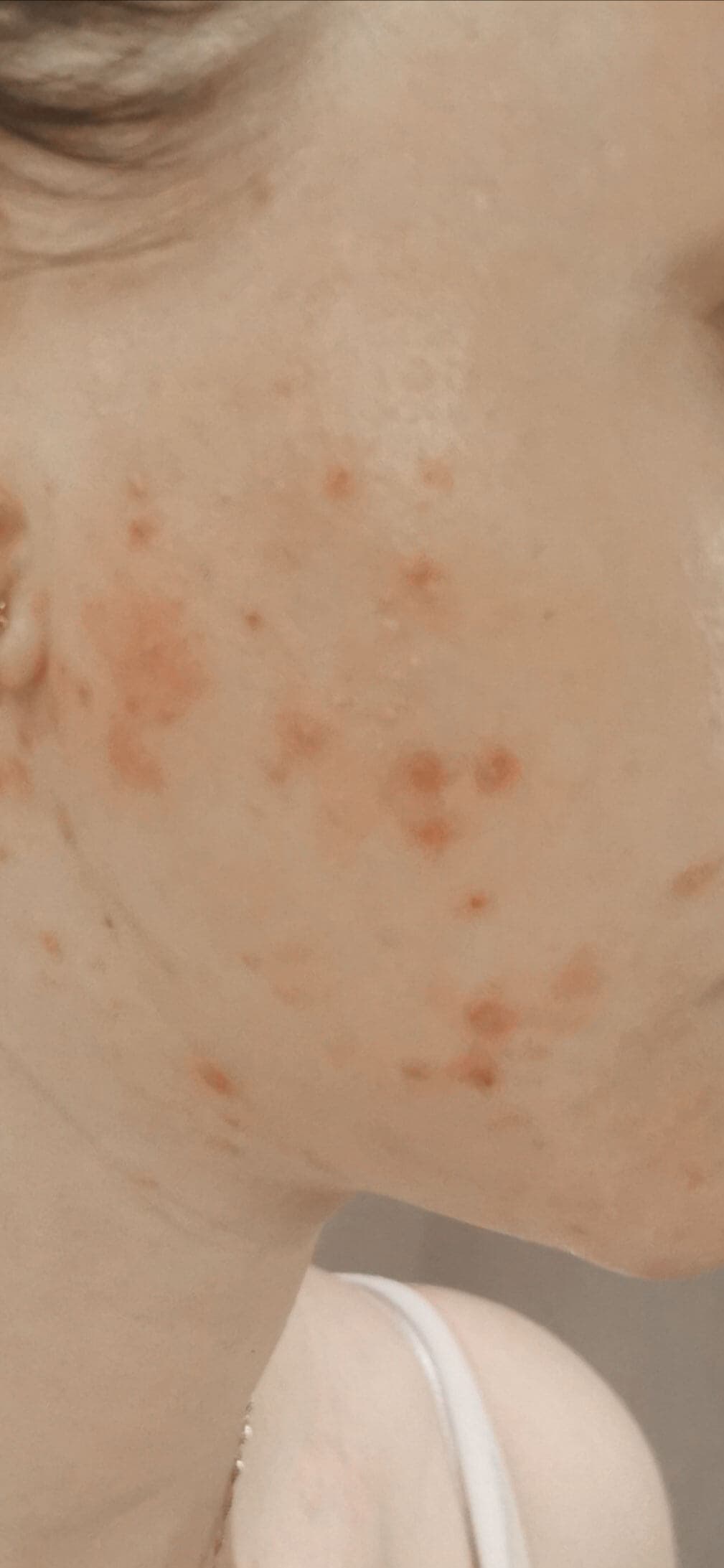 Before
 After
AfterKeep reading
- Ingredient · retinol
- Ingredient · salicylic acid
- Ingredient · gluconolactone
- Ingredient · niacinamide
- Ingredient · sodium hyaluronate
- Ingredient · urea
- Condition · sensitive skin
- Condition · acne and blemishes
- Condition · blackheads
- Condition · signs of ageing
- Condition · dry skin
- Read · slugging
- Read · how to repair skin barrier after over exfoliating
- Read · why does my skin look dull
- Read · how to treat dry skin on face
- Read · how to get rid of pimples
- Read · what are blackheads
- Read · how to get rid of oily skin
Citations
- Kafi R, et al. Improvement of naturally aged skin with vitamin A (retinol). Arch Dermatol. 2007;143(5):606-612.PMID 17515510
- Mukherjee S, et al. Retinoids in the treatment of skin aging: an overview of clinical efficacy and safety. Clin Interv Aging. 2006;1(4):327-348.PMID 18046911
- Arif T. Salicylic acid as a peeling agent: a comprehensive review. Clin Cosmet Investig Dermatol. 2015;8:455-461.PMID 26347269
- Madison KC. Barrier function of the skin: 'la raison d'etre' of the epidermis. J Invest Dermatol. 2003;121(2):231-241.PMID 12880413