
Why is my face oily by noon?
If your face looks oily by lunchtime, the cause is usually sebum, heat, product texture, or a routine that strips too hard in the morning.

On this page
I used to judge my skin by the bathroom mirror at 8 in the morning.
Freshly washed. Temporarily matte. Very promising.
Then lunch arrived, and my forehead looked like it had negotiated its own lighting contract. When you have oily or acne-prone skin, that midday shine can feel personal. It is not. It is usually biology, product texture, weather, and a morning routine trying too hard.
After helping more than 100,000 people with problem skin, I have seen this pattern many times in before-and-after cases: oily skin often improves when the routine becomes lighter, calmer, and less obsessed with making skin feel dry at 8:00.
The short answer
Your face gets oily by noon because sebaceous glands keep releasing sebum during the day.
Sebum is a complex mixture of skin lipids. A 2009 study on sebaceous gland lipids[1] explains that human sebum contains unique lipids such as squalene and wax esters that help supply the skin surface with protection.
If you want the chemistry layer, the dictionary entry on sebum oxidation explains why oxidised skin oil gets discussed in acne-prone routines.
So the problem is not that your skin makes oil.
The problem is when oil becomes more visible than you want by lunchtime, especially on the forehead, nose, cheeks, and chin.
Common reasons include:
- naturally active sebaceous glands
- heat or humidity
- stress and hormones
- heavy SPF, moisturiser, primer, or makeup
- cleansing too harshly in the morning
- skipping moisturiser, then feeling tight and greasy later
- clogged pores that trap oil and dead cells
If the midday oil comes with tightness or flakes, read the guide to oily and dry skin at the same time. That pattern needs barrier support, not a stronger face wash.
Morning cleansing can be too successful
Many oily-skin routines fail because the morning cleanse feels amazing for 20 minutes.
You wash hard, the oil disappears, and the face feels dry enough to behave. Then the skin gets tight. Later, oil comes back and sits on a barrier that now feels irritated.
A 2017 review of oily-skin treatment options[2] describes oily skin as a common dermatologic concern with several topical, systemic, and procedural management options. In daily skincare, the useful first move is still simple: reduce visible oil without creating irritation.
That means your cleanser should remove overnight oil and residue. It should not make your skin feel polished, squeaky, or slightly frightened.
The midday-shine routine
Try this structure for a few weeks before judging your skin.
Morning
- Cleanse gently for 20 to 30 seconds if you wake up oily.
- Use a lightweight moisturiser or moisturising SPF.
- Keep layers thin. More product usually means more slip by lunchtime.
- Apply SPF evenly, then let it settle before makeup.
If you are not oily when you wake up, rinsing with water can be enough for some people. Your skin does not receive a certificate for cleansing twice daily.
Midday
Do not re-wash your face at lunch unless you are sweaty, dirty, or removing something.
Better options:
- blotting paper
- a clean tissue pressed gently on shiny areas
- a small amount of powder
- leaving it alone if the shine is mild
Blotting is not cheating. It is practical. Skincare should leave room for normal human days.
Evening
Evening is where you treat the causes behind shiny, clogged skin.
If your oiliness comes with blackheads, closed bumps, or rough texture, use salicylic acid a few nights per week if your skin tolerates it. Keep the other nights calm: cleanse, moisturise, sleep.
If the skin feels tight, stingy, or flaky, reduce active nights first. Oily skin can still have an irritated barrier, which is deeply unfair but very common.
Where niacinamide fits
Niacinamide is one of the most useful daytime ingredients for oily skin because it can support visible oil balance and barrier comfort.
A 2006 clinical study[3] found that 2% niacinamide reduced sebum measures in the studied groups over several weeks, with slightly different results between populations. That is enough to make niacinamide sensible. It is not enough to treat it like a magical matte filter.
I prefer niacinamide inside a moisturiser or SPF for many people. One good daily step beats a separate serum you use for nine days and then forget.
Product texture matters more than product count
If your face is oily by noon, check the morning layers before blaming your skin.
Possible culprits:
- rich moisturiser all over the T-zone
- oil-heavy sunscreen
- thick primer under sunscreen
- too much product because each layer feels "light"
- makeup applied before SPF has settled
- a cleanser that leaves the skin tight
You do not need a ten-step oil-control system. You need fewer layers that sit well together.
If sunscreen is the main problem, the guide to breaking out after sunscreen can help separate product texture, comedones, irritation, and acne. If the bumps show up where foundation or primer sits, use the makeup breakout guide instead.
What not to do
Avoid:
- cleansing three or four times daily
- alcohol toners that make the skin feel dry for ten minutes
- scrubs on oily areas
- skipping moisturiser entirely
- using acid every night on tight skin
- piling mattifying products over an irritated barrier
- chasing a completely matte face all day
Healthy skin has some surface sheen. The goal is less unwanted shine and fewer clogged pores, not a face that looks laminated in the opposite direction.
When to get help
See a dermatologist if oiliness comes with painful cysts, scarring acne, sudden adult changes, irregular cycles, unwanted hair growth, or breakouts that do not improve after a steady routine.
Sometimes midday shine is ordinary oily skin. Sometimes it is part of acne, hormonal changes, seborrheic dermatitis, medication effects, or another pattern that needs proper medical advice.
My final advice
If your face gets oily by noon, stop trying to win the whole day with one aggressive morning cleanse.
Cleanse gently. Keep the morning layers light. Blot if you need to. Treat clogged pores at night. Give the routine enough weeks to show you what your skin does when it is not being stripped before breakfast.
That is the calm routine I would choose every time.
People also ask
Why does my face get oily by lunchtime?
Your sebaceous glands keep producing sebum through the day. Heat, humidity, heavy products, stress, hormones, and harsh morning cleansing can make the shine more visible by noon.
Should I wash my face again at lunch if it is oily?
Usually no. Re-washing can make the skin tight and irritated. Blotting paper, a little powder, or a lighter morning routine is usually kinder.
Can moisturiser make my face oily by noon?
Yes, if the texture is too rich for your skin or you layer too many products underneath SPF. Oily skin usually does better with lightweight moisturiser, not no moisturiser.
What ingredient helps midday oily skin?
Niacinamide can support visible oil balance, while salicylic acid helps when oil comes with clogged pores. Neither replaces a gentle cleanser and lightweight SPF.
The routine I would use for noon shine
When skin is oily by noon, I want the routine to do less in the morning and stay more consistent over the week. The Danish Skin Care Kit keeps that simple: gentle cleansing, a light SPF step, salicylic acid for clogged pores at night, and moisturiser that supports the barrier instead of trying to dry the face into obedience.

A simple oily-skin routine: gentle cleansing, salicylic acid where clogged pores need help, lightweight moisture, and daily SPF.
Full transparency: Danish Skin Care is my own company — I formulated these products and earn from every sale. That's exactly why I only recommend them where they genuinely fit the guide you just read.
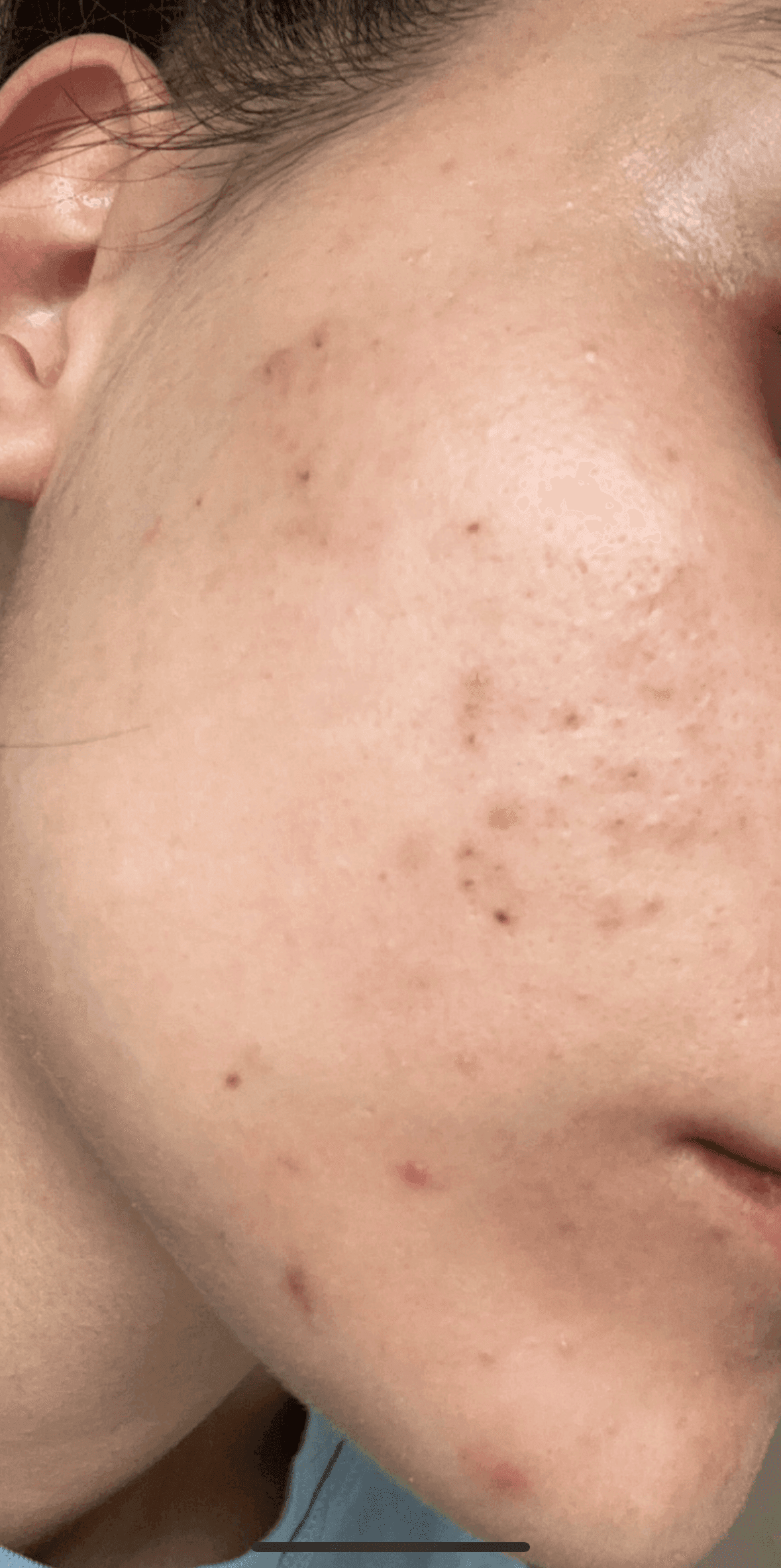
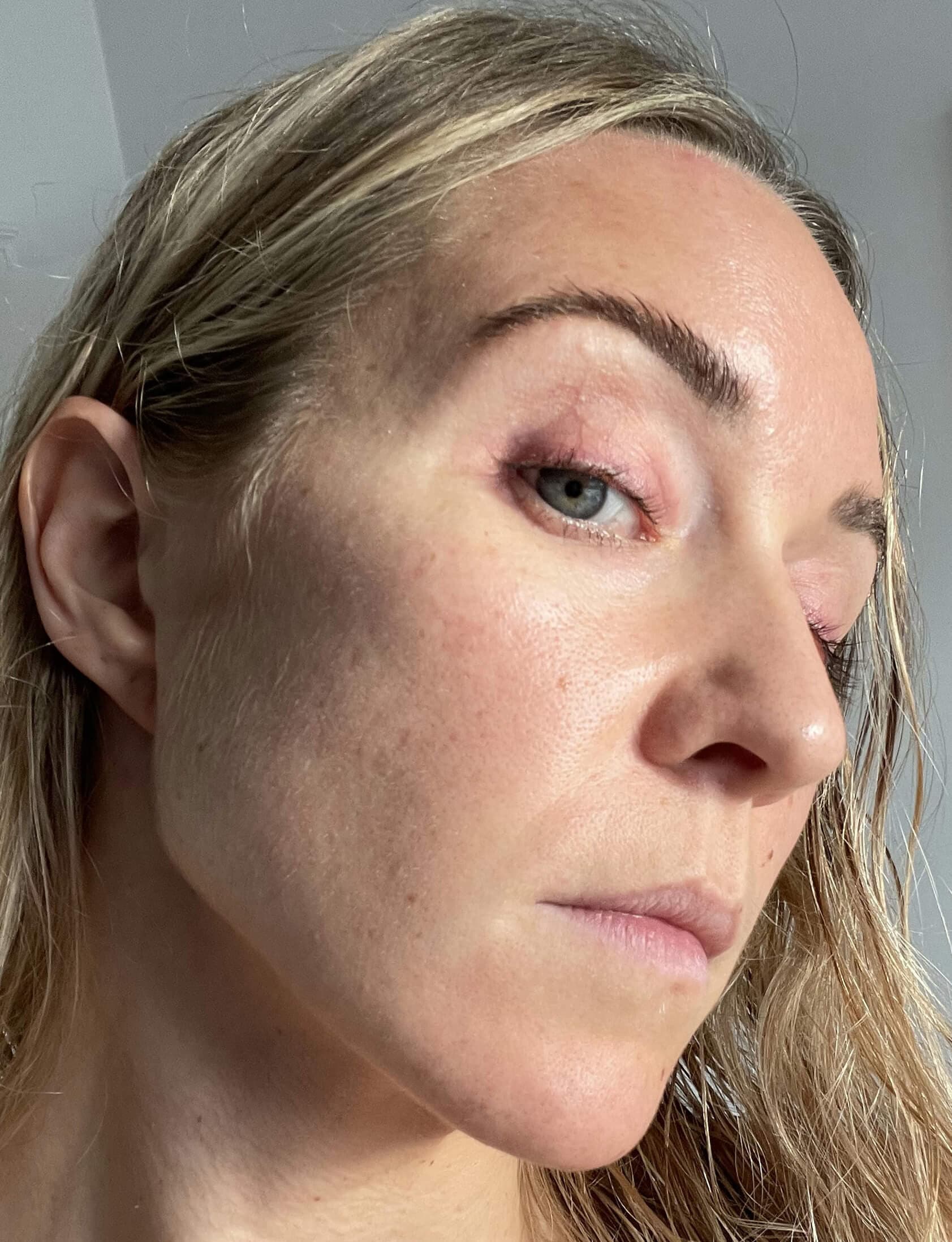
Real results from simple routines
A few real before-and-after cases from people using Danish Skin Care for skin concerns related to this guide. No filters, no miracle promise. Consistent skincare over time.
 Before
 After
After Before
 After
After Before
 After
AfterKeep reading
- Ingredient · niacinamide
- Ingredient · zinc pca
- Ingredient · salicylic acid
- Ingredient · sodium ascorbyl phosphate
- Ingredient · silica
- Ingredient · glycerin
- Condition · oily skin
- Condition · combination skin
- Condition · blackheads
- Condition · acne and blemishes
- Read · how to get rid of oily skin
- Read · why is my skin oily and dry at the same time
- Read · how to fix dehydrated oily skin
- Read · best skincare routine for clogged pores
- Read · why does my skin feel tight after washing
- Read · why do i break out after sunscreen
Citations
- Picardo M, Ottaviani M, Camera E, Mastrofrancesco A. Sebaceous gland lipids. Dermatoendocrinol. 2009;1(2):68-71.PMID 20224686
- Endly DC, Miller RA. Oily Skin: A review of Treatment Options. J Clin Aesthet Dermatol. 2017;10(8):49-55.PMID 28979664
- Draelos ZD, Matsubara A, Smiles K. The effect of 2% niacinamide on facial sebum production. J Cosmet Laser Ther. 2006;8(2):96-101.PMID 16766489