
How to get rid of pimples without making your skin angry
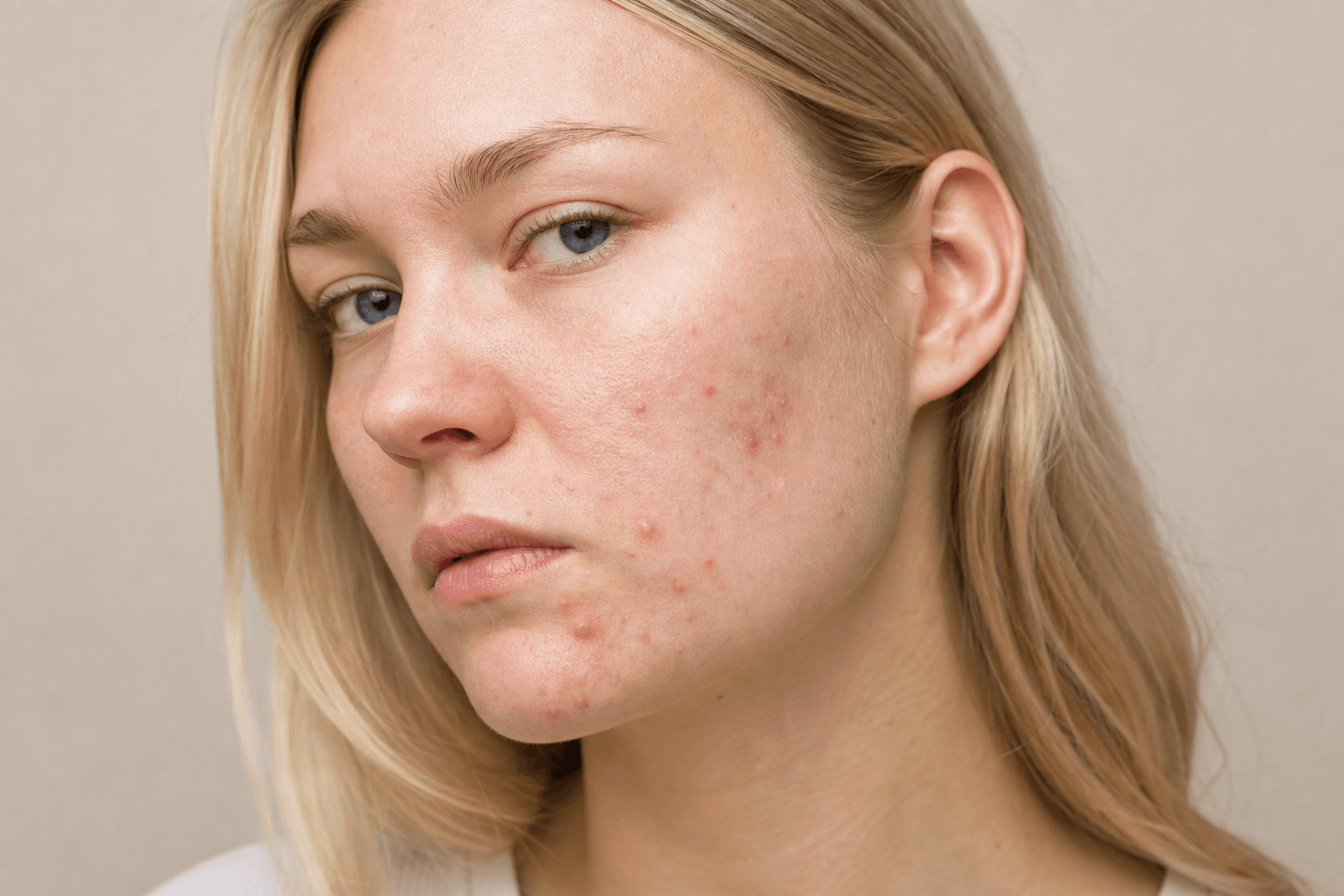
Pimples are usually clogged follicles, oil, bacteria, and inflammation. Here is the calm routine that helps them clear without picking, scrubbing, or starting a bathroom war.
On this page
I know the exact kind of pimple that makes people lose all common sense.
The one that appears before a date, a work presentation, a family photo, or a Tuesday where you simply wanted to exist in peace. Suddenly you are standing two centimetres from the mirror, negotiating with your face like it has customer support.
I have been there. When I struggled with acne and irritated skin, I did what many people do: I tried to outwork the pimple. More cleansing. More drying. More touching. More "one tiny squeeze", which is almost never tiny and rarely stops at one.
At Danish Skin Care, we have helped more than 100,000 people get clearer skin, with more than 500 before-and-after cases and more than 4,000 Trustpilot reviews averaging 4.7 out of 5. The pattern we see again and again is not that people are doing too little.
Often, they are doing too much to skin that is already inflamed.
So let us make pimples less mysterious, less dramatic, and much less tempting to attack.
The short answer
To get rid of pimples, treat the process behind them:
- Oil and dead skin cells clog the follicle.
- The clogged follicle becomes a tiny closed environment.
- Cutibacterium acnes can contribute to inflammation inside it.
- The immune system responds with redness, swelling, tenderness, and sometimes pus.
That is the basic acne pathway described in the acne literature. A pimple is not proof that your skin is dirty. It is a clogged, inflamed follicle having a bad day.
The best over-the-counter starting routine is usually:
- Gentle cleansing.
- A 2% leave-on salicylic acid a few nights per week.
- Barrier support with moisturiser and niacinamide.
- SPF every morning, especially if you get red or brown marks after pimples.
- No picking unless the pimple is genuinely ready and you can extract it hygienically.
That last point matters. The fastest way to turn one pimple into a week-long skin event is panic squeezing.
If your pimples flare in a pattern with food, start with the bigger evidence signals: sugar and high-glycemic meals, milk, or a specific trigger you can test calmly. Do not change everything at once, or your skin will give you useless data.
What kind of pimple do you have?
"Pimple" is a casual word. Skin is a bit more specific, because skin enjoys making paperwork.
Most pimples fall into a few buckets:
- Closed comedones: tiny skin-coloured bumps where the follicle is clogged but not very inflamed.
- Whiteheads: clogged pores with a visible white top.
- Blackheads: open clogged pores where the plug oxidises and looks dark.
- Papules: red, tender bumps without visible pus.
- Pustules: inflamed pimples with a pus-filled centre.
- Nodules or cysts: deeper, painful lumps under the skin.
The first five are often reasonable to treat with a calm topical routine. Deep, painful, scarring, or repeated cyst-like bumps deserve a dermatologist sooner, because prescription options may be the right tool.
If the bumps mostly sit across the upper face or hairline, the more specific guide to forehead acne is useful because hair products, sweat, hats, and friction can change the plan.
No amount of bathroom bravery makes a deep cyst extractable. It is not ready. It is not secretly waiting for the right angle. Leave it alone and get help if it keeps returning.
Why pimples happen
A 2012 acne study[1] describes acne as a disorder of the pilosebaceous unit: the hair follicle plus the oil gland. In normal language, the problem starts inside the pore, not on top of the skin.
Four things usually stack together.
1. More oil
Sebum is normal. Your skin makes it for a reason.
But when oil production is higher, especially during puberty, hormonal shifts, stress, or adult acne patterns, follicles can clog more easily. A 2023 adult-acne study[5] is useful here because it describes how acne can persist or appear after adolescence too. That does not mean oil is bad. It means oil plus sticky dead skin cells can become a traffic jam.
2. Sticky dead skin cells
Skin cells normally shed. In acne-prone follicles, they can clump together and narrow the exit.
This is why scrubbing the surface rarely fixes pimples. The clog is inside the follicle, not sitting politely on top of your face waiting for a gritty apricot product to evict it.
3. C. acnes and inflammation
Cutibacterium acnes is a normal skin bacterium. It is not a villain that moved in because you touched your face once.
In a clogged follicle, it can contribute to inflammatory signals. Then your immune system responds. That response is the redness, swelling, tenderness, and general "why is this one pimple developing a personality" feeling.
4. Irritation makes everything louder
Harsh cleansers, scrubs, alcohol toners, too many actives, picking, and drying spot treatments can all make inflamed skin more inflamed.
This is the part people underestimate. A pimple routine should treat acne while keeping the barrier calm. If the treatment creates more redness and peeling than the pimple did, the routine is not winning.
What actually helps pimples
Salicylic acid
Salicylic acid is usually the cleanest first active for blackheads, whiteheads, clogged bumps, and mild inflamed pimples.
It is oil-soluble, which is useful because pimples happen in sebum-rich follicles. A 1992 clinical study[3] on salicylic acid pads found improvement in acne lesions, and acne guideline literature keeps salicylic acid in the over-the-counter acne toolbox.
Use a 2% leave-on product 2 nights per week to start. If your skin stays calm, build to 3 or 4 nights per week.
Do not start every night if your skin is sensitive. This is skincare, not a loyalty test.
Niacinamide
Niacinamide is helpful because pimples involve more than clogs. They also involve redness, oil, barrier strength, and the marks left behind.
A 2006 study[4] on 2% niacinamide found reductions in facial sebum measures. In real routines, niacinamide is useful because it supports the barrier while being easy to tolerate for many people.
It is not the loudest ingredient in the room. That is one of its strengths.
Moisturiser
Moisturiser does not "feed" pimples when the formula is lightweight and non-clogging.
Skipping moisturiser often backfires because dry, tight, irritated skin tolerates acne treatment poorly. Then you stop the active, change products, pick more, and somehow the pimple has become the project manager of your week.
Keep the moisturiser simple. Comfort matters.
SPF
SPF does not remove a pimple overnight.
It helps prevent the aftermath from becoming the main event. Inflamed pimples can leave post-inflammatory red or brown marks, and UV exposure can make pigmentation hang around longer.
Choose an SPF you will actually wear. The perfect sunscreen in a drawer is mostly interior design.
What to stop doing
This is the section nobody wants and almost everybody needs.
- Stop picking early pimples. If there is no obvious whitehead at the surface, you are usually pushing inflammation deeper.
- Stop using toothpaste on pimples. Teeth, yes. Pimples, no.
- Stop scrubbing. Pimples are inflamed follicles, not dirty dishes.
- Stop drying the whole area out. Tight, flaky skin is not clear skin. It is irritated skin.
- Stop changing routines every few days. Acne routines need weeks, not a weekend.
- Stop stacking actives. Salicylic acid plus retinol plus benzoyl peroxide plus a peel is not ambition. It is irritation wearing a lab coat.
If you remember only one thing, remember this: a pimple heals best when the surrounding skin is calm.
Should you pop a pimple?
Usually, no.
But I also live in reality. People pop pimples. Pretending otherwise is like pretending nobody eats chocolate while standing in the kitchen.
If you are going to extract, only consider it when:
- The pimple has a clear white or yellow head.
- It is at the surface.
- It is not deep, hot, or cyst-like.
- The skin is clean.
- Your hands or tool are clean.
- It opens with very light pressure.
Stop immediately if nothing happens. Forcing it is how you get more swelling, a longer healing time, and a mark that becomes a small historical monument.
For deep, painful pimples, do not extract. Use your routine, reduce irritation, and read why the same pimple can keep coming back. See a dermatologist if a deep spot persists or scars.
A simple 12-week pimple plan
Weeks 1 to 2
Cleanse gently. Use salicylic acid 2 nights per week. Moisturise every night. Use SPF every morning.
Keep everything else boring. Boring is underrated. Boring is how your skin gets enough repetition to respond.
Weeks 3 to 6
If your skin is comfortable, increase salicylic acid to 3 nights per week.
If your skin stings, flakes, burns, or feels tight, stay at 2 nights or reduce to 1 night. More irritation does not mean more progress.
Weeks 7 to 12
Stay consistent and judge the trend, not each individual pimple.
You may still get the occasional spot. That does not mean the routine failed. Look for fewer new pimples, faster healing, less redness, and fewer clogged bumps.
If you are still getting painful, deep, recurring pimples after 12 weeks, especially if they scar or cluster around the jawline, get medical help. The 2016 acne guidelines[2] include prescription retinoids, benzoyl peroxide combinations, hormonal options, antibiotics in specific cases, and isotretinoin for severe acne for a reason.
They are not signs that you failed. They are tools for acne that needs a stronger plan.
The bottom line
Getting rid of pimples is mostly about doing the right things calmly for long enough.
Cleanse gently. Use salicylic acid a few nights per week. Support the barrier. Wear SPF. Do not pick everything that dares to appear. And if pimples are deep, painful, scarring, or stubborn, do not keep escalating bathroom experiments forever.
Across thousands of skin journeys, the same lesson keeps repeating: consistency beats panic.
For many people, that kind of calm structure is exactly what their skin has been asking for.
People also ask
What is the fastest way to calm a pimple?
The fastest realistic approach is to stop touching it, cleanse gently, use a leave-on salicylic acid product if your skin tolerates it, and protect the skin barrier. Trying to dry it out aggressively often creates more redness and a longer-lasting mark.
How long does a pimple take to go away?
A small pimple may settle in a few days, while deeper inflamed spots can take one to two weeks or longer. The red or brown mark after a pimple can last much longer, which is why SPF, not picking, and a calm post-acne mark routine matter.
Should I pop a pimple?
Most pimples should be left alone. Popping too early can increase inflammation, push debris deeper, and raise the risk of scarring or pigmentation. If a whitehead is fully surfaced, use clean tools and very gentle pressure, then stop immediately if it does not release.
A simple routine when pimples keep showing up
When pimples keep showing up, the routine should make inflamed skin less reactive, not more dramatic. I developed the Danish Skin Care Kit as a simple daily foundation: cleanse gently, use salicylic acid consistently, support the barrier, and protect the skin with SPF before adding more products or trying to outwork every spot.

The simplest start if pimples come with clogged pores, oil, redness, and routine confusion. Cleanser, treatment, moisturiser, and SPF in one calm system.
Full transparency: Danish Skin Care is my own company — I formulated these products and earn from every sale. That's exactly why I only recommend them where they genuinely fit the guide you just read.
Keep reading
- Ingredient · salicylic acid
- Ingredient · niacinamide
- Ingredient · retinol
- Ingredient · sodium hyaluronate
- Condition · acne and blemishes
- Condition · acne scars and marks
- Condition · oily skin
- Condition · blackheads
- Condition · combination skin
- Read · how to fade post acne marks
- Read · acne scars
- Read · how to get rid of forehead acne
- Read · how to get rid of chin acne
- Read · how to get rid of oily skin
- Read · rosacea acne
Citations
- Williams HC, et al. Acne vulgaris. Lancet. 2012;379(9813):361-72.PMID 21880356
- Zaenglein AL, et al. Guidelines of care for the management of acne vulgaris. J Am Acad Dermatol. 2016;74(5):945-73.PMID 26897386
- Zander E, Weisman S. Treatment of acne vulgaris with salicylic acid pads. Clin Ther. 1992;14(2):247-53.PMID 1535349
- Draelos ZD, et al. The effect of 2% niacinamide on facial sebum production. J Cosmet Laser Ther. 2006;8(2):96-101.PMID 16766489
- Bagatin E, et al. Adult acne versus adolescent acne: a narrative review with a focus on epidemiology to treatment. An Bras Dermatol. 2023;98(1):75-83.PMID 36253244