Oily skin
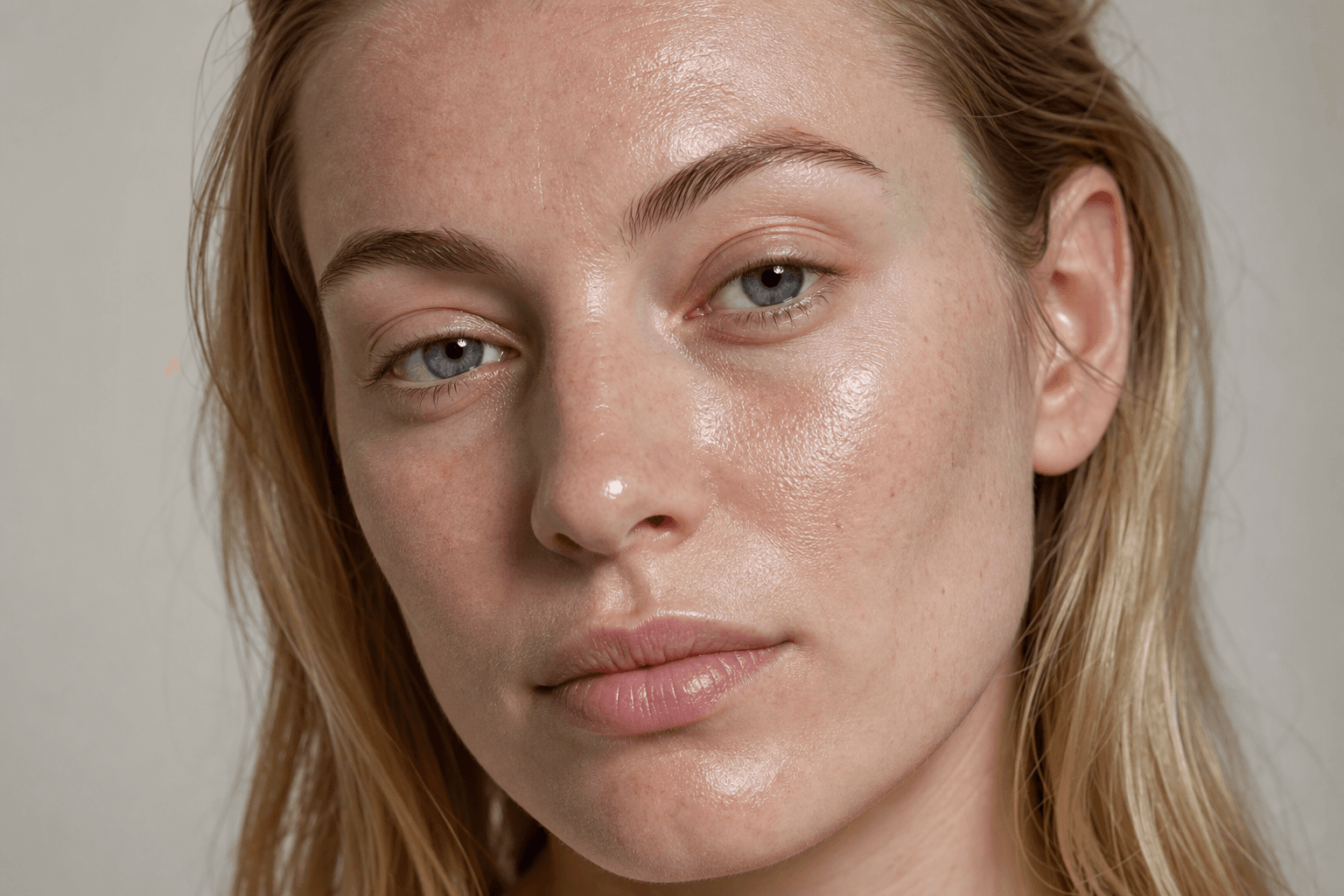
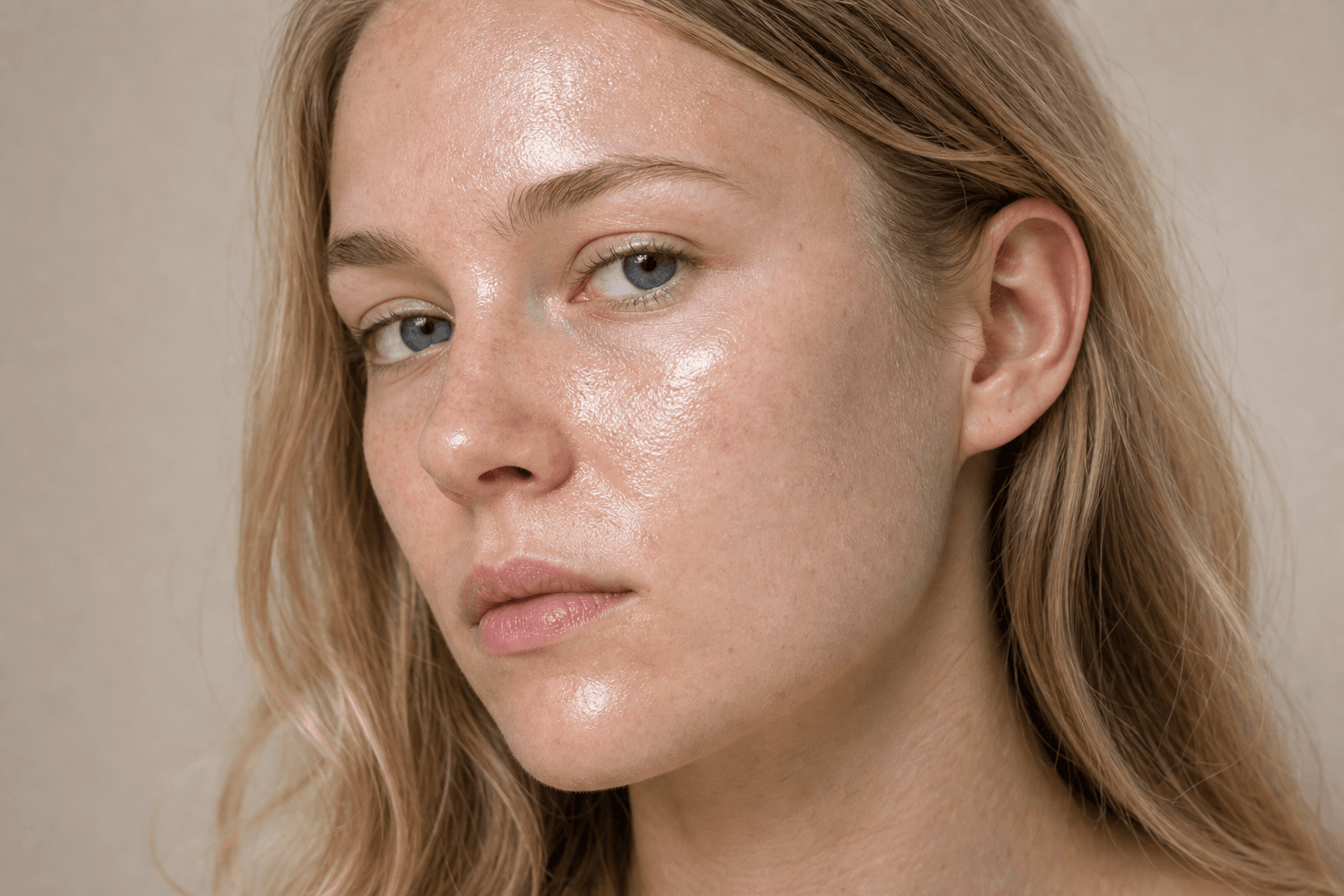
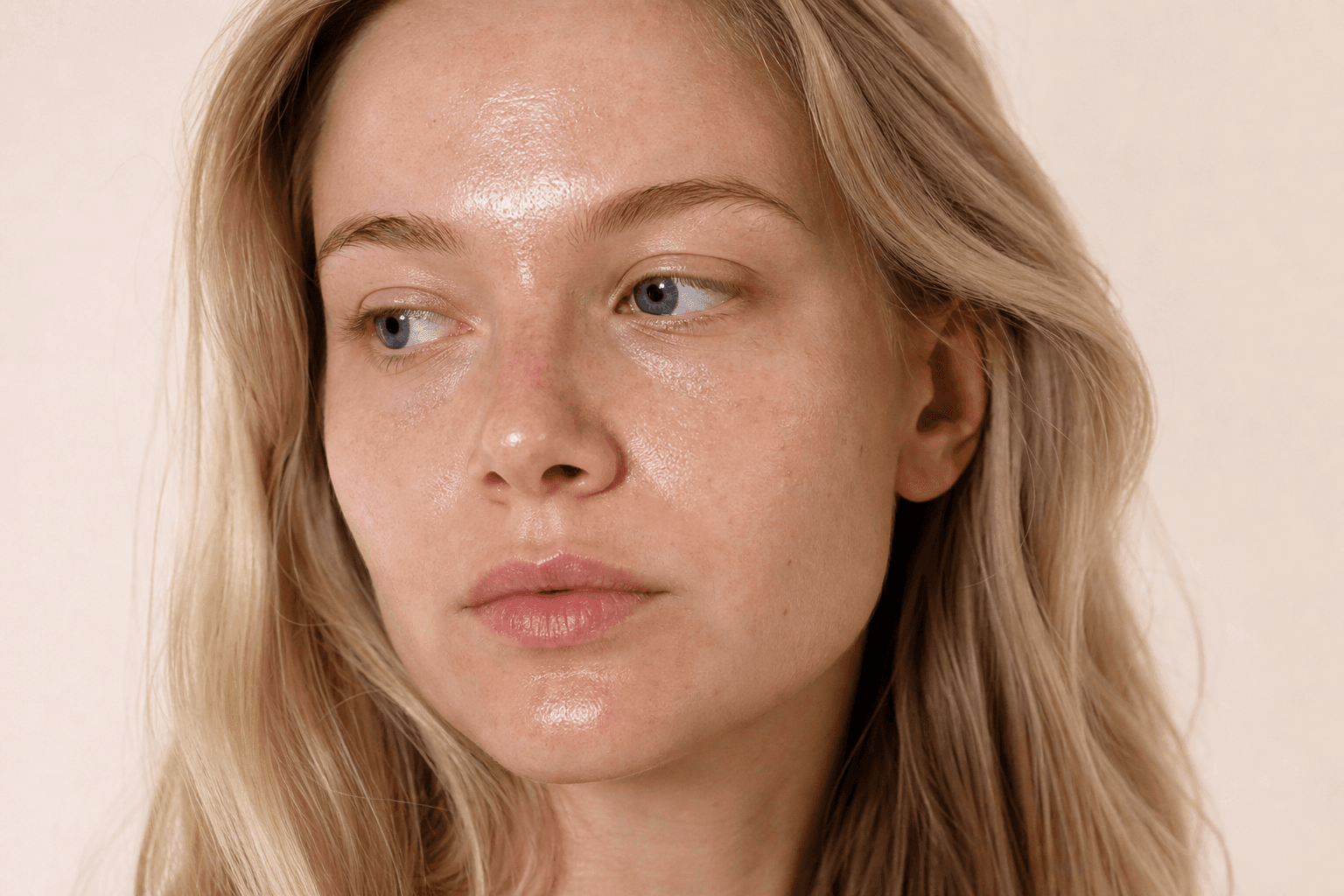
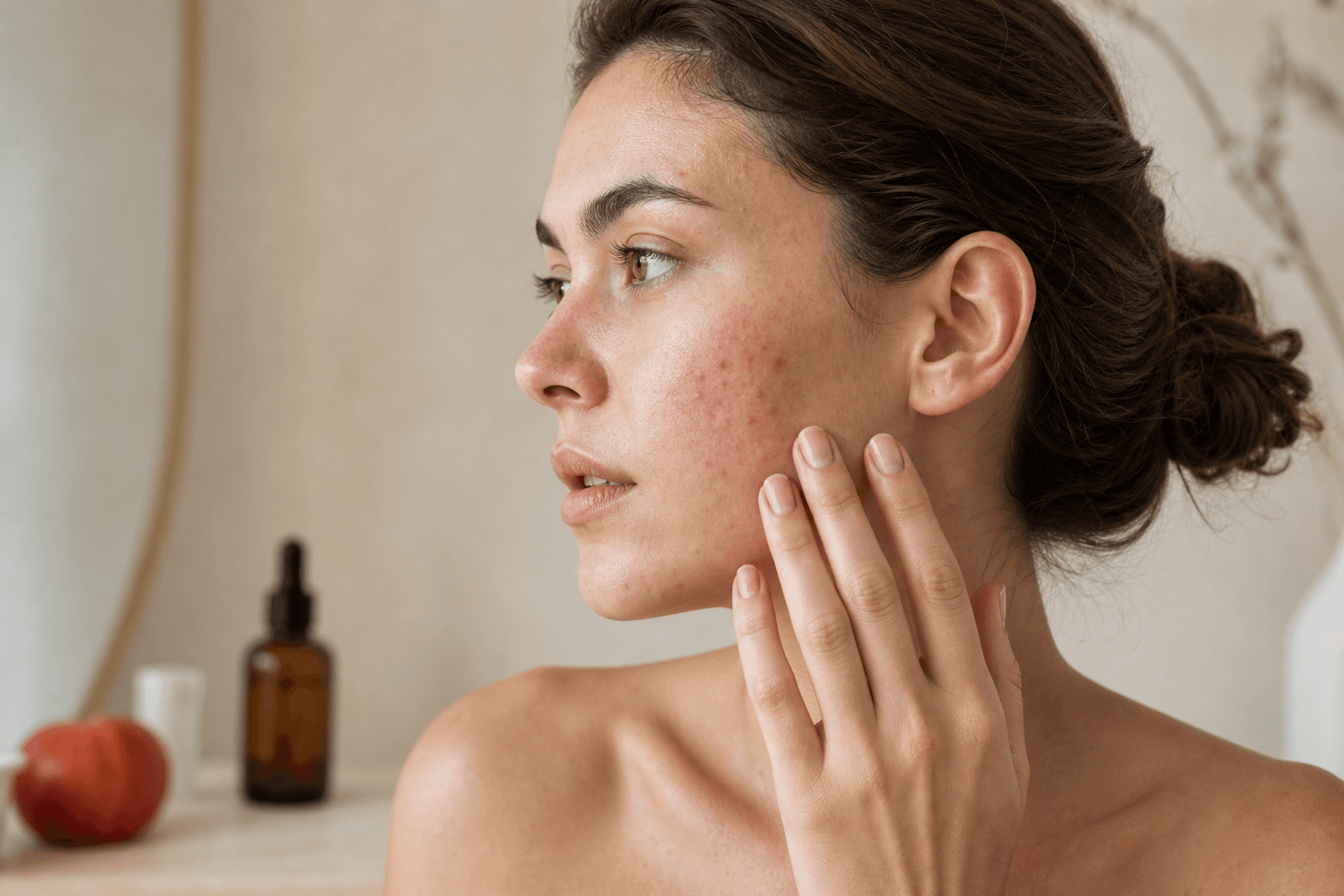
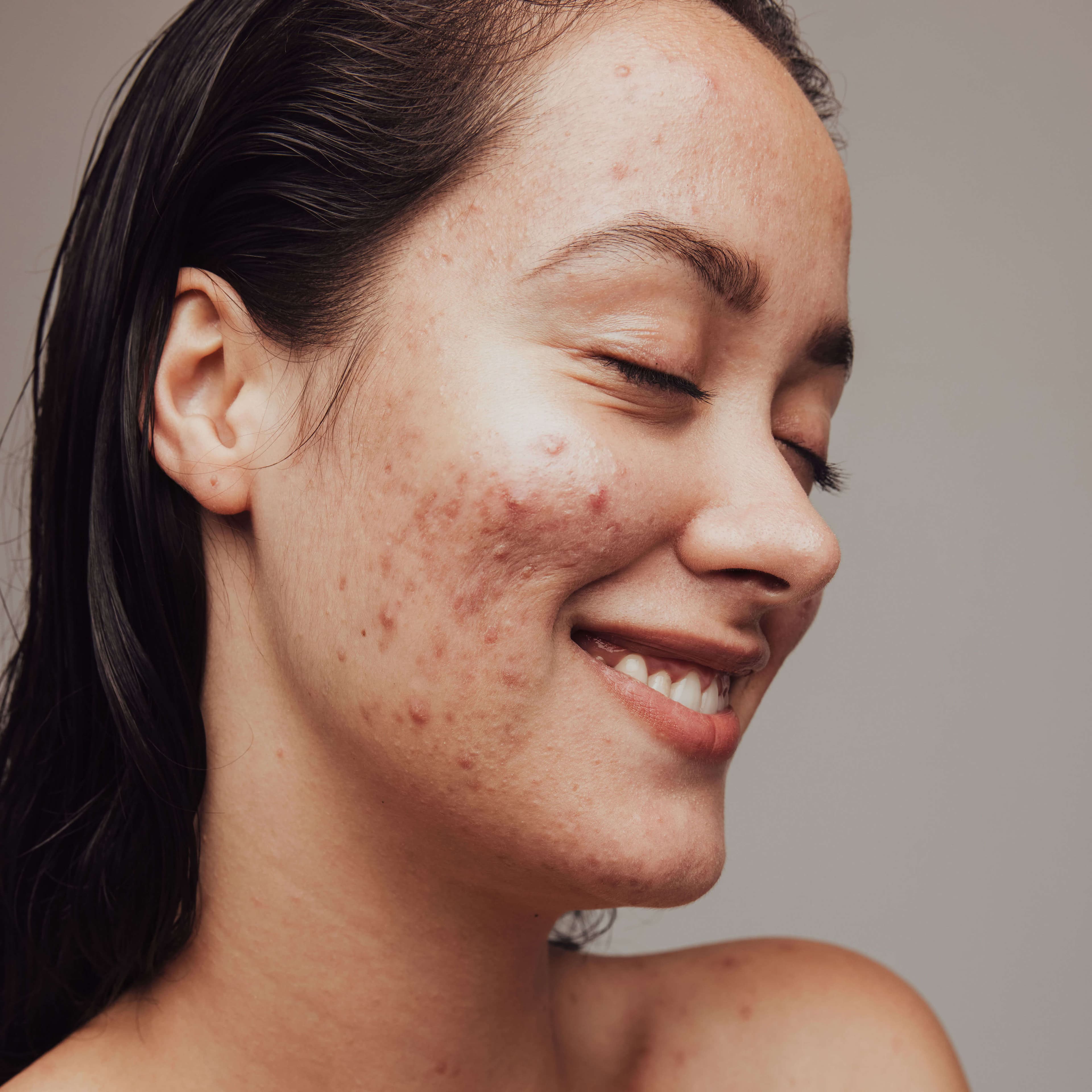
Oily skin isn't a problem to "fix". It's a feature with trade-offs. Here's what actually controls sebum, what doesn't, and the routine that works without stripping.

On this page
Why oily skin isn't a problem to fix
Sebum keeps the barrier intact, slows trans-epidermal water loss, carries vitamin E to the surface, and has documented antimicrobial activity. The Picardo 2009 review on sebaceous gland lipids is a good reminder that sebum isn't the enemy. It's a feature with trade-offs.
That said, visible oiliness, central-face shine by lunchtime, and the congestion that often comes with it are real complaints with real solutions. If your main complaint is face oiliness by noon, start with the midday-shine routine before adding more actives. The Endly 2017 review on oily skin treatment options is the cleanest summary of the actual evidence base.
What works
Three actives, well-evidenced:
- Niacinamide at 2–5%. Draelos 2006 found lower sebum excretion rates after 2 and 4 weeks in one study population, with a different pattern in the second arm. Useful, yes. Magic oil switch, no.
- Salicylic acid at 2%. Oil-soluble, it gets inside follicles and clears the congestion that comes with sebum. Our Power Treat is the leave-on option.
- Zinc PCA. Less studied than the first two, but the available evidence is positive for sebum control. It's in our Day Protector.
What doesn't work, and why
Stripping cleansers. They remove shine briefly, then leave the surface tight and annoyed while oil production continues. Twice a day, gentle, is the right ceiling.
Alcohol-based toners. They give a temporary "matte" feeling that is often surface dehydration. The shine usually returns, now on top of a more irritated barrier.
Skipping moisturiser. Dehydrated oily skin tends to feel tight and look shiny at the same time. Use a lightweight non-comedogenic moisturiser daily. The Moisturizer "Normal to oily" is specifically formulated for this.
When to look elsewhere
If your "oily" skin comes with painful, deep cystic acne, hormonal triggers (PCOS, persistent jawline breakouts in adults), or massive late-day shine that no surface routine touches, see a dermatologist or an endocrinologist. The conversation moves beyond topicals: oral spironolactone, hormonal management, or isotretinoin become reasonable options.
A simple routine
Morning
- Foaming cleanse — A short foaming wash is fine for oily skin (where it's a poor choice for dry).
- Niacinamide-supported moisturiser — 2% niacinamide reduced sebum measurements in clinical testing, with results varying by population (Draelos 2006).
- SPF, light and non-comedogenic
Evening
- Cleanse
- Salicylic acid 2% treat, 3 to 4 nights per week
- Light moisturiser (yes, even oily skin) — Pick the Moisturizer "Normal to oily" variant; it's lighter and skips squalane.
What to avoid
- Cleansing more than twice a day
- Stripping alcohol toners
- Skipping moisturiser: dehydrated oily skin often feels tighter and looks shinier
- Heavy comedogenic facial oils
Recommended Danish Skin Care routine

Pick the "Normal to oily" variants of Moisturizer and Day Protector. Lighter formulas, niacinamide for sebum control.

Salicylic acid penetrates inside the follicle. The right tool for sebum-heavy congestion.

Niacinamide + zinc PCA for a lighter daily finish while protecting from UV.
Full transparency: Danish Skin Care is my own company — I formulated these products and earn from every sale. That's exactly why I only recommend them where they genuinely fit the condition described above.
Key ingredients to look for
Common questions
Will I produce less oil if I cleanse more often?
No. Extra cleansing may remove shine for an hour, but it also irritates the barrier while your sebaceous glands keep working. Twice a day, gentle, is the ceiling.
Should oily skin skip moisturiser?
No. Dehydrated oily skin often feels tight underneath and shiny on top. Use a light, non-comedogenic moisturiser daily so the barrier is comfortable while you manage oil.
Will diet fix oily skin?
Mostly no. If acne travels with the oiliness, a lower-glycaemic experiment can be sensible, but diet is not a reliable sebum-control switch. Don't expect miracles.
Citations
- Draelos ZD, et al. The effect of 2% niacinamide on facial sebum production. J Cosmet Laser Ther. 2006;8(2):96–101. — PMID 16766489
- Endly DC, Miller RA. Oily Skin: A review of treatment options. J Clin Aesthet Dermatol. 2017;10(8):49–55. — PMID 28979664
- Picardo M, et al. Sebaceous gland lipids. Dermatoendocrinol. 2009;1(2):68–71. — PMID 20224686