
Why is my skin oily and dry at the same time?
Skin can be oily and dry at the same time when sebum is high but the barrier is short on water. Here is how to calm combination skin.

On this page
Oily and dry skin at the same time feels like your face cannot pick a side.
I remember having oily areas that shone by lunchtime while other areas felt tight after washing. My first instinct was to attack the oil. The dry areas did not send a thank-you card.
In many before-and-after cases, combination skin improves when the routine stops treating oil as the enemy and dryness as an afterthought.
The short answer
Your skin can be oily and dry at the same time because oil and water are different problems.
Oiliness usually means sebum. A 2009 study on sebaceous gland lipids[1] explains that sebum contributes to the skin surface environment. It is not dirt. It is part of skin biology.
Dryness or dehydration usually means the outer barrier is not holding water comfortably. A 2023 skin-barrier review[2] explains that moisturisation depends on barrier structure, water-binding ingredients, and lipids working together.
So yes, you can have too much shine and not enough comfort at the same time. Skin is annoying like that, but at least it is explainable.
If the oily-but-tight pattern is your main problem, the step-by-step guide to fixing dehydrated oily skin goes deeper into cleanser, humectant, and salicylic-acid frequency.
The classic oily-dry pattern
You might notice:
- shiny forehead, nose, or chin
- tight cheeks after cleansing
- flakes around the mouth or nose
- oily skin that still stings from products
- clogged pores plus dry patches
- makeup that separates in oily areas and clings to dry ones
This is often called combination skin, but the label is less important than the routine response.
Why stripping makes it worse
The common mistake is trying to remove all oil.
That often means:
- harsh cleanser twice daily
- no moisturiser
- daily clay masks
- strong acids because shine feels urgent
- powdering over irritated skin
The result can be a shiny T-zone and a stressed barrier. Oil production does not disappear because you made the cheeks miserable.
Build the routine around balance
Start with this:
Morning
- Rinse or cleanse gently if oily.
- Use lightweight moisturiser if the skin feels tight.
- Apply SPF.
Evening
- Cleanse once.
- Use salicylic acid on clogged or oily areas 2 to 4 nights weekly if tolerated.
- Moisturise.
If cheeks are dry and the T-zone is oily, you can apply a bit more moisturiser to the cheeks and less to the T-zone. That is allowed. Your face is not a single spreadsheet cell.
Where niacinamide fits
Niacinamide is useful for oily-dry skin because it sits between oil support and barrier support.
A 2006 study[3] found that 2% niacinamide reduced facial sebum measures over several weeks. That does not mean niacinamide will perfectly mattify your face. It means it is a sensible support ingredient when oiliness and routine comfort both matter.
I prefer it inside a moisturiser or SPF for many people, because the routine stays simpler.
What not to do
Avoid:
- skipping moisturiser entirely
- cleansing until the face squeaks
- using acid on dry, stingy patches
- treating flakes with scrubs
- using a heavy balm everywhere if only the cheeks need richness
- changing every product at once
Combination skin does not need a complicated routine. It needs a routine with enough flexibility not to bully one area while helping another.
When to get help
See a dermatologist if dryness is severe, cracking, itchy, scaly, oozing, or persistent. Also get help if oiliness comes with painful acne, sudden breakouts, or scarring.
Sometimes "oily and dry" is straightforward combination skin. Sometimes it is irritation, seborrheic dermatitis, rosacea, eczema, or acne needing medical treatment.
My final advice
Do not choose between treating oil and supporting the barrier.
Cleanse gently. Moisturise lightly. Treat clogged oily areas without punishing dry ones. Use SPF. Let the routine be simple enough that you can repeat it when life gets busy, because life always does.
People also ask
Can skin be oily and dry at the same time?
Yes. Oily usually describes sebum, while dry or dehydrated often describes water loss and barrier comfort. You can have both at once.
Should I skip moisturiser if my skin is oily and dry?
No. Choose a lightweight moisturiser. Skipping moisturiser can make tightness and irritation worse, even if the T-zone is shiny.
Why is my T-zone oily but cheeks dry?
The T-zone often has more active oil glands, while cheeks can be more barrier-dry or sensitive. Treat zones differently only where needed.
What ingredients help oily and dry skin?
Niacinamide, glycerin, sodium hyaluronate, panthenol, and carefully used salicylic acid can all be useful depending on whether oil, dehydration, or clogged pores is the main issue.
The oily-dry routine I would keep balanced
When skin is oily and dry at the same time, the answer is rarely to strip the oily parts and ignore the dry parts. The Danish Skin Care Kit keeps the routine balanced: cleanse gently, use salicylic acid where congestion needs help, moisturise, and protect every morning. That simple structure is much easier to repeat than treating your face like two separate weather systems.

A simple routine for combination skin: gentle cleanse, salicylic acid where needed, moisturiser, and SPF.
Full transparency: Danish Skin Care is my own company — I formulated these products and earn from every sale. That's exactly why I only recommend them where they genuinely fit the guide you just read.
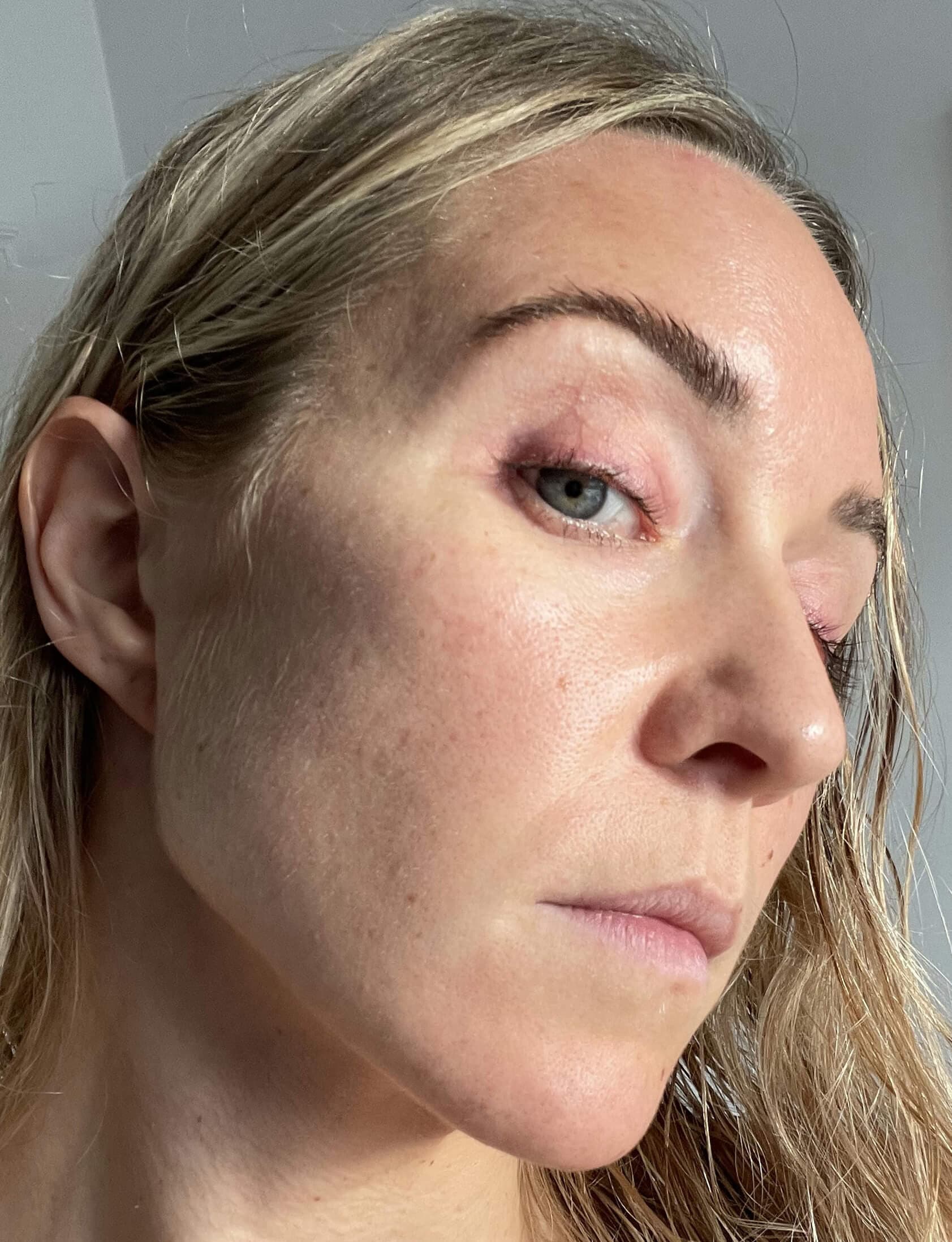
Real results from simple routines
A few real before-and-after cases from people using Danish Skin Care for skin concerns related to this guide. No filters, no miracle promise. Consistent skincare over time.
 Before
 After
After Before
 After
After Before
 After
AfterKeep reading
- Ingredient · niacinamide
- Ingredient · glycerin
- Ingredient · sodium hyaluronate
- Ingredient · salicylic acid
- Ingredient · zinc pca
- Condition · combination skin
- Condition · oily skin
- Condition · dry skin
- Condition · sensitive skin
- Condition · acne and blemishes
- Read · how to fix dehydrated oily skin
- Read · how to get rid of oily skin
- Read · why does my skin feel tight after washing
- Read · best skincare routine for clogged pores
- Read · how to treat dry skin on face
- Read · why does my skin burn when i apply moisturizer
Citations
- Picardo M, Ottaviani M, Camera E, Mastrofrancesco A. Sebaceous gland lipids. Dermatoendocrinol. 2009;1(2):68-71.PMID 20224686
- The Skin Barrier and Moisturization: Function, Disruption, and Mechanisms of Repair. Skin Pharmacol Physiol. 2023.PMID 37717558
- Draelos ZD, Matsubara A, Smiles K. The effect of 2% niacinamide on facial sebum production. J Cosmet Laser Ther. 2006;8(2):96-101.PMID 16766489