
Why do I get pimples on my cheeks?
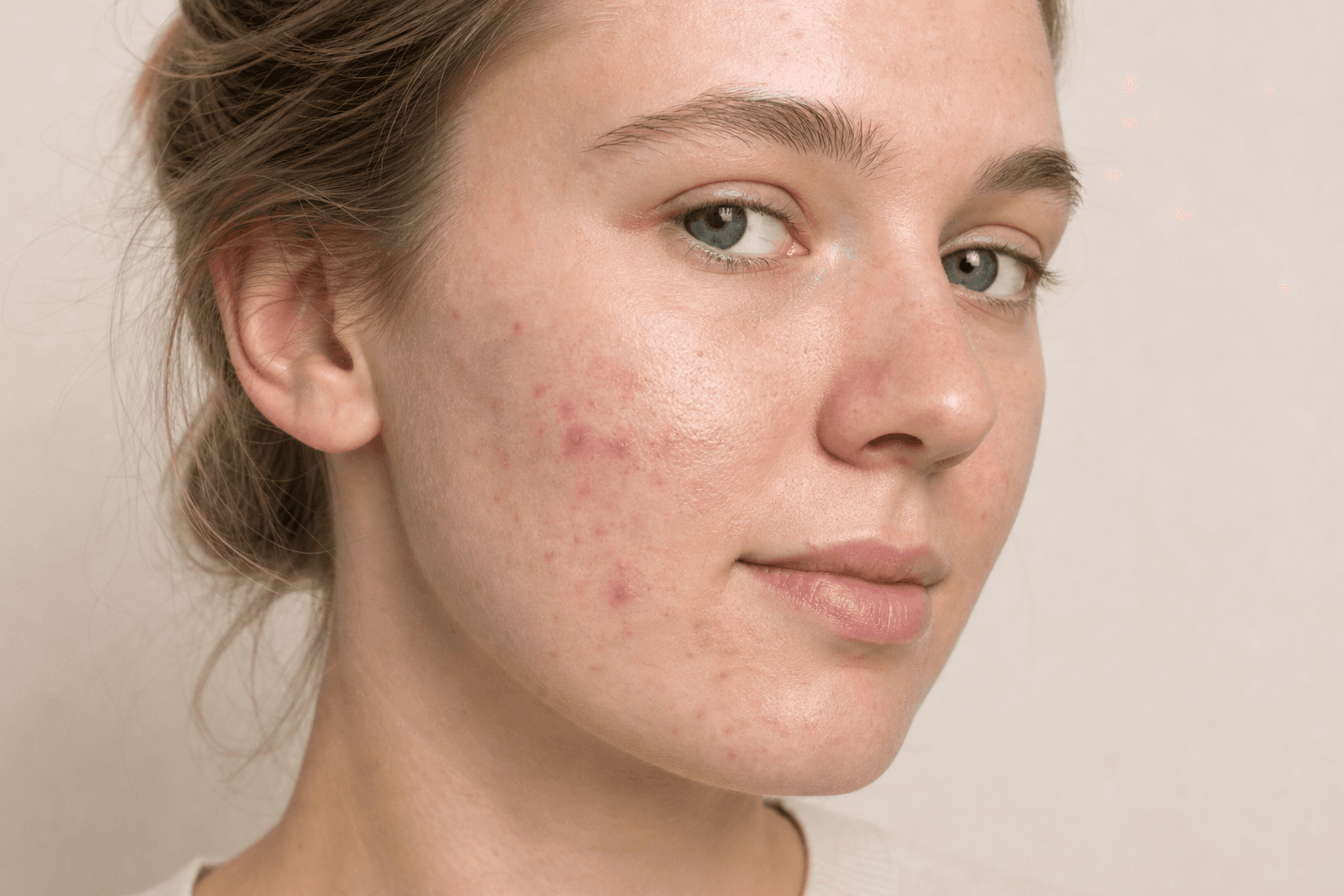
Cheek pimples usually come from acne biology plus everyday contact: makeup, sunscreen, hair products, pillowcases, phones, masks, friction, and over-cleansing.
On this page
When I had acne, cheek pimples felt unfairly personal.
Forehead bumps were annoying. Chin spots were predictable. But cheek acne sat right in the middle of every conversation, every photo, every bathroom mirror ambush. I remember treating it like a cleanliness problem, which meant I washed harder, checked more often, and gave my skin the emotional support of sandpaper.
After helping more than 100,000 people with problem skin, I have learned that cheek acne is often less mysterious than it feels. The cheeks are where acne biology meets real life: makeup, sunscreen, hair, pillowcases, phones, masks, sweat, friction, and hands that keep checking whether the bump is still there. Spoiler: it is still there.
The short answer
You get pimples on your cheeks when follicles clog and inflame, then everyday contact adds extra irritation or residue.
Acne starts in the pilosebaceous unit - the hair follicle and oil gland - where sebum, sticky dead skin cells, Cutibacterium acnes, and inflammation can all play a role[1]. Cheek acne is not proof that your face is dirty. It is usually acne-prone skin meeting too many small triggers in the same place.
The most useful starting plan is:
- Cleanse gently every evening.
- Remove makeup and SPF properly, without scrubbing.
- Use one tolerated acne active, often salicylic acid, a few nights per week.
- Moisturise so the cheeks do not become tight and irritated.
- Wear SPF, especially if pimples leave red or brown marks.
- Audit what touches your cheeks: hair products, pillowcases, phones, masks, scarves, and hands.
Simple is not lazy here. Simple is how you find the culprit without creating six new suspects.
Why cheeks break out so easily
Cheeks are contact zones.
They touch pillows. They catch foundation and blush. They sit under sunscreen. They meet hair products when hair falls forward. They get rubbed by phones, helmets, winter scarves, masks, and the side of your hand during one of those "I am working" poses that is mostly cheek compression with emails.
That contact can matter in a few ways.
Makeup and sunscreen residue
If cheek bumps appear where foundation, concealer, blush, bronzer, primer, or sunscreen sits, think about acne cosmetica.
Kligman and Mills described acne cosmetica in 1972 as acne linked to cosmetic exposure[2]. That does not make makeup evil. It means a specific product, texture, or removal habit can keep acne-prone follicles more clogged.
The clue is usually a cluster of small bumps, closed comedones, or whiteheads exactly where the product lives. If that sounds familiar, the guide to makeup breakouts walks through a calmer product test.
Hair products touching the cheeks
Hair products do not stay politely in the hair. Conditioner, styling cream, oil, wax, dry shampoo, and leave-in products can migrate onto the cheeks, especially if your hair rests there during the day or while you sleep.
An 8-week study of a non-comedogenic hair-care regimen[3] found improvement in mild to moderate facial and truncal acne. That does not mean every hair product causes acne. It means hair care can be part of the breakout pattern when residue reaches acne-prone skin.
If cheek acne sits near the temples, jaw-side cheeks, or hairline, read are hair products breaking you out? before blaming your entire routine.
Friction from phones, masks, straps, and scarves
Repeated rubbing and pressure can trigger acne mechanica. A classic acne mechanica paper[4] described breakouts from pressure, friction, heat, and occlusion.
On the cheeks, that can look like:
- bumps where a mask edge rubs
- pimples on the side you hold your phone
- acne under a helmet strap or sports gear
- irritation from scarves, collars, or pillow friction
- breakouts where you rest your hand while working
You do not need to sterilise your life. Clean the obvious contact points and reduce repeated rubbing where you can.
Is it cheek acne or something else?
Most cheek breakouts are acne. Still, the pattern matters.
Typical cheek acne often includes a mix of clogged pores, whiteheads, red pimples, and marks from older spots.
Makeup or SPF breakouts often cluster where the product sits and may improve when you pause one product for several weeks. If SPF seems suspicious, use the guide to breaking out after sunscreen.
Friction acne follows the object: mask line, phone side, strap line, pillow side.
Rosacea-like bumps may come with flushing, persistent redness, burning, and sensitivity. If your cheeks are red, hot, and reactive rather than mainly clogged, start with the rosacea guide or get a diagnosis.
Very uniform itchy bumps may be folliculitis rather than classic acne. If the bumps are all the same size and itch more than normal acne, get help instead of escalating acids.
Treating the wrong thing harder is a very efficient way to make the cheeks angrier.
A calm cheek-acne routine
Keep the routine steady for 8 to 12 weeks. Acne is slow, and cheeks are dramatic.
Morning
Rinse or cleanse gently depending on how oily your skin feels. If your cheeks are sensitive, do not start the day by stripping them.
Use a light moisturiser if the skin feels tight, then sunscreen. If sunscreen often clogs your cheeks, choose lighter textures and remove them properly at night. Do not quit SPF in a panic if pimples leave marks; UV exposure can make post-acne pigmentation more stubborn.
If you wear makeup, keep cheek layers thinner for a few weeks. Foundation plus concealer plus cream blush plus powder plus setting spray can be fine for some people. For acne-prone cheeks, it can also become a small film festival.
Evening
Cleanse once, properly and gently. If you wear makeup or water-resistant SPF, remove that layer first, then cleanse without scrubbing.
Use a leave-on 2% salicylic acid product 2 nights per week to start if your skin tolerates it. A clinical study of salicylic acid pads[5] found improvement in acne lesions, and the practical reason still makes sense: salicylic acid can help inside oily, clogged follicles.
On the other nights, moisturise and leave the cheeks alone. If the skin stings, flakes, burns, or feels tight, reduce the active step. Irritation is feedback, not a dare.
The contact audit
Do this like a quiet experiment, not a crime scene.
For 4 weeks:
- Change pillowcases 2 to 3 times per week.
- Wipe your phone regularly.
- Keep hair products away from cheek skin.
- Rinse conditioner thoroughly before washing your face.
- Wash masks, scarves, helmet straps, and sports gear.
- Stop resting your face in your hand while working.
- Avoid picking closed comedones. They are terrible at becoming "quick fixes."
Do not change your whole skincare routine during the audit. If everything changes, you learn nothing except that your bathroom now looks busier.
When to see a dermatologist
The 2016 acne guidelines[6] include prescription options for acne when over-the-counter care is not enough, including topical retinoids, benzoyl peroxide combinations, oral antibiotics in specific cases, hormonal options for some patients, and isotretinoin for severe acne.
Get proper help sooner if cheek acne is:
- deep or painful
- leaving scars
- suddenly severe
- very itchy or uniform
- linked with strong flushing or burning
- not improving after 8 to 12 weeks of consistent care
- affecting your confidence enough that it dominates your day
Prescription care is not a failure. It is sometimes the right tool.
My final advice
If your cheeks keep breaking out, do not turn your face into a laboratory.
Keep the acne routine simple. Then test the obvious contact triggers one by one: makeup, SPF, hair products, pillowcases, phones, masks, and friction.
Cheek acne gets easier to understand when you stop changing everything at once. Fewer variables, fewer arguments, calmer skin. Not glamorous advice. Very useful advice.
People also ask
What causes pimples on cheeks?
Cheek pimples usually come from the normal acne process plus contact triggers such as makeup, sunscreen, hair products, pillowcases, phones, masks, sweat, or friction.
Can pillowcases cause cheek acne?
A dirty pillowcase is rarely the only cause, but fabric that repeatedly touches acne-prone cheeks can add residue, friction, and irritation. Wash it regularly while keeping the skincare routine steady.
How long does cheek acne take to clear?
Mild cheek acne often needs 8 to 12 weeks of a consistent routine. Deep, painful, scarring, very itchy, or persistent cheek breakouts should be checked by a dermatologist.
Should I stop wearing makeup if I get cheek pimples?
Not automatically. Test the most suspicious cheek products for a few weeks, choose lighter non-comedogenic formulas, and remove makeup gently before bed.
The cheek-acne routine I would keep simple
Cheek acne can make people investigate every pillowcase, foundation, phone screen, and snack in their life. I would start more calmly. The Danish Skin Care Kit keeps the routine repeatable: gentle cleansing, salicylic acid where clogged pores need help, moisturiser, and daily SPF. Then you can test contact triggers without changing the whole bathroom at once.

A simple cheek-acne base: gentle cleansing, a tolerated salicylic acid step for clogged pores, moisturising support, and SPF so red or brown marks are not left to darken.
Full transparency: Danish Skin Care is my own company — I formulated these products and earn from every sale. That's exactly why I only recommend them where they genuinely fit the guide you just read.
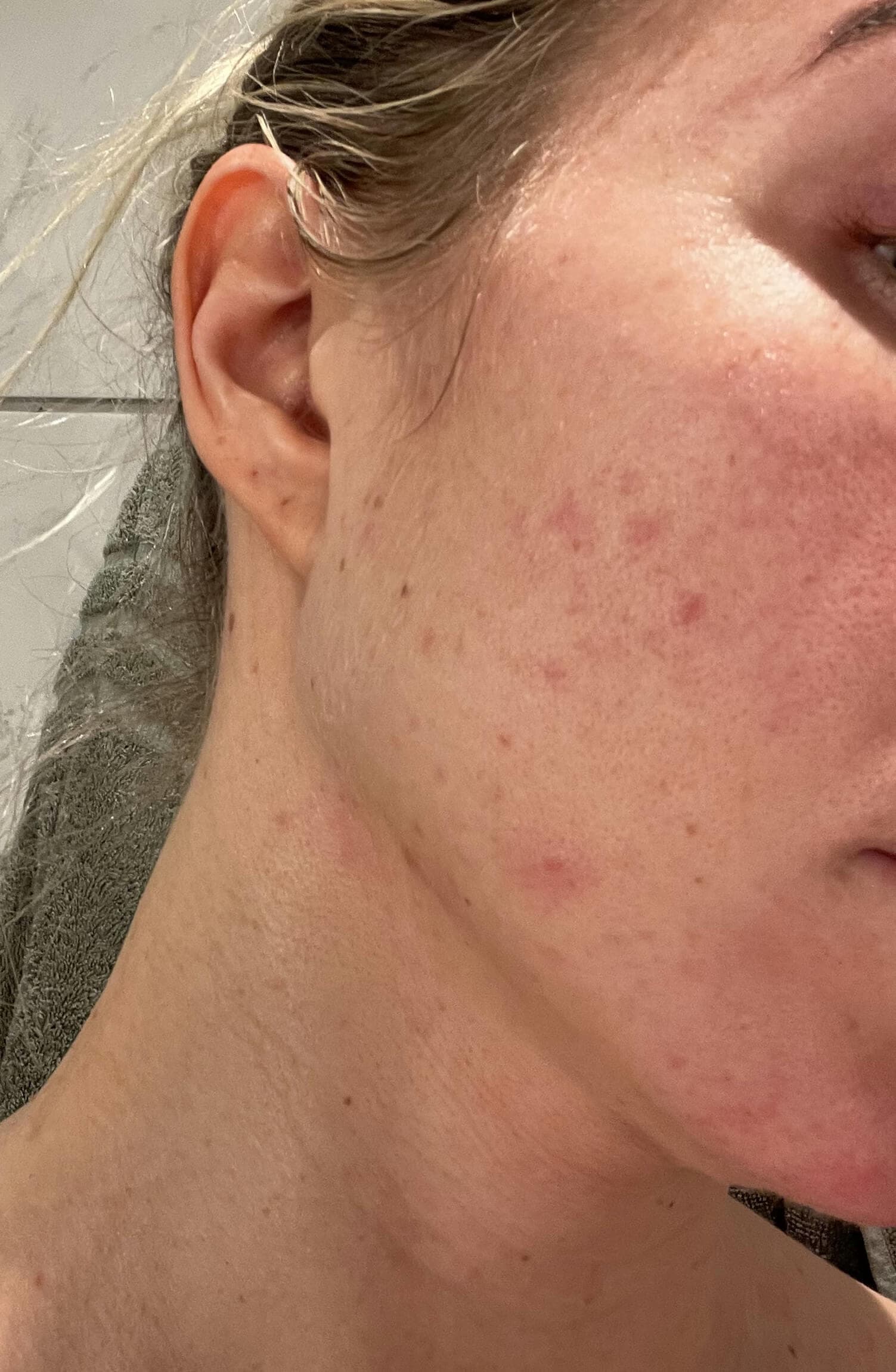
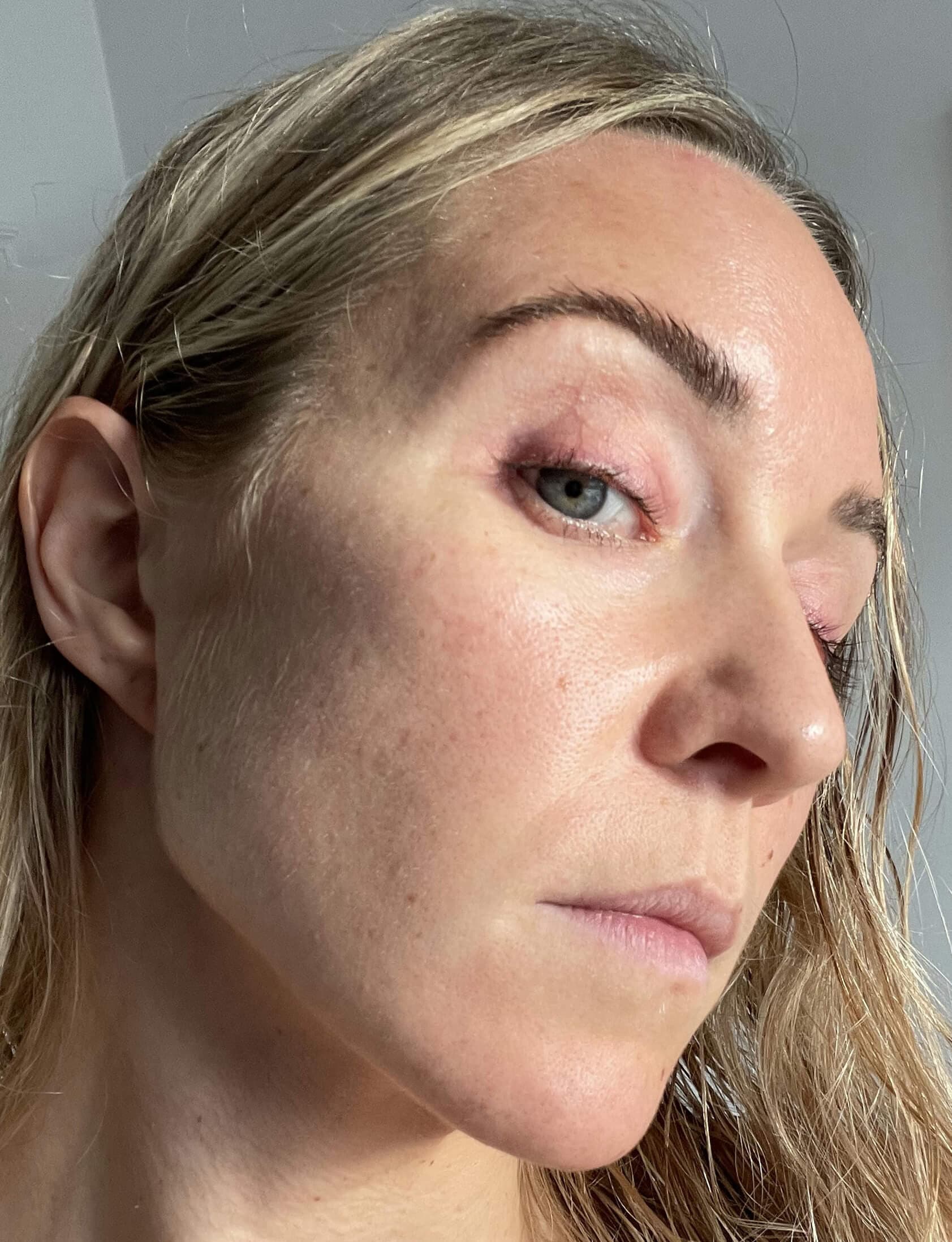
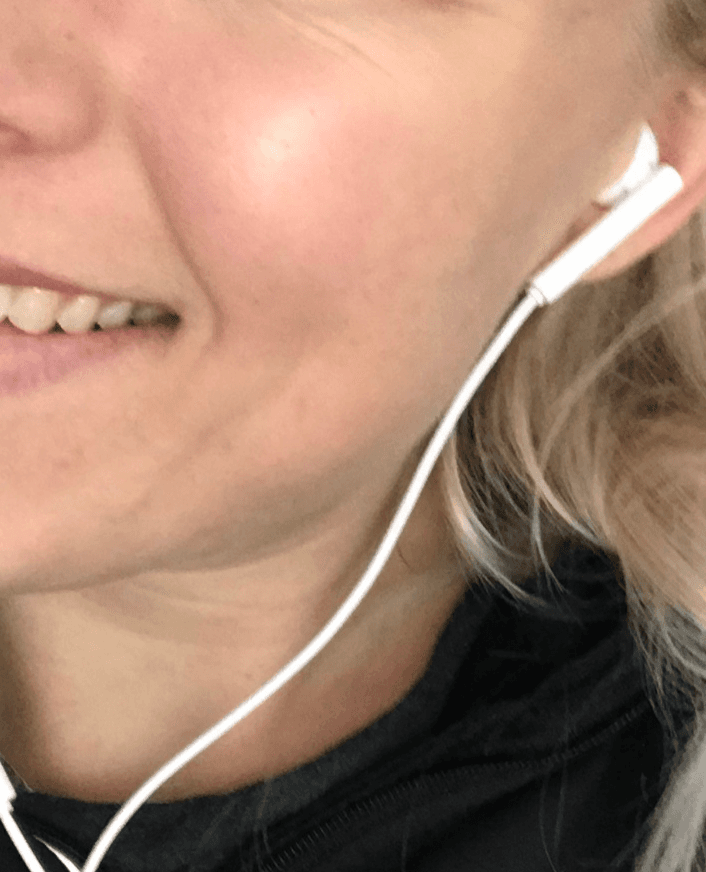
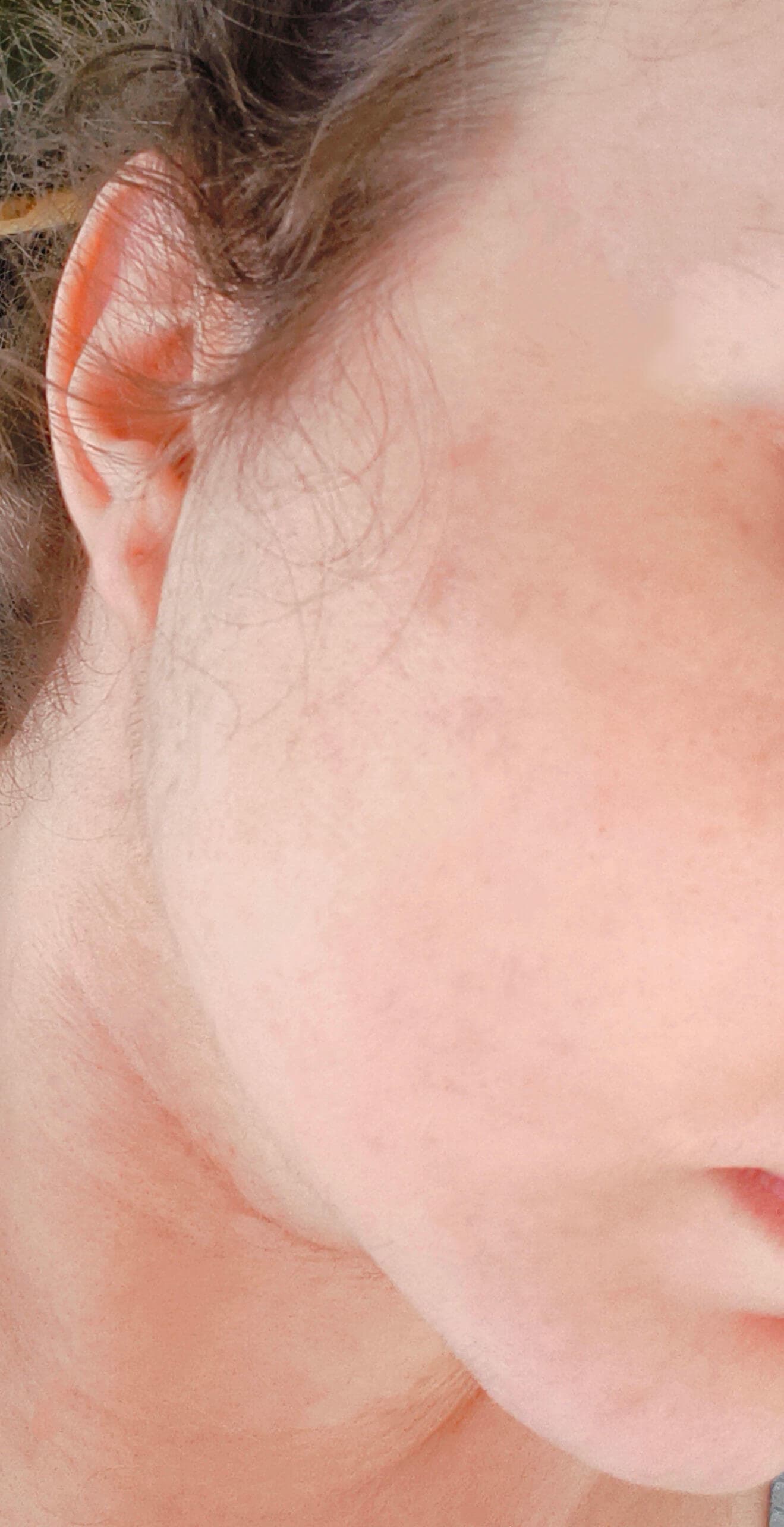
Real results from simple routines
A few real before-and-after cases from people using Danish Skin Care for skin concerns related to this guide. No filters, no miracle promise. Consistent skincare over time.
 Before
 After
After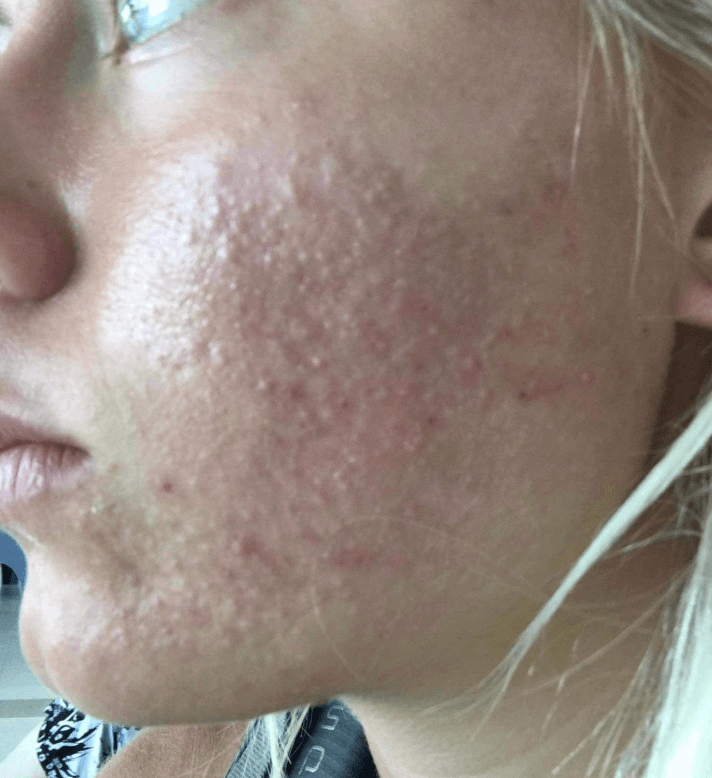 Before
 After
After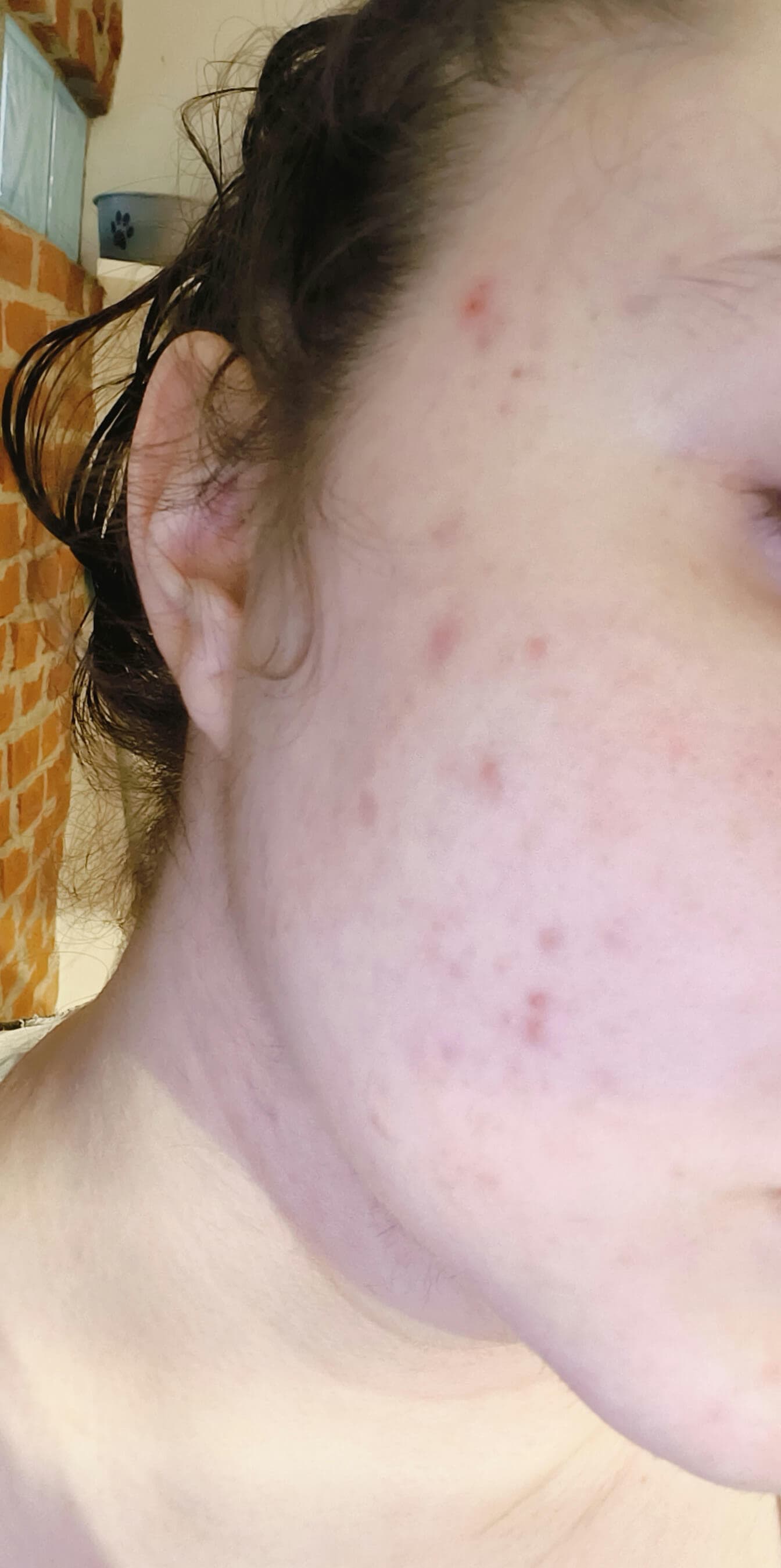 Before
 After
AfterKeep reading
- Ingredient · salicylic acid
- Ingredient · niacinamide
- Ingredient · decyl glucoside
- Ingredient · dimethicone
- Ingredient · jojoba oil
- Condition · acne and blemishes
- Condition · blackheads
- Condition · oily skin
- Condition · sensitive skin
- Read · why does makeup break me out
- Read · are hair products breaking you out
- Read · why do i break out after sunscreen
- Read · how to get rid of pimples
- Read · best skincare routine for clogged pores
- Read · how to wash your face with acne
Citations
- Williams HC, Dellavalle RP, Garner S. Acne vulgaris. Lancet. 2012;379(9813):361-372.PMID 21880356
- Kligman AM, Mills OH Jr. Acne cosmetica. Arch Dermatol. 1972;106(6):843-850.PMID 4264346
- Draelos ZD, et al. Efficacy of a Non-Comedogenic Hair Care Regimen for the Reduction of Mild-to-Moderate Truncal and Facial Acne: A Single-Arm 8-Week Study. J Drugs Dermatol. 2021;20(6):690-693.DOI 10.36849/JDD.5772
- Mills OH Jr, Kligman AM. Acne mechanica. Arch Dermatol. 1975;111(4):481-483.PMID 123732
- Zander E, Weisman S. Treatment of acne vulgaris with salicylic acid pads. Clin Ther. 1992;14(2):247-253.PMID 1535349
- Zaenglein AL, et al. Guidelines of care for the management of acne vulgaris. J Am Acad Dermatol. 2016;74(5):945-973.PMID 26897386