Sensitive skin
"Sensitive" is a symptom, not a diagnosis. Learn what drives reactive skin, the routine that calms it, and what to leave out.
On this page
What "sensitive" means
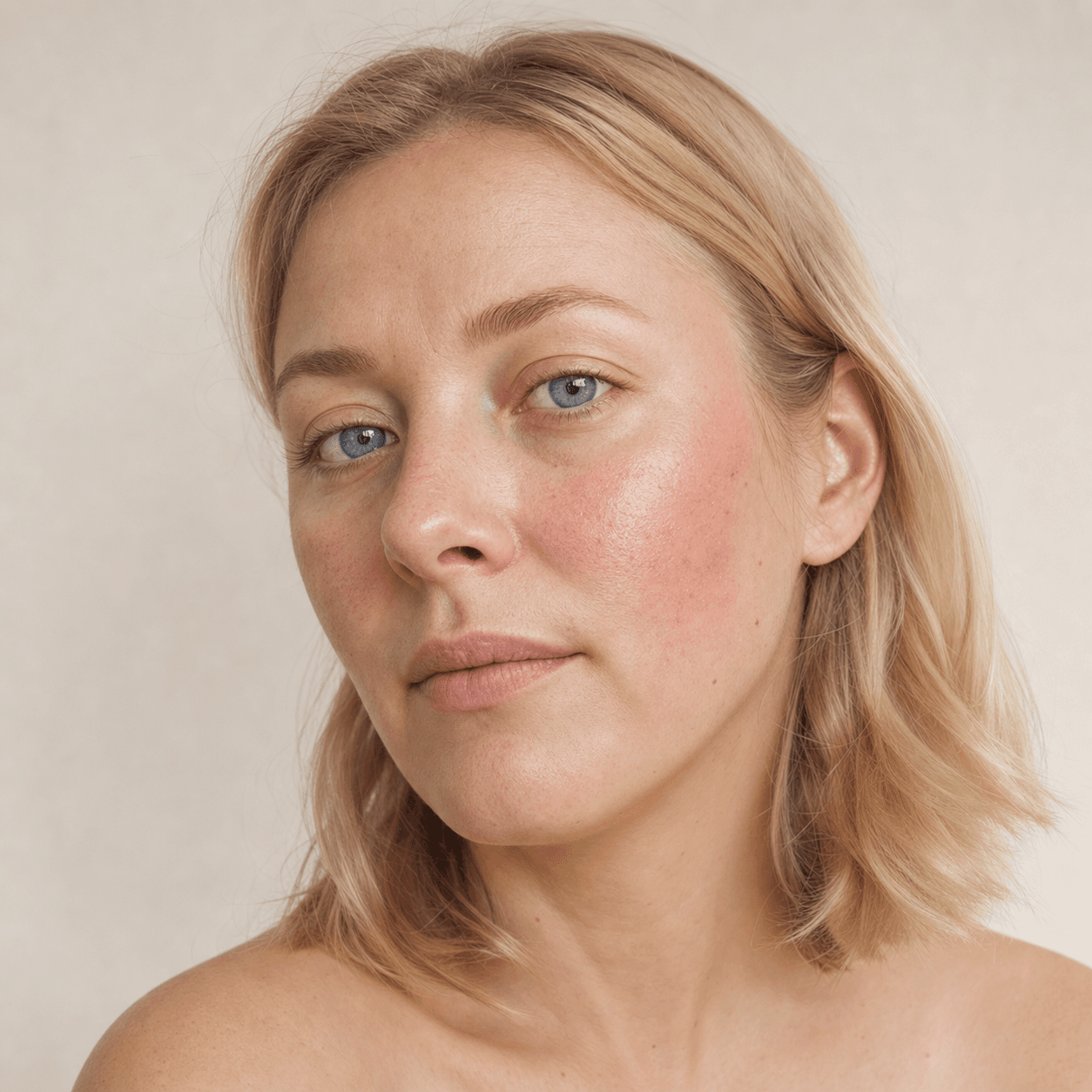
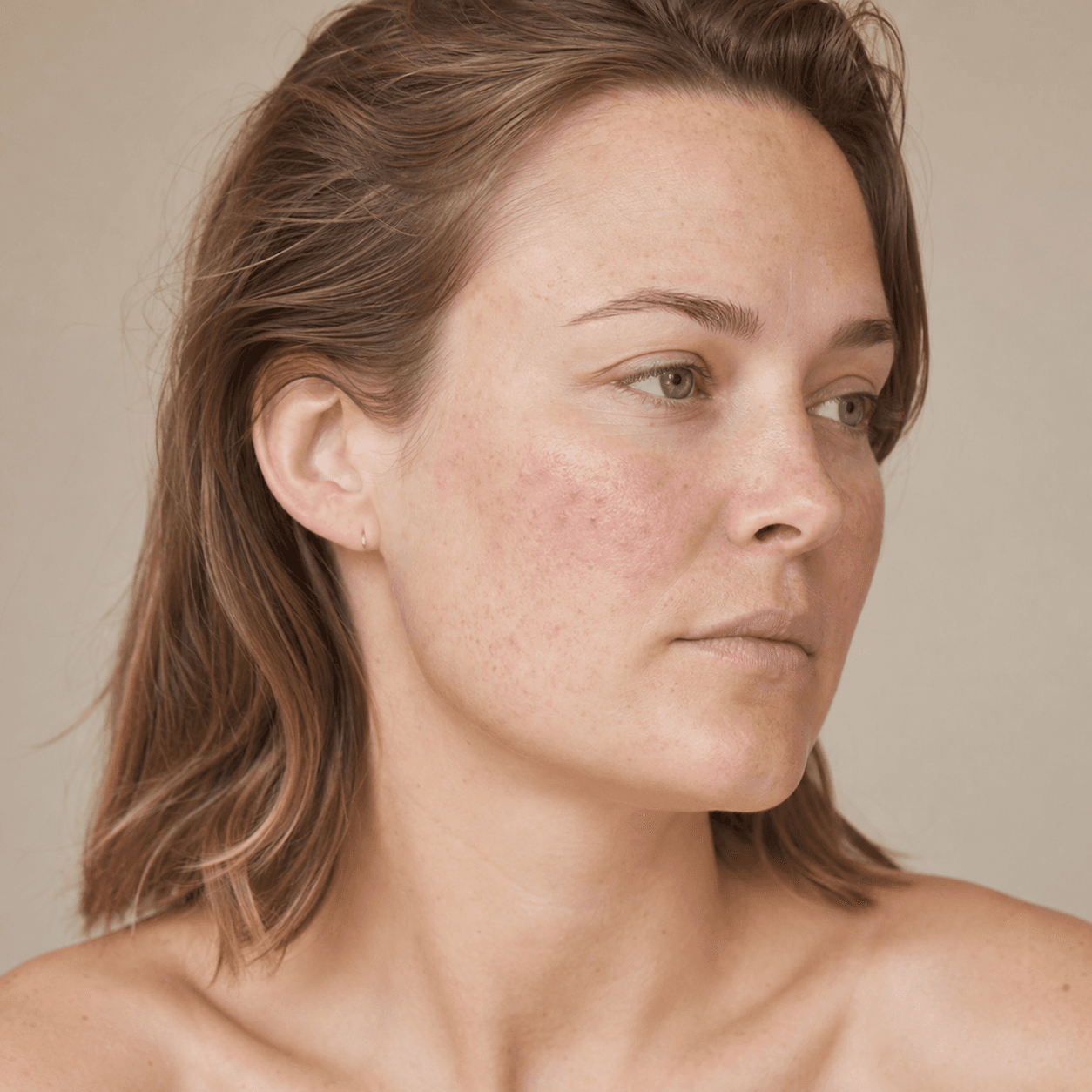
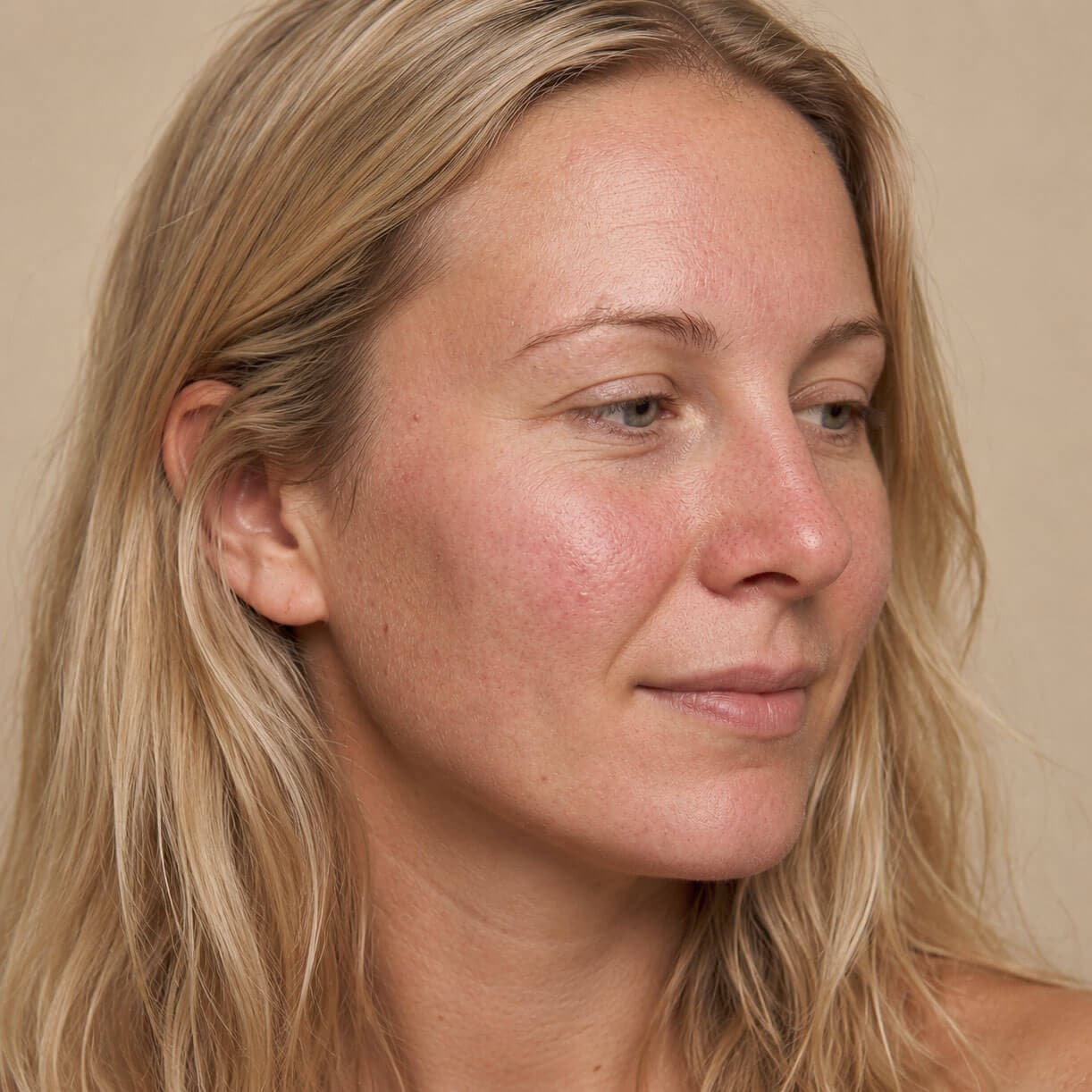
There's no biopsy you can do, no blood marker that says "this patient has sensitive skin." It's a symptom report: burning, stinging, itching, visible redness after things that shouldn't bother an unbothered face. The Misery 2011 epidemiological study found that 44.6% of surveyed US adults described their skin as sensitive or very sensitive, with women reporting it more often than men. The biological work summarised by Farage 2010 and Draelos 1997 points toward a mix of impaired barrier function, lower irritation thresholds, and nervous-system over-responsiveness.
In practice, genuinely reactive skin can reflect a compromised barrier, an undiagnosed condition such as rosacea, atopic eczema, or contact allergy, or more active products than the skin tolerates. Fix the barrier first, then carefully reintroduce what serves you.
The first 4–6 weeks: subtract, don't add
If your skin is in active reactive mode, here's the routine that works for almost everyone:
- Stop everything optional. No actives. No exfoliants. No essential oils. No "calming" toners with niacinamide-and-also-eight-other-things.
- Gentle cleanse, once or twice a day, with lukewarm water.
- One barrier-supporting moisturiser, applied to damp skin.
- SPF in the morning. Mineral or broad-spectrum. Niacinamide-containing SPFs are particularly forgiving.
Give it 4–6 weeks. Many reactive faces calm substantially in that window, especially when the trigger was over-cleansing or too many actives. If cleansing leaves your face pulled or shiny, the guide to tight skin after washing helps you adjust that first step. If sensitivity and acne are happening together, use the sensitive acne-prone routine instead of chasing stronger actives. Then, and only then, reintroduce one active at a time, twice a week, watching for flares.
Choose support without building another complicated routine
If the ingredient list feels like homework, start with the shortlist of soothing ingredients for sensitive skin. The glycerin versus hyaluronic acid comparison helps when dehydration is the main problem, while the moisturiser ingredient guide explains how humectants, emollients, and occlusives work together.
Botanical support needs the same calm judgment as any other ingredient. The practical chamomile-for-skin guide compares German and Roman chamomile without treating either as medicine. If an alcohol name makes you nervous, the alcohol-in-skincare guide separates ethanol from fatty alcohols, while the emulsifier guide explains why a stable cream still needs formula support. The dedicated cetyl alcohol page covers one common waxy example.
For the quieter formulation layer, the guide to emulsion stability explains why texture stays predictable, Sorbitan Olivate shows one emulsifier's modest role, and the dictionary entry for vehicle explains why the base carrying an active can change comfort.
If products that once felt fine begin causing a delayed itchy rash, read the definition of irritant contact dermatitis alongside skin sensitization. The two patterns can overlap, and qualified patch testing is more useful than guessing through another shopping basket.
Product safety without label panic
Sensitive skin often makes ordinary bathroom questions feel medical. The guide to preservatives in skincare explains why water-based formulas need protection, while Benzyl Alcohol shows how one multifunctional ingredient can be safe for broad use and still cause rare individual reactions. The definition of water activity fills in the formulation science without pretending an INCI list can reveal a laboratory measurement.
For products already on your shelf, check whether skincare expires and which changes matter. If a cream forms little rolls during application but otherwise looks and smells normal, troubleshoot why moisturiser pills before assuming contamination or scrubbing sensitive skin.
When sensitivity may point to another condition
Some "sensitive skin" complaints come from undiagnosed rosacea, perioral dermatitis, atopic eczema, or contact allergy to a product you keep using. If flushing, central-face redness, warmth, or eye irritation are part of the pattern, compare your signs with the rosacea symptoms guide and see a dermatologist if symptoms persist. Those conditions need specific care. A generic "for sensitive skin" routine may not be enough.
A simple routine
Morning
- Lukewarm-water rinse OR very short gentle cleanse — If your skin is genuinely reactive, water alone in the morning is fine.
- Skip serums while you stabilise. Moisturiser straight on damp skin.
- SPF with niacinamide + zinc PCA for anti-inflammatory protection
Evening
- Cleanse once, gently
- Moisturiser only for the first 4–6 weeks — Skip retinol until the barrier feels settled. The Moisturizer's retinol is low-frequency, but if you're in active reactive mode, alternate nights or skip until stable.
What to avoid
- Fragrance (including natural essential oils marketed as "calming")
- Daily AHAs/BHAs while you're stabilising
- "Brightening" or "purifying" toners with high alcohol content
- Stacking multiple new products in the same week
- Hot water on the face (lukewarm only)
Recommended Danish Skin Care routine

Pick the "Normal to dry" variants of Moisturizer and Day Protector for the extra emollient layer. Hold the Power Treat until your barrier feels settled (4–6 weeks).

Panthenol + allantoin + sodium hyaluronate, calming and barrier-supporting. The "Normal to dry" variant is the gentler pick for sensitive skin.

SPF + niacinamide + zinc PCA. A steady, low-friction morning step is more useful for sensitive skin than adding extra serums.
Full transparency: Danish Skin Care is my own company — I formulated these products and earn from every sale. That's exactly why I only recommend them where they genuinely fit the condition described above.
Key ingredients to look for
Common questions
Is sensitive skin a real condition?
Yes and no. There's no single biological mechanism that defines it (Misery 2011 found ~50% of women in the US self-describe as having sensitive skin), but there are real, measurable findings: impaired barrier function, exaggerated TRPV1 responses, lower irritation thresholds. Treat it as a symptom of an underlying barrier or reactivity issue rather than a stable diagnosis.
Should I avoid all actives forever?
No. Once the barrier is stable (typically 4–8 weeks of minimalism), introduce ONE active at a time, low concentration, twice a week. Many people who think they're 'too sensitive for retinol' introduced it too fast.
Is fragrance always a problem for sensitive skin?
It's the most common avoidable trigger. Even 'natural' essential oils are concentrated terpenes that can sensitise the skin over time. If you're stabilising a reactive face, go fragrance-free for 8 weeks and see what changes.
Citations
- Misery L, et al. Sensitive skin in the American population: prevalence, clinical data, and role of the dermatologist. Int J Dermatol. 2011;50(8):961–7. — PMID 21781068
- Farage MA, et al. Sensitive skin: closing in on a physiological cause. Contact Dermatitis. 2010;62(3):137–49. — PMID 20565500
- Draelos ZD. Sensitive skin: perceptions, evaluation, and treatment. Am J Contact Dermat. 1997;8(2):67–78. — PMID 9153340