
Jojoba oil
A lightweight plant-derived liquid wax that can soften skin and improve formula feel. Useful in moisturisers, balms, and SPF, but not a stand-alone acne or barrier treatment.
At a glance
What Jojoba oil does for skin, and how to read the practical safety signals.
- Technically a liquid wax: Jojoba is rich in wax esters rather than behaving like a typical triglyceride plant oil.
- Best as formula support: It can soften and cushion skin, but the complete product decides how acne-prone or sensitive skin responds.
- Good for comfort: Often used in moisturisers, balms, sunscreens, and makeup removers for slip and a less greasy finish.
- Type
- Emollient
- Rating
- Pregnancy
- Considered safe
- Comedogenic rating
- 2/5 (Low clogging risk)
- Vegan
- Yes
- Suited skin types
- All skin types
On this page
The short answer
Jojoba oil is a plant-derived emollient used in skincare to soften the skin, improve slip, and make formulas feel more comfortable.
The slightly nerdy detail matters: jojoba oil is not a typical plant oil. A 2021 review[1] explains that jojoba oil is mainly liquid wax esters, with only small amounts of triglyceride-type material. That waxy chemistry is why it often feels lighter and less greasy than many classic face oils.
In a good formula, jojoba oil can be lovely. On its own, it is still an oil-like layer. That means acne-prone skin should test it calmly instead of assuming "natural" means automatically safe for pores.
What the evidence shows
Cosmetic and dermatology use. A dermatology review[2] describes jojoba as a wax-rich ingredient used in moisturisers, sunscreens, and other topical preparations, with anti-inflammatory and wound-healing research around it. Useful background, yes. A reason to treat jojoba oil like a prescription? No.
Plant oil barrier context. A review of topical plant oils[3] discusses jojoba oil among oils studied for anti-inflammatory, antioxidant, wound-healing, and barrier-repair effects. The important word is "context." Plant oils behave differently depending on composition, processing, concentration, and the finished formula.
Chemistry and tolerability. The 2021 review[1] also covers jojoba's chemistry, pharmaceutical uses, and toxicity literature. For skincare readers, the practical takeaway is simple: jojoba is common and useful, but it is still a formulation ingredient, not a guarantee that a product will suit every face.
My read: jojoba oil is a sensible comfort ingredient when the formula is light and well balanced. It is not a shortcut around building a routine your skin can tolerate every day.
How to use it
Use jojoba oil the easy way:
- in a moisturiser
- in a balm for dry patches
- in a makeup remover or cleansing balm, if it rinses cleanly
- in an SPF or cream where it improves spread
- occasionally as a thin layer on dry skin, if your skin already tolerates it
If your cheeks or jaw clog easily, do not start by adding pure jojoba oil all over the face every night. Test a small area first. Acne-prone skin is not being dramatic; it is giving you data.
Where it fits in a routine
Jojoba oil sits in the emollient lane.
It pairs naturally with:
- Glycerin: water-binding hydration.
- Squalane: another lightweight emollient for softness.
- Dimethicone: slip and semi-occlusive comfort without heaviness.
- Tocopherol: antioxidant support that often appears in oil phases.
- Gentle cleansers: useful if jojoba appears in a cleansing product that removes makeup or SPF.
If you are treating cheek acne, jojoba oil is not the pore-clearing step. Keep salicylic acid or other acne care in the correct role, and use jojoba only if it makes the surrounding formula easier to tolerate.
Who benefits most
Jojoba oil makes the most sense for:
- dry skin that likes a soft finish
- mature skin that dislikes very matte products
- sensitive skin that tolerates the full formula
- combination skin using a small amount in dry zones
- makeup or SPF users who need comfortable spread
It is less useful if your skin already feels oily, congested, and heavy by midday. In that case, choose lighter moisturisers before adding more oil-like texture.
When it will not help
Jojoba oil will not:
- clear blackheads
- treat inflamed acne
- replace sunscreen
- repair a damaged barrier by itself
- make a heavy comedogenic product acne-friendly
It also will not fix a routine that is irritating your skin every night. If your skin feels tight, burning, or over-exfoliated, start with the barrier repair guide before adding new oils.
The practical takeaway
My goal with this guide was to gather the useful science on jojoba oil in one place, so you can stop hunting for the next clever fix and focus on a simple, effective routine.
That is also why I made the Danish Skin Care Kit: a calm routine built around documented ingredients, and one that has helped more than 100,000 people with problem skin. If even the smallest question is still nagging you, send me an email at info@danishskincare.com.
Common questions
Is jojoba oil good for acne-prone skin?
Sometimes, if it is inside a well-designed lightweight formula. It is not an acne treatment, and some acne-prone skin dislikes extra oil or waxy layers.
Is jojoba oil the same as a normal face oil?
Not quite. Jojoba is mostly liquid wax esters, which gives it a different feel from many triglyceride-rich plant oils.
Can jojoba oil replace moisturiser?
Usually no. It can soften and reduce dryness, but a complete moisturiser normally combines humectants, emollients, and other barrier-support ingredients.
Reading a real label?
Scan a product to see how it is formulated
Upload a photo of the ingredient list and get a quick ingredient-by-ingredient read against the evidence-led database.
I recommend these products

The Kit keeps emollient support inside a balanced routine, so you are not trying to solve dryness or cheek breakouts by adding a separate oil to everything.
Skin conditions it actively helps with
Where the published evidence puts Jojoba oil on the short list of active ingredients worth reaching for.

Dry skin
Dry skin is usually a barrier problem, not simply a water problem. Here's the difference between dry and dehydrated, why it matters, and the routine that actually helps.
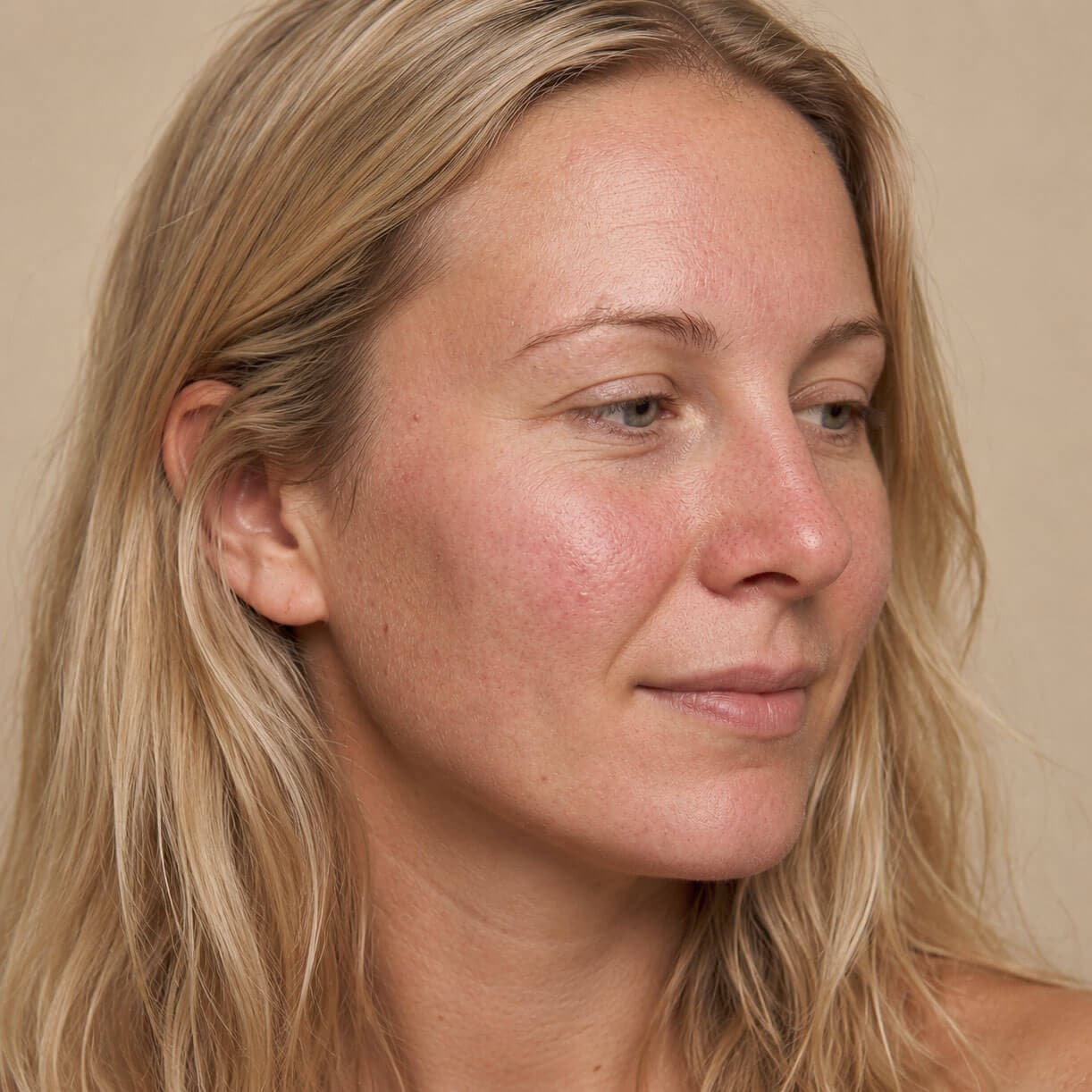
Sensitive skin
"Sensitive" is a symptom, not a diagnosis. Learn what drives reactive skin, the routine that calms it, and what to leave out.

Acne and blemishes
A clear-headed guide to acne: what's actually happening in your skin, what the evidence says works, and a simple routine that doesn't make things worse.

Combination skin
Oily T-zone, drier or normal cheeks, and a routine that has to address both without making either worse. Here's how to actually balance combination skin.
Related ingredients
Citations
- Gad HA, Roberts A, Hamzi SH, Gad HA, Touiss I, Altyar AE, Kensara OA, Ashour ML. Jojoba Oil: An Updated Comprehensive Review on Chemistry, Pharmaceutical Uses, and Toxicity. Polymers (Basel). 2021;13(11):1711. — PMID 34073772
- Pazyar N, Yaghoobi R, Ghassemi MR, Kazerouni A, Rafeie E, Jamshydian N. Jojoba in dermatology: a succinct review. G Ital Dermatol Venereol. 2013;148(6):687-691. — PMID 24442052
- Lin TK, Zhong L, Santiago JL. Anti-Inflammatory and Skin Barrier Repair Effects of Topical Application of Some Plant Oils. Int J Mol Sci. 2017;19(1):70. — PMID 29280987