
Gluconolactone
A mild polyhydroxy acid used for surface smoothing and hydration support. Helpful for dull, rough, or sensitive-leaning skin when the finished formula is gentle.
At a glance
What Gluconolactone does for skin, and how to read the practical safety signals.
- Gentle acid lane: A PHA that can smooth the surface with less sting than many stronger AHA routines.
- Hydration support: PHAs are described as having humectant and moisturising properties, so gluconolactone is not only a peel-style ingredient.
- Best for texture, not clogged pores: Useful for rough dullness, while salicylic acid still makes more sense for oily blackheads.
- Type
- Polyhydroxy acid
- Rating
- Pregnancy
- Considered safe
- Comedogenic rating
- 0/5 (Won't clog pores)
- Vegan
- Yes
- Suited skin types
- All skin types
On this page
The short answer
Gluconolactone is a polyhydroxy acid, often shortened to PHA.
In skincare, it is used for gentle surface smoothing, hydration support, and formulas aimed at dull, rough, or sensitive-leaning skin. Think of it as an acid with softer manners. Still an acid, though. Manners do not remove the need for common sense.
What the evidence shows
PHA category evidence. A review of polyhydroxy acids in photoaged skin[1] describes PHAs such as gluconolactone and lactobionic acid as acid ingredients with smoothing, humectant, moisturising, and antioxidant properties. The review also discusses compatibility with sensitive skin in studied settings.
Tolerability compared with AHA routines. A 12-week clinical study[2] compared a gluconolactone-containing PHA regimen with a glycolic acid AHA regimen. Both regimens improved measured photoageing signs, while the PHA regimen was better tolerated for stinging, burning, and perceived sensitivity.
UV nuance. An in vitro and small human study[3] found gluconolactone did not significantly increase sunburn cells after treatment and UV exposure, unlike the glycolic acid comparison site in that study. That does not make gluconolactone sunscreen. It means PHA should be discussed with more nuance than "all acids make skin reckless in the sun."
How gluconolactone differs from AHA and BHA
The practical difference is job and feel.
- Glycolic acid: stronger surface exfoliation, often more sting-prone.
- Lactic acid: surface smoothing with humectant character.
- Mandelic acid: larger AHA molecule, often used when people want a slower feel.
- Salicylic acid: oil-soluble BHA, usually better for blackheads and clogged pores.
- Gluconolactone: PHA, often chosen for gentle surface smoothing and hydration-supportive formulas.
If your main problem is blackheads, I would usually look at salicylic acid first.
If your main problem is rough, dry, dull-looking surface texture, gluconolactone can be a sensible option.
Who may like it
Gluconolactone is worth noticing if your skin is:
- dull and rough
- dry but easily irritated
- sensitive to stronger acids
- interested in exfoliation but not daily peeling drama
- prone to tightness when routines get too active
It can also be useful for people who read about acids and immediately imagine their face turning into a tomato. Understandable. The internet has not been calm about exfoliation.
How to use it without annoying your barrier
Start simply:
- Use it at night.
- Start once or twice weekly.
- Do not combine it with retinol, scrubs, or other acids at first.
- Moisturise after.
- Use sunscreen in the morning.
If your skin stings, flakes, or feels tight for more than a short adjustment period, reduce frequency or stop.
If your skin already burns when moisturiser goes on, pause gluconolactone and read the guide to moisturiser stinging first.
What it will not do
Gluconolactone will not:
- unclog oily pores as directly as salicylic acid
- replace sunscreen
- erase pigmentation by itself
- fix dull skin caused by harsh cleansing
- make over-exfoliation safe because it is "gentle"
Gentle is not the same as unlimited.
The practical takeaway
My goal with this guide was to gather the useful science on gluconolactone in one place, so you can stop hunting for the next clever fix and focus on a simple, effective routine.
That is also why I made the Danish Skin Care Kit: a calm routine built around documented ingredients, and one that has helped more than 100,000 people with problem skin. If even the smallest question is still nagging you, send me an email at info@danishskincare.com.
Common questions
Is gluconolactone the same as PHA?
Gluconolactone is one type of polyhydroxy acid, often shortened to PHA. Lactobionic acid is another common PHA.
Is gluconolactone gentler than glycolic acid?
Often, yes, especially in comparable PHA versus AHA routines, but the finished formula, pH, and frequency still decide how your skin reacts.
Can gluconolactone clear acne?
It is not the first choice for oily blackheads or acne. Salicylic acid is usually more targeted for clogged follicles, while gluconolactone is more surface-smoothing and comfort-focused.
Reading a real label?
Scan a product to see how it is formulated
Upload a photo of the ingredient list and get a quick ingredient-by-ingredient read against the evidence-led database.
I recommend these products

The Kit follows the same calm routine logic: treat texture carefully, keep the barrier comfortable, and avoid turning skincare into an acid collection.
Skin conditions it actively helps with
Where the published evidence puts Gluconolactone on the short list of active ingredients worth reaching for.
Dry skin
Dry skin is usually a barrier problem, not simply a water problem. Here's the difference between dry and dehydrated, why it matters, and the routine that actually helps.
Sensitive skin
"Sensitive" is a symptom, not a diagnosis. Learn what drives reactive skin, the routine that calms it, and what to leave out.

Signs of ageing
Wrinkles, sallowness, slack tone, and uneven pigment all share the same drivers. Here's the unglamorous routine that genuinely slows them.
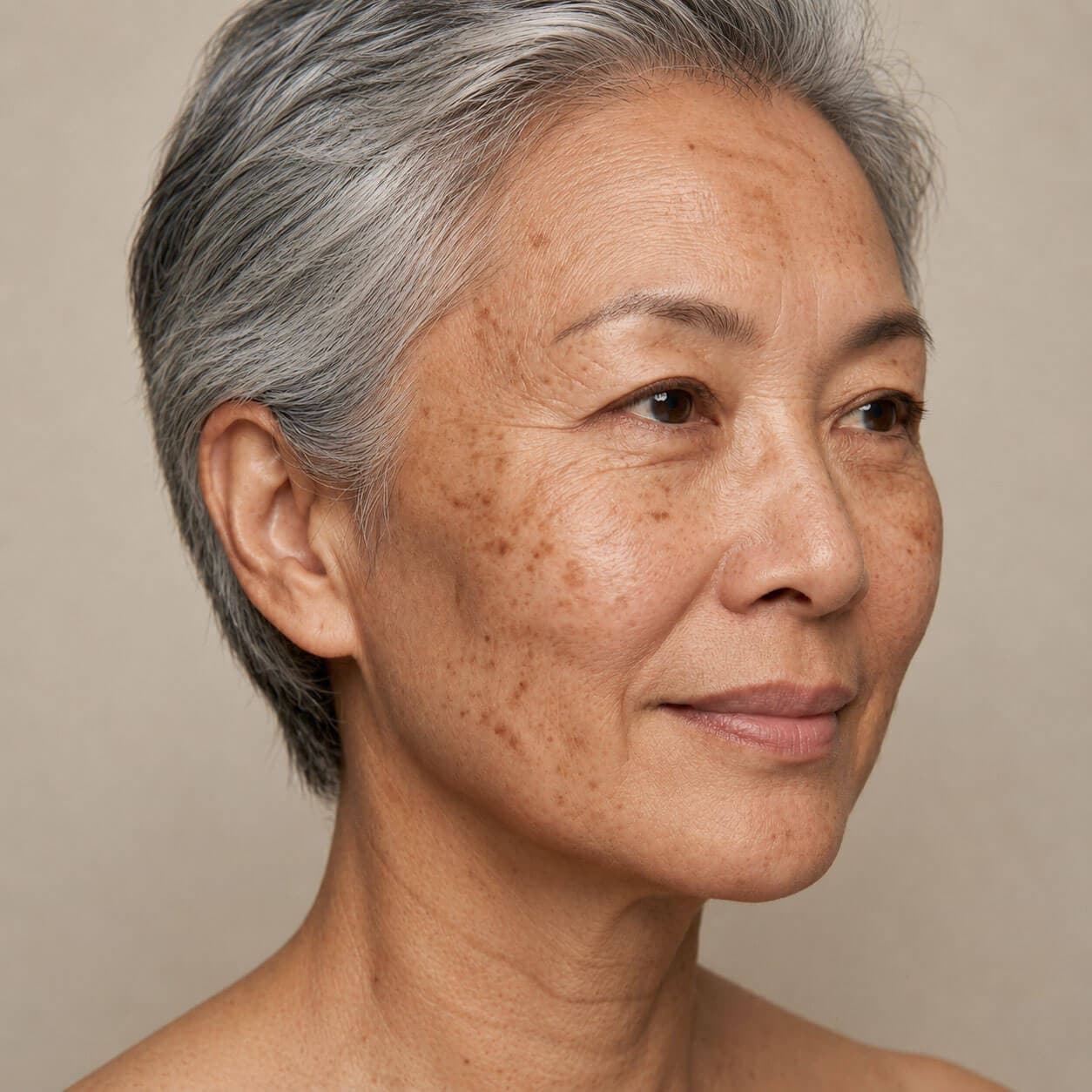
Pigmentation
Pigmentation is one of the most-asked-about, most-misunderstood skin concerns. Here's what's happening in your skin and the slow, evidence-led routine that actually fades it.
Related ingredients
Citations
- Grimes PE, Green BA, Wildnauer RH, Edison BL. The use of polyhydroxy acids (PHAs) in photoaged skin. Cutis. 2004;73(2 Suppl):3-13. — PMID 15002656
- Edison BL, Green BA, Wildnauer RH, Sigler ML. A polyhydroxy acid skin care regimen provides antiaging effects comparable to an alpha-hydroxyacid regimen. Cutis. 2004;73(2 Suppl):14-17. — PMID 15002657
- Bernstein EF, Brown DB, Schwartz MD, Kaidbey K, Ksenzenko SM. The polyhydroxy acid gluconolactone protects against ultraviolet radiation in an in vitro model of cutaneous photoaging. Dermatol Surg. 2004;30(2 Pt 1):189-195. — PMID 14756648