Perioral dermatitis
Small inflammatory bumps around the mouth, nose or eyes can be perioral dermatitis. Learn how to recognise the pattern, simplify your routine with clinical guidance and get treatment when you need it.
On this page
What perioral dermatitis is, and isn't
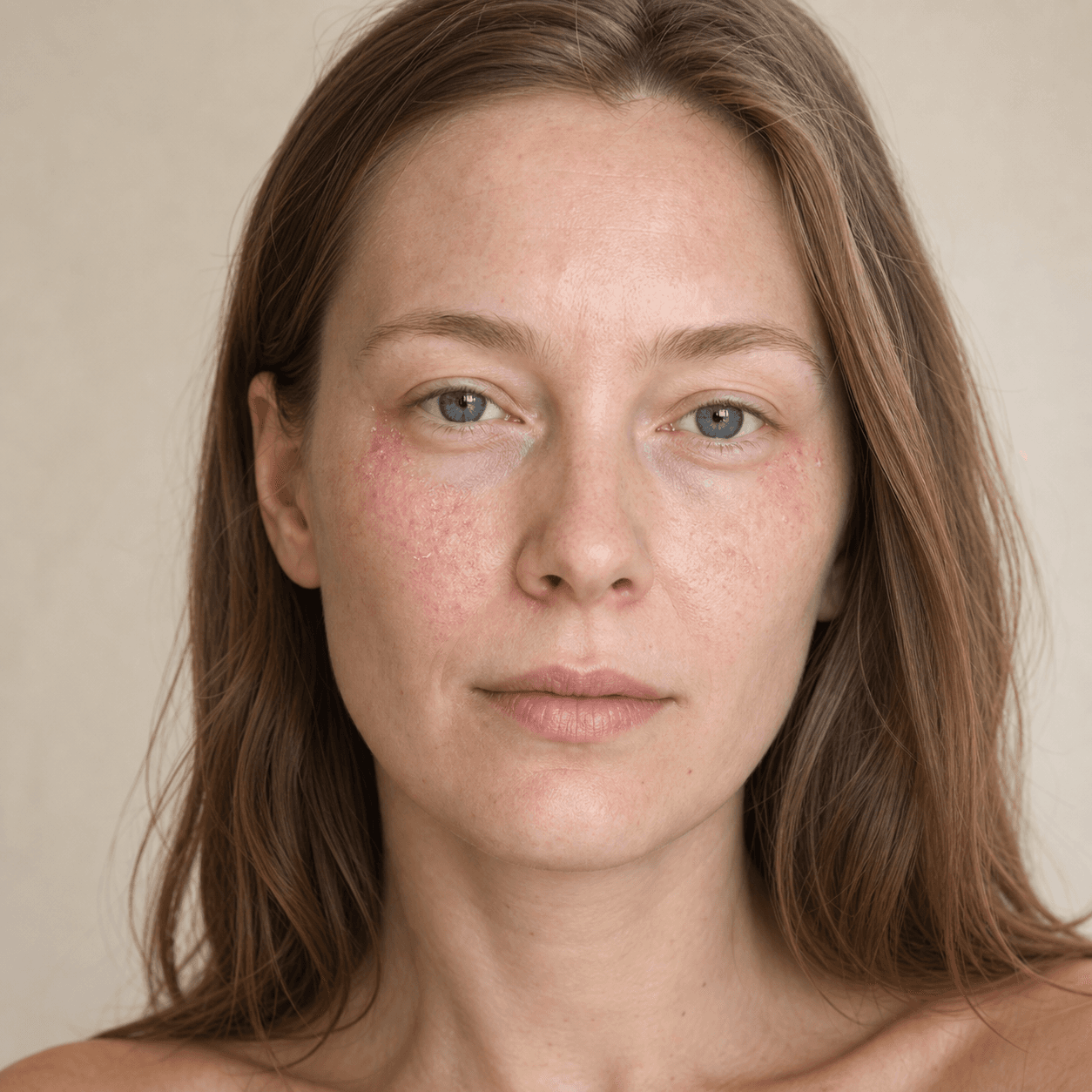
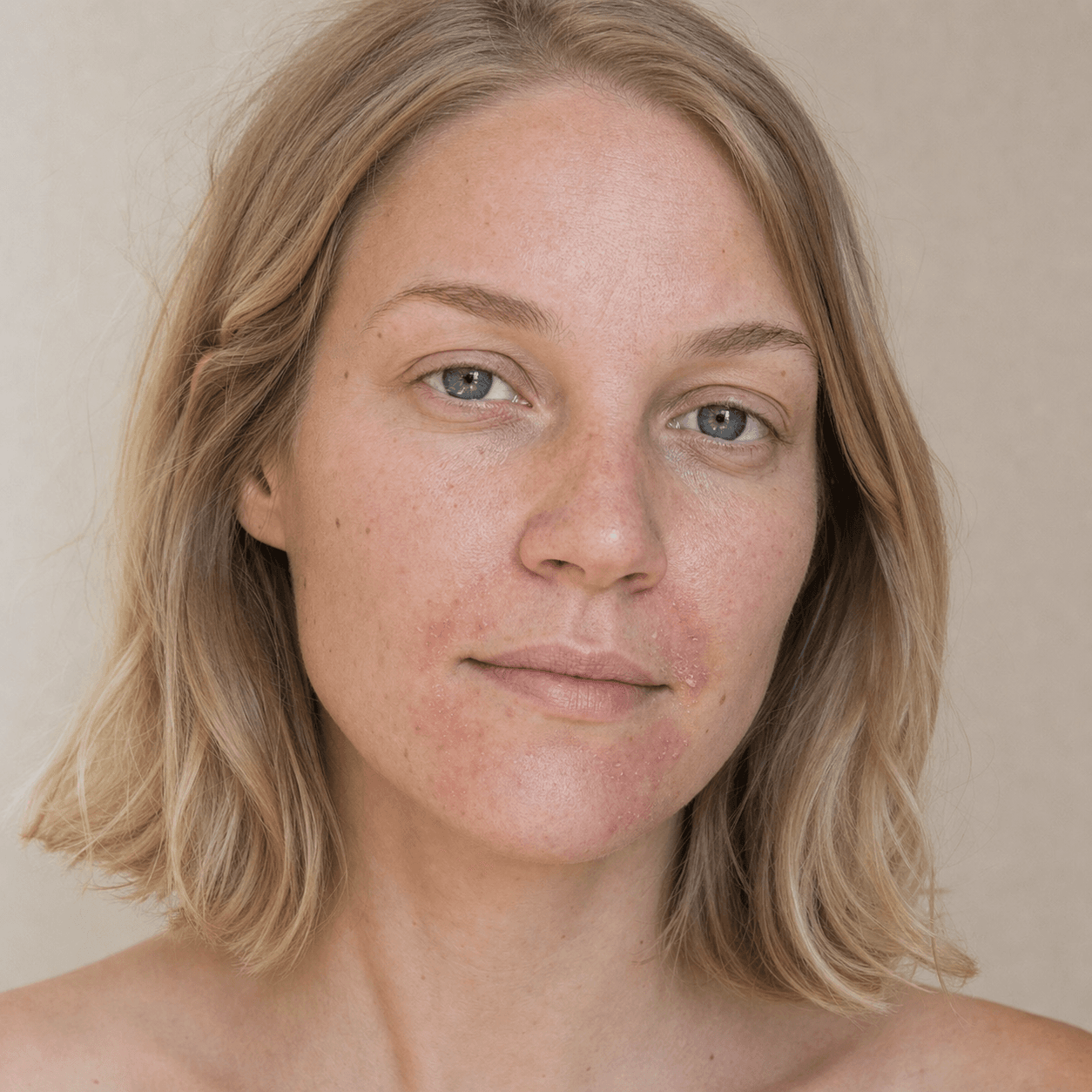
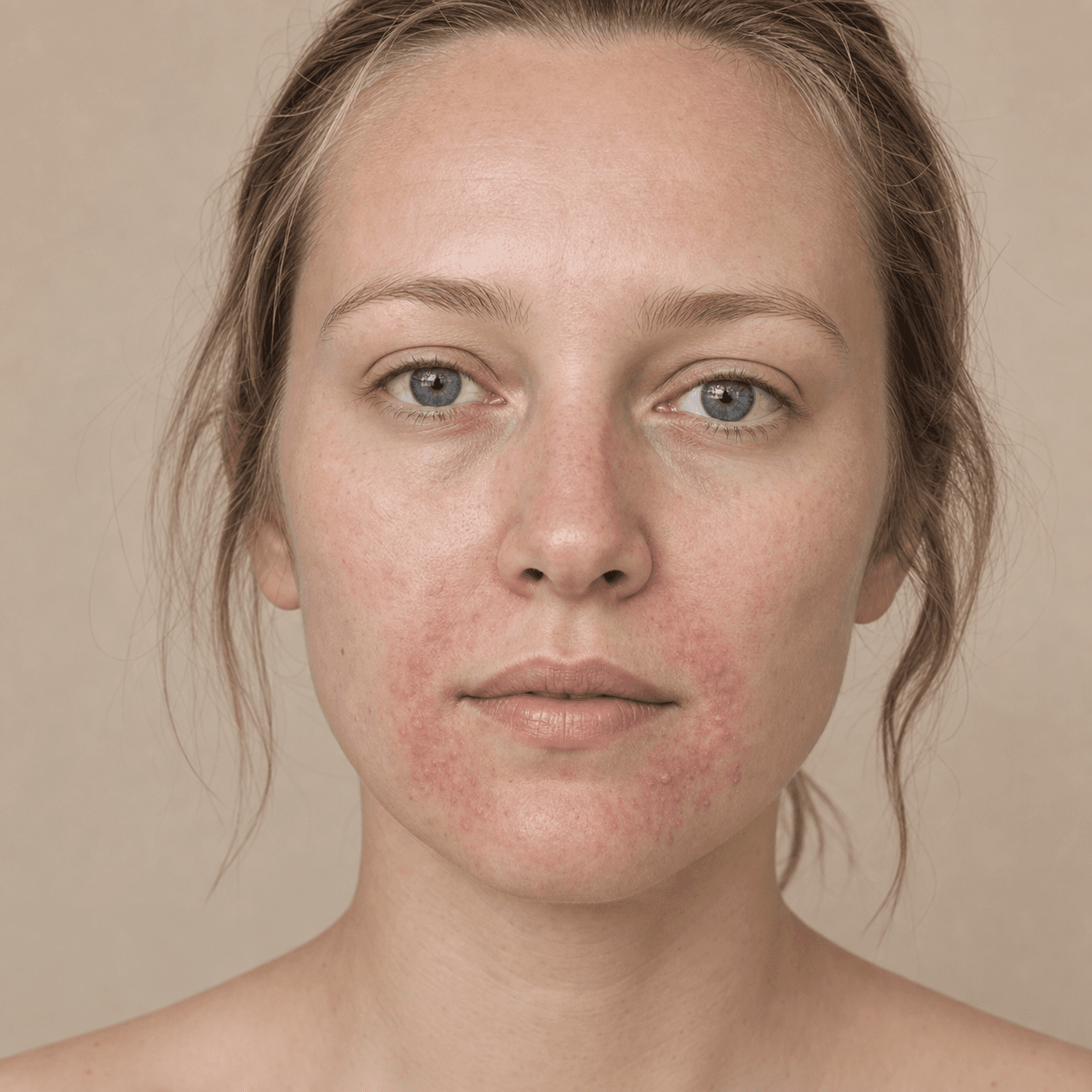
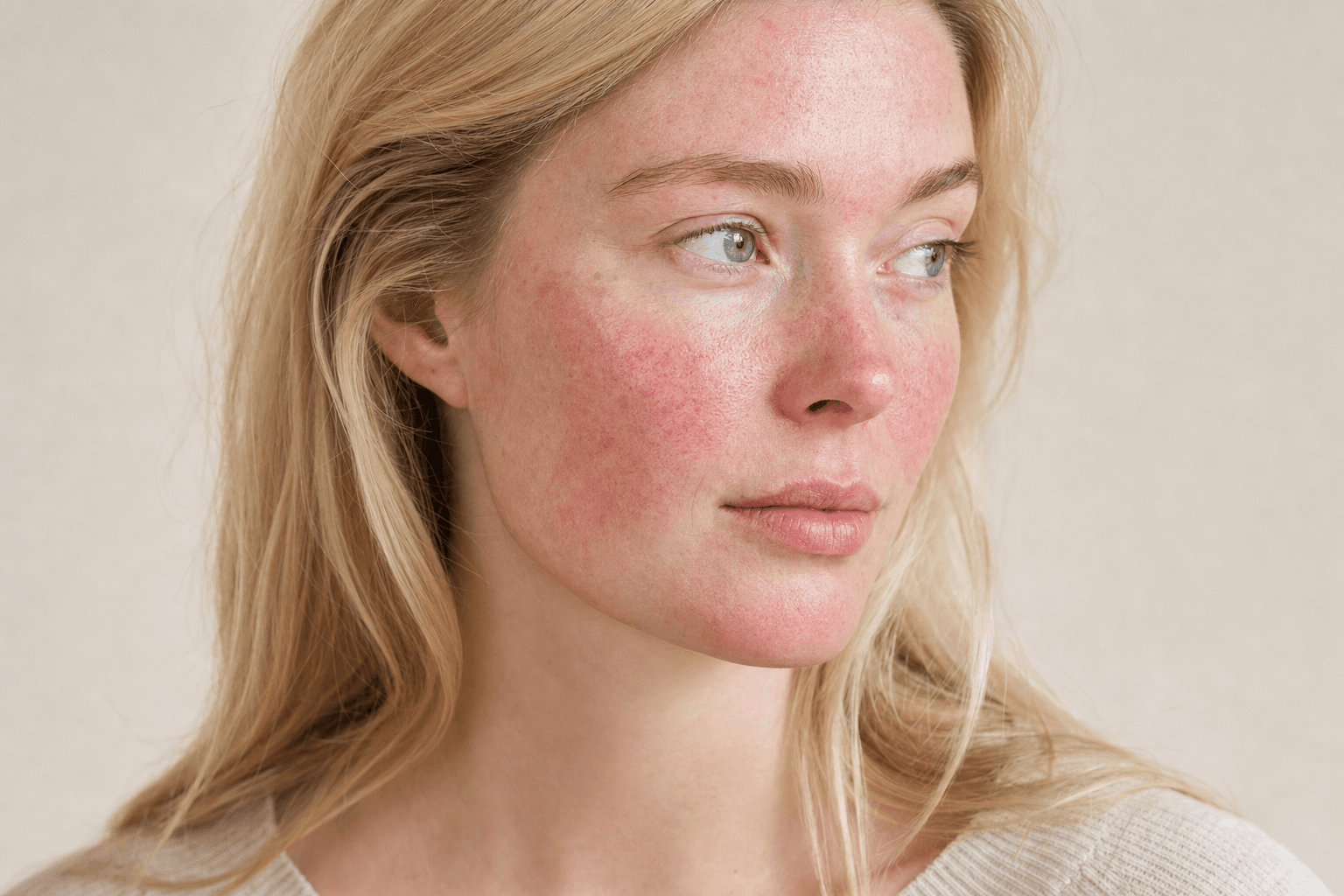
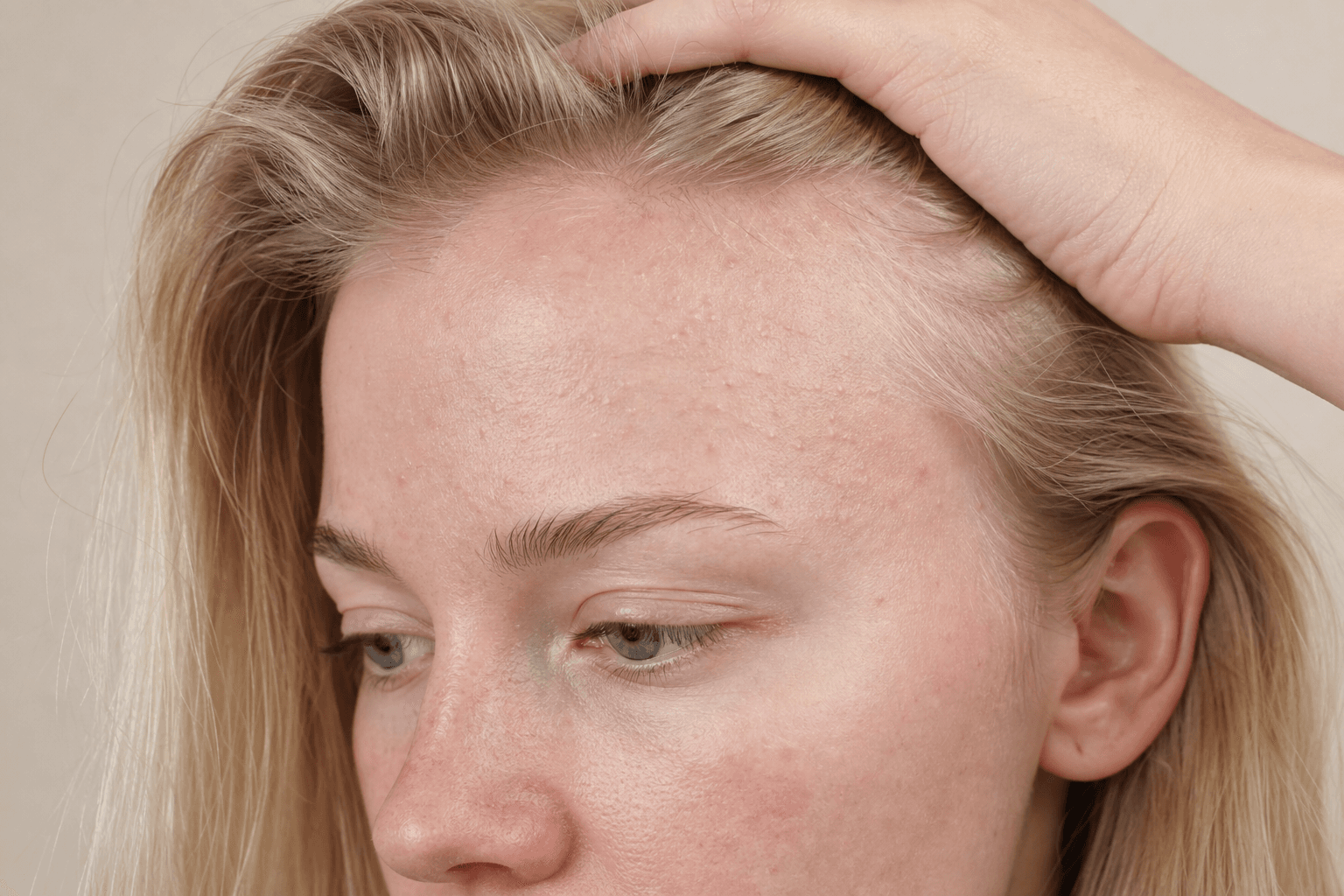
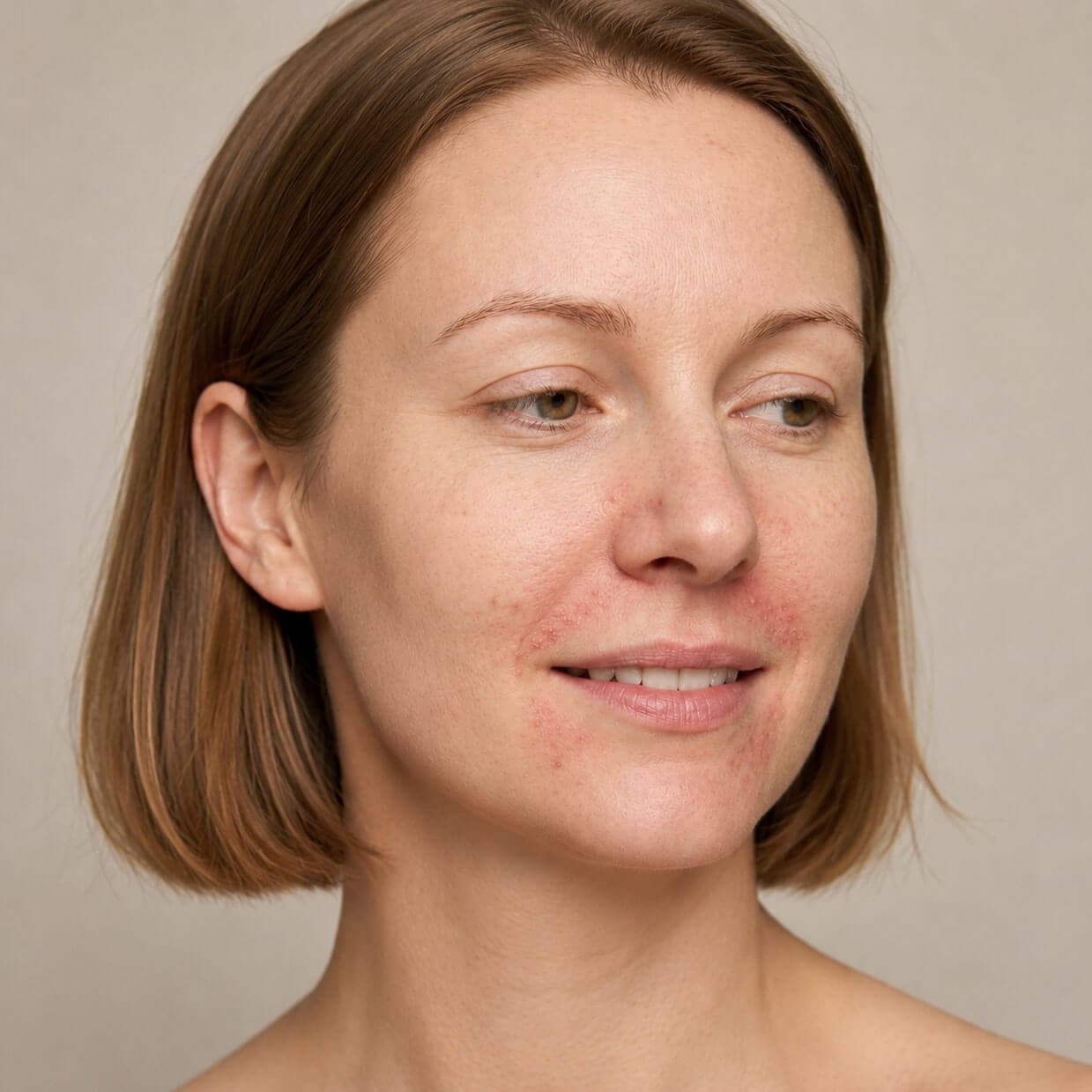
Perioral dermatitis is a chronic, relapsing inflammatory eruption that classically presents as small papules and pustules around the mouth, nostrils, and sometimes the eyes. It looks like acne to people who haven't seen it before, but it isn't acne. The distinction matters because an acne routine may irritate a perioral rash, and treatment should follow the diagnosis.
Reviews by Tempark and Shwayder and by Lipozencic describe facial corticosteroid use as a common preceding factor. The exact cause remains uncertain. Steroids can temporarily improve the rash, but stopping them can cause a rebound.[1][2]
What a zero-therapy reset can involve
Zero therapy means removing products that may aggravate the rash. It does not mean withholding prescribed treatment or following a fixed water-only schedule. The AAD advises gentle care and notes that a mild fragrance-free cleanser or other fragrance-free products may suit the treatment plan.[4]
If you use a prescription facial steroid, ask the prescriber before changing it. Withdrawal can cause a rebound, and some people need a clinician-directed transition. Keep optional acids, scrubs and heavy balms off the affected area while the diagnosis and treatment are reviewed.[4]
When to see a dermatologist
Almost always, and sooner rather than later. Perioral dermatitis often needs prescription support after zero therapy: oral tetracyclines have the strongest evidence in adults, while topical options such as erythromycin, pimecrolimus, or metronidazole may fit some cases. The Hall 2010 evidence-based review is useful here because it separates the better-supported options from the habits that keep the rash going.
Ask a clinician to confirm the diagnosis if the rash persists, spreads or causes discomfort. Some cases settle after aggravating products are removed; others need prescription treatment.[3]
After the flare clears
Once you're clear - often after several weeks of zero therapy plus any prescription support your dermatologist chooses - reintroduce products one at a time, away from the affected area, weeks apart. The pattern that perpetuates this condition is "I keep adding new things to my routine." The pattern that prevents recurrence is "I use a small, stable, fragrance-free routine and add things very rarely."
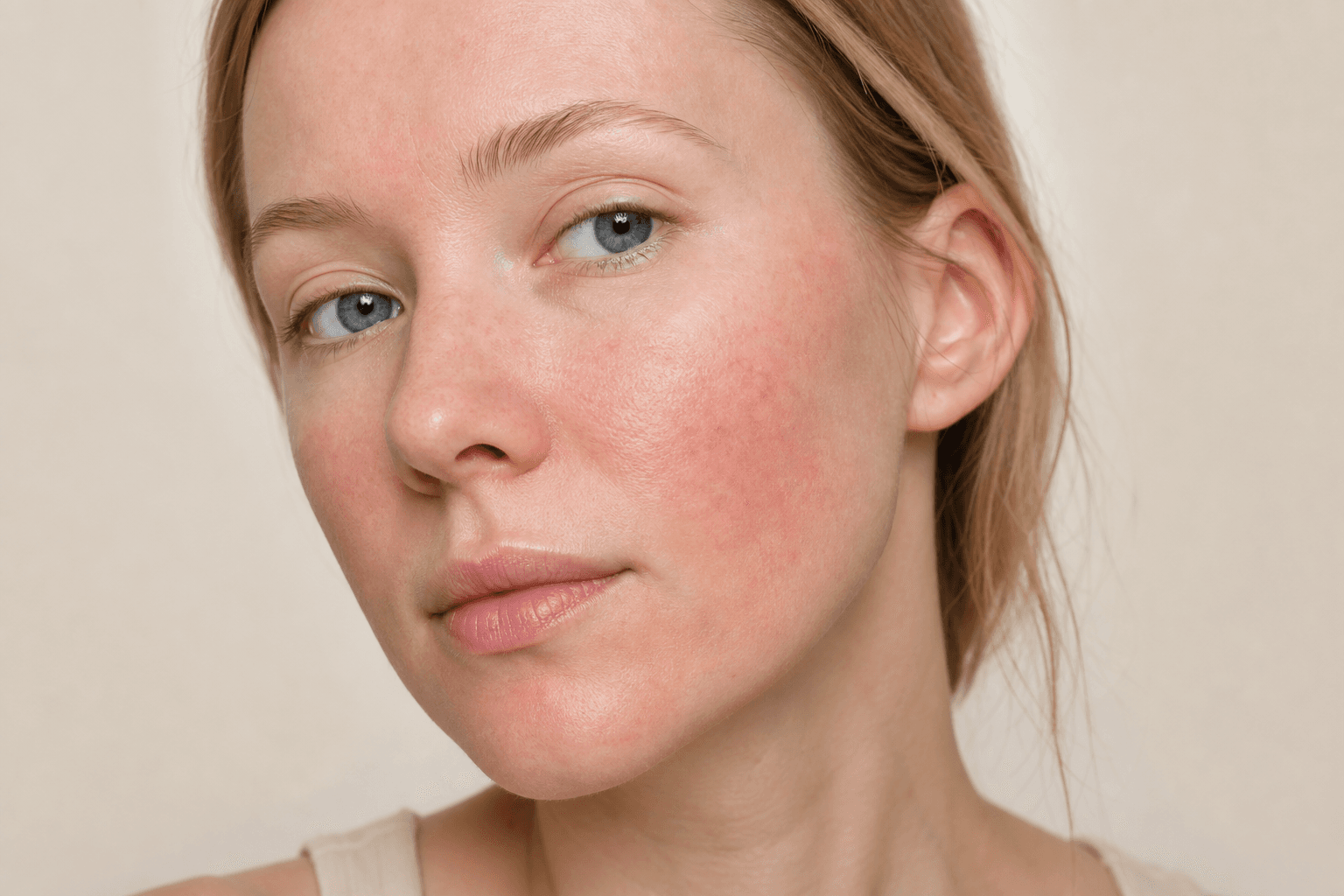
If you suspect rosacea or sensitive skin is part of the picture, get them assessed together. These conditions overlap diagnostically and share treatment principles. The rosacea vs perioral dermatitis guide walks through the practical clues without pretending a blog post can diagnose your face.
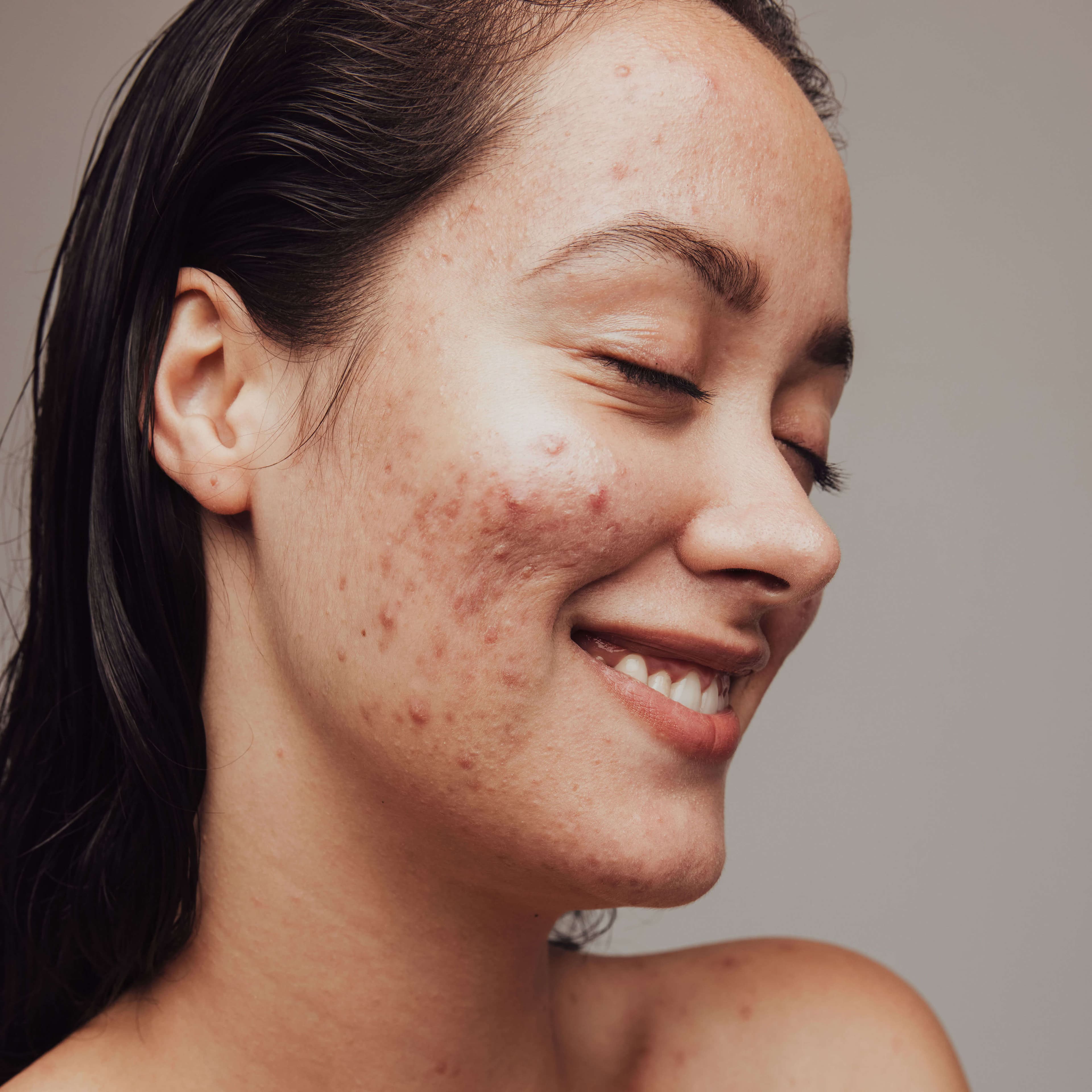
If the bumps are mostly blackheads, whiteheads, and ordinary inflamed pimples near the lip or chin, the guide to pimples around the mouth explains the acne side of the same confusing area.
For a practical reset, use the perioral dermatitis skincare routine. If facial steroid cream is part of the story, read steroid cream and perioral dermatitis; bumps near the eyelids need the separate perioral dermatitis around the eyes guide. The zero therapy definition explains the product pause, while the pimecrolimus guide covers that prescription option without turning it into do-it-yourself care.
A simple routine
Morning
- Rinse gently with lukewarm water, or use a mild fragrance-free cleanser if your clinician recommends it.
- Pause optional cosmetics, scrubs and irritating actives on the affected area. — Follow prescribed treatment; ask the prescriber before changing a facial steroid.
Evening
- Repeat gentle cleansing and use any prescribed medicine as directed.
- Ask whether a small amount of plain fragrance-free moisturiser fits your treatment plan.
What to avoid
- Topical corticosteroids (even a little can prolong the condition)
- Heavy facial creams, balms, and oils in the affected area
- Unsupervised toothpaste experiments; ask before removing fluoride long-term
- Sodium lauryl sulfate cleansers
- Active ingredients of any kind on the perioral area during a flare
Recommended Danish Skin Care routine

After the flare clears (often after zero therapy plus any dermatologist-prescribed support), the Kit is a sensible baseline. Reintroduce one product at a time around the affected area.

Once the flare is settled, the "Normal to dry" variant carries panthenol + allantoin + sodium hyaluronate to support barrier recovery.
Full transparency: Danish Skin Care is my own company — I formulated these products and earn from every sale. That's exactly why I only recommend them where they genuinely fit the condition described above.
Key ingredients to look for
Common questions
How do I know if it's perioral dermatitis and not acne?
Perioral dermatitis sits in distinctive patterns: around the mouth (often sparing the thin border immediately against the lip), around the nostrils, sometimes around the eyes. The bumps are small, clustered, often slightly scaly, and don't have the comedone (whitehead/blackhead) cores of acne. Burning or stinging is common; tenderness less so. If in doubt, see a dermatologist. Getting the diagnosis wrong leads to acne treatments that make POD worse.
Can I use any moisturiser during a flare?
The plan depends on your skin and treatment. Ask whether a small amount of plain fragrance-free moisturiser is suitable if dryness is uncomfortable. Avoid heavy occlusive products that aggravate the rash. There is no universal requirement to use water alone for a fixed number of weeks.
Should I use a steroid cream?
No. Steroid creams are one of the major *causes* of perioral dermatitis and often make it worse in the medium term, even when they offer short-term improvement. If you're currently using one, speak with the clinician who prescribed it or see a dermatologist. A rebound flare in the first 1–2 weeks can happen when steroids are withdrawn.
Citations
- Tempark T, Shwayder TA. Perioral dermatitis: a review of the condition with special attention to treatment options. Am J Clin Dermatol. 2014;15(2):101–13. — PMID 24623018
- Lipozencic J, Hadzavdic SL. Perioral dermatitis. Clin Dermatol. 2014;32(1):125–30. — PMID 24314386
- Hall CS, Reichenberg J. Evidence based review of perioral dermatitis therapy. G Ital Dermatol Venereol. 2010;145(4):433–44. — PMID 20823788
- American Academy of Dermatology Association. Red rash around your mouth could be perioral dermatitis. — AAD