
Fungal acne: why those tiny itchy bumps may not be acne
Fungal acne is usually Malassezia folliculitis, not true acne. Learn the signs, why normal acne routines can fail, and when antifungal treatment is needed.
On this page
When you have acne-prone skin, it is very easy to assume every bump belongs to the acne family.
I understand that instinct. When I struggled with acne and irritated skin, I looked at every new bump like it was part of the same problem: cleanse harder, treat harder, repeat. I see the same pattern in customers and readers: they keep escalating acne products, but the bumps stay tiny, itchy, uniform, and stubborn.
That is often the moment where the most helpful question is not "which stronger acne product should I use?"
It is "are we sure this is acne?"
The short answer
"Fungal acne" is one of those skincare terms that is useful and slightly wrong at the same time.
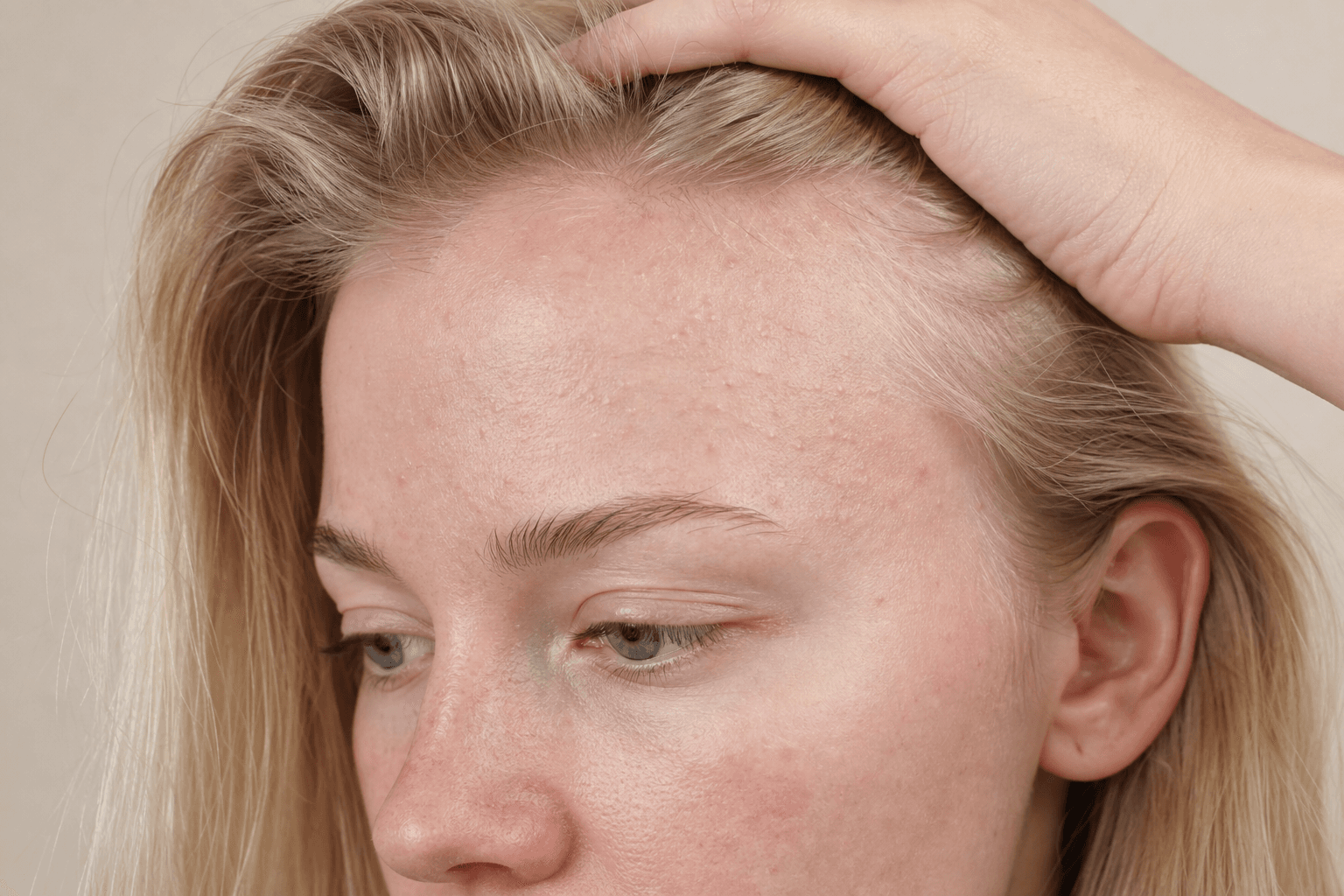
Most people use it to mean Malassezia folliculitis: tiny, often itchy, uniform bumps caused by yeast overgrowth inside hair follicles. It can look like acne, especially on the forehead, chest, shoulders, and back. But it is not regular acne.
That matters because regular acne and fungal folliculitis do not respond to the same plan.
A 2012 Lancet study[5] describes acne as a follicle-and-oil-gland disorder involving sebum, sticky skin cells, C. acnes, and inflammation. Malassezia folliculitis is different. A 2014 study[1] describes it as folliculitis caused by Malassezia yeast, often misdiagnosed as acne because the bumps can look so similar.
In normal-person language:
- Acne usually has clogged pores, whiteheads, blackheads, inflamed spots, and sometimes deeper bumps.
- Fungal acne usually has many small, similar-looking itchy bumps, often without blackheads.
- Acne products may help acne.
- Antifungal treatment is usually needed for true Malassezia folliculitis.
So if your "acne" is tiny, itchy, uniform, and stubborn, the goal is not to punish your skin harder. It is to ask whether you are treating the wrong thing.
Why I am careful with the term fungal acne
I understand why people say fungal acne. It is short. It is searchable. It sounds less like a spell from a medical textbook.
But it can also make people think this is another acne subtype, like chin acne or forehead acne.
It is not.
Malassezia is a yeast that normally lives on human skin. That part is not scary. Skin is not a sterile dinner plate, and we should all be grateful for that. The issue is that under certain conditions, Malassezia can overgrow inside follicles and trigger inflamed follicular bumps.
A 2025 study[4] on Malassezia folliculitis calls it an underdiagnosed mimicker of acneiform eruptions and highlights the classic pattern: monomorphic, itchy papules and pustules, often mistaken for acne and sometimes made worse by inappropriate antibiotic use.
This is why the diagnosis matters before you buy your fourth "fungal acne safe" spreadsheet routine from the internet.
What fungal acne looks like
Fungal acne often has a very specific personality.
Look for:
- Small bumps that look very similar to each other.
- Itching, sometimes quite noticeable.
- Bumps based around hair follicles.
- Forehead, hairline, chest, upper back, shoulders, or upper arms involvement.
- Few or no blackheads.
- Little response to normal acne treatment.
- Flares with heat, sweating, tight clothing, heavy products, or after antibiotics.
A 2024 study[3] on diagnostic challenges describes Malassezia folliculitis as itchy follicular papules and pustules, usually in oil-rich areas like the chest, back, shoulders, and sometimes the neck or upper limbs. It also notes that the absence of comedones helps separate it from acne vulgaris.
That last word is important: comedones.
Comedones are blackheads and whiteheads. If you have lots of them, regular acne is more likely. If every bump looks identical and itchy, with no real clogged pores, fungal folliculitis moves higher on the list.
This is especially useful around the upper face: forehead acne often includes clogged pores, hair-product triggers, sweat, and friction, while fungal folliculitis tends to look more uniform and itchy.
Fungal acne vs regular acne
Here is the practical comparison.
Regular acne often includes:
- Blackheads.
- Whiteheads.
- Mixed bump sizes.
- Tender inflamed pimples.
- Deep nodules in some cases.
- Oily, clogged areas.
- Breakouts on the face, chest, back, or jawline.
Fungal acne often includes:
- Uniform small bumps.
- Itching.
- Forehead or hairline bumps.
- Chest, shoulder, and back flares.
- No obvious blackheads.
- Worsening in heat or sweat.
- Poor response to antibiotics or standard acne routines.
Can you have both? Yes. Because skin enjoys complexity like a tiny unpaid consultant.
You can have acne on the chin and fungal folliculitis on the chest. You can have clogged pores and an itchy folliculitis flare at the same time. This is one reason internet diagnosis becomes messy very quickly.
Why normal acne routines can fail
If the problem is Malassezia folliculitis, throwing more acne actives at it can backfire.
Not because salicylic acid, benzoyl peroxide, or retinoids are bad. They can be useful for actual acne. The problem is mismatch.
A clogged pore routine is aimed at oil, sticky dead skin cells, and acne inflammation. Fungal folliculitis needs antifungal management. A 2022 clinical outcomes study[2] on Pityrosporum folliculitis reports improvement with treatments such as topical ketoconazole and oral itraconazole in studied groups, which is very different from a normal acne routine.
Also, over-treating irritated skin can create a second problem: barrier damage. Then you have the original bumps plus stinging, redness, dryness, and a bathroom shelf that looks like it is preparing for a chemistry exam.
What triggers fungal acne?
Triggers are not always simple, but common patterns include:
- Heat and humidity.
- Sweat sitting on the skin.
- Tight sports clothing or occlusion.
- Heavy oily products.
- Antibiotic use, especially if the eruption began after acne antibiotics.
- Immunosuppression or medical factors in some people.
This does not mean sweat is dirty or oils are evil. Please do not let skincare turn normal human biology into a crime scene.
It means Malassezia likes certain environments. Warm, oily, occluded follicles are more welcoming than cool, clean, breathable skin.
What to do if you suspect fungal acne
1. Stop escalating the acne routine
If you have already tried several acne treatments and the bumps are still tiny, itchy, and uniform, do not keep adding more.
More actives can make the skin barrier worse without treating the yeast problem.
2. Simplify for a week or two
Use:
- A gentle cleanser.
- A light moisturiser only if needed.
- SPF in the morning.
- No scrubs.
- No strong peel experiments.
- No new oil-heavy masks or balms over the bumps.
The goal is not to cure confirmed fungal folliculitis with minimalism. The goal is to stop creating extra irritation while you figure out what is happening.
3. Ask about antifungal treatment
This is the important part.
Confirmed Malassezia folliculitis is usually treated with antifungal options. Oral antifungal medication can be effective especially early because the yeast sits deeper in the follicle, while topical antifungals are useful as adjunctive or maintenance therapy because recurrence is common.
That does not mean everyone should self-prescribe oral antifungals. They can interact with medications and are not casual skincare. A clinician should guide that.
4. Think maintenance, not panic
Recurrence can happen. The literature is annoyingly clear on that point.
Maintenance may mean managing sweat, showering after heavy exercise, avoiding unnecessary occlusion, and using a clinician-recommended topical antifungal schedule if you are prone to repeat flares.
Ingredients people worry about
Online fungal acne advice often turns into ingredient panic.
You will see long lists of esters, oils, fatty acids, polysorbates, ferments, and anything else that once stood near a yeast cell at a party.
Some of that caution comes from a real idea: Malassezia is lipid-dependent. It uses lipids differently from bacteria, and greasy occlusion can be a trigger for some people.
But the internet often turns this into a product witch hunt. Formulas are more complicated than a single ingredient list. Concentration, product type, rinse-off versus leave-on, your skin, sweat, climate, and diagnosis all matter.
My practical advice is calmer:
- If a heavy product clearly worsens the bumps, stop it.
- If a lightweight product does not worsen anything, do not panic because a checker tool flagged it.
- Danish Skin Care is fungal-acne safe, but it is still supportive skincare, not antifungal medicine.
- If the eruption is persistent, get the diagnosis right.
- If it is confirmed Malassezia folliculitis, follow antifungal guidance first.
Skincare should reduce confusion, not turn your moisturiser into a suspect lineup.
When to see a dermatologist
See a dermatologist or clinician if:
- The bumps are itchy, uniform, and persistent.
- They are on the chest, back, shoulders, forehead, or hairline.
- Acne antibiotics made things worse or did nothing.
- You have no blackheads or whiteheads.
- The bumps keep recurring.
- You are immunosuppressed, pregnant, or using medications that complicate treatment.
- The rash is painful, spreading, crusting, or unusual.
Diagnosis may involve clinical examination, microscopy such as KOH preparation, Wood's lamp in some cases, or response to antifungal treatment. Diagnostic supports matter because visual guessing alone can be unreliable.
The bottom line
Fungal acne is usually not acne. It is usually Malassezia folliculitis.
The clues are small uniform itchy bumps, few blackheads, flares on the forehead or upper body, and poor response to normal acne treatment. If that sounds like your skin, do not keep adding stronger acne products to feel productive.
Simplify the routine, reduce obvious triggers like sweat and occlusion, and get proper antifungal guidance if the pattern fits.
Calm skin starts with the right diagnosis. Very annoying, very unglamorous, very true.
People also ask
Is fungal acne actually acne?
Usually no. What people call fungal acne is most often Malassezia folliculitis, a yeast-related inflammation of hair follicles. It can look like acne, but it is biologically different.
How do I know if I have fungal acne?
Common clues are small uniform itchy bumps, few or no blackheads and whiteheads, and flares on the forehead, hairline, chest, shoulders, or back. A clinician can confirm with examination or microscopy when needed.
Does salicylic acid treat fungal acne?
Salicylic acid can help clogged pores if you also have acne, but it is not an antifungal treatment. Confirmed Malassezia folliculitis usually needs antifungal therapy.
Is Danish Skin Care fungal-acne safe?
Yes. Danish Skin Care is fungal-acne safe and can be used as a simple, fragrance-free support routine. It should not be confused with antifungal treatment for confirmed Malassezia folliculitis.
Can fungal acne come back?
Yes, recurrence is common. Heat, sweat, occlusion, oily products, and sometimes antibiotic use can contribute, so maintenance habits and correct diagnosis matter.
A fungal-acne-safe routine while you get the diagnosis right
Danish Skin Care is fungal-acne safe, so I would use the Kit as the calm base routine around the problem: gentle cleansing, barrier support, and daily consistency. The important nuance is treatment: if the bumps are true Malassezia folliculitis, the Kit is supportive skincare, not antifungal medicine. Get the right antifungal advice instead of escalating acne actives.

A simple fragrance-free, fungal-acne-safe base routine. It can support acne-prone skin, but confirmed Malassezia folliculitis may still need antifungal treatment.
Full transparency: Danish Skin Care is my own company — I formulated these products and earn from every sale. That's exactly why I only recommend them where they genuinely fit the guide you just read.
Keep reading
Citations
- Rubenstein RM, Malerich SA. Malassezia (Pityrosporum) Folliculitis. J Clin Aesthet Dermatol. 2014;7(3):37-41.PMID 24688625
- Clinical characteristics and treatment outcomes of Pityrosporum folliculitis in immunocompetent patients. Mycoses. 2022;65(12):1180-1188.PMID 36517586
- Martinez-Ortega JI, Mut Quej JE, Franco Gonzalez S. Malassezia Folliculitis: Pathogenesis and Diagnostic Challenges. Cureus. 2024;16(12):e73429.PMID 39664138
- Malassezia Folliculitis: An Underdiagnosed Mimicker of Acneiform Eruptions. J Fungi (Basel). 2025;11(9):662.PMID 41003208
- Williams HC, et al. Acne vulgaris. Lancet. 2012;379(9813):361-372.PMID 21880356