
Why does my skin burn when I apply moisturizer?
Moisturizer can burn when your barrier is damaged, your skin is inflamed, or the formula does not suit you. Here is the calm way to tell the difference.
On this page
I remember the first time a "gentle" product made my acne-prone skin burn.
The confusing part was not the stinging. The confusing part was the label. Sensitive. Soothing. Comforting. The bottle sounded like a small Danish blanket. My face disagreed immediately.
After helping more than 100,000 people with problem skin, I have learned that moisturiser burning usually says more about the state of the skin than the marketing on the tube.
The short answer
Moisturiser burns when the skin barrier is disrupted, the skin is inflamed, or the formula contains something your skin does not tolerate.
The outer skin layer is supposed to keep water in and irritants out. A 2023 skin-barrier review[2] explains that moisturisation depends on a functioning barrier, water-binding ingredients, and lipids working together. When that system is disturbed, even ordinary products can sting.
So the question is not "Why does my moisturiser hate me?" It is usually one of these:
- Your barrier is damaged.
- You are over-exfoliating or using retinoids too aggressively.
- Your skin is already inflamed.
- The formula is too active, fragranced, acidic, or irritating for you.
- You may have contact allergy or dermatitis.
When burning is a barrier warning
Barrier-damaged skin often feels:
- tight after cleansing
- shiny but dry
- rough or papery
- more red than usual
- stingy with products that were previously fine
- worse after acids, retinoids, scrubs, or strong cleansers
A moisturiser review[1] describes moisturisers as formulas that support the stratum corneum with humectants, emollients, and occlusives. Those ingredients work best when the barrier is irritated but not actively being attacked every night by three exfoliants and a cleansing routine with military energy.
When the formula may be the problem
Sometimes the barrier is fine and the product simply does not suit you.
Watch for:
- burning every time you use the same product
- itching or rash
- swelling
- eye-area reactions
- symptoms in places you applied the product
- reactions to fragrance, essential oils, strong acids, or high-active formulas
If that happens, stop. Your skin does not need a loyalty program for products that hurt.
What to do tonight
For the next few days, make the routine boring:
- Cleanse gently, or rinse with water in the morning if cleansing stings.
- Pause acids, scrubs, retinoids, vitamin C, peeling masks, and new products.
- Use a simple moisturiser only if it feels comfortable.
- Use SPF in the morning if your skin tolerates it.
- Do not test a new active while the barrier is still loud.
Panthenol is one useful comfort ingredient here. In a 2009 irritation study[3], dexpanthenol improved barrier repair, hydration, roughness, and redness after sodium lauryl sulphate irritation. That does not mean panthenol cures every burning face. It means barrier-support ingredients make sense when the skin is recovering.
The simple decision guide
| What you feel | Most likely | Best next step |
|---|---|---|
| Mild tingling for a few seconds on very dry skin | Dryness or small barrier cracks | Apply less, use on damp skin, simplify |
| Burning that lasts minutes | Irritation or barrier damage | Stop actives and use a bland routine |
| Itching, swelling, rash | Possible allergy or dermatitis | Stop the product and seek medical guidance |
| Stinging after every exfoliant night | Over-exfoliation | Pause exfoliation for at least 1 to 2 weeks |
| Burning around nose, mouth, or eyes | Irritated sensitive zones | Avoid actives there and consider clinician advice |
How to reintroduce products
When the burning settles, reintroduce one product at a time.
Give each product a few days before adding the next. This is not glamorous, but it is how you learn what your skin actually tolerates. If you restart five products in one evening and wake up red, everyone is a suspect.
When to get help
See a qualified clinician if you have swelling, oozing, severe pain, crusting, eye involvement, a spreading rash, or recurring burning that does not improve with a simplified routine. If this is your everyday pattern, the sensitive skin guide can help you keep the routine calmer while you get the cause checked.
Skincare should reduce stress, not turn your face into a nightly negotiation. If moisturiser burns, listen early. The calm response is usually faster than the heroic one.
People also ask
Why does moisturiser burn my face?
The most common reasons are a damaged barrier, active inflammation, over-exfoliation, recent retinoid irritation, or a formula your skin dislikes. Burning does not automatically mean the moisturiser is working.
Should I keep using moisturiser if it stings?
If it is mild and brief on recently dry skin, you can test cautiously. If it burns strongly, keeps stinging, causes redness, swelling, rash, or itching, stop and simplify the routine.
What moisturiser should I use when everything burns?
Choose a bland, fragrance-free, barrier-support moisturiser with humectants and emollients. Pause exfoliants and retinoids until the skin feels normal again.
Can over-exfoliation make moisturiser sting?
Yes. Over-exfoliation can disturb the barrier so even a normal moisturiser feels spicy. That is a sign to pause actives, not add more.
The calmer routine I would rebuild from
When moisturiser burns, the answer is rarely another dramatic active. The Danish Skin Care Kit is the kind of routine I would rebuild from: gentle cleanse, moisturise, protect, and stop giving the barrier twelve opinions at once. After helping more than 100,000 people with problem skin, I keep seeing the same pattern - irritated skin often improves when the routine gets simpler.

A calmer baseline when moisturiser stings because the whole routine has become too harsh: gentle cleansing, barrier support, SPF, and fewer experiments.
Full transparency: Danish Skin Care is my own company — I formulated these products and earn from every sale. That's exactly why I only recommend them where they genuinely fit the guide you just read.
Real results from simple routines
A few real before-and-after cases from people using Danish Skin Care for skin concerns related to this guide. No filters, no miracle promise. Consistent skincare over time.
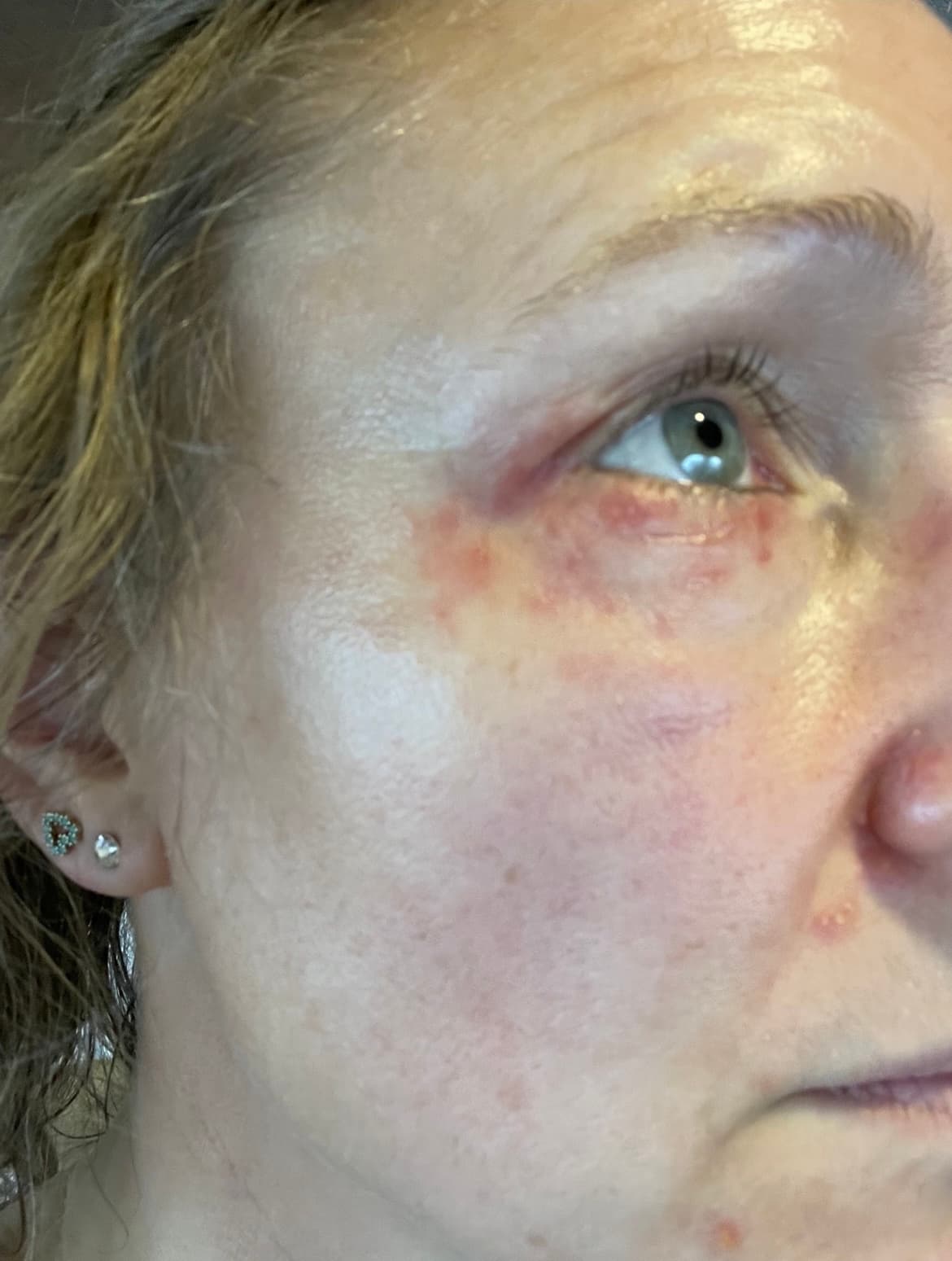 Before
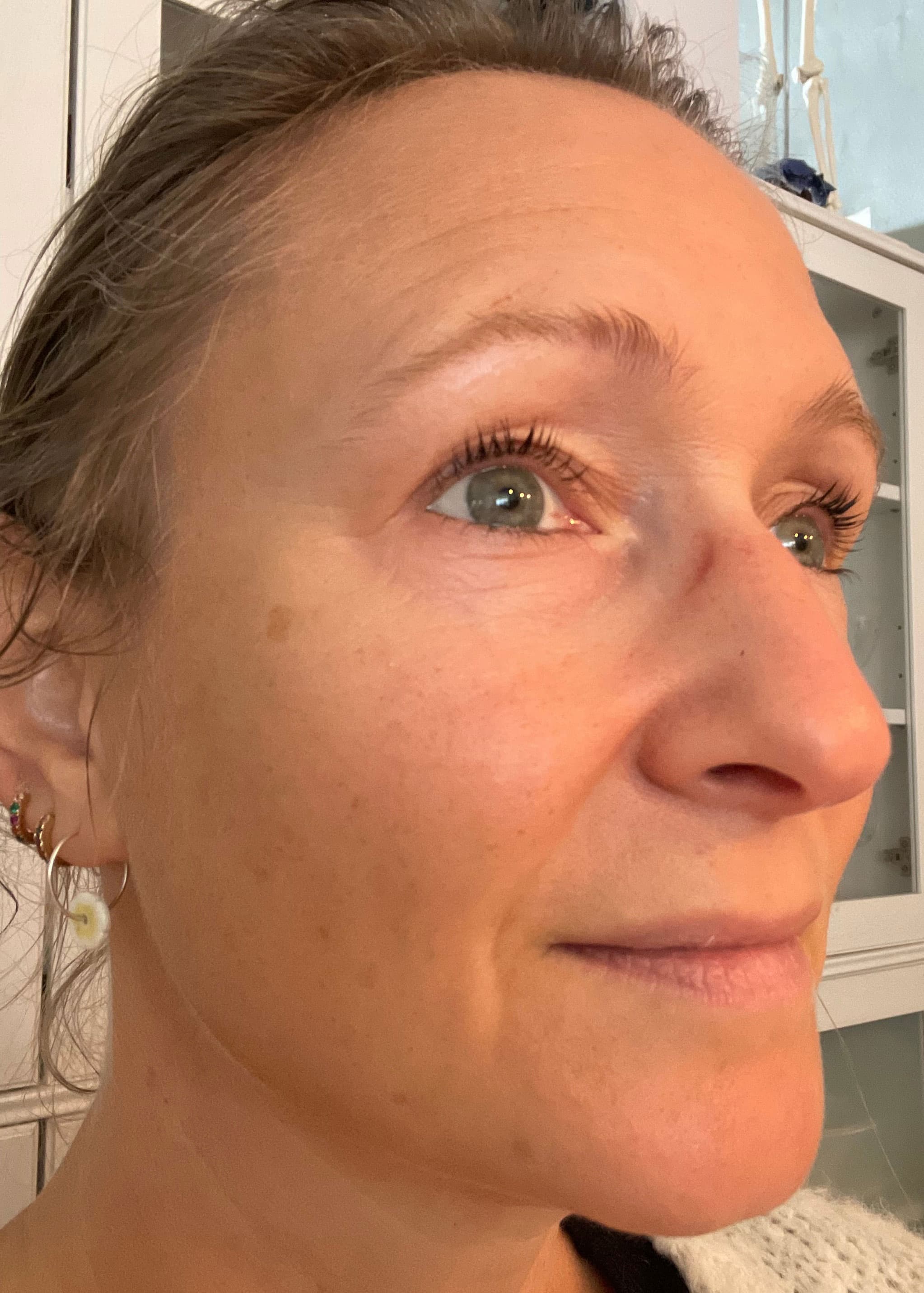 After
After Before
 After
After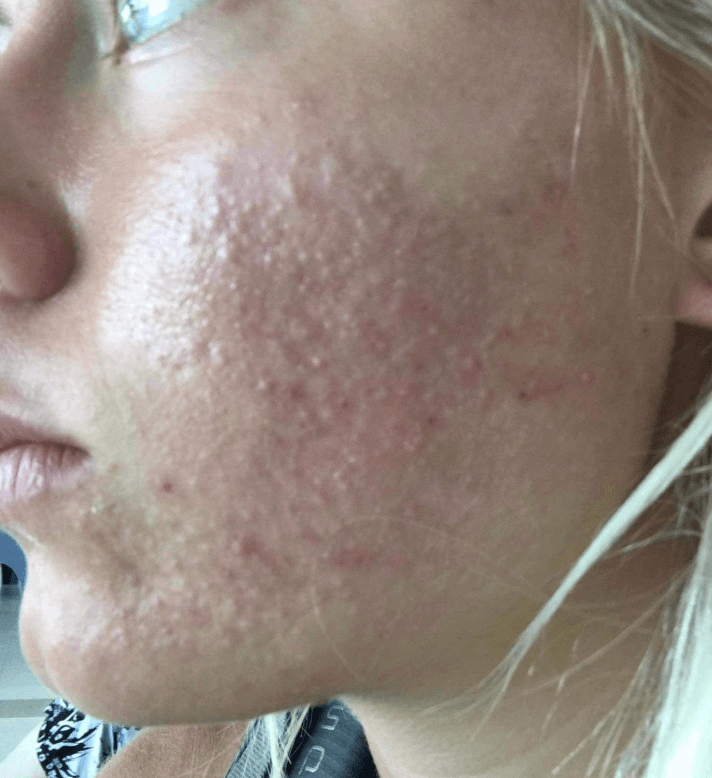 Before
 After
AfterKeep reading
- Ingredient · panthenol
- Ingredient · allantoin
- Ingredient · glycerin
- Ingredient · sodium hyaluronate
- Ingredient · ectoin
- Condition · sensitive skin
- Condition · dry skin
- Condition · rosacea
- Condition · perioral dermatitis
- Read · redness after shower
- Read · rosacea skincare routine
- Read · slugging
- Read · skin cycling
- Read · how to treat dry skin on face
Citations
- Sethi A, Kaur T, Malhotra SK, Gambhir ML. Moisturizers: The slippery road. Indian J Dermatol. 2016;61(3):279-287.PMID 27293248
- The Skin Barrier and Moisturization: Function, Disruption, and Mechanisms of Repair. Skin Pharmacol Physiol. 2023.PMID 37717558
- Proksch E, Nissen HP. Dexpanthenol enhances skin barrier repair and reduces inflammation after sodium lauryl sulphate-induced irritation. J Dermatolog Treat. 2009;20(3):175-181.PMID 19753737