
Vitamin C (L-ascorbic acid)
The most-studied form of topical vitamin C, a daytime antioxidant that meaningfully complements your SPF and slowly evens out pigmentation.
At a glance
What Vitamin C (L-ascorbic acid) does for skin, and how to read the practical safety signals.
- Acts as a daytime antioxidant that helps neutralise some free-radical damage your SPF does not catch.
- Helps improve the look of uneven pigmentation slowly, especially when used consistently under sunscreen.
- Works best in a stable, low-pH formula with packaging that protects it from air and light.
- Type
- Antioxidant
- Rating
- Pregnancy
- Considered safe
- Comedogenic rating
- 0/5 (Won't clog pores)
- Vegan
- Yes
- Suited skin types
- All skin types
On this page
The short answer
If your sunscreen is the goalkeeper, vitamin C is the defender standing just behind it. SPF blocks most of the shots. A few still get through. Vitamin C catches some of the rebounds before they damage anything important.
In the form of L-ascorbic acid, vitamin C is the most-studied topical antioxidant in skincare. Used in the morning under SPF, it neutralises a meaningful share of the free radicals that UV and pollution would otherwise generate in your skin. Over months, it also nudges pigmentation gently more even and contributes to collagen synthesis.
If you've ever stood in the chemist aisle squinting at the price tag on a tiny dark bottle, wondering whether vitamin C is genuinely worth it: it can be. It is, however, not magic. It does not "brighten" overnight, it does not replace sunscreen, and it does not work in every form sold on the shelf.
What the evidence actually shows
Photoprotection as an SPF teammate. Lin's 2003 study at Duke showed that a topical 15% L-ascorbic acid plus 1% alpha-tocopherol formulation, applied before UV exposure, reduced redness and DNA damage markers compared with SPF alone. The implication is not "you can stop wearing sunscreen." It's that vitamin C cleans up some of what SPF lets through. Belt-and-braces, not belt-instead-of-braces.
Collagen and aging. Pullar's 2017 review summarises decades of work: vitamin C is a co-factor for the enzymes that turn procollagen into stable collagen. Topical application can lift the vitamin C levels in your skin enough to support that synthesis. Useful particularly where systemic delivery is poor (smokers, older skin, photoaged skin).
Pigmentation. Telang's 2013 review documents vitamin C as a tyrosinase inhibitor: it interrupts melanin synthesis upstream of where niacinamide works. Vitamin C jams the factory line, niacinamide intercepts the trucks. Different shifts, same target. They're complementary, not competitive.
How to choose a formula
Three things actually matter. Everything else is packaging design.
- Form. L-ascorbic acid is the gold standard. Derivatives such as sodium ascorbyl phosphate, magnesium ascorbyl phosphate, ascorbyl glucoside, and THD ascorbate are less-studied and convert to ascorbic acid in skin at unknown efficiency. Not bad. Less documented.
- Concentration and pH. 10 to 20 percent L-ascorbic acid at pH below 3.5 is the well-studied range. Below 10 percent the evidence thins. Above 20 percent you're paying for marketing.
- Packaging. Air and light destroy L-ascorbic acid roughly the way they destroy a cut apple. An opaque pump or a dark dropper bottle that limits exposure on each use is a real signal of a brand that takes the formulation seriously. A clear jar that lives next to a sunny window is not.
How to use it
- Morning. Cleanse, then vitamin C, then moisturiser, then SPF.
- Daily is fine for most people. Start every other day if your skin runs reactive.
- Use with niacinamide in the same routine for stacking benefits on pigmentation.
- Don't combine with retinol in one application. Separate to morning vs evening. Otherwise you're asking two demanding actives to share a pillow.
If the serum stings more than briefly, do not push through it. The guide to why vitamin C stings walks through when to pause, when to restart, and when a gentler derivative makes more sense.
When vitamin C is the wrong tool
If your only concern is dehydration, hyaluronic acid will do more for you. If your goal is treating active acne or visible wrinkles, retinol is the heavier lift. Vitamin C earns its place as a daytime defensive layer that compounds slowly over months, not as a hero treatment for a single visible problem.
The practical takeaway
My goal with this guide was to gather the useful science on vitamin C in one place, so you can stop hunting for the next clever fix and do the simple, effective things your skin actually needs.
That is also why I made the Danish Skin Care Kit: a calm routine built around documented ingredients, and one that has helped more than 100,000 people with problem skin. If even the smallest question is still nagging you, send me an email at info@danishskincare.com.
Common questions
Does vitamin C replace sunscreen?
No. Nothing does. But topical antioxidants like L-ascorbic acid neutralise some of the reactive oxygen species your SPF doesn't catch. Lin's 2003 study showed C+E combinations meaningfully reduced UV-induced damage compared with SPF alone.
Why does my vitamin C serum turn yellow / brown?
L-ascorbic acid oxidises in light and air. A faint straw colour is fine. Deep brown means it's past its useful life. Store cool, dark, and tightly capped, and use it up within 3 months of opening.
Can I layer vitamin C and niacinamide?
Yes. The cancel-each-other myth is from a 1960s lab artefact. Modern stable formulations work fine together. Lin's combination antioxidant work is one of many studies layering both.
Reading a real label?
Scan a product to see how it is formulated
Upload a photo of the ingredient list and get a quick ingredient-by-ingredient read against the evidence-led database.
I recommend these products

We don't currently make an L-ascorbic acid product. The Optimizer is the brand's alternative antioxidant approach. Azelaic acid plus niacinamide instead of vitamin C, working on the same pigmentation and redness targets.

The Kit's morning step (Day Protector) carries niacinamide plus SPF. Together with the Optimizer, that's our antioxidant axis without vitamin C.
Skin conditions it actively helps with
Where the published evidence puts Vitamin C (L-ascorbic acid) on the short list of active ingredients worth reaching for.
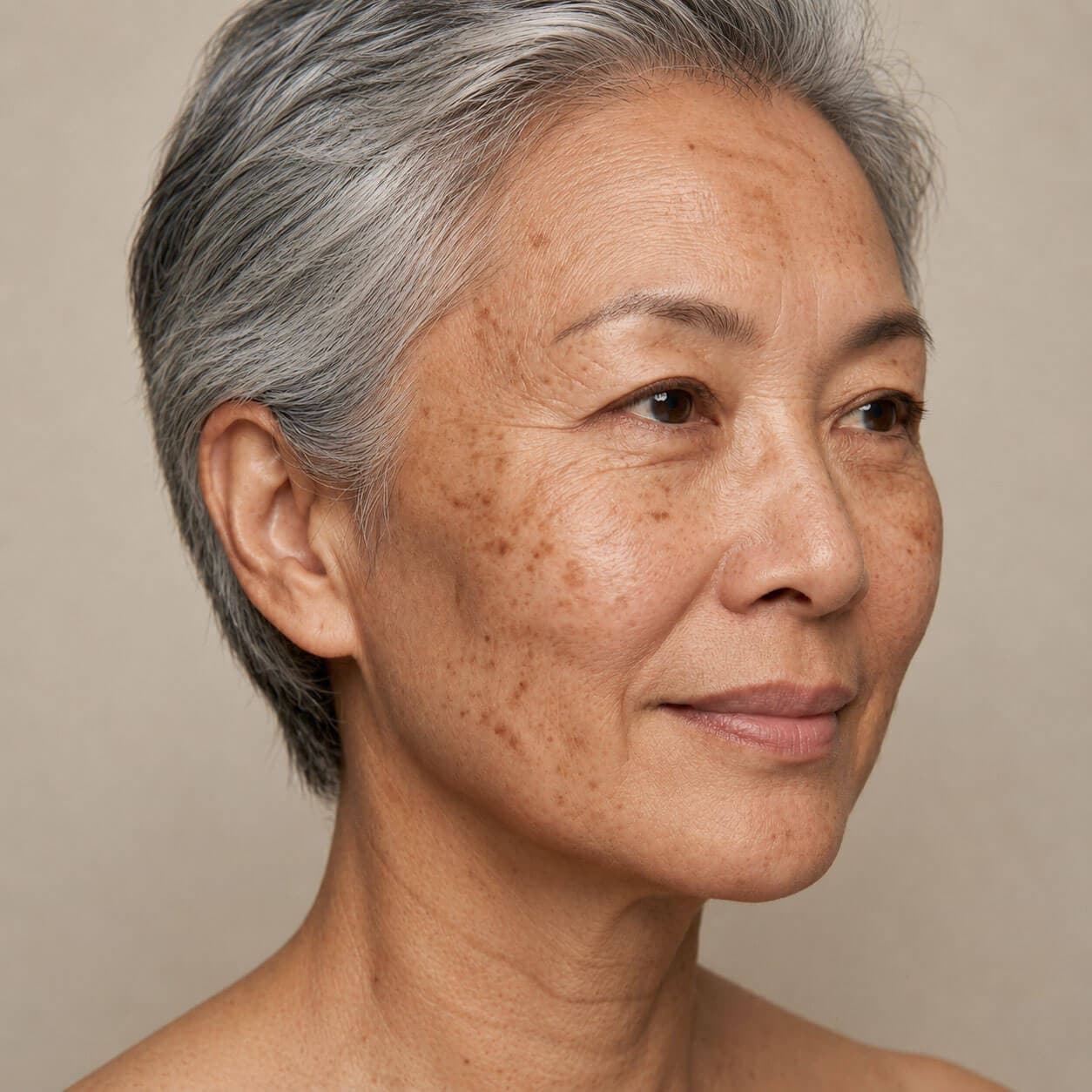
Pigmentation
Pigmentation is one of the most-asked-about, most-misunderstood skin concerns. Here's what's happening in your skin and the slow, evidence-led routine that actually fades it.

Signs of ageing
Wrinkles, sallowness, slack tone, and uneven pigment all share the same drivers. Here's the unglamorous routine that genuinely slows them.
Related ingredients
Citations
- Pullar JM, et al. The Roles of Vitamin C in Skin Health. Nutrients. 2017;9(8):866. — PMID 28805671
- Lin JY, et al. UV photoprotection by combination topical antioxidants vitamin C and vitamin E. J Am Acad Dermatol. 2003;48(6):866–74. — PMID 12789176
- Telang PS. Vitamin C in dermatology. Indian Dermatol Online J. 2013;4(2):143–6. — PMID 23741676