Pigmentation
Pigmentation is one of the most-asked-about, most-misunderstood skin concerns. Here's what's happening in your skin and the slow, evidence-led routine that actually fades it.
On this page
What's actually causing the dark spots
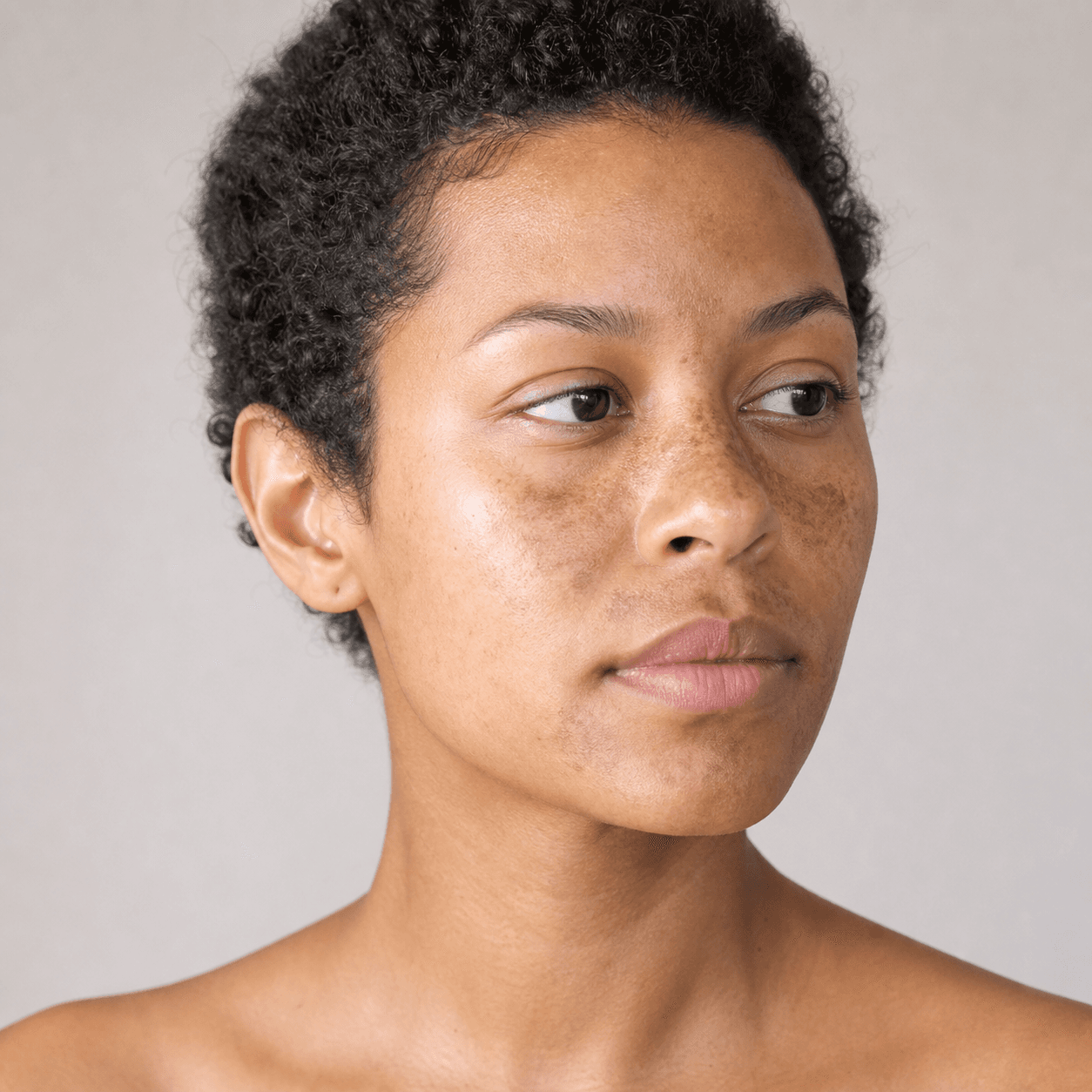
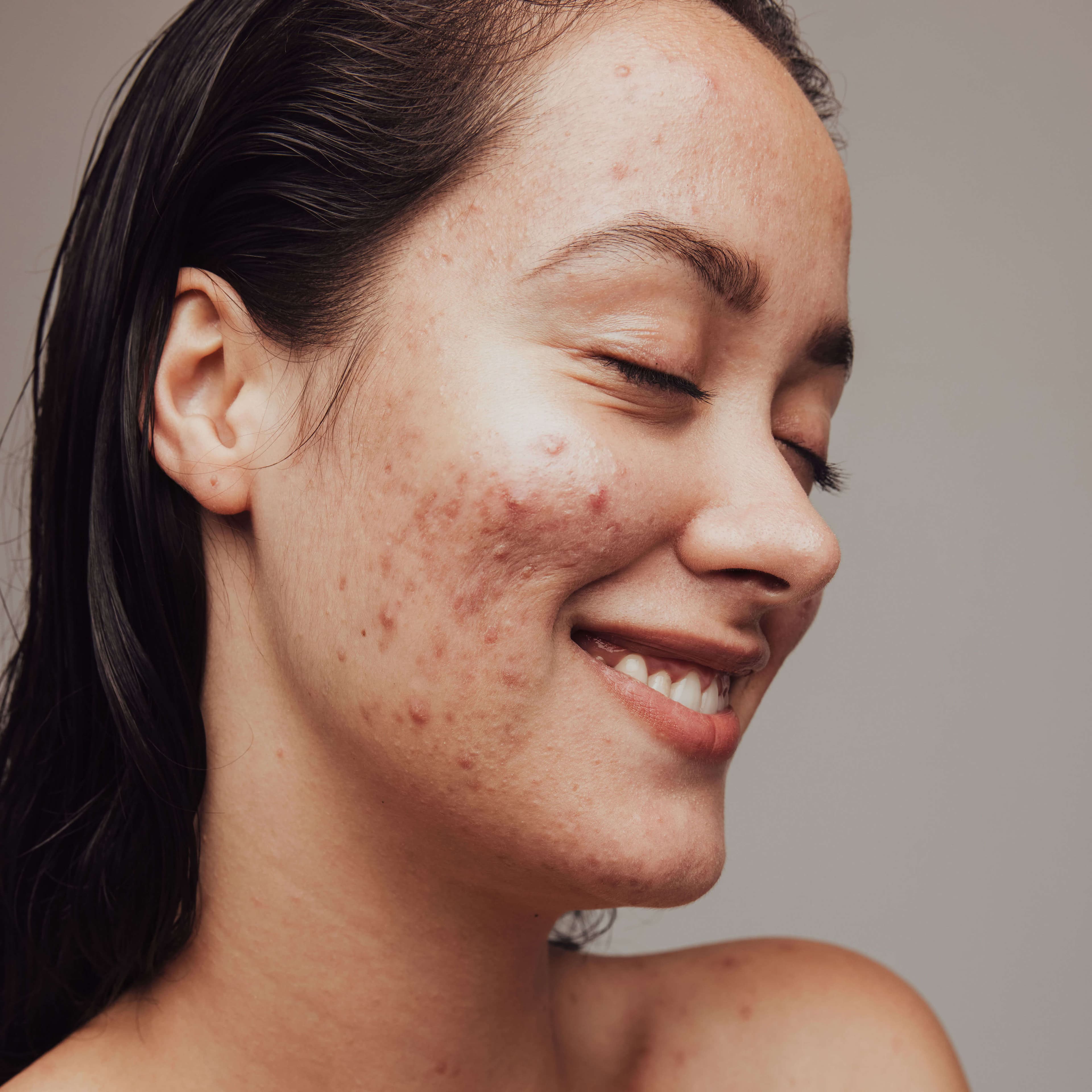
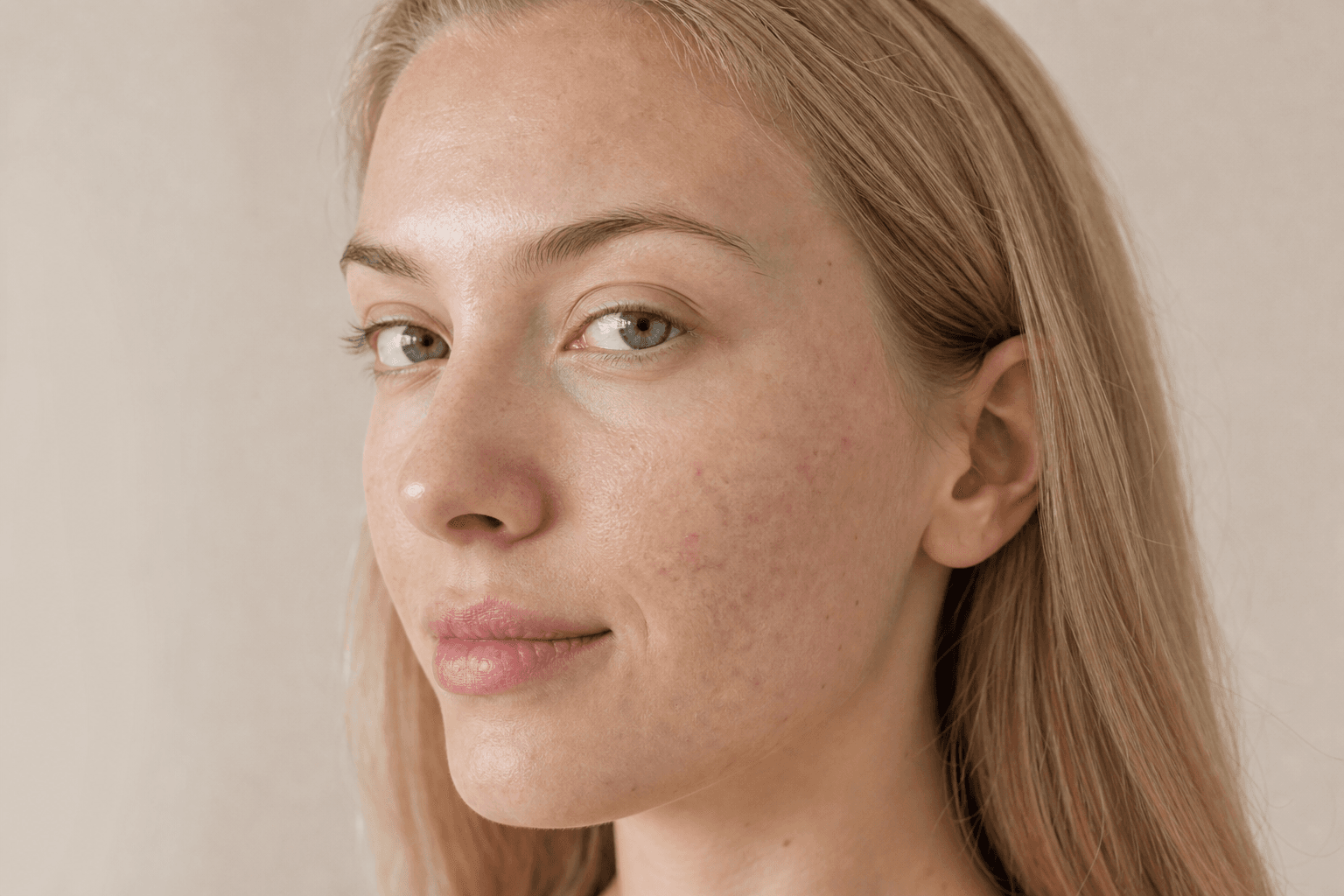
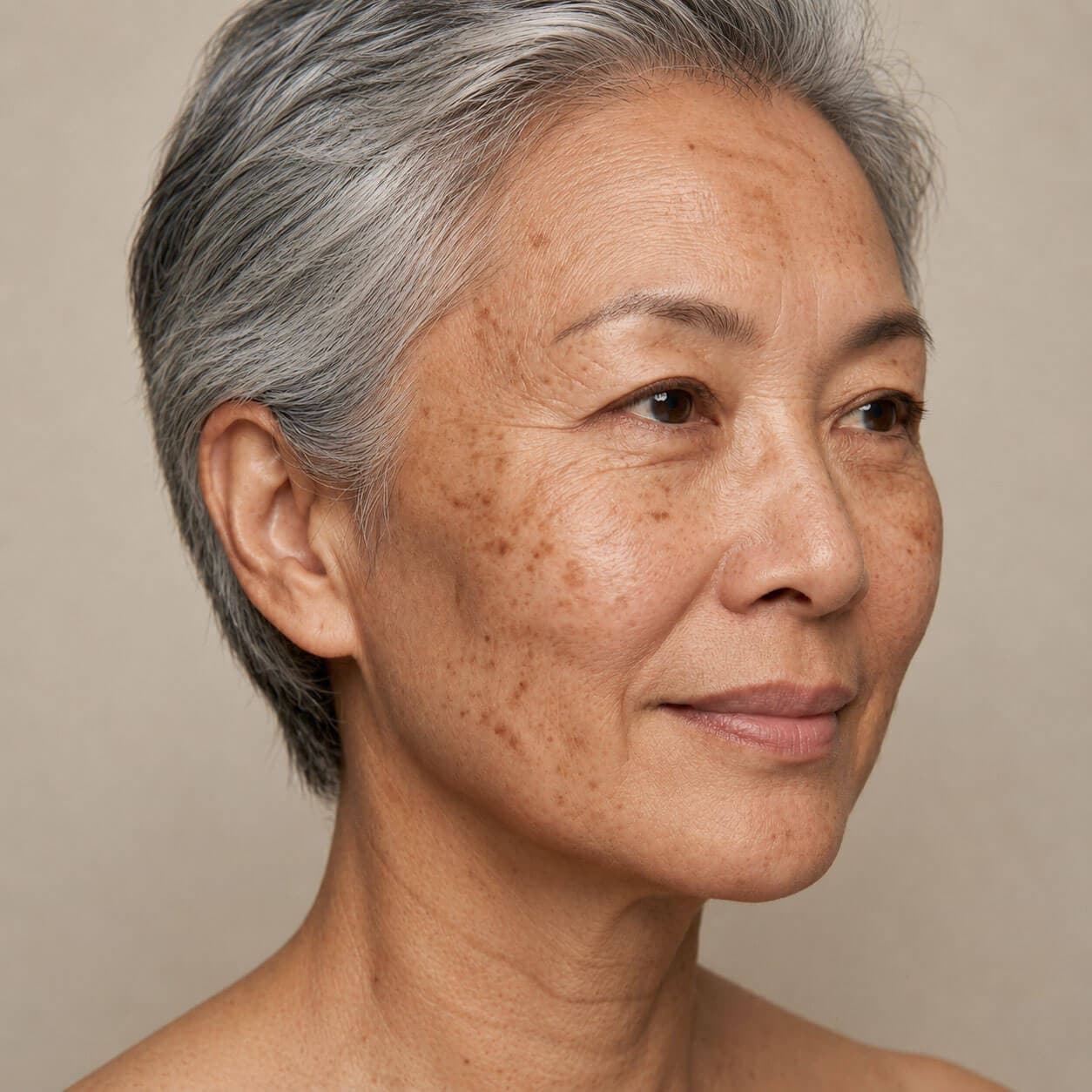
Pigmentation is melanin in the wrong place, in the wrong amount, at the wrong time. The melanocytes in your skin produce melanin in response to UV, hormones, and inflammation. Once that pigment is deposited in the epidermis (or the deeper dermis for melasma), it takes weeks to months to clear, because pigmented cells have to migrate up and shed naturally. When the trigger is acne, the post-acne marks guide helps separate brown pigment from red marks and true texture scars.
That's the whole story. Every successful treatment either stops melanin from being made in the first place (tyrosinase inhibitors like azelaic acid, vitamin C, kojic acid), interrupts its transfer out of melanocytes (niacinamide), or accelerates the shedding of pigment-loaded cells (retinoids).
A complete routine touches at least two of those three mechanisms, plus SPF, which prevents new pigment from being deposited while the old fades.
What works: the evidence
The Hakozaki 2002 study on niacinamide showed measurable reduction in pigmentation with 5% niacinamide compared with vehicle after 4 weeks. The Searle 2020 review covers evidence for familiar brightening ingredients such as vitamin C, retinol, nicotinamide, kojic acid, and arbutin. Sarkar 2013 gives a broader mechanism map, and a 2023 systematic review found 20% azelaic acid performed better than vehicle for melasma in randomized trials. For a quieter support ingredient, a 2007 study found that N-acetyl glucosamine reduced the appearance of facial hyperpigmentation, with a stronger effect when combined with niacinamide[5].
In practice: SPF + the Optimizer (azelaic + niacinamide) + nightly Moisturizer (retinol) is the routine I recommend most. It hits three of the four mechanisms above and is sustainable long-term. Pigmentation routines have to be sustainable because they're measured in months.
The single most important step
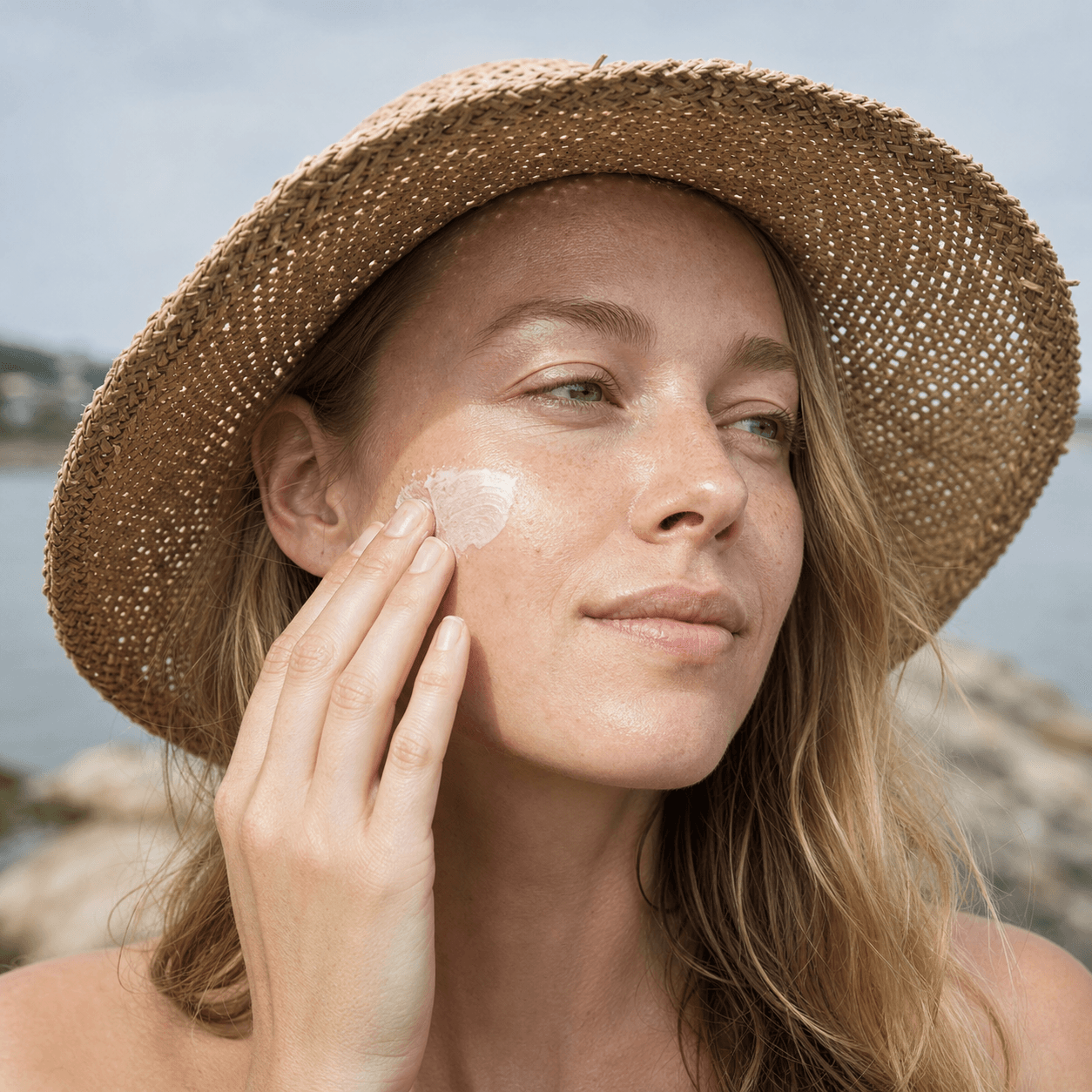
SPF. Every morning. Without exception, including cloudy days.
UVA penetrates clouds and glass, drives pigmentation hardest, and is the single thing standing between "my pigmentation is slowly fading" and "my pigmentation keeps coming back." A broad-spectrum SPF 30 or higher is the floor. If you have melasma, look for one with iron oxides. They add visible-light protection that conventional UV filters miss.
A focused melasma reading path
Hormonal melasma raises different questions at different moments. Start with melasma during pregnancy for a conservative routine and ingredient guardrails, or read birth control and melasma if the timing seems connected to contraception. When patches fade and return, why melasma keeps coming back explains maintenance without blaming your routine. The hydroquinone guide covers the prescription-strength option and its limits, while the melanogenesis definition explains the pigment-making process behind all five pages.
When to see a dermatologist
Stubborn melasma, very dark or deeply-set pigmentation, or pigmentation that isn't responding after 3–4 months of consistent topicals deserves a dermatologist. Options include prescription hydroquinone (still the gold standard), tranexamic acid (oral or topical), and carefully-chosen in-office treatments (chemical peels, picosecond lasers). Don't DIY in-office treatments. Overdone procedures cause more pigmentation than they remove.
A simple routine
Morning
- Gentle cleanse
- Azelaic acid + niacinamide treatment — Azelaic acid targets melanin production; niacinamide helps interrupt pigment transfer. Mads's preferred everyday pigmentation pair.
- Moisturiser
- SPF 30+ every morning, broad-spectrum, ideally with iron oxides for melasma
Evening
- Cleanse
- Retinol at night, accelerates pigment-laden cell turnover — The Moisturizer carries retinol; build up slowly per the retinol guide.
- Layer the Optimizer on alternate nights for additive azelaic action
What to avoid
- Skipping SPF on cloudy days (UVA penetrates clouds and drives pigmentation hardest)
- DIY lemon juice, apple cider vinegar, or any internet "lightening" remedy
- Hydroquinone without dermatologist oversight
- Aggressive scrubs on pigmented patches (micro-tears feed PIH)
Recommended Danish Skin Care routine

The Kit covers all four steps: niacinamide via the Day Protector, retinol via the Moisturizer, gentle cleanser, and salicylic-acid Power Treat for residual congestion.

Azelaic acid + niacinamide, the brand's hero serum for pigmentation. Add layered with the Kit for a heavier pigmentation push.

Niacinamide + zinc PCA + broad-spectrum SPF. UV defence is the single most important step for pigmentation.
Full transparency: Danish Skin Care is my own company — I formulated these products and earn from every sale. That's exactly why I only recommend them where they genuinely fit the condition described above.
Key ingredients to look for
Common questions
How long until pigmentation fades?
Slowly. Surface PIH from a recent breakout tends to fade in 6–12 weeks with consistent SPF + niacinamide + retinol. Deeper melasma is measured in months, not weeks. The routine works. Patience is the missing ingredient most often.
Does vitamin C work for pigmentation?
Yes. L-ascorbic acid is a tyrosinase inhibitor. We don't currently make a vitamin C product (the Optimizer uses azelaic acid + niacinamide as an alternative axis). If you want to add a separate L-ascorbic acid serum, use it in the morning under the Optimizer.
Is melasma the same as sunspots?
No. Melasma is hormonally and genetically driven, deeper in the skin, and notoriously stubborn. Sunspots are purely cumulative UV damage. The treatment overlap is large (SPF, tyrosinase inhibitors), but melasma usually needs longer treatment and stricter sun-avoidance to stay quiet.
Citations
- Hakozaki T, et al. The effect of niacinamide on reducing cutaneous pigmentation. Br J Dermatol. 2002;147(1):20–31. — PMID 12100180
- Searle T, et al. The top 10 cosmeceuticals for facial hyperpigmentation. Dermatol Ther. 2020;33(6):e14095. — PMID 32720446
- Sarkar R, et al. Cosmeceuticals for hyperpigmentation: what is available? J Cutan Aesthet Surg. 2013;6(1):4–11. — PMID 23723597
- King S, et al. A systematic review to evaluate the efficacy of azelaic acid in the management of acne, rosacea, melasma and skin aging. J Cosmet Dermatol. 2023;22(10):2650–2662. — PMID 37550898
- Bissett DL, et al. Reduction in the appearance of facial hyperpigmentation by topical N-acetyl glucosamine. J Cosmet Dermatol. 2007;6(1):20-26. — PMID 17348991