
Sodium lactate
A natural-moisturising-factor style humectant that helps formulas hold water in the outer skin layer and can support dry, tight, barrier-stressed skin.
At a glance
What Sodium lactate does for skin, and how to read the practical safety signals.
- NMF connection: Lactate and sodium are part of the skin's natural moisturising factor system.
- Hydration role: Helps the stratum corneum hold water so skin feels less tight.
- Formula context: Useful inside moisturisers and hydrating products, not as a solo treatment for skin disease.
- Type
- Humectant
- Rating
- Pregnancy
- Considered safe
- Comedogenic rating
- 0/5 (Won't clog pores)
- Vegan
- Yes
- Suited skin types
- All skin types
On this page
The short answer
Sodium lactate is a humectant - a water-binding ingredient - related to lactic acid, but it behaves differently in most skincare formulas.
If lactic acid is the exfoliation cousin, sodium lactate is the quieter hydration cousin. Same family name, very different dinner-table personality.
What the evidence actually shows
Natural moisturising factor. A 2013 study[1] found that sweat contributes several natural moisturising factor components to the stratum corneum, including lactate, urea, sodium, and potassium. Areas with reduced sweating had lower hydration and lower levels of those components.
Dryness link. A 2012 study[2] found lower lactate, urea, sodium, and potassium in the natural moisturising factor of mild atopic dermatitis skin. Potassium lactate application improved surface hydration in that study, which supports the broader point: lactate salts matter for water handling in the outer skin layer.
For everyday skincare, sodium lactate's honest claim is hydration support. It helps the formula make dry skin feel less tight. It is not acne treatment, eczema medicine, or a secret peel hiding under a polite name.
How to use it
You will usually see sodium lactate inside:
- moisturisers
- hydrating serums
- gentle cleansers
- leave-on products where pH and hydration both matter
It pairs naturally with glycerin, urea, sodium PCA, and sodium hyaluronate. That is the sensible humectant family: several small supports, no drama.
Sodium lactate vs lactic acid
Lactic acid can exfoliate when formulated at the right concentration and pH. Sodium lactate is usually there to hold water and help the formula behave.
This distinction matters because people sometimes see "lactate" and worry they are secretly exfoliating. In most moisturisers, sodium lactate is not trying to resurface your face. It is helping the top layer hold water.
When it won't help
Sodium lactate will not fix a routine built on harsh cleansing, too much exfoliation, and no moisturiser. It also will not replace richer lipids if your skin is very dry. Humectants bring water to the party; emollients and occlusives help the party stay.
The practical takeaway
My goal with this guide was to gather the useful science on sodium lactate in one place, so you can stop hunting for the next clever fix and focus on a simple, effective routine.
That is also why I made the Danish Skin Care Kit: a calm routine built around documented ingredients, and one that has helped more than 100,000 people with problem skin. If even the smallest question is still nagging you, send me an email at info@danishskincare.com.
Common questions
Is sodium lactate the same as lactic acid?
No. Sodium lactate is the salt form of lactic acid and is usually used more as a humectant and pH-support ingredient than as an exfoliating acid.
Can sodium lactate exfoliate?
Not in the way a dedicated lactic acid exfoliant does. In typical moisturiser formulas, sodium lactate is mainly there for hydration and formula support.
Is sodium lactate good for dry skin?
Yes, as support. Lactate and sodium are part of natural moisturising factor, and reduced lactate has been linked with lower stratum corneum hydration.
Reading a real label?
Scan a product to see how it is formulated
Upload a photo of the ingredient list and get a quick ingredient-by-ingredient read against the evidence-led database.
I recommend these products

The moisturiser uses other NMF-style support ingredients such as urea and sodium hyaluronate to keep nightly barrier care simple.

The Kit keeps hydration support inside a complete routine instead of asking one humectant to do everything.
Skin conditions it actively helps with
Where the published evidence puts Sodium lactate on the short list of active ingredients worth reaching for.

Dry skin
Dry skin is usually a barrier problem, not simply a water problem. Here's the difference between dry and dehydrated, why it matters, and the routine that actually helps.
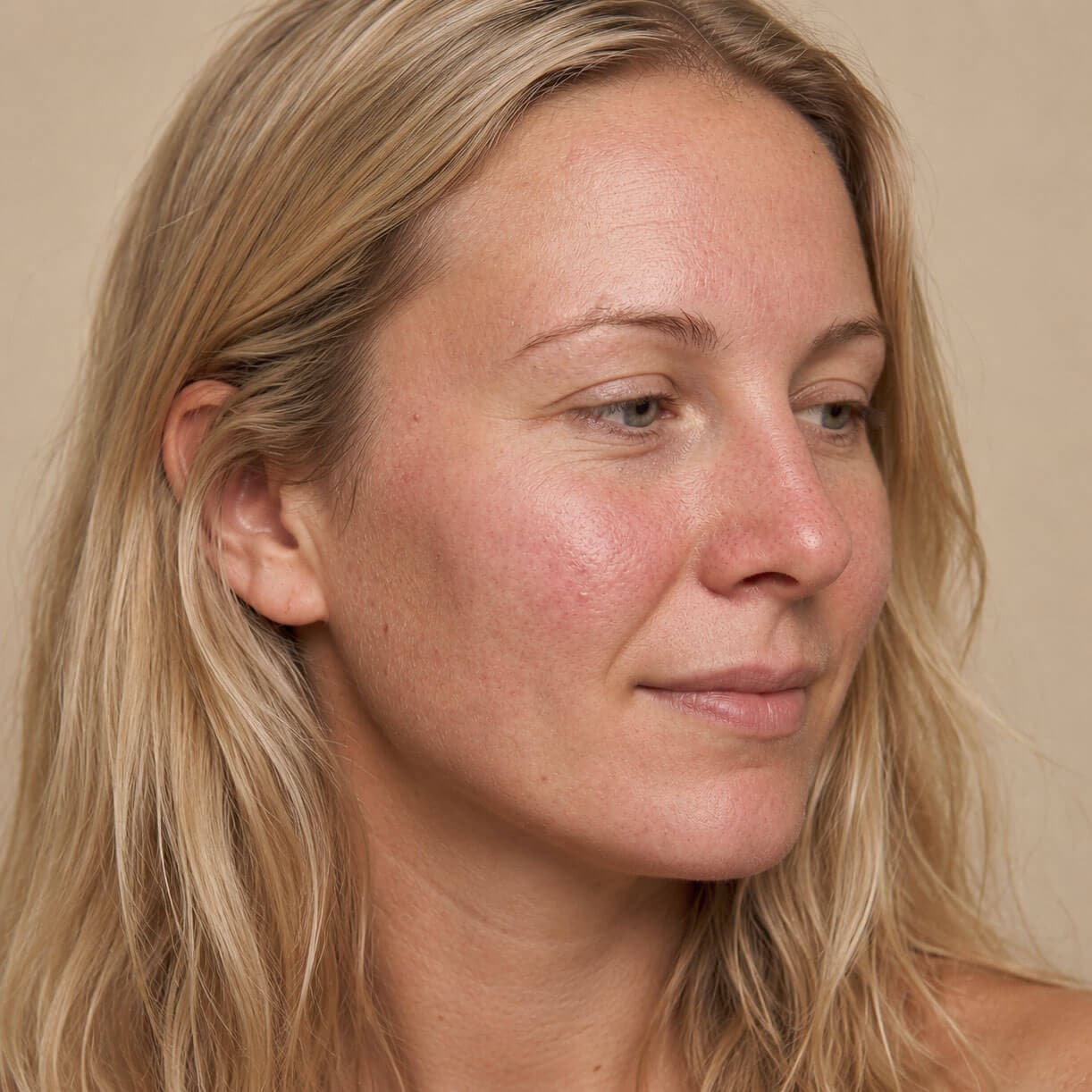
Sensitive skin
"Sensitive" is a symptom, not a diagnosis. Learn what drives reactive skin, the routine that calms it, and what to leave out.

Combination skin
Oily T-zone, drier or normal cheeks, and a routine that has to address both without making either worse. Here's how to actually balance combination skin.
Related ingredients
Citations
- Denda M, et al. Sweat constitutes several natural moisturizing factors, lactate, urea, sodium, and potassium. J Dermatol Sci. 2013;72(2):177-182. — PMID 23871424
- Nakagawa N, et al. Decreased lactate and potassium levels in natural moisturizing factor from the stratum corneum of mild atopic dermatitis patients are involved with the reduced hydration state. J Dermatol Sci. 2012;66(2):154-159. — PMID 22464763