
Zinc PCA
A zinc salt of a natural moisturising factor component. Useful in daytime formulas for oily or blemish-prone skin, especially alongside niacinamide—more support act than solo acne cure.
At a glance
What Zinc PCA does for skin, and how to read the practical safety signals.
- Dual role: Combines zinc's sebum-regulating and antimicrobial properties with PCA, part of the skin's natural moisturising factor.
- Morning-friendly: Often used in lightweight day creams and SPF formulas where matte, balanced skin matters.
- Pair with niacinamide: Clinical acne adjuvant studies have tested the combination rather than zinc PCA alone.
- Type
- Mineral salt
- Rating
- Pregnancy
- Considered safe
- Comedogenic rating
- 0/5 (Won't clog pores)
- Vegan
- Yes
- Suited skin types
- All skin types
On this page
The short answer
Zinc PCA is the zinc salt of pyrrolidone carboxylic acid, or PCA—a component of your skin's natural moisturising factor. INCI lists it simply as Zinc PCA.
It combines two useful ideas in one molecule: zinc, which formulators have used for decades because of antimicrobial and sebum-related activity, and PCA, which helps bind water in the upper skin layers. The result is an ingredient that suits daytime formulas for oily skin and acne-prone skin without the chalky finish of zinc oxide.
It will not replace a proper acne treatment. It is excellent at making a morning SPF or light moisturiser feel more balanced.
What the evidence actually shows
Clinical use alongside niacinamide in acne. A 2020 multicentre randomised trial[1] tested a nicotinamide cream with antibacterial adhesive agents and zinc-pyrrolidone carboxylic acid as adjuvant therapy for moderate acne alongside adapalene. By week two, non-inflammatory lesions decreased significantly versus placebo, with no major tolerability difference between groups. That is combination-formula evidence, not a solo zinc PCA hero study—but it is real clinical data with the exact salt named.
Why zinc keeps showing up in oil-control talk. A classic 1988 in vitro study[2] found that zinc sulphate inhibited 5-alpha-reductase activity in human skin at relevant concentrations, with additive effects alongside azelaic acid. Zinc PCA is a different salt, but the broader zinc story helps explain why formulators reach for zinc-based sebum regulators in the first place.
Zinc-amino acid complexes in acne formulas. A 2021 study[3] of zinc complexes with amino acids such as glycine and histidine reported antibacterial activity against Cutibacterium acnes, low cytotoxicity, and good patch-test tolerance in gel preparations. Again, not zinc PCA specifically, but it supports the logic of pairing zinc with skin-native amino acid chemistry—the same family PCA belongs to.
Honest verdict: zinc PCA is a well-chosen supporting active for daytime balance. Do not expect it to clear moderate acne alone.
How to use it
- Where: morning moisturisers, SPF, or lightweight serums aimed at oil control.
- Concentration: cosmetic formulas typically use modest levels; more is not automatically better.
- Pairing: works naturally with niacinamide, panthenol, and soothing botanicals.
- Frequency: daily morning use is the common pattern.
If your face looks shiny by noon despite doing "everything right", zinc PCA in a morning step is often more useful than adding another stripping cleanser.
Where it fits in a routine
Zinc PCA belongs in the morning, protection, balance lane:
- Niacinamide: the most common partner; oil, redness, and barrier in one routine.
- Salicylic acid: evening pore clearing while zinc PCA helps daytime balance.
- Retinol: renewal at night, mattifying support by day.
- Panthenol: keeps oil-control formulas from feeling punitive.
Our Day Protector uses zinc PCA alongside niacinamide and SPF so the morning step does more than one job. That is the kind of simplification I prefer over a separate niacinamide serum, a separate zinc serum, and a separate sunscreen you will eventually skip.
When it won't help
Zinc PCA will not treat hormonal acne, severe inflammatory breakouts, or pigmentation on its own. It also will not fix dry skin if the rest of your routine is stripping or if you skip moisturiser entirely.
Useful daily balancer. Not a dermatology clinic in a dropper bottle.
The practical takeaway
My goal with this guide was to gather the useful science on zinc PCA in one place, so you can stop hunting for the next clever fix and do the simple, effective things your skin actually needs.
That is also why I made the Danish Skin Care Kit: a calm routine built around documented ingredients, and one that has helped more than 100,000 people with problem skin. If even the smallest question is still nagging you, send me an email at info@danishskincare.com.
Common questions
Is zinc PCA the same as zinc oxide?
No. Zinc oxide is a physical sunscreen mineral and occlusive. Zinc PCA is a water-soluble zinc salt of pyrrolidone carboxylic acid, used mainly for sebum balance and NMF support.
Does zinc PCA replace salicylic acid for acne?
No. It can support oily, blemish-prone routines, especially in daytime formulas, but salicylic acid or retinol still do the heavier lifting for clogged pores and renewal.
Why is zinc PCA paired with niacinamide so often?
They address overlapping problems—excess oil, redness, and routine tolerance—from complementary angles. Clinical adjuvant acne work has tested them together.
Reading a real label?
Scan a product to see how it is formulated
Upload a photo of the ingredient list and get a quick ingredient-by-ingredient read against the evidence-led database.
Found in these Danish Skin Care products

Zinc PCA sits alongside niacinamide, panthenol, and broad-spectrum SPF in the Day Protector. The daily morning step for balanced, protected skin.

The Kit includes the Day Protector so zinc PCA arrives as part of a simple morning routine, not a separate serum shelf.
Skin conditions it actively helps with
Where the published evidence puts Zinc PCA on the short list of active ingredients worth reaching for.

Oily skin
Oily skin isn't a problem to "fix". It's a feature with trade-offs. Here's what actually controls sebum, what doesn't, and the routine that works without stripping.

Acne and blemishes
A clear-headed guide to acne: what's actually happening in your skin, what the evidence says works, and a simple routine that doesn't make things worse.
Sensitive skin
"Sensitive" is a symptom, not a diagnosis. Learn what drives reactive skin, the routine that calms it, and what to leave out.
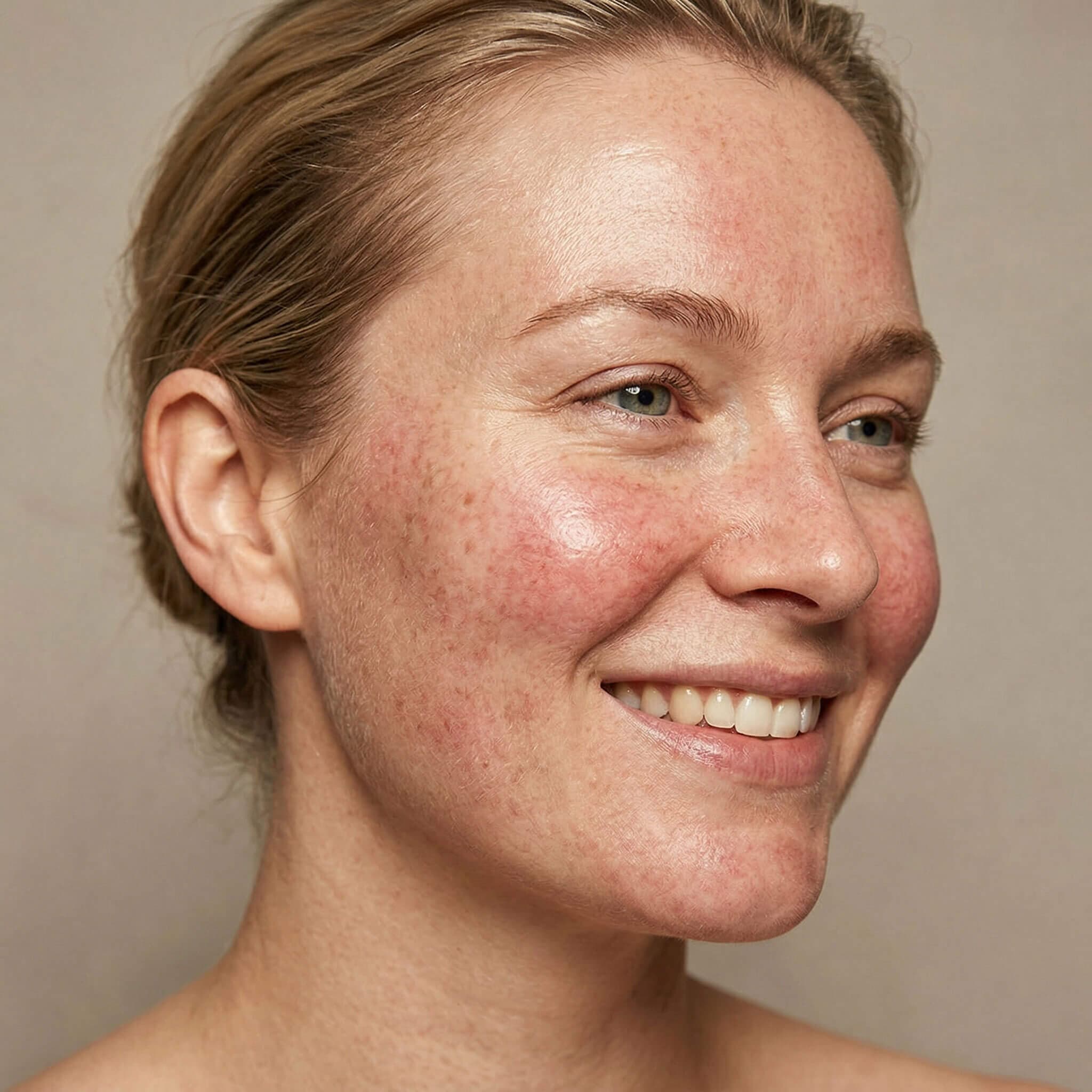
Rosacea and redness
Rosacea is a chronic inflammatory condition, not a temporary flush. Here's what causes it, what calms it, and the routine that doesn't make the reactivity worse.
Related ingredients
Citations
- Sitohang IBS, et al. Efficacy and Tolerability of Topical Nicotinamide Plus Antibacterial Adhesive Agents and Zinc-Pyrrolidone Carboxylic Acid Versus Placebo as an Adjuvant Treatment for Moderate Acne Vulgaris in Indonesia: A Multicenter, Double-blind, Randomized, Controlled Trial. J Clin Aesthet Dermatol. 2020;13(8):E49–E55. — PMID 32983333
- Stamatiadis D, Bulteau-Portois MC, Mowszowicz I. Inhibition of 5 alpha-reductase activity in human skin by zinc and azelaic acid. Br J Dermatol. 1988;119(5):627–632. — PMID 3207614
- Abendrot M, et al. Zinc(II) Complexes of Amino Acids as New Active Ingredients for Anti-Acne Dermatological Preparations. Int J Mol Sci. 2021;22(4):2064. — PMID 33561977