
PIE vs PIH: red and brown acne marks explained simply
Red acne marks and brown acne marks are not the same thing. Learn the difference between PIE, PIH, and true acne scars so you choose the right routine.
On this page
When you have lived with acne, it is very tempting to call every leftover mark a scar.
I get it. The pimple leaves, the mark stays, and emotionally the skin still feels unfinished. Very rude behaviour from a spot that was already annoying while it was active.
But the label matters.
Over the last 15 years, I have helped more than 100,000 people with problem skin, and I have seen a lot of people treat the wrong leftover problem. They use brightening serums for red vascular marks. They use red-light devices for brown pigment. They use scar creams on flat marks. Then they feel like their skin is impossible.
Often, the skin is not impossible. The map is wrong.
The short answer
PIE means post-inflammatory erythema. These are flat red, pink, or purple marks after acne.
PIH means post-inflammatory hyperpigmentation. These are flat brown, grey, or darker marks after acne.
Acne scars are texture changes: pits, dents, rolling shadows, or raised tissue.
So the quickest test is:
- Flat and red or pink? Probably PIE.
- Flat and brown, grey, or darker? Probably PIH.
- Dented, pitted, wavy, or raised? More likely a scar.
That is not a medical diagnosis, but it is a useful starting point before choosing what to do next.
What PIE is
PIE is the red or pink leftover mark after inflammation.
It often shows up more visibly in lighter skin tones, but anyone can have post-acne redness. The colour comes from healing inflammation and tiny blood vessels near the surface of the skin.
A 2022 systematic review[2] describes post-acne erythema as red marks left after acne inflammation and notes that light and laser-based treatments are frequently studied for persistent cases.
In normal routine terms, PIE usually wants:
- Fewer new breakouts.
- No picking.
- Barrier support.
- Sunscreen.
- Time.
- Professional advice if redness persists for months.
Brightening ingredients may help the overall tone, but PIE is not mainly a pigment stain. That is why a "dark spot corrector" can feel disappointing when the mark is red.
What PIH is
PIH is pigment after inflammation.
After acne, the skin can produce extra melanin in the healing area. The result is a flat mark that looks brown, tan, grey, or darker than the surrounding skin. In deeper skin tones, PIH can be more common, more noticeable, and more stubborn.
A 2010 review[1] describes post-inflammatory hyperpigmentation as a common consequence of inflammatory skin conditions and highlights photoprotection plus topical pigment treatments as core management.
In practical terms, PIH usually wants:
- Daily SPF.
- Less new acne.
- No picking.
- Pigment-supporting ingredients.
- Patience.
PIH is where ingredients like azelaic acid, niacinamide, retinoids, vitamin C, kojic acid, tranexamic acid, or dermatologist-supervised hydroquinone may be relevant.
What true acne scars are
True acne scars change the structure of the skin.
A 2017 review[3] explains acne scars by wound healing and collagen changes after inflammation. If too little collagen support forms, the scar can become indented. If too much forms, it can become raised.
Common texture scars include:
- Ice pick scars: narrow, deep pits.
- Boxcar scars: wider depressions with clearer edges.
- Rolling scars: soft waves or shadows.
- Hypertrophic or keloid scars: raised thickened tissue.
Skincare can support the skin around scars. It cannot reliably fill a deep pit or release a tethered rolling scar. That is professional-treatment territory.
The simple at-home check
Look at the mark in natural light.
First, check the surface:
- Does the skin feel flat when you gently run a clean finger over it?
- Does the mark disappear or change mostly with lighting?
- Is there a shadow from a dip?
- Is there a raised edge?
Then check the colour:
- Red, pink, or purple points more toward PIE.
- Brown, grey, tan, or darker points more toward PIH.
- Mixed colour is common.
Now stretch the skin gently beside the mark.
If the mark is mostly colour, stretching may make the surface look normal but the colour remains. If it is a scar, the shadow or indentation often remains because the structure is changed.
Do not obsess over this test. It is a guide, not a legal proceeding against your face.
Why people confuse PIE and PIH
Because real skin does not label itself neatly.
One breakout can leave a red mark first, then a brown mark later. Some marks look purple or grey and sit somewhere between categories visually. Some people have active acne, red marks, brown marks, and pitted scars in the same area.
That is normal.
The goal is not perfect classification. The goal is choosing a routine that does not make things worse.
What to do if it is PIE
For red marks, think calm first.
Use:
- Gentle cleanser.
- Moisturiser or barrier support.
- Daily sunscreen.
- Acne control that your skin tolerates.
- Redness-supporting ingredients such as azelaic acid or niacinamide if they suit your skin.
Avoid:
- Harsh scrubs.
- Daily strong acids.
- Picking.
- Over-cleansing.
- Treating redness with products that sting every time.
If PIE is persistent and bothersome, a dermatologist may discuss vascular lasers, IPL, or other professional options.
What to do if it is PIH
For brown or grey marks, think pigment prevention plus pigment support.
Use:
- SPF every morning.
- Acne control.
- Azelaic acid, niacinamide, retinoids, vitamin C, or other pigment-supporting ingredients as tolerated.
- A routine boring enough to repeat.
Avoid:
- Irritating the skin in the name of speed.
- Picking.
- Skipping sunscreen.
- Strong DIY treatments.
PIH often fades slowly. The most important thing is not restarting inflammation every week.
What to do if it is a scar
If the skin has texture changes, keep skincare realistic.
Your routine should still:
- Reduce new acne.
- Protect from UV.
- Support the barrier.
- Avoid picking and irritation.
But for established pits, dents, rolling shadows, or raised scars, book a dermatologist or experienced acne-scar clinic. Options may include microneedling, laser, subcision, TCA CROSS, fillers, or scar-specific injections depending on the scar.
The acne scars guide goes deeper on that decision.
My final advice
Before treating an acne mark, ask two questions:
- Is it colour or texture?
- If it is colour, is it mostly red or mostly brown?
That tiny pause can save months of frustration.
PIE needs calm and sometimes vascular help. PIH needs sunscreen and pigment support. Scars need structural thinking.
And all three need the same emotional ingredient: less punishment. Your skin already did the hard job of healing. Help it finish calmly.
People also ask
How do I know if I have PIE or PIH?
PIE is usually flat and red, pink, or purple. PIH is usually flat and brown, grey, or darker than your skin. Both are colour changes, not dents or pits.
Is PIE harder to treat than PIH?
Not always, but PIE often responds less directly to brightening ingredients because it is more vascular and inflammatory. Persistent PIE may need time or professional vascular treatments.
Can I have PIE and PIH at the same time?
Yes. Many people have mixed red and brown marks after acne, especially if breakouts have happened at different times or the skin is easily irritated.
Are PIE and PIH acne scars?
They are often called scars casually, but medically they are usually flat post-acne marks. True acne scars change the skin texture.
Start with the mark type, then choose the routine
PIE and PIH need slightly different emphasis, but both do better when the skin is calm and new acne is controlled. The Danish Skin Care Kit gives that foundation. Add the Optimizer when redness and uneven tone need extra support, without turning the routine into a stressful pile of products.

A calm foundation for acne-prone skin while marks fade: cleanser, salicylic acid treatment, moisturiser, and SPF.
Full transparency: Danish Skin Care is my own company — I formulated these products and earn from every sale. That's exactly why I only recommend them where they genuinely fit the guide you just read.
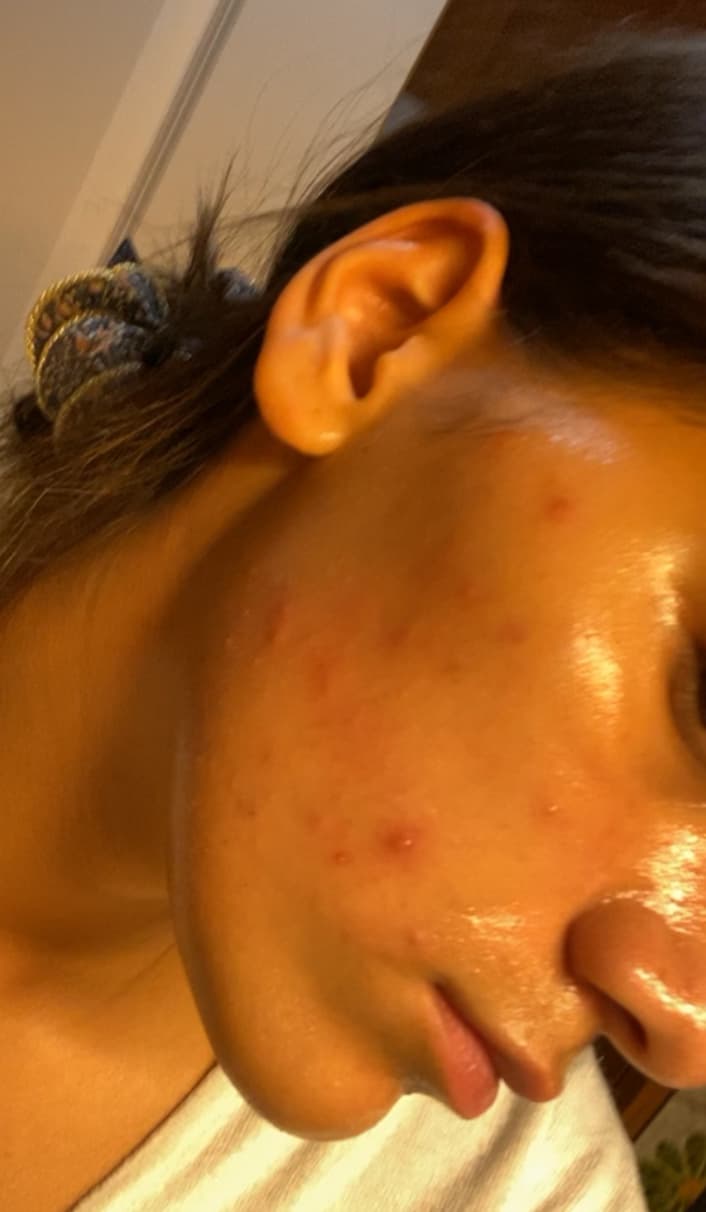
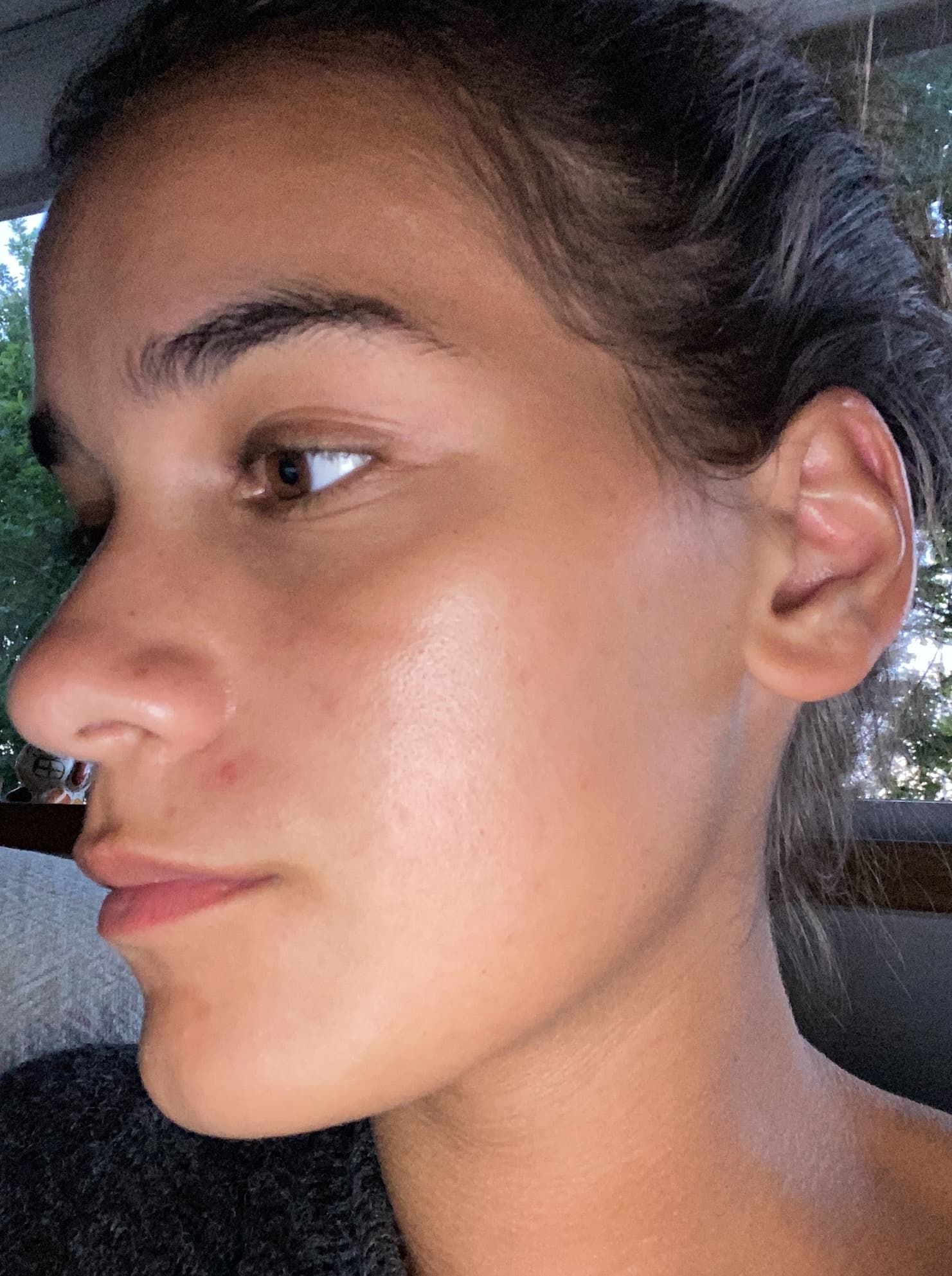
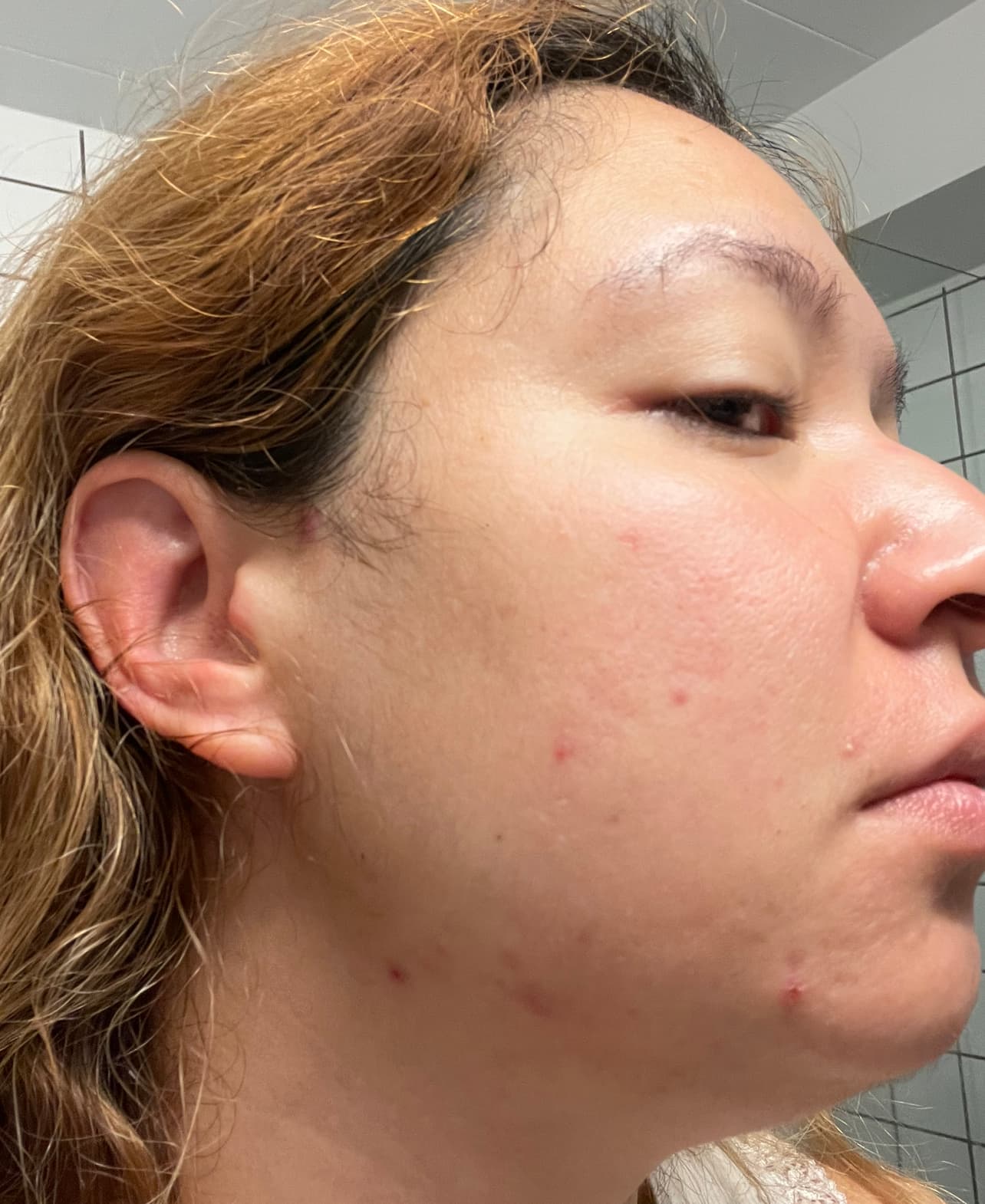
Real results from simple routines
A few real before-and-after cases from people using Danish Skin Care for skin concerns related to this guide. No filters, no miracle promise. Consistent skincare over time.
 Before
 After
After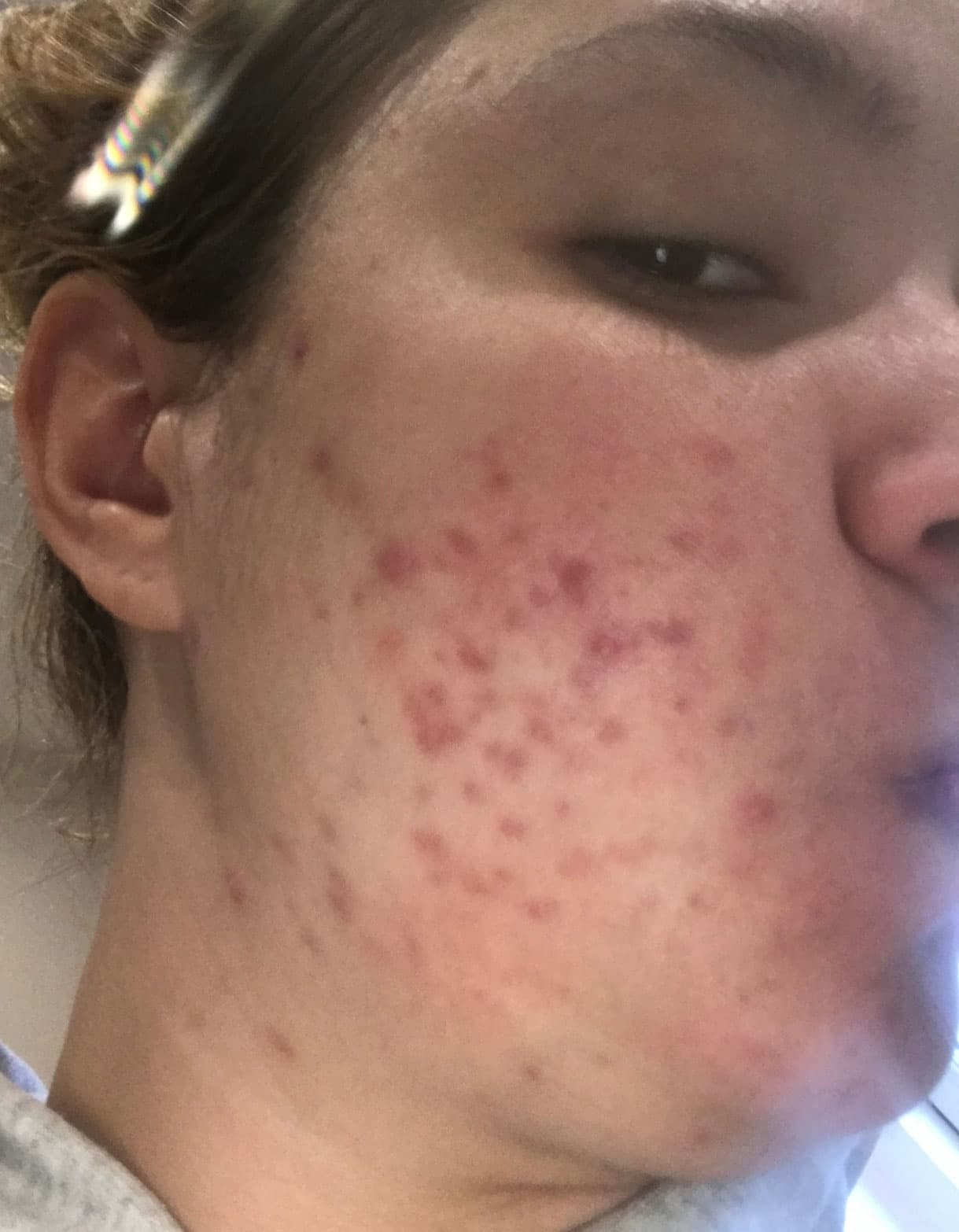 Before
 After
AfterKeep reading
- Ingredient · azelaic acid
- Ingredient · niacinamide
- Ingredient · retinol
- Ingredient · tranexamic acid
- Ingredient · l ascorbic acid
- Condition · acne scars and marks
- Condition · acne and blemishes
- Condition · pigmentation
- Condition · rosacea
- Condition · sensitive skin
- Read · how to fade post acne marks
- Read · acne scars
- Read · best ingredients for acne scars and marks
- Read · microneedling
- Read · red light therapy
Citations
- Davis EC, Callender VD. Postinflammatory hyperpigmentation: a review of the epidemiology, clinical features, and treatment options in skin of color. J Clin Aesthet Dermatol. 2010;3(7):20-31.PMID 20725554
- Madan S, et al. Post-acne erythema treatment: A systematic review of the literature. J Cosmet Dermatol. 2022;21(4):1379-1392.PMID 35076997
- Connolly D, Vu HL, Mariwalla K, Saedi N. Acne Scarring-Pathogenesis, Evaluation, and Treatment Options. J Clin Aesthet Dermatol. 2017;10(9):12-23.PMID 29344322