
Damaged skin barrier or rosacea? How to read red, stinging skin
Barrier damage can mimic a rosacea flare, and rosacea can weaken barrier function. Learn the overlap, the useful clues, and a simple reset that does not delay care.
On this page
Red, tight, stinging skin creates a very specific kind of bathroom panic. The cleanser burns, the moisturiser burns, and suddenly six products are lined up for an emergency meeting.
I know that loop from my own irritated and dehydrated skin. I would add something to repair the problem, react to the addition, then add something else. Over the last 15 years of helping people with problem skin, I have learned that an angry barrier rarely needs a committee.
Rosacea complicates the picture because barrier damage can look like a flare, while rosacea itself is often linked with impaired barrier function.
The short answer
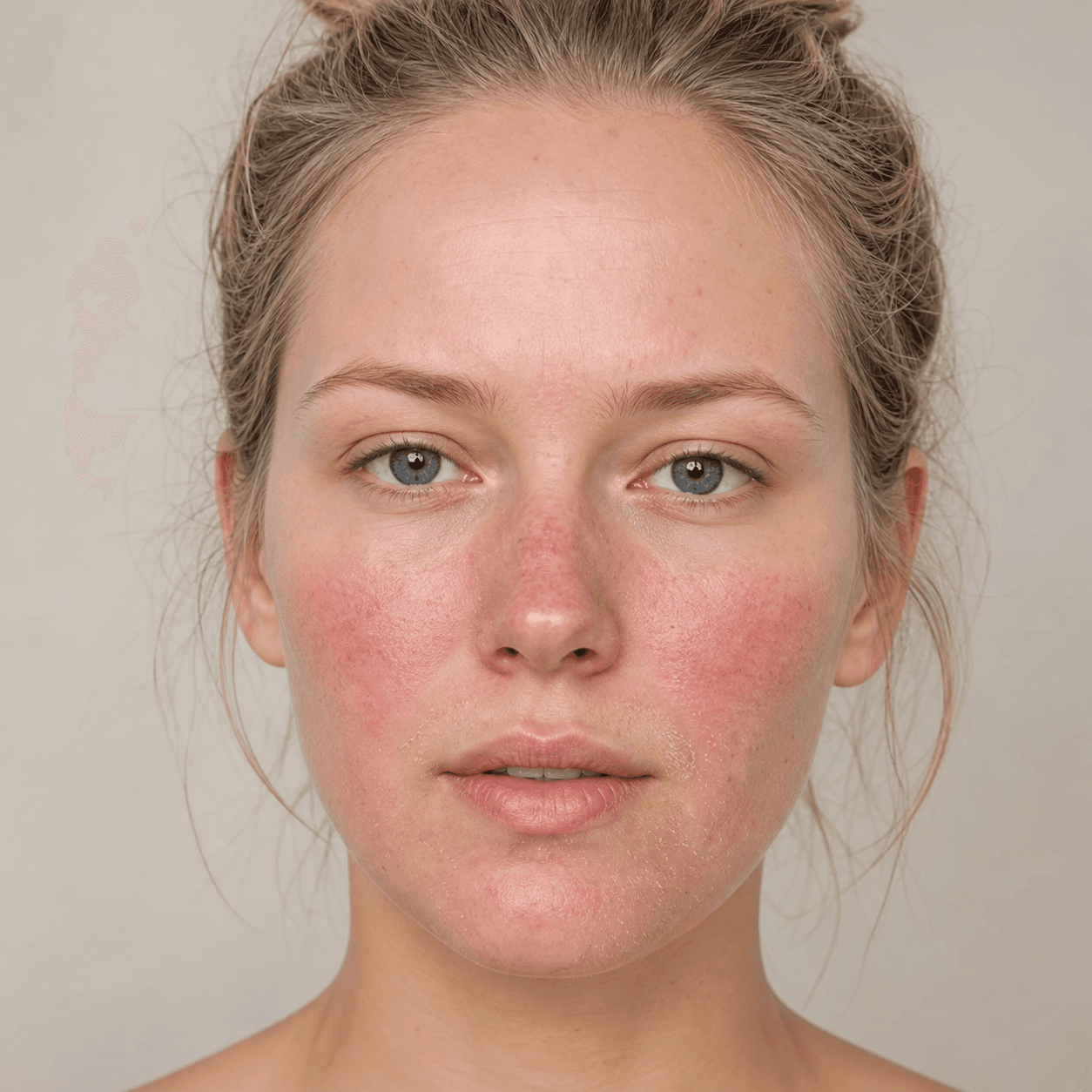
A damaged barrier and rosacea can both cause redness, heat, burning, stinging, dryness, rough texture, and product sensitivity. They can also exist together.
Barrier damage often follows a clear event: over-exfoliation, a new retinoid, harsh cleansing, cold wind, too many actives, or an irritating product. Rosacea is a chronic inflammatory condition that tends to recur across the central face and may include flushing, papules, pustules, persistent colour change, visible vessels, or eye symptoms.
You do not need to solve the diagnosis before making the routine gentler. You do need medical care when the pattern persists or includes warning signs.
Why rosacea skin can feel so fragile
The stratum corneum is the outer barrier: flattened cells set into lipids, a little like bricks held by flexible mortar. It slows water loss and keeps irritants from travelling inward too freely.
A 2020 laboratory study of papulopustular rosacea skin found changes across multiple barrier components, including lipid organisation, cell junctions, and antimicrobial pathways[1]. A clinical pilot study also used hydration and transepidermal water loss measurements to track barrier impairment in people with rosacea[2].
That does not mean “rosacea is only a damaged barrier.” Vascular, immune, nerve, microbial, and environmental factors also matter. It explains why a routine that looks mild on paper can still feel surprisingly sharp on a rosacea-prone face.
Clues that barrier damage is leading the problem
Barrier irritation becomes more likely when:
- symptoms began after a new product or stronger frequency
- the face feels tight immediately after cleansing
- roughness or fine flaking appears in treated areas
- several unrelated products suddenly sting
- redness extends exactly where an acid, retinoid, scrub, or mask was applied
- stopping the trigger produces clear improvement over several days
The over-exfoliated barrier guide goes deeper if you can point to one enthusiastic acid week as the beginning.
Clues that rosacea needs assessment
Rosacea becomes more likely when:
- flushing repeatedly affects the cheeks, nose, central forehead, or chin
- heat, exercise, alcohol, spicy food, stress, sun, or temperature change triggers it
- papules or pustules appear without many blackheads
- background colour stays after the heat has passed
- fine facial vessels become visible
- the pattern returns after the barrier seems comfortable again
- eyes feel gritty, dry, sore, light-sensitive, or persistently red
The presentation can be subtler in deeper skin tones. Brown or violet colour change, warmth, swelling, and bumps may reveal more than bright redness; see rosacea in darker skin.
The 10-to-14-day reset
The purpose of a reset is not to cure rosacea. It removes routine noise so the skin can settle and the remaining pattern becomes easier to read.
Morning
- Rinse with lukewarm water, or use a mild cleanser only if you need it.
- Apply a simple fragrance-free moisturiser where skin feels dry.
- Use sunscreen you already tolerate when relevant. This is not the week to audition five new formulas.
Evening
- Cleanse gently to remove sunscreen, makeup, and daily buildup.
- Pat rather than rub.
- Apply the same moisturiser.
- Stop there.
Pause scrubs, cleansing brushes, peel pads, fragranced experiments, strong acids, and non-essential actives that clearly sting. Keep prescribed medicines separate from that list: ask the prescriber before changing them.
AAD rosacea guidance recommends mild cleansing, moisturising, avoiding rubbing and scrubbing, and choosing gentle products[3]. A small two-week cleanser study in 30 people with mild-to-moderate rosacea found that a non-alkaline gentle cleanser maintained hydration without increasing water loss[4]. The study was small and product-specific, but the practical direction is sensible: cleansing should remove what needs removing without leaving the face squeaky.
How to restart active products
Wait until water and moisturiser no longer sting and the skin feels less tight. Then reintroduce one non-prescription active at a time, perhaps twice weekly at first.
Do not restart retinol on Monday, acid on Tuesday, vitamin C on Wednesday, and a “soothing” peel on Thursday. You will learn nothing except that Thursday was ambitious.
If azelaic acid is part of your rosacea plan, a clinician can help you distinguish expected mild tingling from irritation that needs a different frequency or formula.
When to stop troubleshooting alone
See a qualified dermatologist when the reset does not produce meaningful comfort, bumps or pustules persist, swelling or thickening develops, the rash spreads in an unusual pattern, or you are unsure whether this is rosacea, contact dermatitis, perioral dermatitis, eczema, or something else.
Eye pain, light sensitivity, marked redness, or vision change needs prompt care.
A calmer routine is useful because it protects the barrier and makes the pattern easier to see. It is not a test result. If the face keeps asking for medical help, believe it.
People also ask
Can a damaged skin barrier look like rosacea?
Yes. Both can cause redness, burning, stinging, dryness, and sensitivity. Barrier irritation often follows a product or routine change and improves when the irritant stops; rosacea tends to recur in a central-face pattern with characteristic triggers or bumps.
Does rosacea damage the skin barrier?
Rosacea is associated with impaired barrier measurements and altered barrier structure. That can make skincare sting more easily, but barrier impairment is one part of rosacea rather than its only cause.
How long should a rosacea barrier reset take?
You may notice less stinging within days, but give a simple routine about 10 to 14 days before judging it. Persistent bumps, eye symptoms, swelling, or worsening redness need medical assessment.
Should I stop rosacea medication during a barrier flare?
Do not stop a prescription on your own. Contact the prescriber about burning, frequency, amount, and formulation so the treatment can be adjusted safely.
The routine I would make quieter for two weeks
When red, tight skin is reacting to everything, adding more usually makes the cause harder to see. I built the Danish Skin Care Kit as a small, repeatable base: gentle cleansing, barrier support, and daytime protection while you pause the extras and watch what the skin does.

A simple cleanser, moisturiser, and daytime protection base for the reset period, without turning barrier repair into a crowded shelf.
Full transparency: Danish Skin Care is my own company — I formulated these products and earn from every sale. That's exactly why I only recommend them where they genuinely fit the guide you just read.
Keep reading
- Ingredient · ceramides
- Ingredient · glycerin
- Ingredient · panthenol
- Ingredient · niacinamide
- Ingredient · azelaic acid
- Condition · rosacea
- Condition · sensitive skin
- Condition · dry skin
- Read · how to calm rosacea flare
- Read · rosacea skincare routine
- Read · why does my skin burn when i apply moisturizer
- Read · how to repair skin barrier after over exfoliating
- Read · demodex rosacea
- Read · rosacea in darker skin
Citations
- Medgyesi B, et al. Rosacea Is Characterized by a Profoundly Diminished Skin Barrier. J Invest Dermatol. 2020;140(10):1938-1950.e5.PMID 32199994
- Logger JGM, Driessen RJB, de Jong EMGJ, van Erp PEJ. Value of GPSkin for the measurement of skin barrier impairment and for monitoring of rosacea treatment in daily practice. Skin Res Technol. 2021;27(1):15-23.PMID 32573826
- American Academy of Dermatology Association. 7 rosacea skin care tips dermatologists recommend.AAD
- Draelos ZD. The effect of Cetaphil Gentle Skin Cleanser on the skin barrier of patients with rosacea. Cutis. 2006;77(4 Suppl):27-33.PMID 16706247