
Rosacea in darker skin: signs redness can hide
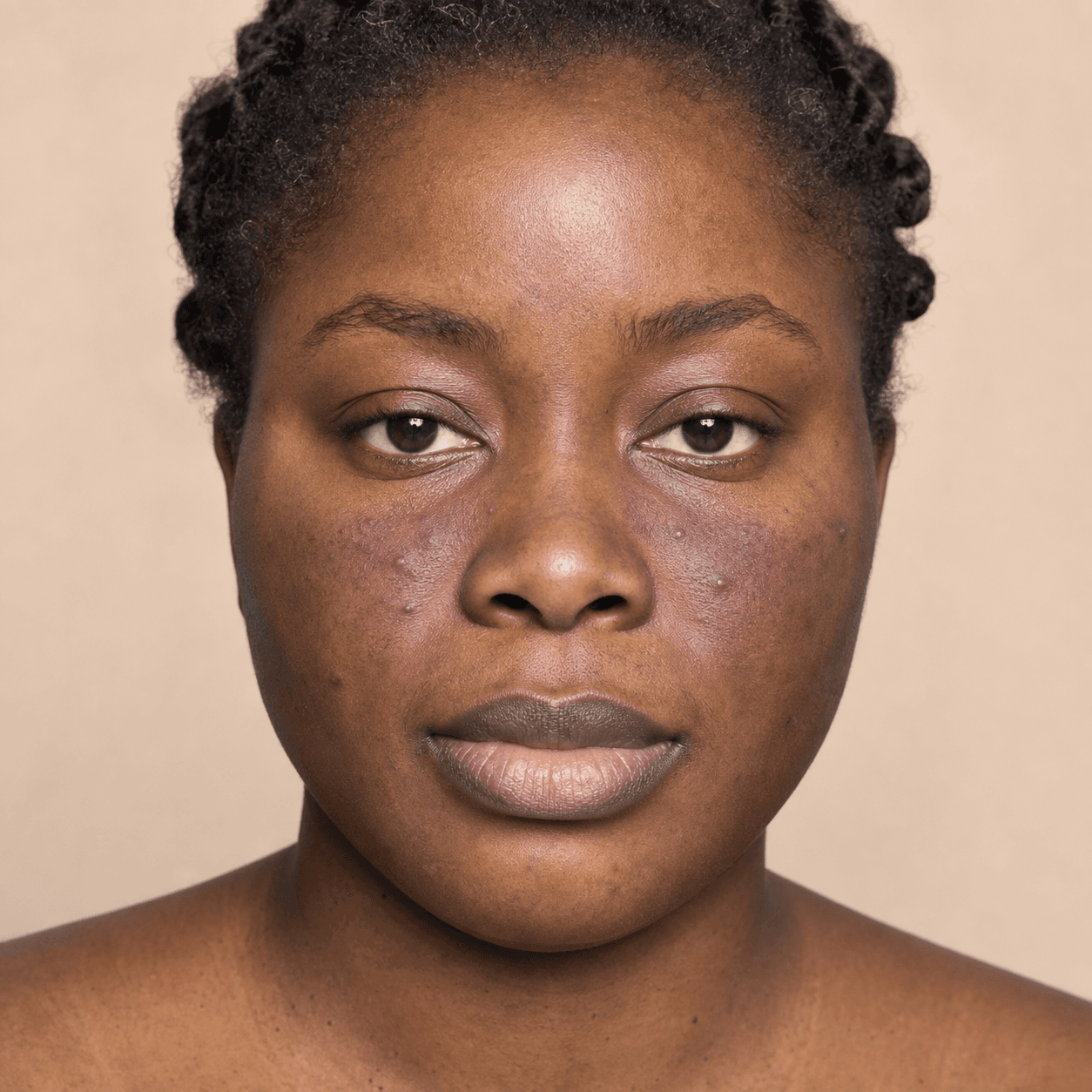
Rosacea can be missed in brown and Black skin when bright redness is treated as the main clue. Warmth, burning, bumps, swelling, and colour change may tell more.
On this page
Rosacea advice has spent years asking one narrow question: “Is your face red?”
That works poorly when redness is subtle, looks brown or violet, or is simply harder to see against deeper skin. A reader can have heat, burning, swelling, bumps, and eye symptoms while every online checklist keeps pointing to a bright pink cheek that does not resemble them.
My own problem-skin history was acne, oil, clogged pores, dehydration, and irritation. I have not experienced rosacea in darker skin myself. The honest founder role here is to translate the evidence, acknowledge the diagnostic gap, and tell you which clues deserve proper care.
The short answer
Black and brown skin can develop rosacea. The condition is probably missed more often because persistent erythema and tiny visible vessels are harder to see.
The American Academy of Dermatology lists warmth, dry or swollen skin, dusky brown colour change, acne-like bumps that resist acne treatment, burning, stinging, and thickening as signs worth assessing in darker skin[1]. Eye symptoms matter too.
Rosacea does not need to look bright red to be real.
Why the diagnosis gets missed
Many teaching images, symptom descriptions, and even the word redness were built around lighter skin. That creates a visibility problem at home and in the clinic.
A 2019 clinical review[2] concluded that rosacea in skin of colour is not rare, yet it is underreported and underdiagnosed. Erythema and telangiectasia can be difficult to discern, which may delay useful treatment.
Rosacea can also resemble other conditions. Acne, seborrheic dermatitis, contact dermatitis, perioral dermatitis, and lupus can all enter the conversation. The answer is not to diagnose yourself from colour alone. It is to bring the complete pattern to a qualified clinician.
Signs beyond bright redness
Start with sensation. Ask what the face does before studying how it photographs.
Useful clues include:
- warmth that lasts longer than the trigger
- burning or stinging, sometimes even with water
- tight, rough, or dry skin across the central face
- recurring swelling
- red, brown, dusky, or violet colour change on the cheeks and nose
- papules or pustules without the usual blackheads of acne
- acne treatment that repeatedly makes the pattern worse
- colour change or dark marks after inflamed bumps settle
AAD guidance notes that papules and pustules may be the first easily visible sign in darker skin, while small facial vessels can be difficult to see[3]. If your search for “redness” finds nothing, bumps plus heat and burning may tell the clearer story.
The rosacea symptoms guide can help you organise the wider pattern before an appointment.
Eye signs do not depend on skin tone
Rosacea may affect the eyes before the facial pattern is obvious. Watch for:
- gritty or sandy sensation
- dryness or watering
- burning or soreness
- swollen eyelids
- crusting around lashes
- bloodshot eyes
- light sensitivity
- blurred or changing vision
NIAMS warns that untreated ocular rosacea can harm the eyes and, in severe cases, vision[4]. Persistent eye pain, light sensitivity, or vision change deserves prompt medical care, not another round of face serum experiments.
What a useful appointment sounds like
Bring concrete observations. “My face feels hot for two hours after exercise” carries more information than “I think I am red.”
You might note:
- where bumps and colour changes appear
- whether the skin burns or stings
- what heat, wind, alcohol, spicy food, stress, or products do
- whether blackheads are present
- which acne products failed or irritated
- whether your eyes are involved
- photos in consistent natural light during a flare
A dermatologist diagnoses rosacea from the skin and eye pattern, symptoms, and history. Testing may be used to rule out a condition that looks similar. If you feel that the absence of bright redness ended the conversation too early, it is reasonable to ask how the other signs were weighed.
A calm routine while you get clarity
Skincare cannot diagnose rosacea. It can stop adding noise.
For two to three weeks, keep the routine simple:
- Cleanse with fingertips and lukewarm water.
- Use a plain moisturiser that does not sting.
- Apply sunscreen you tolerate when daylight exposure makes it relevant.
- Pause scrubs, cleansing brushes, strong peel routines, and rapid product testing.
- Introduce only one new product at a time.
Do not try to exfoliate away a brown or dusky colour shift. Deeper skin can develop post-inflammatory hyperpigmentation after irritation, so an aggressive brightening campaign may create the very marks you wanted to reduce.
If even bland products burn, read the guide to rosacea and a damaged skin barrier. Barrier support may improve comfort, but persistent papules, pustules, swelling, eye signs, or thickening still deserve a medical plan.
Treatment should follow the signs present
Rosacea care may combine gentle skincare, trigger management, prescription topicals for inflammatory bumps, oral medicine when appropriate, and vascular procedures for persistent colour or vessels. Darker skin needs a clinician experienced with the relevant devices and skin tones because procedure settings and pigment-change risk require judgement.
The important correction is simple: rosacea is not reserved for pale skin, and redness is not the only doorway to diagnosis.
Warmth counts. Burning counts. Bumps count. Eye symptoms count. Bring the whole pattern.
People also ask
What does rosacea look like on darker skin?
It may look red, brown, dusky, or violet across the central face. Warmth, burning, swelling, dryness, papules, pustules, and eye symptoms can be more useful than bright redness alone.
Can Black and brown skin get rosacea?
Yes. Rosacea can affect every skin tone. It is likely underdiagnosed in darker skin because redness and small visible vessels can be harder to recognise.
How is rosacea diagnosed in darker skin?
A clinician considers the pattern, sensations, eye symptoms, triggers, medical history, and other possible conditions. There is no single rosacea test.
Can rosacea leave dark marks?
Inflammatory bumps and irritation can leave post-inflammatory hyperpigmentation in darker skin. Treating inflammation gently helps reduce new marks; a dermatologist can guide persistent changes.
Keep reading
Citations
- American Academy of Dermatology Association. People with darker skin tones can get rosacea.AAD
- Alexis AF, Callender VD, Baldwin HE, Desai SR, Rendon MI, Taylor SC. Global epidemiology and clinical spectrum of rosacea, highlighting skin of color: Review and clinical practice experience. J Am Acad Dermatol. 2019;80(6):1722-1729.e7.PMID 30240779
- American Academy of Dermatology Association. Rosacea: Signs and symptoms.AAD
- National Institute of Arthritis and Musculoskeletal and Skin Diseases. Rosacea: Symptoms, Causes, & Risk Factors.NIAMS