Rosacea and coffee: is caffeine really the problem?
Coffee can flush rosacea-prone skin for some people, but the temperature of the drink may matter more than caffeine itself. Here is how to test coffee calmly without turning breakfast into a fear ritual.
On this page
I understand why coffee and rosacea feels personal.
For many people, coffee is not a beverage. It is the small morning ceremony that makes the day feel possible. So when someone says, "Maybe coffee is triggering your rosacea," it can sound like skincare has now come for your last peaceful habit.
My own skin story was acne, oily skin, clogged pores, dehydration, and irritation. I have not had rosacea as my own diagnosis, and I do not want to borrow an experience that is not mine. But after years of helping customers and readers with redness-prone skin, I have seen one pattern again and again:
People often blame the cup.
The real trigger may be the heat.
The short answer
Coffee can trigger rosacea flushing for some people, especially when it is served very hot.
But caffeine itself is not clearly the problem. In a small study on erythematotelangiectatic rosacea, coffee and caffeine at 22 degrees C did not cause flushing, while hot coffee and hot water at 60 degrees C caused similar flushing reactions[1]. Plain translation: the face reacted to thermal heat, not to coffee magic.
That does not mean coffee is harmless for every rosacea-prone face. It means the useful question is more specific:
- Is it hot coffee?
- Is it caffeine?
- Is it coffee plus stress?
- Is it coffee plus poor sleep, sun, heat, spicy breakfast, or rushing?
- Is it the whole morning stack?
Skincare gets calmer when the question gets clearer.
Coffee is a common suspect, but not always guilty
Rosacea-prone skin can behave like a face with a very sensitive thermostat.
Heat, sun, emotional stress, alcohol, spicy food, hot showers, irritating skincare, and heated drinks can all push it toward flushing. That is why coffee gets blamed so often. It is warm, daily, easy to notice, and usually present right before the mirror tells on us.
National Rosacea Society survey data reported hot coffee as a flare trigger for 33% of respondents and hot tea for 30%[3]. That is useful. It also says "hot coffee", not "all coffee forever."
This distinction matters because a rule like "I can never drink coffee again" is heavy. A rule like "my face handles iced coffee better than boiling coffee" is much easier to live with.
What the caffeine research says
Here is where the coffee story becomes less tidy.
A large cohort study of 82,737 women found an inverse association between caffeine intake and incident rosacea risk. Women drinking 4 or more servings of caffeinated coffee per day had a lower risk of incident rosacea than women drinking less than 1 serving per month[2]. The study did not find the same clear association for decaffeinated coffee.
Please do not turn that into "coffee treats rosacea."
It does not prove that coffee protects your personal skin from flares. It studied risk of developing rosacea in a large group, not whether your cheeks burn after a hot mug on a stressful Tuesday.
The practical takeaway is gentler:
Caffeine is not the obvious villain people once assumed.
If coffee flushes you, test the heat and the context before you remove the habit completely.
Why hot drinks can flush the face
Heat widens blood vessels near the surface of the skin.
For someone without rosacea, that may be a temporary warm face. For rosacea-prone skin, the same heat signal can feel bigger:
- cheeks turn red or hot
- skin stings or prickles
- visible vessels look stronger
- bumps feel angrier
- the face stays flushed longer than expected
- moisturiser or sunscreen stings afterward
That is why hot coffee, hot tea, soup, saunas, hot showers, warm rooms, and exercise can all end up in the same trigger conversation. The details differ, but the face receives one familiar message: heat.
If hot drinks are part of your pattern, the rosacea triggers guide will help you map the wider picture without turning life into a ban list.
How to test coffee without making your life miserable
Do a small, boring experiment.
Not a dramatic identity change. Not a 30-day punishment plan. A test.
Step 1: Keep your skincare steady
Do not start a new acid, retinoid, vitamin C, cleanser, moisturiser, and sunscreen in the same week you test coffee.
That makes the experiment impossible to read.
Keep the baseline simple: gentle cleanse, moisturiser if needed, daily SPF, and no scrubbing. If your face is already burning or rough, use the rosacea flare reset guide before testing triggers.
Step 2: Change the temperature first
If you usually drink coffee very hot, let it cool.
Try:
- warm instead of hot
- iced coffee
- a smaller cup
- slower drinking
- coffee after breakfast instead of on an empty stomach
- avoiding a hot shower right before or after
If iced coffee is fine and hot coffee is not, you have learned something useful without removing coffee from your life.
Step 3: Track only what matters
For 2 weeks, write down:
- coffee temperature
- amount
- time of day
- sleep
- stress
- sun or heat exposure
- spicy food
- alcohol the night before
- new skincare
- when flushing started
- how long it lasted
You are looking for repetition, not courtroom evidence.
A simple note like "large hot coffee after bad sleep = red cheeks for 3 hours" is more useful than guessing from memory.
What if iced coffee still triggers you?
Then caffeine or the whole routine around coffee may matter for you.
Some people feel more anxious, warmer, sweatier, or more flushed after caffeine. Some drink coffee during the most rushed, stressed part of the day. Some sleep worse after afternoon caffeine, and poor sleep can make reactive skin feel even more reactive.
If cooler coffee still flares your face, test:
- smaller servings
- half-caf
- earlier coffee
- fewer cups
- decaf
- switching to tea if tea suits you better
Do not test all of them at once. That turns the experiment into soup.
What to do if coffee makes your face flush
First, do less.
I know that sounds too simple. But a flushed rosacea-prone face is already hot and reactive. It does not need a scrub, a harsh mask, a strong exfoliating acid, or a panic routine.
Use the calm plan:
- Move away from heat.
- Sip water.
- Let the face cool naturally.
- Cleanse only if you need to remove sunscreen or makeup.
- Use lukewarm water.
- Moisturise if the skin feels tight.
- Use SPF the next morning.
- Pause strong actives if the skin is stinging.
The 2019 National Rosacea Society management update[4] treats rosacea care as individual and based on the signs present. That is the sensible medical frame. If you have persistent redness, papules, pustules, visible vessels, swelling, thickened skin, or eye symptoms, coffee testing is not a treatment plan by itself.
Should you quit coffee for rosacea?
Maybe. But only if your own pattern earns that rule.
A useful decision sounds like:
- "Hot coffee flushes me, but iced coffee is fine."
- "One small coffee is okay. Three cups are not."
- "Coffee is fine unless I combine it with a hot shower and no breakfast."
- "Caffeine makes me feel stressed and flushed, so decaf suits me better."
- "Coffee does not affect my rosacea, so I focus on sun, heat, and skincare irritation."
That is the tone I want for rosacea care: honest, specific, and livable.
There is no skincare prize for quitting something that does not affect you. There is also no need to keep repeating a habit that clearly makes your face miserable.
The bottom line
Coffee can be part of a rosacea trigger pattern.
But for many people, the most important part is heat, not caffeine.
Try the coffee cooler. Try it smaller. Try it iced. Keep your skincare boring while you test. And if rosacea symptoms continue even when you manage triggers well, get proper medical help.
Your morning does not need another fear rule.
It needs a clearer pattern.
People also ask
Does coffee always trigger rosacea?
No. Coffee can trigger flushing for some people, especially when it is very hot, but it is not a universal rosacea trigger. Test temperature, amount, and context before making a strict rule.
Is caffeine bad for rosacea?
Caffeine itself is not clearly bad for rosacea. A small thermal flushing study pointed to heat rather than caffeine, and a large cohort study found caffeinated coffee was associated with lower incident rosacea risk. Your own flares still matter most.
Is iced coffee better for rosacea?
It may be better for some people because it removes the heat trigger. If hot coffee flushes your face, try the same drink cooler or iced and see whether the pattern changes.
Should I quit coffee if I have rosacea?
Only if it repeatedly makes your symptoms worse and calmer testing confirms the pattern. If redness, bumps, burning, or eye symptoms continue even without coffee, ask a dermatologist for individual care.
The routine I would keep boring while testing coffee
If coffee seems to trigger your rosacea, the next move is not to rebuild your whole bathroom shelf before breakfast. Over the last 15 years, I have helped more than 100,000 people with problem skin, and reactive skin keeps repeating the same lesson: calm beats dramatic. The Danish Skin Care Kit gives you a simple base - gentle cleansing, barrier support, and daytime SPF - while you learn whether heat, caffeine, stress, sleep, or sun is really driving the flush.

The calm base routine I would keep steady while testing coffee: gentle cleansing, barrier support, and daily SPF, without adding more morning irritation.
Full transparency: Danish Skin Care is my own company — I formulated these products and earn from every sale. That's exactly why I only recommend them where they genuinely fit the guide you just read.
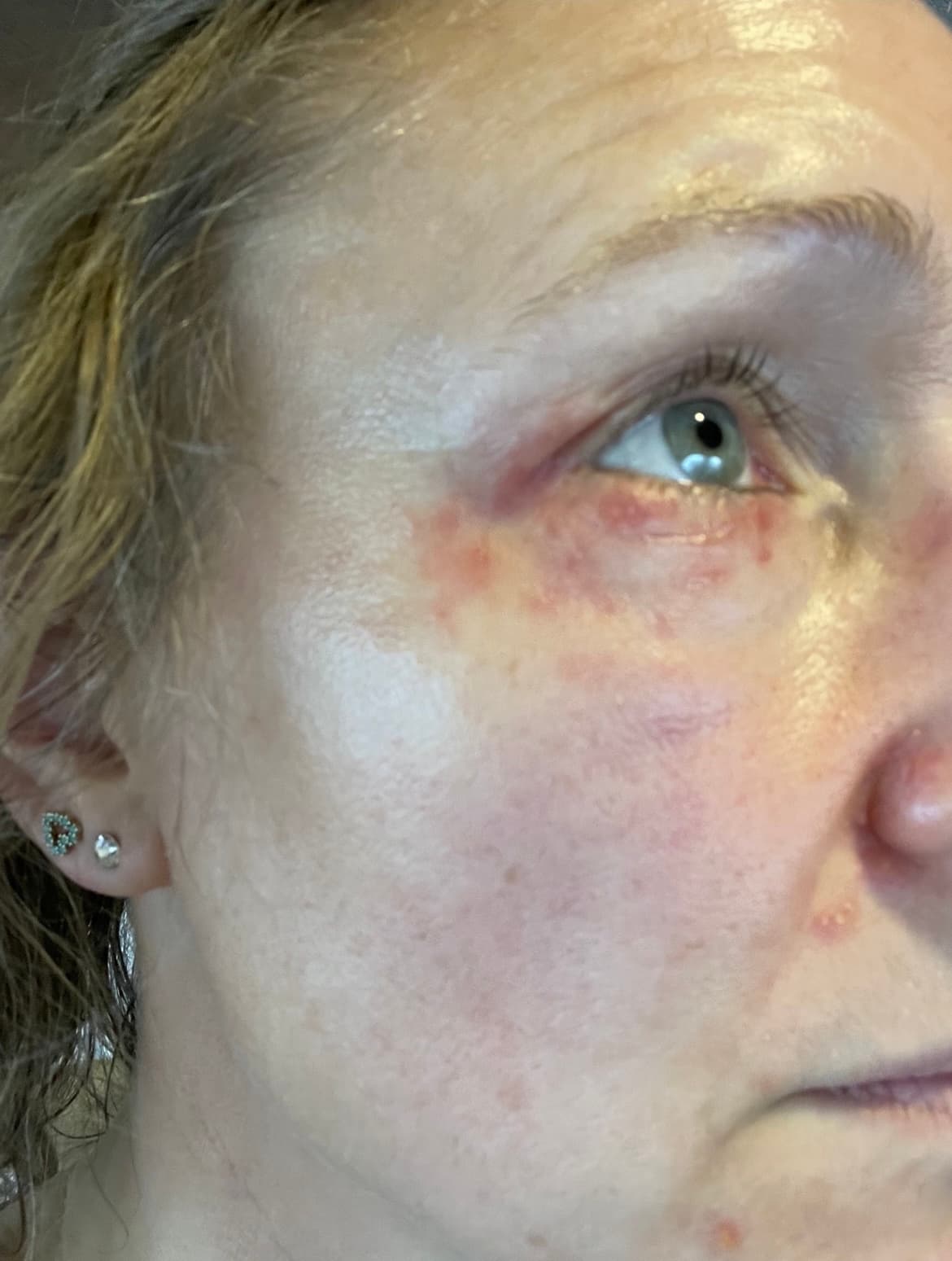
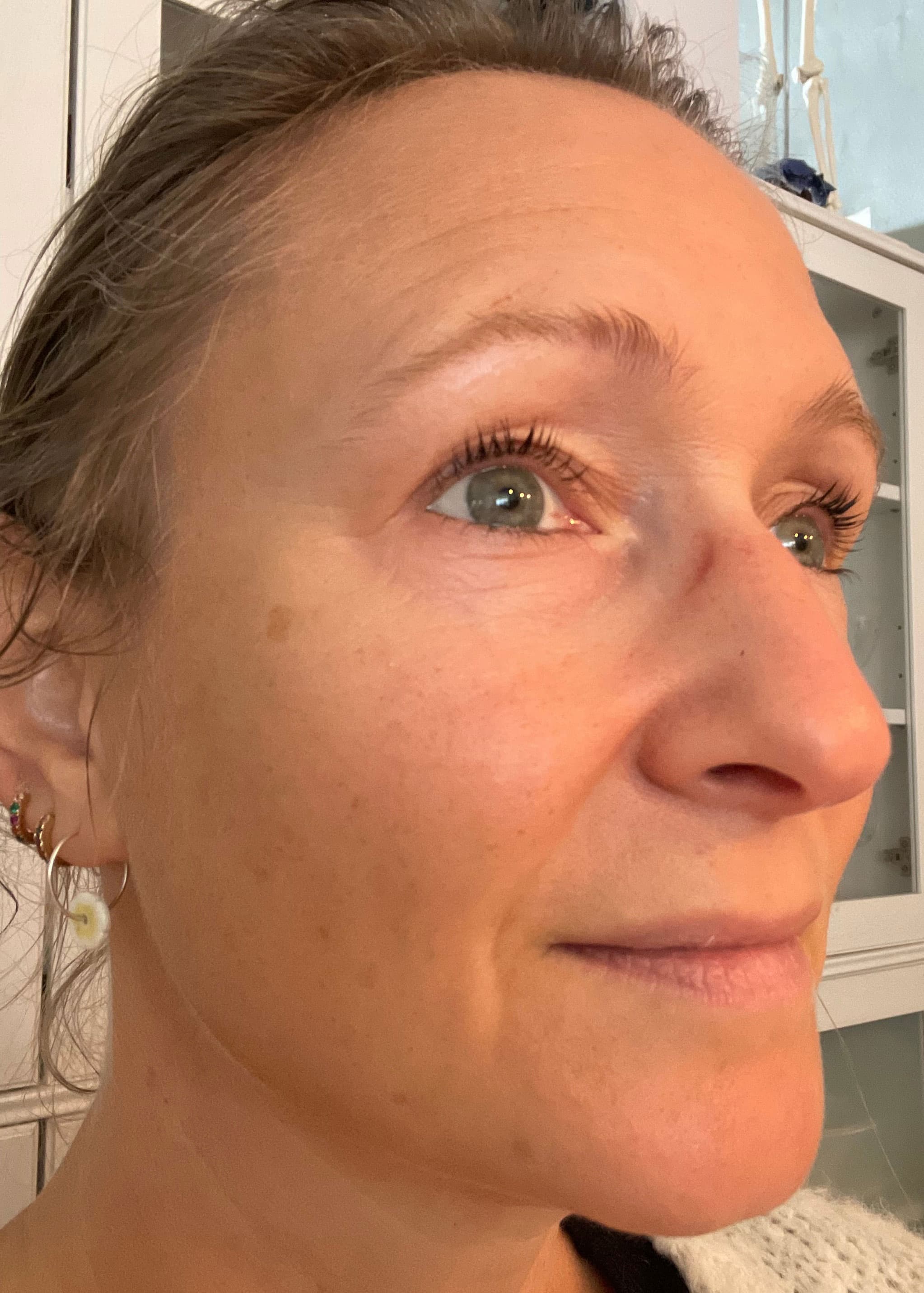
Real results from simple routines
A few real before-and-after cases from people using Danish Skin Care for skin concerns related to this guide. No filters, no miracle promise. Consistent skincare over time.
 Before
 After
After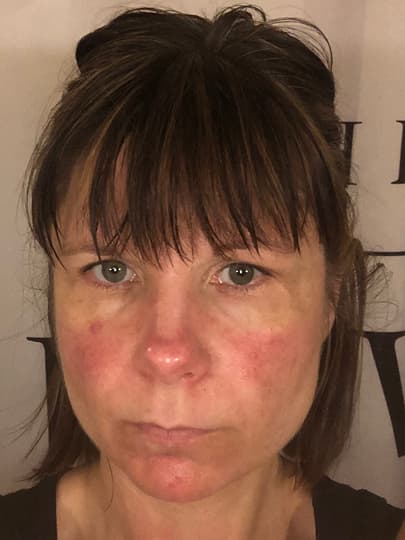 Before
 After
After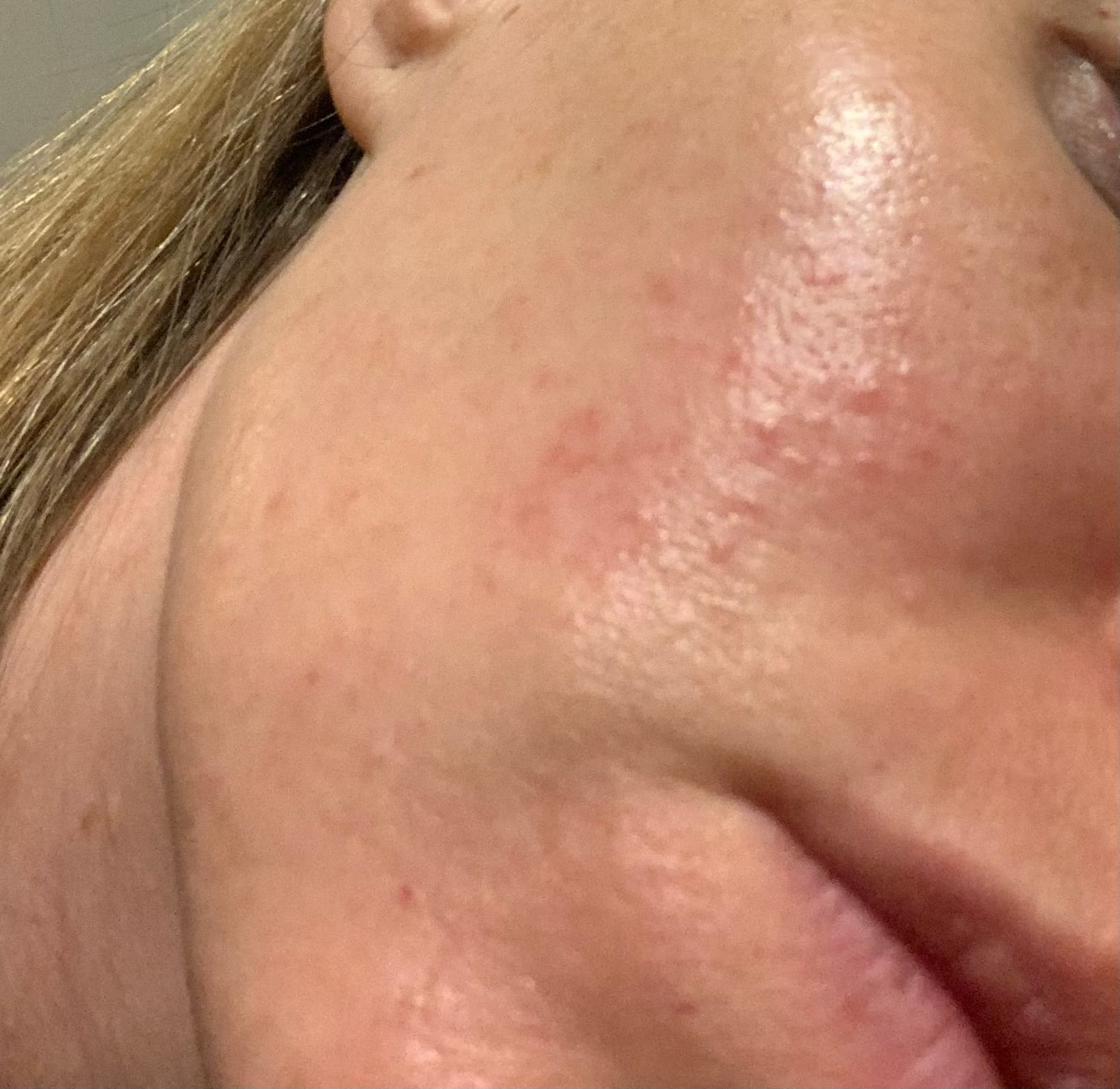 Before
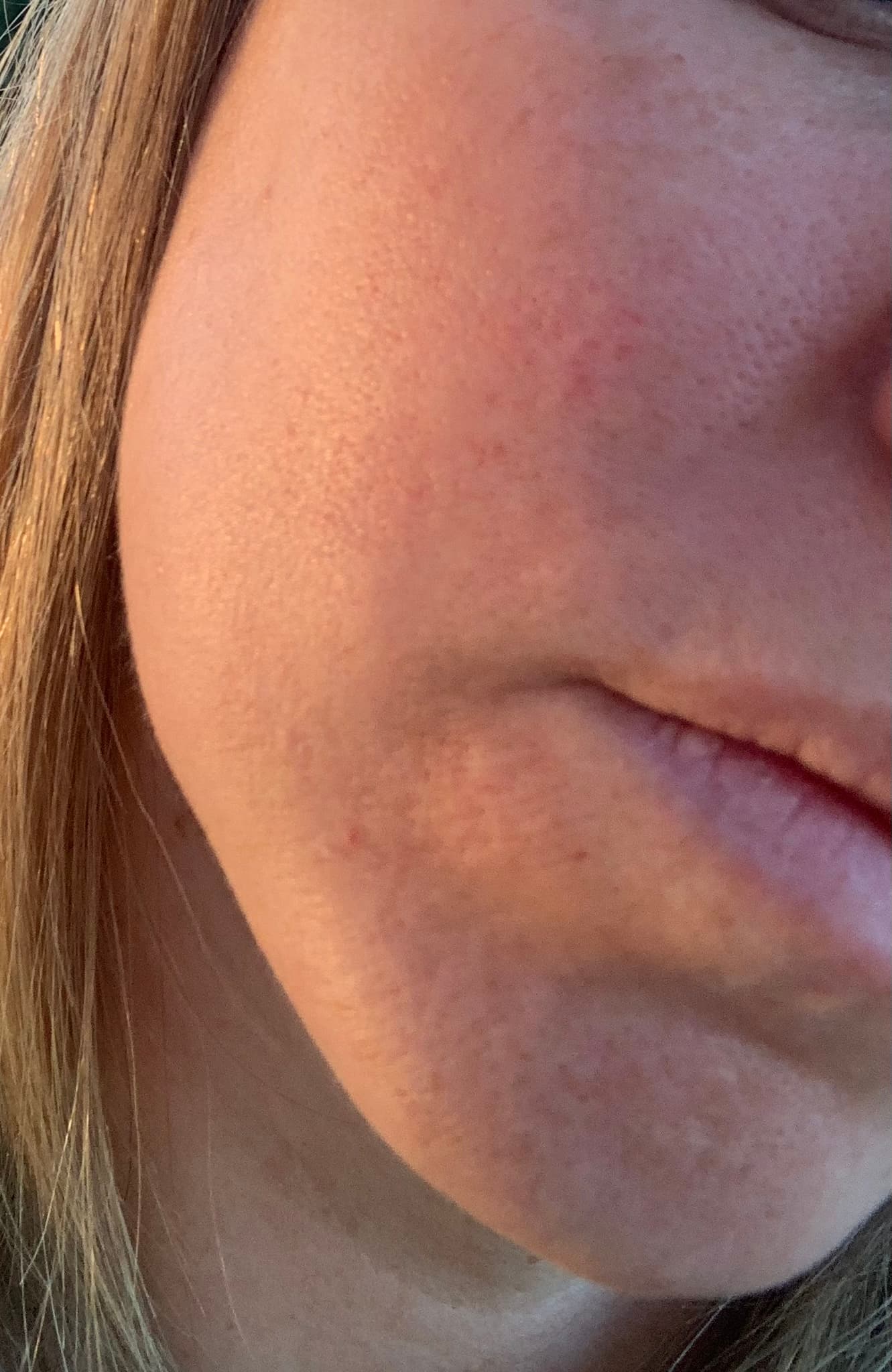 After
AfterKeep reading
- Ingredient · azelaic acid
- Ingredient · niacinamide
- Ingredient · panthenol
- Ingredient · sodium hyaluronate
- Ingredient · glycerin
- Condition · rosacea
- Condition · sensitive skin
- Read · rosacea triggers
- Read · rosacea and alcohol
- Read · rosacea skincare routine
- Read · how to calm rosacea flare
- Read · redness after shower
- Read · best sunscreen for rosacea
Citations
- Wilkin J. Oral thermal-induced flushing in erythematotelangiectatic rosacea. J Invest Dermatol. 1981;76(1):15-18.PMID 6450809
- Li S, Chen ML, Drucker AM, Qureshi AA, Li WQ. Association of Caffeine Intake and Caffeinated Coffee Consumption With Risk of Incident Rosacea in Women. JAMA Dermatol. 2018;154(12):1394-1400.PMID 30347034
- National Rosacea Society. Hot Sauce, Wine and Tomatoes Cause Flare-ups, Survey Finds.NRS
- Thiboutot D, et al. Standard management options for rosacea: The 2019 update by the National Rosacea Society Expert Committee. J Am Acad Dermatol. 2020;82(6):1501-1510.PMID 32035944