
Keratosis pilaris on legs: bumpy thighs, rough calves, and strawberry-leg confusion
Keratosis pilaris on legs can look like rough thighs, tiny red dots, or strawberry legs. Here is how to tell what you are dealing with and smooth it without over-exfoliating.
On this page
Keratosis pilaris on legs has a special way of becoming visible exactly when you were planning not to think about your skin.
Shorts. Summer. Gym clothes. Sitting with one leg crossed and suddenly noticing every tiny dot on your thigh like your brain has switched to inspection mode.
I have seen this pattern with many skin concerns: the bumps are physically small, but the mental zoom is enormous. When skin texture bothers you, you do not need someone to say, "It is harmless." You need someone to explain what to do without making you feel silly for caring.
So let us make the plan calm.
The short answer
Keratosis pilaris on legs is usually rough follicle bumps caused by keratin plugs inside hair follicles.
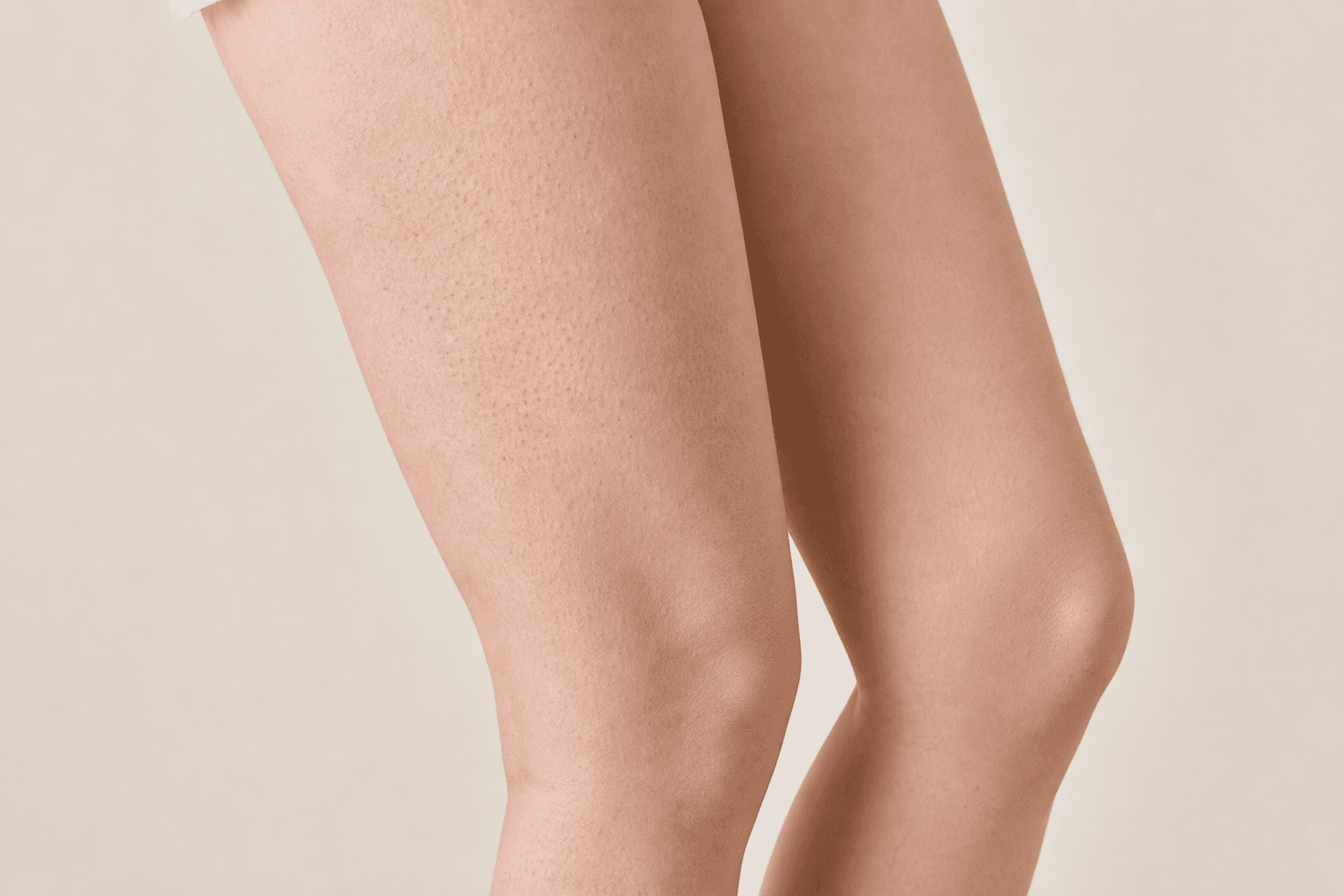
A 2008 overview[1] describes KP as a common follicular hyperkeratosis that often affects the upper legs as well as the upper arms and buttocks. On legs, it commonly appears on the outer thighs, front thighs, or sometimes calves.
To smooth leg KP:
- Keep showers lukewarm.
- Stop harsh scrubs and aggressive exfoliating mitts.
- Moisturise legs after showering while the skin is damp.
- Shave gently if you shave.
- Add one keratolytic, such as urea, lactic acid, or salicylic acid, a few nights per week.
- Give it 8 to 12 weeks.
Leg skin covers a large area. That matters. A product your face tolerates on one small patch may become irritating when you enthusiastically apply it from hip to ankle.
Skincare geography is real.
What leg KP looks like
Leg KP often shows up as:
- Rough bumps on the thighs.
- Tiny red, pink, brown, or dark dots around follicles.
- Sandpapery texture.
- Bumps that feel worse when the skin is dry.
- A pattern that is fairly even on both legs.
It is usually more textured than painful. It may itch mildly, especially when the skin is dry, but it should not be hot, infected-looking, or very tender.
If bumps are filled with pus, painful, sharply linked to shaving, or clustered around ingrown hairs, you may be dealing with folliculitis, razor bumps, or ingrowns rather than classic KP.
The label matters because the fix changes.
KP, strawberry legs, or shaving bumps?
"Strawberry legs" is not one single diagnosis. It is a visual description: visible dots at the follicles.
Those dots can come from several things:
- Keratosis pilaris: rough keratin plugs, often on thighs, with a sandpapery feel.
- Shaving irritation: redness or tenderness after shaving, often worse with dull blades or repeated passes.
- Ingrown hairs: trapped hairs, sometimes tender or inflamed.
- Clogged follicles: darker-looking pores or follicle openings.
- Post-inflammatory marks: leftover dots after bumps or irritation calm down.
If your leg skin feels rough all the time, even when you have not shaved, KP may be the main pattern.
If the dots flare mainly after shaving, the shaving routine deserves attention first.
Why legs are tricky
Leg KP has three practical challenges.
First, legs are often dry. Lower humidity, hot showers, shaving, and not moisturising enough all make the texture feel sharper.
Second, legs get friction. Tight jeans, leggings, cycling shorts, seams, and winter layers can rub the same follicles repeatedly.
Third, legs are large. When people decide to "fix" leg texture, they often use too much acid over too much area too often. Then the legs become dry, itchy, and red. The bumps remain, now with extra drama.
The routine should respect the size of the job.
The leg KP routine
Step 1: Make showers less drying
Hot showers feel wonderful and behave like a tiny betrayal.
Keep water lukewarm. Use a gentle body cleanser. Skip gritty scrubs and harsh exfoliating gloves. If your legs feel tight after showering, that is not a clean-skin victory. It is a barrier complaint.
Pat dry. Do not rub the towel over bumpy thighs like you are trying to erase pencil marks.
Step 2: Moisturise damp legs
Apply moisturiser while the legs are still slightly damp.
For rough leg texture, useful ingredients include:
- Urea for hydration and softening rough keratin.
- Lactic acid for dry, rough texture when tolerated.
- Glycerin and sodium hyaluronate for water-binding support.
- Squalane and emollients for comfort and slip.
If you only moisturise when your legs are already visibly flaky, you are always arriving late. KP usually behaves better when moisture is maintenance, not rescue.
Step 3: Add chemical smoothing slowly
A 2015 study[2] found that 10% lactic acid and 5% salicylic acid creams both improved KP over 12 weeks. That supports the general idea of keratolytic treatment, but the practical routine still needs to respect irritation.
Start with:
- 2 nights per week if your legs are dry or sensitive.
- 3 nights per week if the skin is resilient.
- Moisturiser on the other nights.
Do not apply strong acids immediately after shaving if your legs sting easily. Freshly shaved skin is already a little stressed. Adding acid right then can turn a sensible routine into a spicy mistake.
Step 4: Shave in a KP-friendly way
If you shave your legs, shaving can make KP look worse even when it is not causing the KP.
Try this:
- Shave near the end of the shower when hair is softened.
- Use a shaving cream, gel, or enough cleanser slip.
- Use a sharp, clean razor.
- Shave with light pressure.
- Avoid repeated passes over the same bumpy patch.
- Moisturise afterward.
- Keep active exfoliation for non-shaving nights if your skin is reactive.
The goal is fewer micro-injuries. Your razor should not be part of the exfoliation plan.
What about red dots on thighs?
Red dots can be KP inflammation, shaving irritation, ingrown hairs, folliculitis, or marks from old bumps.
A 2022 systematic review[3] found that topical treatments can improve KP appearance, but results vary by treatment and KP type. That nuance matters for red leg bumps. Texture may soften before redness fades.
If redness is your main concern:
- Avoid fragrance-heavy body products.
- Use acids less often.
- Keep the barrier moisturised.
- Reduce friction from tight clothing.
- Use sunscreen when legs are exposed.
- Stop picking.
Picked KP can leave marks for months. I say that with sympathy, not judgment. Picking is often what happens when a tiny bump becomes a tiny unfinished task.
Can you use retinol on leg KP?
Retinoids can help some follicular texture patterns, but legs often tolerate them differently than the face because people apply more product over more skin.
If you use a product that contains retinol, keep the rest of the routine calm. Do not combine retinol, acids, shaving irritation, and a rough mitt in the same week and expect your legs to write a thank-you card.
For many people, moisturising plus urea or lactic acid is the better first step. Add stronger renewal only if the skin is comfortable and the routine is easy to repeat.
The 12-week leg plan
Weeks 1 to 2
Reset the barrier.
No scrubs. No hot water. Moisturise damp legs daily. Shave gently if you shave. If your legs are itchy or irritated, avoid acids during this phase.
Weeks 3 to 6
Add one active 2 nights per week.
Choose urea, lactic acid, salicylic acid, or glycolic acid. Use a thin layer on the bumpy areas, not automatically from hip to ankle. Keep moisturising daily.
Weeks 7 to 12
Adjust based on tolerance.
If texture is softer and the skin is calm, continue or slowly increase active nights. If the legs are stingy, dry, or redder, reduce treatment and moisturise more.
By week 12, you should know whether the plan is helping. If the pattern is painful, pustular, very itchy, one-sided, or getting worse, ask a dermatologist or clinician to check it.
The bottom line
Keratosis pilaris on legs is common, stubborn, and often mixed with shaving irritation or strawberry-leg confusion.
Start with the basics: less drying, less friction, daily moisture, gentle treatment, and patience. The goal is softer, calmer leg skin - not a full-time exfoliation career.
Your legs do not need to be polished into submission. They need a routine you can keep.
People also ask
Is keratosis pilaris on legs the same as strawberry legs?
Not always. KP is rough keratin plugs inside follicles. Strawberry legs is a broad description for visible follicle dots, which can also come from shaving, ingrown hairs, clogged follicles, or post-inflammatory marks.
Can shaving make leg KP worse?
Shaving can make leg KP look more irritated if the skin is dry, the razor is dull, or you shave repeatedly over bumpy areas. Shave with slip, use gentle pressure, and moisturise afterward.
What ingredient is best for bumpy legs?
There is no single best ingredient for everyone. Urea and lactic acid are often useful for dry rough legs, while salicylic acid can help follicular texture. Start with one and watch irritation.
How long does keratosis pilaris on legs take to smooth?
Expect weeks, not days. Many people notice softer leg texture after 4 to 8 weeks, with clearer improvement around 8 to 12 weeks if the routine is consistent and not irritating.
A calmer plan for rough leg texture
Leg KP often gets mixed with shaving irritation, dry skin, and strawberry-leg worries. The safest starting point is simple: make the skin less dry, reduce friction, then add gentle treatment only as tolerated. Danish Skin Care was built around that same idea - fewer products, better consistency, and less irritation.

A simple face routine for people who also deal with KP-prone dryness, clogged pores, or irritation. For legs, follow the same principle: gentle cleanse, moisturise, treat texture carefully, and avoid routine chaos.
Full transparency: Danish Skin Care is my own company — I formulated these products and earn from every sale. That's exactly why I only recommend them where they genuinely fit the guide you just read.
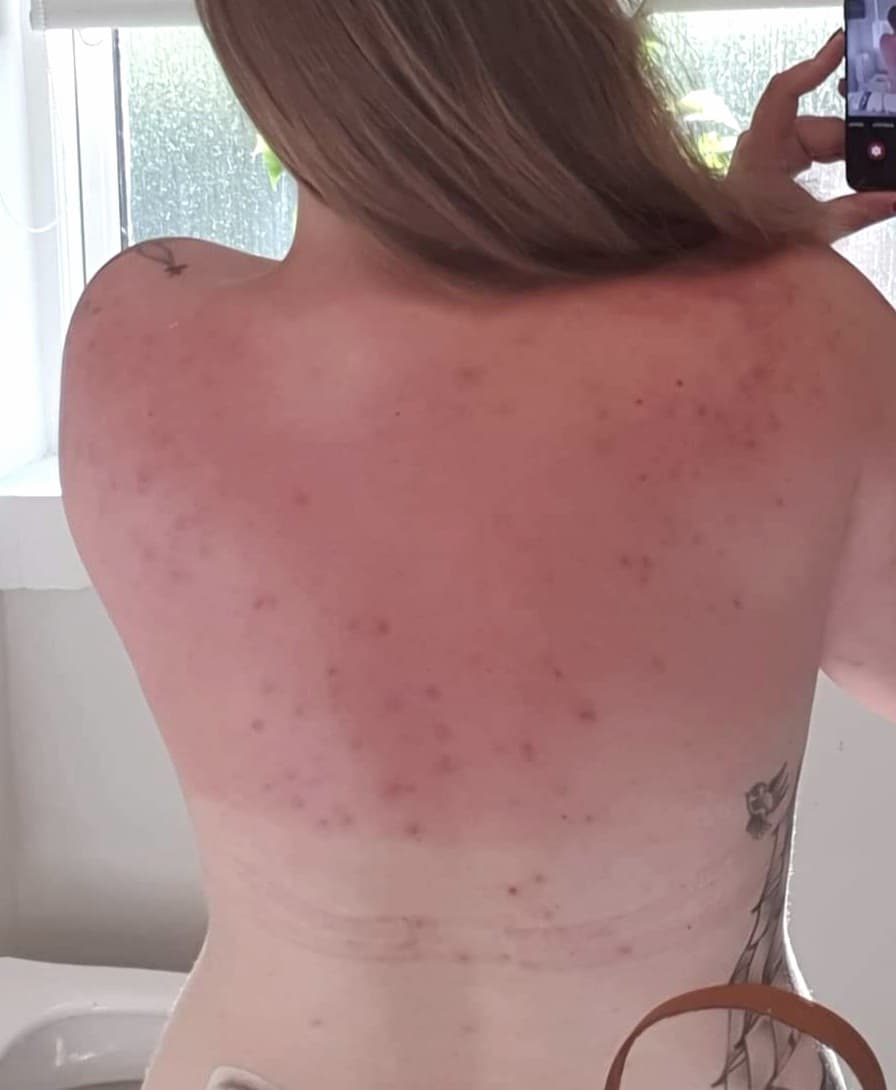
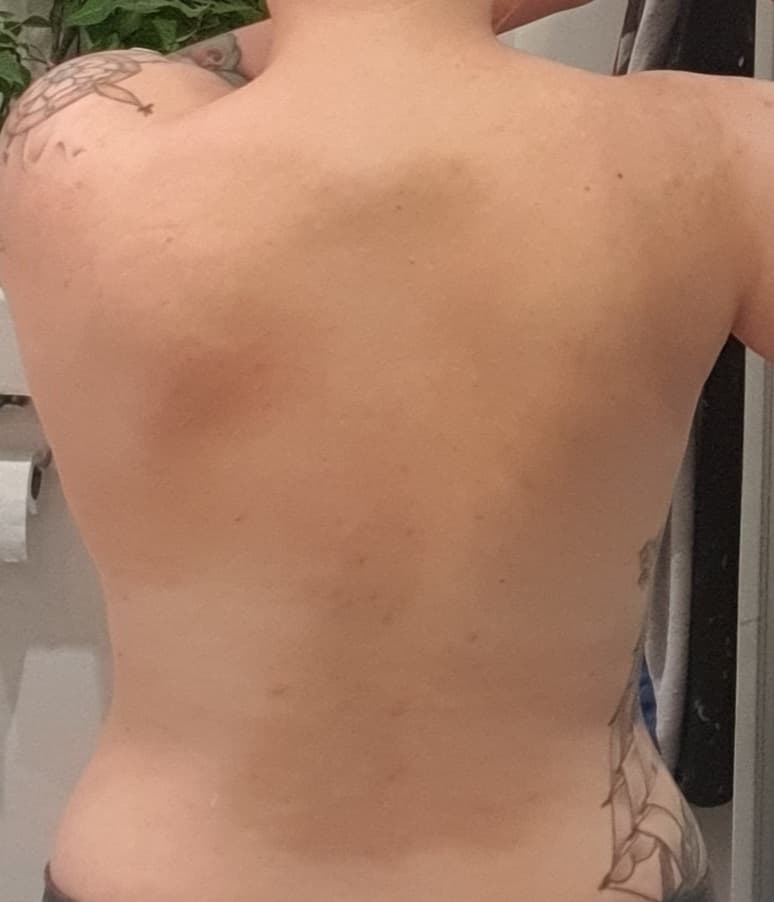
Real results from simple routines
A few real before-and-after cases from people using Danish Skin Care for skin concerns related to this guide. No filters, no miracle promise. Consistent skincare over time.
 Before
 After
AfterKeep reading
- Ingredient · urea
- Ingredient · lactic acid
- Ingredient · salicylic acid
- Ingredient · glycolic acid
- Ingredient · sodium hyaluronate
- Ingredient · retinol
- Condition · keratosis pilaris
- Condition · dry skin
- Condition · sensitive skin
- Read · how to get rid of keratosis pilaris
- Read · keratosis pilaris on arms
- Read · how to treat dry skin on face
- Read · how to get rid of back acne
Citations
- Hwang S, Schwartz RA. Keratosis pilaris: a common follicular hyperkeratosis. Cutis. 2008;82(3):177-180.PMID 18856156
- Kootiratrakarn T, Kampirapap K, Chunhasewee C. Epidermal permeability barrier in the treatment of keratosis pilaris. Dermatol Res Pract. 2015;2015:205012.PMID 25802513
- Maghfour J, Ly S, Haidari W, Taylor SL, Feldman SR. Treatment of keratosis pilaris and its variants: a systematic review. J Dermatolog Treat. 2022;33(3):1231-1242.PMID 32886029