
Does sleep affect acne?
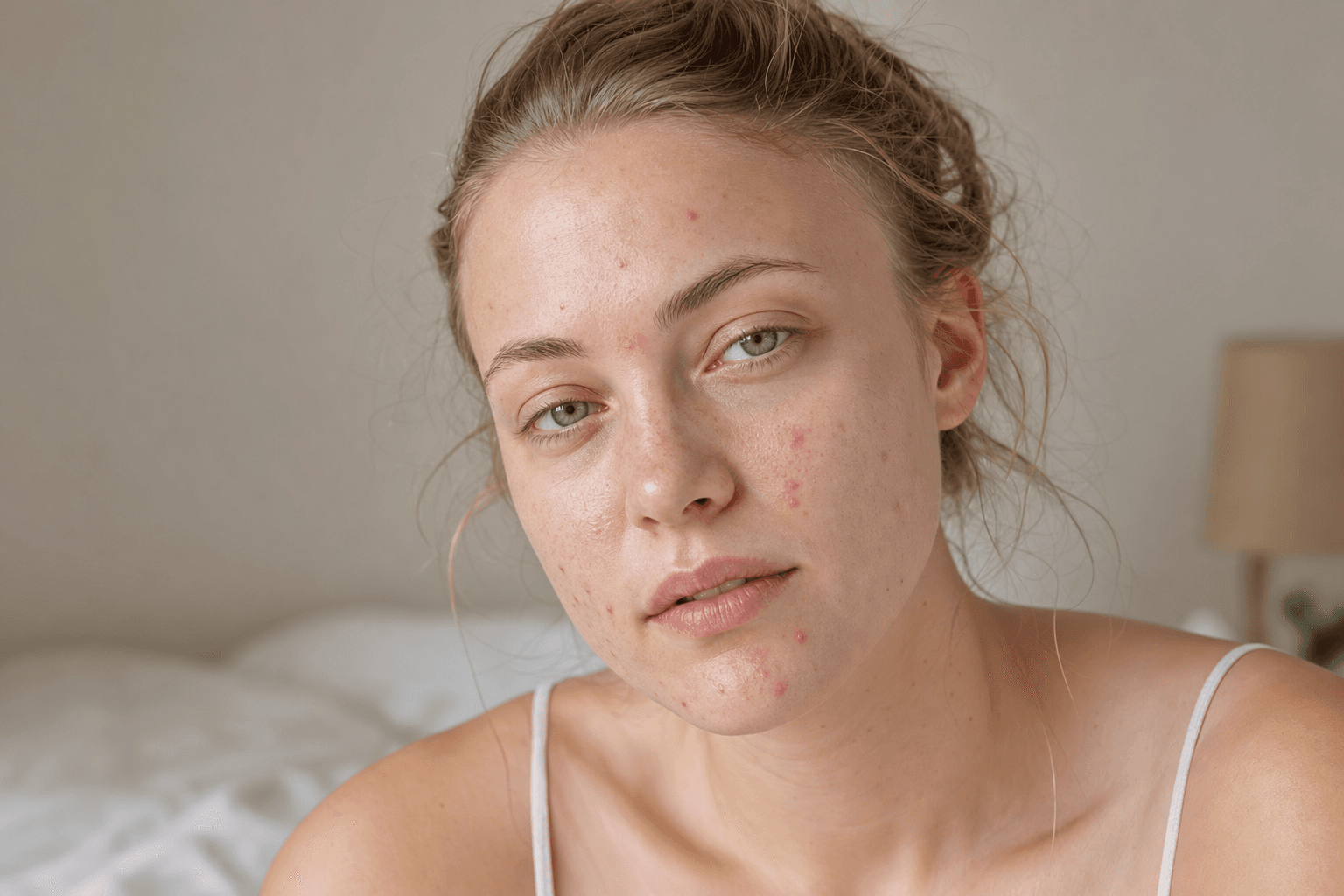
Poor sleep can make acne-prone skin harder to manage by stacking stress, inflammation, picking, and routine chaos. Sleep is not an acne cure, but it matters.
On this page
When I had acne, a bad night of sleep made everything feel bigger.
The pimple looked bigger. The mirror felt harsher. My patience dropped to the floor, and suddenly I was touching my face, washing more aggressively, or deciding that midnight was a sensible time to inspect every pore.
Not my finest laboratory work.
After helping more than 100,000 people with problem skin, I would never tell someone that sleep is their acne cure. That would be too neat. But I do pay attention when breakouts keep appearing after late nights, exams, travel, shift work, or weeks where the whole body feels worn thin.
The short answer
Sleep can affect acne-prone skin, but usually as part of a stack.
A study of adults with acne found that acne severity was associated with poorer sleep quality[1]. Another study also reported that acne was strongly associated with poor sleep and mood[2].
That does not prove one bad night creates one new pimple. Acne still involves follicle plugging, sebum, Cutibacterium acnes, and inflammation[3].
It means poor sleep can make the acne environment less calm.
Why poor sleep may make acne feel worse
Bad sleep rarely travels alone.
It often arrives with:
- more stress
- more touching and picking
- skipped cleansing
- heavier makeup the next morning
- more caffeine, sugar, or convenience food
- less patience with slow routines
- more irritation from panic-treating
That is why the pattern matters. If you sleep badly once and get a pimple, do not build a courtroom case. If every exam week gives you inflamed breakouts, picked spots, and a routine that suddenly gets dramatic, you have useful information.
What to do on tired-skin weeks
Make the evening routine smaller, not cleverer.
Try this:
- Cleanse gently.
- Use one acne treatment you already tolerate.
- Moisturise enough that the barrier does not feel tight.
- Stop adding new actives after 10 p.m.
- Step away from harsh bathroom lighting.
If you use salicylic acid, keep it at a rhythm your skin can repeat. If the skin is burning or peeling, reduce frequency. Tired skin does not need proof that you are committed. It needs fewer extra fights.
Sleep is support, not blame
I want to be careful here.
People with acne already blame themselves for enough things: food, hygiene, hormones, stress, pillows, water, discipline, the moon if the week is especially annoying. Poor sleep may worsen the pattern, but acne is not a character flaw.
If acne is painful, cystic, scarring, sudden, or not improving after a steady routine, get medical advice. Better sleep can support the skin. It does not replace proper acne care.
The practical takeaway
Sleep will not replace sunscreen, a gentle cleanser, acne treatment, or a dermatologist when you need one.
But if your skin breaks out after repeated late nights, treat that as pattern data. Keep the routine steady. Pick less. Reduce irritation. Give your skin a boring evening it can understand.
Sometimes the most useful acne step at night is the one where you stop negotiating with the mirror and go to bed.
People also ask
Can lack of sleep cause acne?
Lack of sleep is unlikely to be the only cause of acne, but studies link acne with poorer sleep quality. Poor sleep can also increase stress, picking, and routine inconsistency.
Will sleeping more clear my acne?
No. Sleep can support the conditions around acne care, but acne still needs a consistent routine and sometimes medical treatment.
Why do I break out after bad sleep?
Bad sleep often stacks with stress, inflammation, sweating, face touching, skipped cleansing, or harsher products. The combination matters more than one night alone.
Keep reading
- Ingredient · salicylic acid
- Ingredient · niacinamide
- Ingredient · benzoyl peroxide
- Ingredient · panthenol
- Condition · acne and blemishes
- Condition · sensitive skin
- Read · can stress cause acne
- Read · how to get rid of pimples
- Read · best skincare routine for sensitive acne prone skin
- Read · why do pimples leave red marks
Citations
- Schrom KP, et al. Acne Severity and Sleep Quality in Adults. Clocks Sleep. 2019;1(4):510-516.PMC7445853
- Ak M, et al. Sleep quality, circadian preferences, and mood among patients with acne vulgaris. J Cosmet Dermatol. 2023;22(4):1316-1323.PMID 36650359
- Zaenglein AL, et al. Guidelines of care for the management of acne vulgaris. J Am Acad Dermatol. 2016;74(5):945-973.e33.PMID 26897386