
Perioral dermatitis skincare routine: a calm reset
A perioral dermatitis routine should remove likely irritants before adding products. Learn how zero therapy, gentle washing, and slow reintroduction work.
On this page
When every product stings, adding another cream can make it harder to work out what is aggravating the rash. A cleanser, exfoliant and heavy balm introduced together leave several possible explanations for the next flare.
Write down what you use, including steroid creams and prescription medicines, before your appointment. That gives your clinician a clearer starting point for deciding which products to pause and which treatments to continue.
A useful perioral dermatitis routine begins with subtraction, a proper diagnosis, and enough patience to see what changes.
The short answer
For suspected perioral dermatitis:
- Ask a qualified clinician to confirm the pattern.
- Stop optional actives, scrubs, fragranced products, and heavy balms on the affected area.
- Do not use a facial steroid by guesswork.
- Wash with lukewarm water and minimal friction.
- Use prescription treatment exactly as directed.
- Reintroduce necessary skincare one product at a time after the flare is calm.
This stripped-back approach is often called zero therapy. It does not mean neglecting your skin or avoiding medical care. It means removing enough variables to let the rash settle and the treatment plan become readable.
First, make sure the routine fits the problem
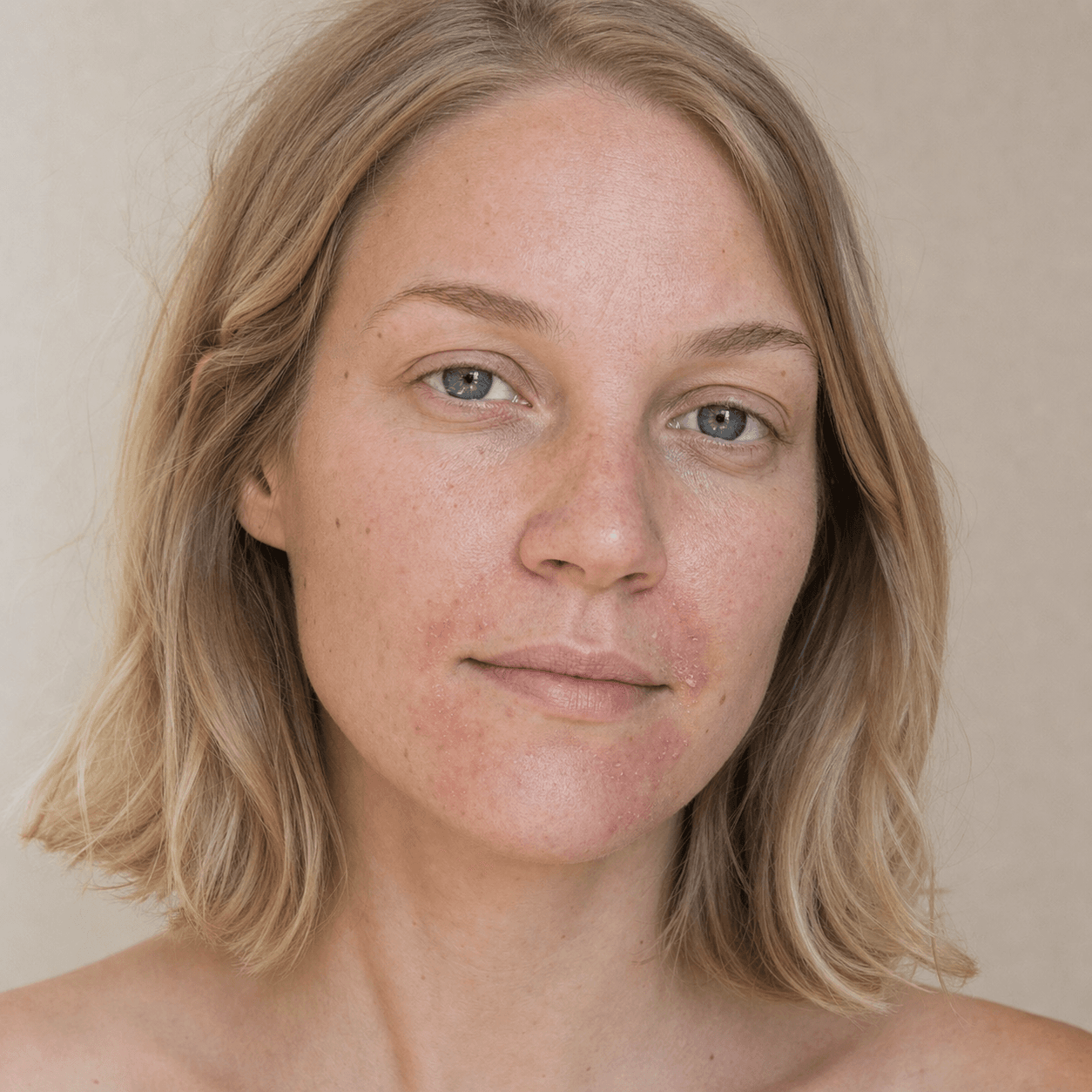
Perioral dermatitis usually causes small grouped papules or pustules around the mouth. It may also appear beside the nose or around the eyes. Burning, stinging, tightness, and fine scale are common. The narrow rim immediately beside the lips is often relatively clear.
Blackheads and whiteheads point more toward acne. Persistent central flushing and visible vessels suggest rosacea. Strong itch, swelling, or a sharp product-shaped border may fit contact dermatitis. Infection can also imitate a harmless-looking facial rash.
The 2021 evidence review[2] describes perioral dermatitis as an acne-like eruption with an incompletely understood cause and identifies topical corticosteroid misuse as the best-supported aggravating factor. That is why diagnosis matters before you start an acne routine, an eczema cream, or a social-media “detox.”
Use the perioral dermatitis pillar for the broad overview. See a qualified dermatologist when the bumps persist, spread, involve the eyes, or keep returning.
What zero therapy really means
An evidence review of perioral dermatitis treatment[1] found strong practical support for stopping cosmetics and topical corticosteroid exposure, often described as zero therapy. The exact reset varies. Some clinicians recommend water only on the area for a period; others allow a mild fragrance-free cleanser or a small amount of plain moisturiser.
The shared principle is simple: remove likely aggravators and stop changing the experiment every evening.
During the reset, pause these on the affected area unless your clinician has given different instructions:
- exfoliating acids
- retinoids
- benzoyl peroxide
- strong vitamin C formulas
- scrubs and cleansing brushes
- essential oils and fragranced products
- heavy balms or thick occlusive layers
- makeup over active bumps
Do not stop a prescribed corticosteroid without speaking to the prescriber. Facial steroids can create a rebound flare, and the safest withdrawal plan depends on the medicine, strength, duration, location, and reason it was prescribed. The dedicated guide to steroid cream and perioral dermatitis explains that awkward transition.
A simple morning routine
1. Cleanse only as much as needed
Use lukewarm water and clean fingertips. If water alone leaves the skin comfortable, that may be enough during a short reset. If you need cleanser for the rest of the face, choose a mild fragrance-free formula and keep rubbing to a minimum.
Pat dry. A red, stingy area does not need a washcloth audition.
2. Use prescribed medicine in the prescribed order
Perioral dermatitis sometimes clears after aggravators are removed. Other cases need a prescription topical treatment or an oral antibiotic. The American Academy of Dermatology notes that treatment may include changing the routine and using prescription medication, with improvement taking several weeks or months[3].
Follow the instructions for your exact medicine. Do not borrow another person's metronidazole, pimecrolimus, or antibiotic schedule.
3. Add comfort only when necessary
If dryness is uncomfortable, ask whether a small amount of simple fragrance-free moisturiser is appropriate. Apply it around, rather than repeatedly rubbing through, the most active bumps.
Heavy does not automatically mean healing. A rich film can feel reassuring for an hour and still be a poor fit for this particular eruption.
A simple evening routine
The evening should be equally uneventful:
- Remove makeup gently if you wore it elsewhere on the face.
- Rinse or cleanse with lukewarm water.
- Pat dry.
- Apply prescribed treatment as directed.
- Leave the area alone.
Do not alternate a drying acne treatment, a steroid, and a soothing balm according to how the rash looks in the bathroom light. That cycle makes it difficult to know whether the condition, medicine, or rescue product is driving the next change.
What about pimecrolimus?
Pimecrolimus is a prescription calcineurin inhibitor approved for certain cases of atopic dermatitis, not specifically for perioral dermatitis. Clinicians sometimes use it off-label when it fits the diagnosis.
In a small four-week randomised study of 40 adults[4], 1% pimecrolimus reduced perioral dermatitis severity more than the vehicle during treatment, although the difference did not remain significant at follow-up. That makes it a possible medical option, not an over-the-counter routine step. The pimecrolimus guide covers the evidence, burning risk, label warnings, and why prescriber oversight matters.
How to reintroduce skincare
Wait until the skin is clearly calmer and follow your clinician's timing. Then add one essential at a time:
- a mild cleanser, if needed
- a simple moisturiser
- daytime sun protection that you already tolerate
- makeup only after the first steps remain comfortable
Leave several days between additions. Optional actives come last, and some may stay outside the previously affected area.
Keep brief notes: product, date, location, and what changed. You do not need a colour-coded investigation board. A few clear observations beat a complicated routine diary.
When professional care matters
Book a qualified dermatologist or clinician if:
- the rash is close to the eyes
- the eyes become red, painful, gritty, swollen, or light-sensitive
- yellow crust, weeping, marked swelling, or fever appears
- the eruption spreads quickly
- you are using a prescription steroid on the face
- the pattern has not improved after a careful reset
- it keeps returning when treatment stops
Perioral dermatitis is educational content on this site, not a diagnosis from a photograph or checklist.
The practical takeaway
The best perioral dermatitis routine is usually the one with the fewest moving parts.
Get the pattern checked. Remove optional irritants. Treat facial steroid withdrawal as a medical decision. Cleanse without friction, follow the prescription, and bring products back slowly.
Calm routines can feel almost too ordinary. That is the point: the skin gets a fair chance to settle, and you finally get information you can use.
People also ask
What is the best skincare routine for perioral dermatitis?
Start with fewer products, low-friction cleansing, no optional actives on the rash, and the treatment a qualified clinician recommends. Reintroduce essentials one at a time after the flare settles.
Can I moisturise perioral dermatitis?
Some people tolerate a small amount of plain fragrance-free moisturiser, while others improve with a short product break. Heavy occlusive layers can aggravate the pattern. Ask your clinician if dryness is painful.
Should I stop all skincare for perioral dermatitis?
A clinician may recommend zero therapy, meaning temporary withdrawal of cosmetics and non-essential topicals. Do not stop a prescribed medicine without checking with its prescriber.
How long does a perioral dermatitis reset take?
Improvement is gradual and may take weeks. A rebound can occur after facial steroid withdrawal, and persistent or spreading symptoms need medical review.
Keep reading
- Ingredient · pimecrolimus
- Ingredient · metronidazole
- Ingredient · azelaic acid
- Ingredient · niacinamide
- Condition · perioral dermatitis
- Condition · sensitive skin
- Condition · rosacea
- Read · steroid cream perioral dermatitis
- Read · perioral dermatitis around eyes
- Read · rosacea vs perioral dermatitis
- Read · why do i get pimples around my mouth
- Read · redness around nose
Citations
- Hall CS, Reichenberg J. Evidence based review of perioral dermatitis therapy. G Ital Dermatol Venereol. 2010;145(4):433-444.PMID 20823788
- Searle T, Ali FR, Al-Niaimi F. Perioral dermatitis: Diagnosis, proposed etiologies, and management. J Cosmet Dermatol. 2021;20(12):3839-3848.PMID 33751778
- American Academy of Dermatology Association. Red rash around your mouth could be perioral dermatitis.AAD
- Oppel T, Pavicic T, Kamann S, Bräutigam M, Wollenberg A. Pimecrolimus cream (1%) efficacy in perioral dermatitis - results of a randomized, double-blind, vehicle-controlled study in 40 patients. J Eur Acad Dermatol Venereol. 2007;21(9):1175-1180. doi:10.1111/j.1468-3083.2007.02191.x.PMID 17894701