
Metronidazole
A well-established prescription option for inflammatory rosacea papules and pustules. It is useful in the right diagnosis but not a general redness serum.
At a glance
What Metronidazole does for skin, and how to read the practical safety signals.
- Prescription role: Topical metronidazole is used for inflammatory papules and pustules caused by rosacea.
- Best fit: Evidence supports bumps and pustules more clearly than fixed vessels, flushing, or thickened nasal skin.
- Mechanism: The official label says the exact way topical metronidazole improves rosacea is unknown.
- Type
- Prescription nitroimidazole
- Rating
- Pregnancy
- Discuss with a clinician
- Comedogenic rating
- 0/5 (Won't clog pores)
- Vegan
- Yes
- Suited skin types
- All skin types
On this page
The short answer
Topical metronidazole is a prescription medicine used mainly for the inflammatory papules and pustules of rosacea. It has been part of rosacea care for decades and comes in gels, creams, and lotions with different strengths and schedules.
It is not a cosmetic redness serum. It does not diagnose a rash, close fixed facial vessels, or reverse thickened tissue on the nose.
What metronidazole is
Metronidazole belongs to the nitroimidazole class. Most people know the name as an antimicrobial medicine, but the way it helps rosacea is less tidy than "bacteria caused the redness."
The current US prescribing information states that the mechanism of action in rosacea is unknown[1]. Anti-inflammatory and antioxidant effects have been proposed, but the clinical result matters more than a confident story the label itself does not support.
Rosacea is not proof of poor hygiene or an infection you failed to clean away.
What the clinical evidence shows
A 12-week trial in 72 people with moderate-to-severe rosacea compared once-daily 0.75% and 1% metronidazole creams. Median inflammatory lesion counts fell by 62% and 60%, with no meaningful efficacy difference between the strengths[2].
That result applies to papules and pustules. It does not mean a stronger percentage is automatically better for every person, or that metronidazole is the best tool for isolated flushing.
A large phenotype-based systematic review found moderate-certainty evidence for topical metronidazole in reducing rosacea papules and pustules[3]. The same review found different treatments were better supported for other signs: brimonidine or oxymetazoline for persistent erythema, and laser or intense pulsed light mainly for erythema and visible vessels.
Treatment should follow the sign. The rosacea on the nose guide makes that distinction practical.
Can it help maintain control?
Rosacea often returns after a good response. In a six-month maintenance study, 23% of participants using metronidazole gel relapsed compared with 42% using its vehicle after initial control with oral tetracycline plus topical metronidazole[4].
That supports maintenance in selected treatment plans. It does not mean everyone should use the medicine forever. Your prescriber should decide duration based on response, diagnosis, side effects, and available alternatives.
Who may be offered topical metronidazole
A dermatologist or other qualified clinician may consider it when:
- inflammatory papules and pustules sit in a rosacea pattern
- the face also flushes, burns, or has persistent central redness
- ordinary acne products have irritated the skin or missed the problem
- a familiar, generally well-tolerated topical fits the plan
- long-term control needs a topical option
Metronidazole may also be used off-label for conditions such as perioral dermatitis. That does not make it a safe guessing tool for every rash around the nose or mouth. The redness around the nose guide explains why those lookalikes need different decisions.
How prescription use works
Follow the directions for the exact product you receive. The DailyMed label for one 1% gel instructs patients to cleanse the treated area, apply a thin film once daily, and avoid oral, eye, and intravaginal use[1].
Other products may use different strengths or schedules. Do not copy a twice-daily cream routine onto a once-daily gel.
Keep the surrounding skincare simple:
- wash with lukewarm water and a mild cleanser
- let the face dry without rubbing
- apply the medicine as prescribed
- use a plain moisturiser if it suits the prescribed order
- use daytime sun protection you tolerate
- avoid starting several strong actives in the same week
If the prescription stings, do not hide the problem under five soothing serums. Ask the prescriber whether the vehicle, frequency, diagnosis, or another part of the routine needs adjusting.
Side effects and safety
Topical metronidazole can cause contact dermatitis and eye irritation. The current label also tells prescribers to reassess treatment if abnormal neurologic signs such as tingling or numbness appear, because peripheral neuropathy has been reported after approval[1].
Avoid the eyes. Contact the prescriber for a spreading rash, swelling, strong burning, unusual numbness, or worsening symptoms.
The label says available pregnancy data have not established an association with major birth defects or miscarriage, while breastfeeding is not recommended with that specific 1% gel[1]. That combination is exactly why a simple "pregnancy safe" badge cannot replace a conversation with the prescribing clinician.
What metronidazole cannot do
Topical metronidazole does not reliably:
- close persistent telangiectasia
- stop every flushing trigger
- reverse rhinophyma
- treat blackheads and whiteheads as an acne medicine
- prove that an undiagnosed facial rash is rosacea
It is a useful prescription for a specific part of rosacea, not a universal answer to redness.
The practical takeaway
Topical metronidazole has a respectable evidence base for inflammatory rosacea bumps and may help some people maintain control. It works best when a clinician has named the condition and matched the treatment to the signs present.
My goal with this guide was to gather the useful science on metronidazole so you can stop chasing the next clever fix and focus on a simple, effective routine. That is also why I created the Danish Skin Care Kit: the supporting routine I built after helping more than 100,000 people with problem skin. It does not replace prescription care, but it keeps cleansing, moisture, and daytime protection from becoming another source of irritation. Email info@danishskincare.com with routine questions; medicine questions belong with your prescriber.
Common questions
What does topical metronidazole treat?
It is a prescription treatment for inflammatory papules and pustules of rosacea. Clinicians may use it in other facial conditions, but that depends on a proper diagnosis.
Does metronidazole remove facial redness and vessels?
It may improve some inflammation and background redness, but evidence is strongest for inflammatory lesions. It does not reliably close fixed visible vessels or reverse rhinophyma.
Can I use topical metronidazole during pregnancy?
Available label data have not established an association with major birth defects, but formulation, timing, breastfeeding, and your medical history matter. Use it only with the prescribing clinician's advice.
Reading a real label?
Scan a product to see how it is formulated
Upload a photo of the ingredient list and get a quick ingredient-by-ingredient read against the evidence-led database.
Skin conditions it actively helps with
Where the published evidence puts Metronidazole on the short list of active ingredients worth reaching for.
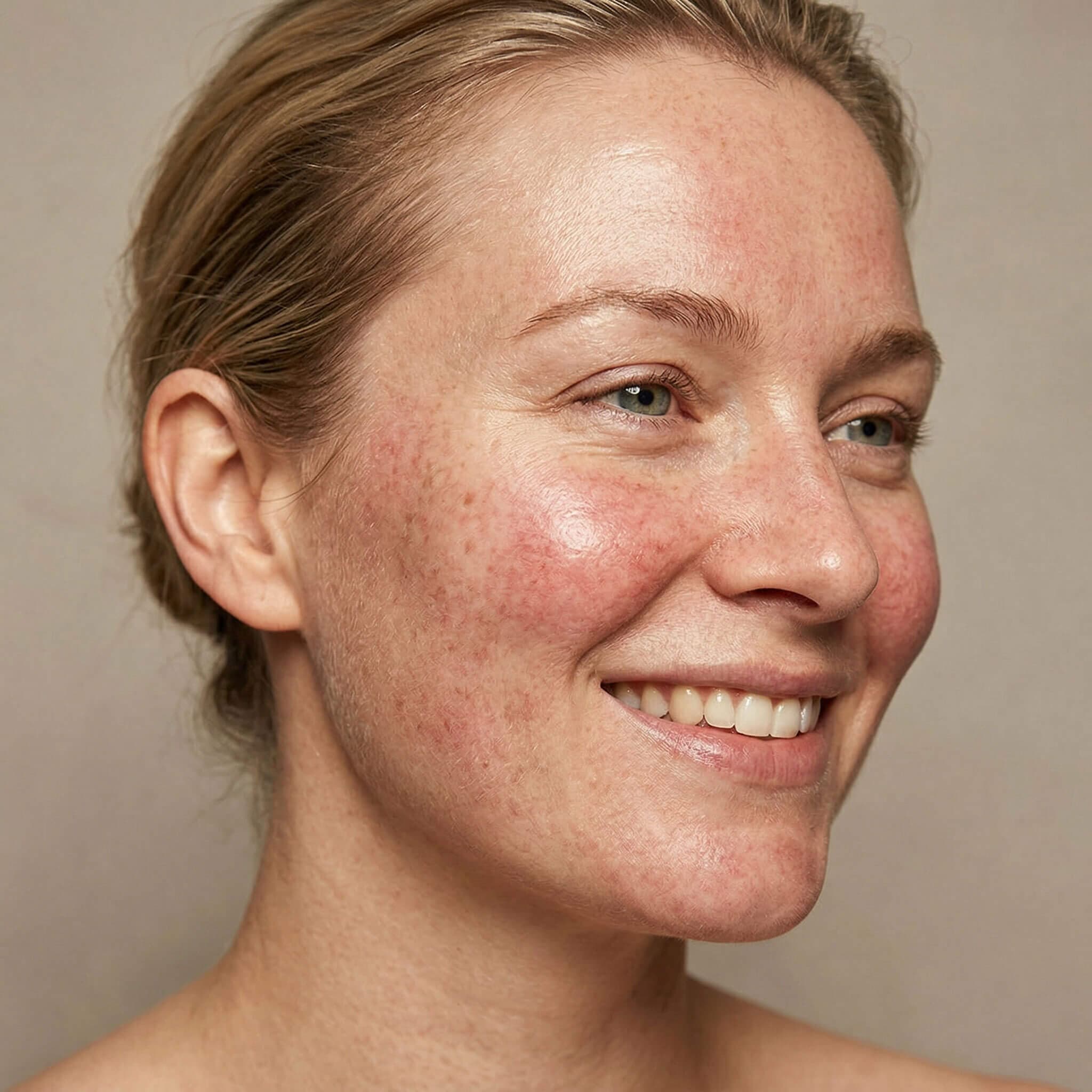
Rosacea and redness
Rosacea is a chronic inflammatory condition, not a temporary flush. Here's what causes it, what calms it, and the routine that doesn't make the reactivity worse.
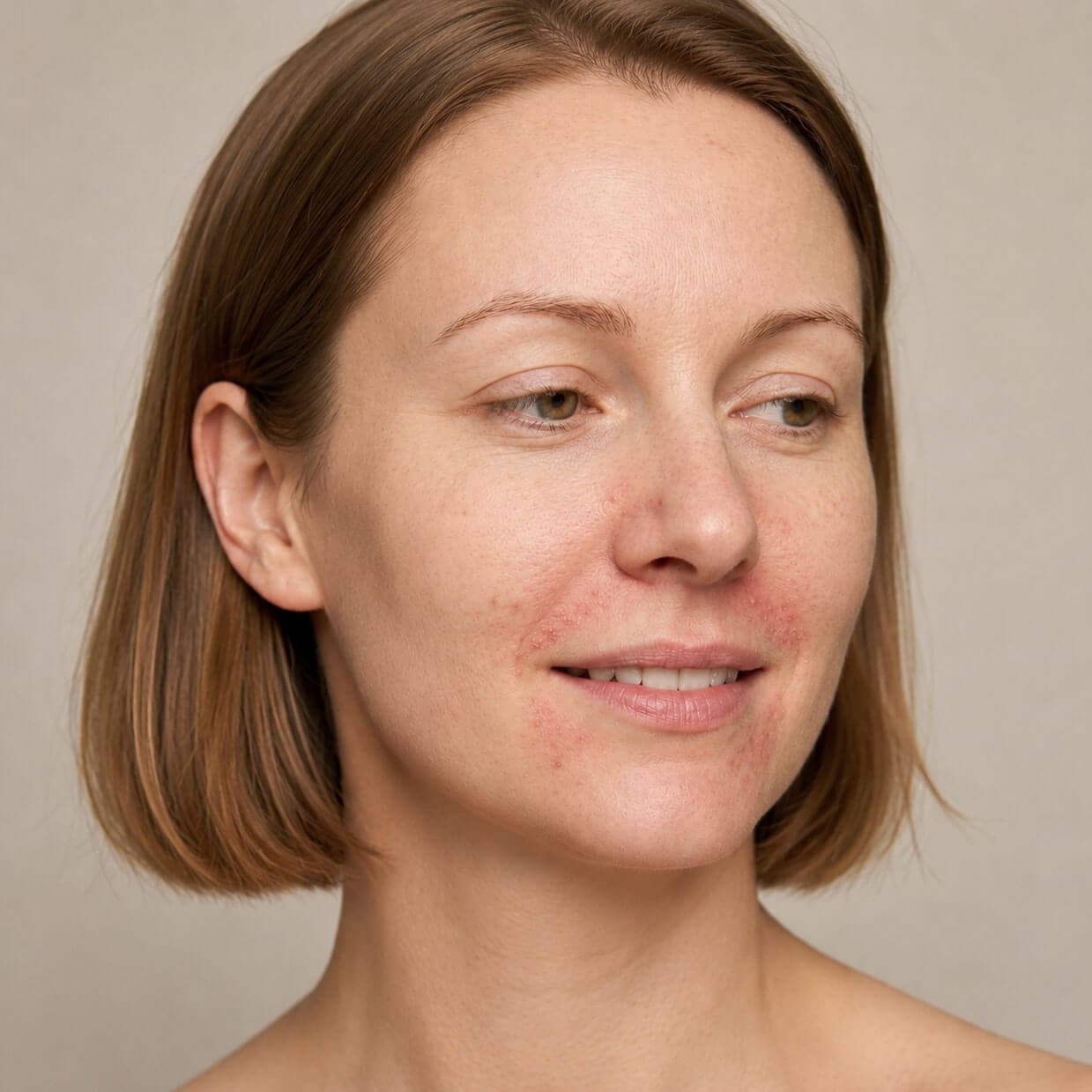
Perioral dermatitis
Small inflammatory bumps around the mouth, nose or eyes can be perioral dermatitis. Learn how to recognise the pattern, simplify your routine with clinical guidance and get treatment when you need it.
Related ingredients
Citations
- DailyMed. Metronidazole Gel, 1%, prescribing information. — DailyMed
- Dahl MV, et al. Once-daily topical metronidazole cream formulations in the treatment of the papules and pustules of rosacea. J Am Acad Dermatol. 2001;45(5):723-730. — PMID 11606923
- van Zuuren EJ, et al. Interventions for rosacea based on the phenotype approach: an updated systematic review including GRADE assessments. Br J Dermatol. 2019;181(1):65-79. — PMID 30585305
- Dahl MV, et al. Topical metronidazole maintains remissions of rosacea. Arch Dermatol. 1998;134(6):679-683. — PMID 9645635