
Steroid cream and perioral dermatitis: rebound without panic
Facial steroid cream can calm perioral dermatitis briefly, then drive a rebound cycle. Learn why it happens, what not to do, and when to call the prescriber.
On this page
One of skincare's most confusing experiences is watching a cream work quickly and then leave the rash angrier when you stop.
I know the relief side from my own irritated skin: when something takes down redness overnight, you want to trust it. I have not had perioral dermatitis, and that distinction matters here. A facial steroid can be the right medicine for one diagnosed condition and the wrong repeat treatment for another.
With perioral dermatitis, the short-term calm can become a loop: apply steroid, improve, stop, flare, restart.
The short answer
Topical corticosteroids, including over-the-counter hydrocortisone, are strongly associated with perioral dermatitis on the face. They can reduce redness and inflammation briefly. When the medicine is withdrawn, the bumps and burning may rebound. Reapplying it can settle the rebound for a while and make the pattern more dependent on the same cream.
If a clinician prescribed your steroid, contact that clinician before changing it. The diagnosis, strength, duration, and reason for treatment determine whether you should stop, taper, or switch to something else.
Why a steroid can help first and hurt later
Topical corticosteroids reduce inflammatory signalling and constrict small blood vessels. Those effects can make a red facial eruption look quieter quickly.
Perioral dermatitis has a different long-term relationship with steroids. A 2021 evidence review[1] found the strongest support for topical corticosteroid misuse as a major causative or perpetuating factor. The exact biology remains incomplete, but the clinical pattern is familiar: temporary suppression followed by recurrence or worsening.
That does not make steroid creams “bad ingredients.” They are valuable medicines for conditions where their benefits and risks fit. The problem is a mismatch between medicine, location, diagnosis, and duration.
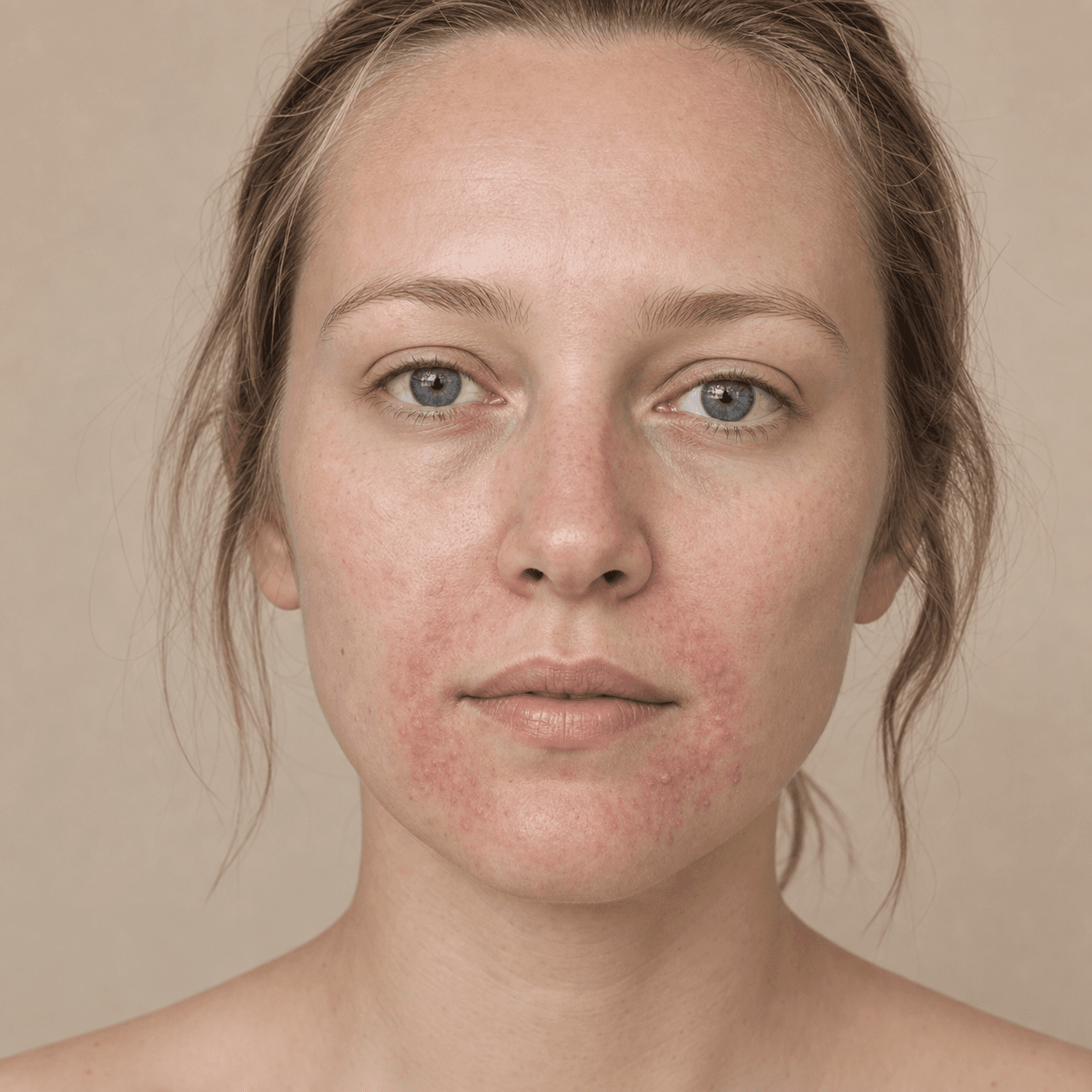
What steroid-related perioral dermatitis looks like
Typical clues include:
- small, fairly uniform bumps around the mouth
- a narrow clear strip immediately beside the lips
- spread around the nostrils or eyes
- fine scale, dryness, burning, or stinging
- improvement while steroid cream is used
- worsening after the steroid is reduced or stopped
- another short improvement when it is restarted
Blackheads and varied pimples favour acne. Prominent central flushing and visible vessels may fit rosacea. Strong itch, swelling, or a sharp edge can point toward contact dermatitis.
StatPearls describes the diagnosis as mainly clinical and notes that atypical or treatment-resistant eruptions may need biopsy or other testing[2]. A checklist can help you recognise a pattern; it cannot tell you which facial rash you have.
Check every route of steroid exposure
“Steroid cream” is broader than the tube you remember using.
Make a list of:
- prescription creams or ointments
- over-the-counter hydrocortisone
- combination antifungal-and-steroid products
- nasal steroid spray that touches skin beside the nose
- inhaled corticosteroid residue around the mouth
- a steroid used on another facial rash
Do not stop an inhaler or nasal medicine needed for asthma or allergy control. Instead, ask the prescriber about technique, a spacer where appropriate, rinsing the mouth, and gently cleaning residue from nearby skin.
Bring the exact names or photographs of labels to the appointment. “The white tube” makes pharmacology unnecessarily adventurous.
Should you stop immediately or taper?
There is no safe universal instruction for a prescription medicine.
The American Academy of Dermatology advises people using a prescription corticosteroid to ask the prescriber whether they can stop, while noting that the rash can worsen after withdrawal[3]. Some clinicians stop a mild, short-term exposure. Others taper a stronger or longer-used facial steroid or replace it with a non-steroid prescription.
The plan depends on:
- steroid potency
- how often and how long it was used
- the facial area involved
- the original diagnosis
- whether another condition still requires treatment
- pregnancy, age, and medical history
Do not turn “steroids can worsen perioral dermatitis” into “all steroids must be stopped today.” Medical nuance matters most when a useful medicine is involved.
What rebound can feel like
After reduction or withdrawal, redness, burning, scale, and bumps may become more noticeable. That does not automatically mean the steroid was treating the correct condition. It may be the expected return of a suppressed eruption.
The difficult part is emotional. The mirror seems to offer proof that stopping was a mistake. Restarting gives rapid relief, which reinforces the cycle.
Contact the clinician instead. Record the timing and take consistent photographs in the same light. Those details help distinguish a predictable rebound from infection, allergy, rosacea, eczema, or another problem.
Do not diagnose “topical steroid withdrawal syndrome” from any short rebound. That term usually describes a broader and sometimes severe reaction after prolonged topical steroid exposure. Perioral dermatitis rebound is a more specific pattern and still needs assessment.
What clinicians may use instead
The first step is usually removing aggravating products and simplifying the routine. An evidence review[4] supports zero therapy, oral tetracyclines, topical erythromycin, and topical pimecrolimus to different degrees, while also noting limits in the evidence.
A clinician may consider:
- a non-steroid topical medicine
- topical metronidazole or erythromycin
- pimecrolimus in selected off-label treatment
- an oral tetracycline-class antibiotic
- a careful steroid taper in a specific case
This list is not a menu to self-order. Perioral dermatitis treatment depends on age, pregnancy, severity, distribution, prior steroid exposure, and the diagnosis being correct.
Keep skincare quiet during withdrawal
Use the perioral dermatitis skincare routine as the practical reset. In brief:
- wash with lukewarm water
- use clean fingertips, not brushes or cloths
- pause acids, retinoids, benzoyl peroxide, and scrubs on the area
- avoid heavy balms and fragranced products
- follow the prescribed medicine exactly
- reintroduce essentials slowly after improvement
Trying to “repair” rebound with six soothing products can add contact irritation and hide the treatment response.
When to seek prompt care
Get medical help promptly if you have:
- eye pain, redness, light sensitivity, swelling, or visual change
- spreading warmth, yellow crust, oozing, or fever
- marked facial swelling
- severe pain
- a rash after starting a new medicine
- symptoms that extend well beyond the original area
Routine dermatology review is sensible whenever the facial steroid was prescribed, the eruption persists, or the diagnosis is uncertain.
The practical takeaway
A steroid-related perioral dermatitis flare is frustrating because the quick fix appears to prove itself every time.
Step out of that loop with information: identify the exact steroid, contact the prescriber, expect that rebound may happen, strip away optional irritation, and use the replacement plan consistently.
No panic, no ingredient villain, and no solo prescription experiments. This is one of the moments when qualified medical care makes skincare simpler.
People also ask
Can hydrocortisone cause perioral dermatitis?
Yes. Facial topical corticosteroid exposure is strongly associated with perioral dermatitis. A clinician should still confirm the diagnosis because other rashes may genuinely need steroid treatment.
Should I stop steroid cream immediately?
Ask the prescribing clinician. Some situations call for stopping, while longer or stronger use may need an individual taper or replacement plan. Do not change a prescription blindly.
How long does steroid rebound last with perioral dermatitis?
A flare can appear after withdrawal and improvement often takes weeks. Duration varies with the diagnosis, steroid potency, duration of use, and prescribed treatment.
Can I restart hydrocortisone if the rash gets worse?
Restarting can give temporary relief and keep the cycle going. Contact the prescriber or a dermatologist instead of repeatedly stopping and restarting on your own.
Keep reading
- Ingredient · pimecrolimus
- Ingredient · metronidazole
- Ingredient · azelaic acid
- Condition · perioral dermatitis
- Condition · rosacea
- Condition · sensitive skin
- Read · perioral dermatitis skincare routine
- Read · perioral dermatitis around eyes
- Read · rosacea vs perioral dermatitis
- Read · redness around nose
- Read · why do i get pimples around my mouth
Citations
- Searle T, Ali FR, Al-Niaimi F. Perioral dermatitis: Diagnosis, proposed etiologies, and management. J Cosmet Dermatol. 2021;20(12):3839-3848.PMID 33751778
- Tolaymat L, Syed HA, Hall MR. Perioral Dermatitis. StatPearls. Updated 2025.NCBI Bookshelf
- American Academy of Dermatology Association. Red rash around your mouth could be perioral dermatitis.AAD
- Hall CS, Reichenberg J. Evidence based review of perioral dermatitis therapy. G Ital Dermatol Venereol. 2010;145(4):433-444.PMID 20823788