
Vitamin E (Tocopherol)
A reliable antioxidant support ingredient that works best alongside vitamin C and SPF — useful in moisturisers and day creams, but not a stand-alone anti-ageing treatment.
At a glance
What Vitamin E (Tocopherol) does for skin, and how to read the practical safety signals.
- Antioxidant support: Helps neutralise some UV-related oxidative stress when paired with vitamin C and daily SPF.
- Barrier-friendly: Commonly used in moisturisers and lip care for comfort and lipid support.
- Formula-dependent: Works as part of a team; a lone vitamin E serum rarely moves the needle on its own.
- Type
- Antioxidant
- Rating
- Pregnancy
- Considered safe
- Comedogenic rating
- 2/5 (Low clogging risk)
- Vegan
- Yes
- Suited skin types
- All skin types
On this page
The short answer
Tocopherol is vitamin E — the fat-soluble antioxidant your skin already encounters in sebum and many everyday formulas. In skincare, it is mainly there to support oxidative defence, especially when paired with vitamin C and a daily SPF.
It is not the ingredient that rewrites your skin in six weeks. It is the quiet teammate that helps a sensible routine hold up better against sun, pollution, and the slow wear of time. I like it in moisturisers and day creams for exactly that reason: useful, low-drama, easy to use consistently.
What the evidence actually shows
Photoprotection with vitamin C. Lin's 2003 study[1] tested a topical 15% L-ascorbic acid plus 1% alpha-tocopherol formulation applied before UV exposure. The combination reduced erythema and DNA damage markers compared with untreated skin — the kind of belt-and-braces protection that sits behind sunscreen, not instead of it.
Skin antioxidant biology. Pullar's 2017 review[2] documents how vitamins C and E work in skin health: C is water-soluble and regenerates E after E neutralises free radicals in lipid membranes. They are designed to work as a pair. That is why a vitamin E moisturiser alone is fine, but the strongest evidence is for the combination axis.
Topical use in dermatology. Keen's 2016 review[3] summarises vitamin E's role in skin: lipid-soluble antioxidant activity, photoprotective support when combined with vitamin C, and common use in moisturisers for barrier comfort. The practical takeaway is not "buy the most expensive antioxidant serum on the market." It is "if you care about photoaging, make sure your routine includes SPF plus sensible antioxidant support — not one or the other."
How to use it
- Best role: inside a moisturiser or day cream you already use daily, not as a separate oil you forget on the bathroom shelf.
- Morning: logical slot, especially under or alongside SPF in a day cream.
- Evening: fine in a night moisturiser; pairs naturally with retinol in the same formula.
- Concentration: most evidence uses around 1% alpha-tocopherol in combination formulas. Higher is not automatically better.
If you are acne-prone, avoid slathering pure vitamin E oil. Tocopherol at normal cosmetic levels inside a balanced cream is a different conversation.
Where it fits in a routine
Tocopherol works best as support inside a simple stack:
- L-ascorbic acid plus SPF: the canonical daytime antioxidant pairing when you use a separate vitamin C product.
- Niacinamide: barrier support and even tone from a different angle; no famous clash with vitamin E.
- Retinol: common night-cream pairing; E helps stabilise some formulations and supports the lipid environment retinol works in. Many day and night creams use tocopheryl acetate instead of free tocopherol for stability.
- Glycerin, panthenol, and sodium hyaluronate: the hydration base that makes antioxidant moisturisers feel usable every day.
There is no widely cited reason to keep vitamin E away from most routine ingredients. If something stings, look at the whole formula — fragrance, exfoliant load, pH — before blaming tocopherol alone.
When it won't help
Vitamin E will not reverse deep wrinkles, clear acne, or fix stubborn pigmentation on its own. It is support, not a hero active. If your main concern is melasma, severe sun damage, or inflammatory breakouts, you need targeted actives — azelaic acid, retinoids, salicylic acid, prescription care — not a vitamin E capsule squeezed onto your face.
It also will not rescue an unstable, oxidised formula. Antioxidants only help when the product is fresh and the packaging protects it from air and light.
The practical takeaway
My goal with this guide was to gather the useful science on tocopherol in one place, so you can stop hunting for the next clever fix and do the simple, effective things your skin actually needs.
That is also why I made the Danish Skin Care Kit: a calm routine built around documented ingredients, and one that has helped more than 100,000 people with problem skin. If even the smallest question is still nagging you, send me an email at info@danishskincare.com.
For another antioxidant with its own evidence base, read the guide to coenzyme Q10.
Common questions
Does vitamin E replace sunscreen?
No. Nothing does. Topical vitamin E can complement SPF by helping mop up some oxidative damage your sunscreen does not fully prevent, especially when paired with vitamin C. Lin's 2003 study showed meaningful extra photoprotection from the combination — not instead of sunscreen.
Is tocopherol the same as tocopheryl acetate?
Closely related. Tocopherol is the active form; tocopheryl acetate is a more stable ester that converts on the skin. Both appear in skincare. The difference matters more to formulators than to most daily routines.
Can vitamin E clog pores?
Pure vitamin E oil can be occlusive for some acne-prone skin. Tocopherol at typical moisturiser concentrations is a different story — it is usually fine as part of a balanced formula, not as a thick oil slugged on alone.
Reading a real label?
Scan a product to see how it is formulated
Upload a photo of the ingredient list and get a quick ingredient-by-ingredient read against the evidence-led database.
Found in these Danish Skin Care products

Tocopherol sits alongside niacinamide, panthenol, and broad-spectrum SPF in the morning step.

Used in the night cream as part of the antioxidant and barrier-support base around retinol.

Both the Day Protector and Moisturizer inside the Kit carry tocopherol for daily antioxidant support.
Skin conditions it actively helps with
Where the published evidence puts Vitamin E (Tocopherol) on the short list of active ingredients worth reaching for.

Signs of ageing
Wrinkles, sallowness, slack tone, and uneven pigment all share the same drivers. Here's the unglamorous routine that genuinely slows them.

Dry skin
Dry skin is usually a barrier problem, not simply a water problem. Here's the difference between dry and dehydrated, why it matters, and the routine that actually helps.
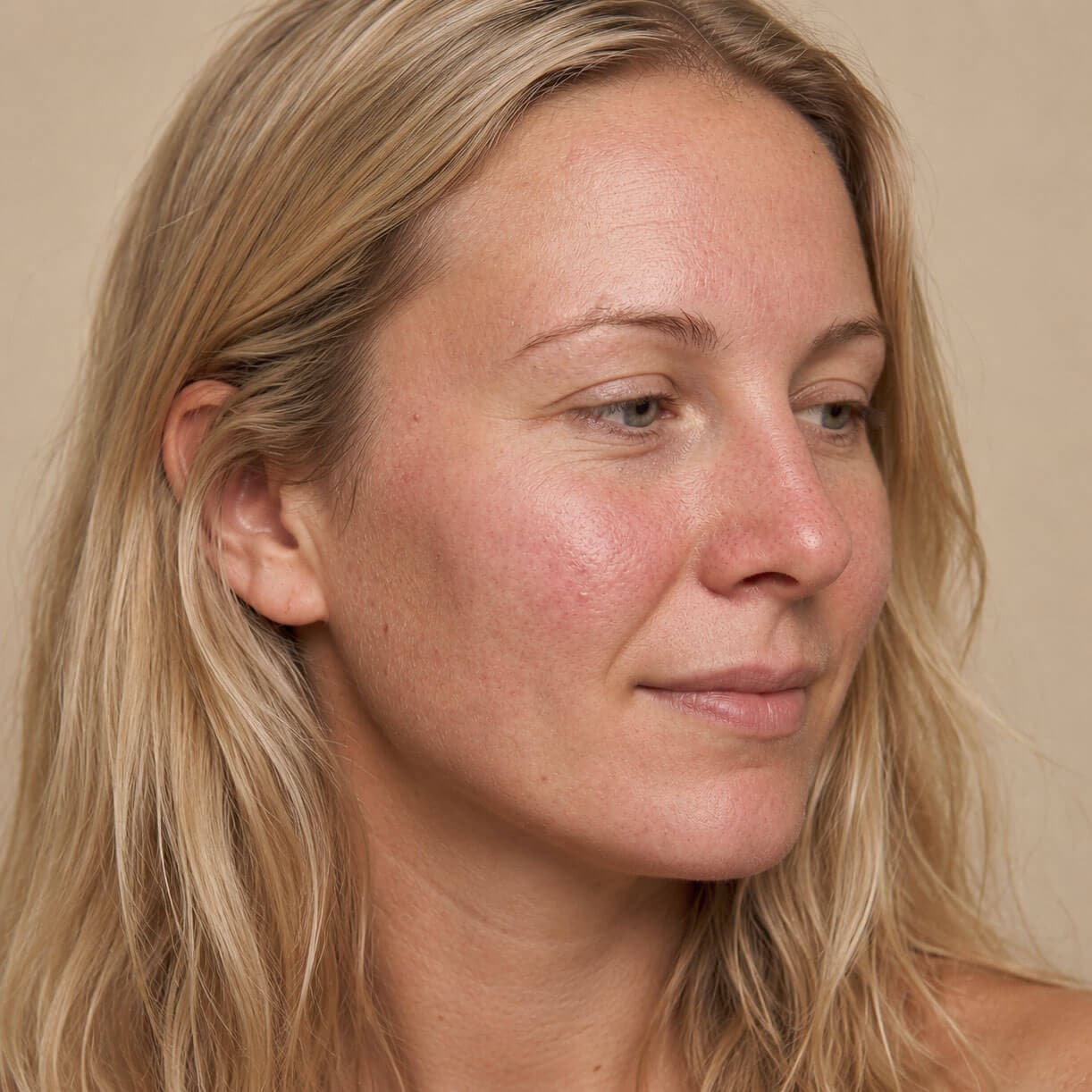
Sensitive skin
"Sensitive" is a symptom, not a diagnosis. Learn what drives reactive skin, the routine that calms it, and what to leave out.
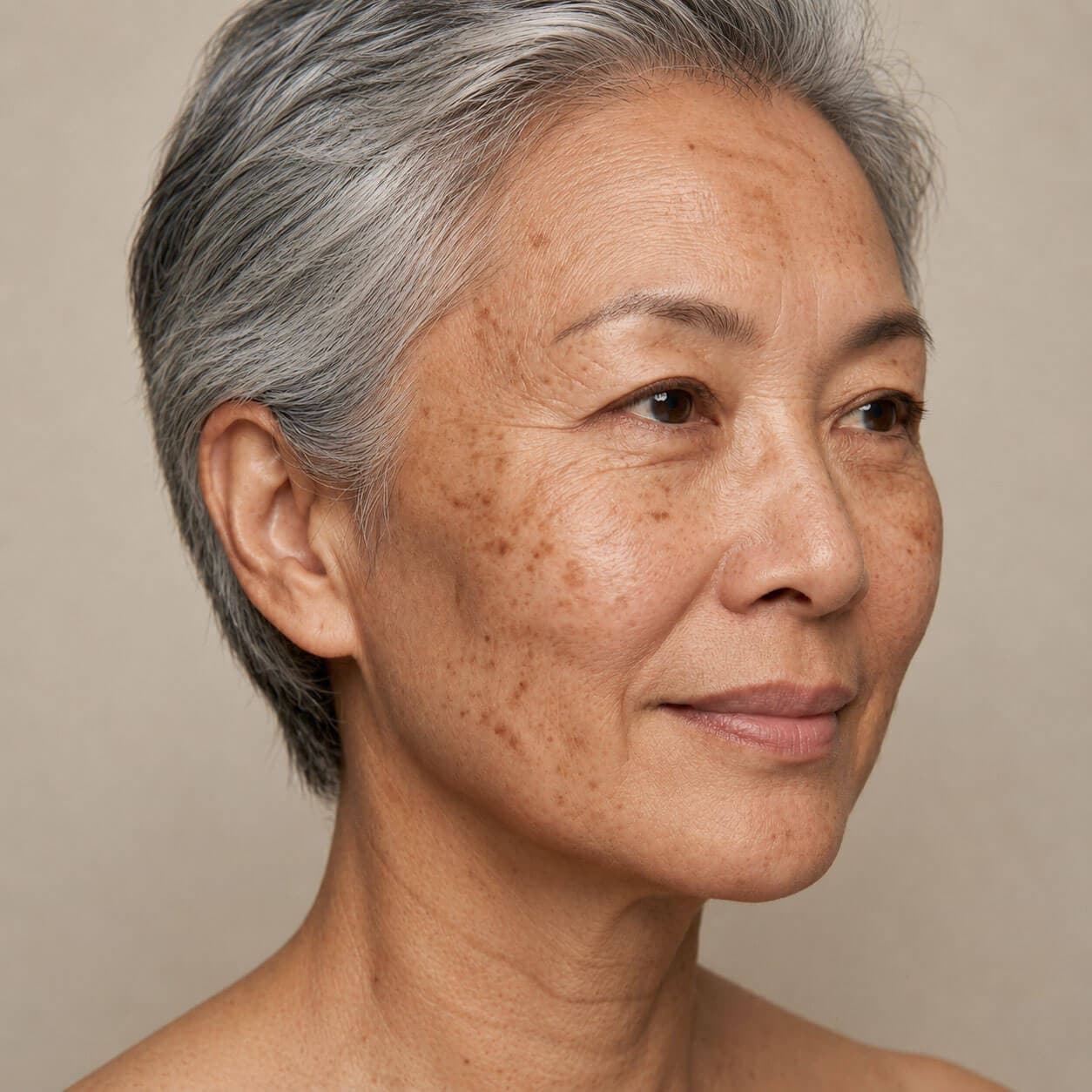
Pigmentation
Pigmentation is one of the most-asked-about, most-misunderstood skin concerns. Here's what's happening in your skin and the slow, evidence-led routine that actually fades it.
Related ingredients
Citations
- Lin JY, et al. UV photoprotection by combination topical antioxidants vitamin C and vitamin E. J Am Acad Dermatol. 2003;48(6):866–874. — PMID 12789176
- Pullar JM, Carr AC, Vissers MCM. The Roles of Vitamin C in Skin Health. Nutrients. 2017;9(8):866. — PMID 28805671
- Keen MA, et al. Vitamin E in dermatology. Indian Dermatol Online J. 2016;7(4):311–315. — PMID 27559512