
Ferulic acid
A plant-derived antioxidant whose best evidence is as a stabiliser and booster for vitamins C and E — valuable in the right formula, oversold as a solo miracle serum.
At a glance
What Ferulic acid does for skin, and how to read the practical safety signals.
- C + E booster: The strongest data is for ferulic acid stabilising vitamin C and E and improving photoprotection together.
- Daytime ingredient: Makes most sense under SPF as antioxidant support, not as a night treatment.
- Formula-sensitive: Benefits depend heavily on concentration, pH, and packaging — not every ferulic serum is equal.
- Type
- Antioxidant
- Rating
- Pregnancy
- Considered safe
- Comedogenic rating
- 0/5 (Won't clog pores)
- Vegan
- Yes
- Suited skin types
- All skin types
On this page
The short answer
Ferulic acid is a plant-derived antioxidant you have probably seen on the label of expensive vitamin C serums. Its best job in skincare is not solo fame. It is stabilising vitamin C and vitamin E and helping that combination protect skin better against UV-related oxidative stress.
If you are chasing one more serum because an influencer called it a "game changer," pause. Ferulic acid earns its place when you already wear SPF daily and want a well-built antioxidant layer underneath it — not when your routine is missing the basics.
What the evidence actually shows
Stabilising C and E. Lin's 2005 study[1] showed that adding ferulic acid to a 15% L-ascorbic acid plus 1% alpha-tocopherol solution improved the vitamins' chemical stability and roughly doubled photoprotection against solar-simulated UV — measured by erythema and sunburn cell formation. That is the study behind the famous C+E+F pairing.
Human skin confirmation. Murray's 2008 trial[2] applied a C+E+ferulic formula to human skin before UV exposure and found significant protection against erythema, thymine dimer formation, and other UV damage markers compared with vehicle. The mechanism is complementary to sunscreen — mopping up oxidative damage that gets through — not replacing it.
Why the pair matters. Lin's earlier C+E work[3] established that the two vitamins regenerate each other and reduce UV-induced damage together. Ferulic acid is the third wheel that actually makes the bicycle faster. Alone, ferulic acid has far less compelling cosmetic evidence than the trio.
How to use it
- Best format: a stable low-pH serum combining ferulic acid with L-ascorbic acid and tocopherol, not a random ferulic toner with no supporting cast.
- When: morning, on clean skin, before moisturiser and SPF.
- Storage: air- and light-sensitive like vitamin C. If it turns dark brown quickly, it is oxidising — freshness matters.
- Sensitive skin: patch test first. Low-pH antioxidant serums are a common trigger for stinging on reactive skin.
Danish Skin Care does not currently formulate with ferulic acid. We use niacinamide, azelaic acid, tocopherol, and SPF as our daily antioxidant axis instead — simpler to keep stable, simpler to use every morning without a chemistry degree.
Where it fits in a routine
Ferulic acid makes sense when:
- You already use daily broad-spectrum SPF and want extra daytime antioxidant support.
- You tolerate L-ascorbic acid at low pH and want the best-supported combination formula.
- Your main long-term concern is photoaging or slow, steady evening of pigmentation — measured in years, not weeks.
It sits awkwardly beside:
- Multiple other acids or retinoids introduced at once. That is how reactive skin happens.
- A already-overloaded morning stack. If you are layering five products before breakfast, ferulic acid is probably not the missing piece — consistency is.
Niacinamide and tocopherol in a day cream offer gentler antioxidant support if a C+E+F serum feels too aggressive.
When it won't help
Ferulic acid will not clear acne, treat rosacea, or replace prescription pigmentation care. It is photoprotection support and formula chemistry, not a treatment active. If your problem is active breakouts, persistent redness, or melasma that has not budged in a year, you need different tools — azelaic acid, retinoids, salicylic acid, or a dermatologist — not another antioxidant dropper bottle.
It also will not fix a routine missing sunscreen. The best antioxidant stack in the world is still second place to daily SPF for preventing photoaging and uneven tone.
The practical takeaway
My goal with this guide was to gather the useful science on ferulic acid in one place, so you can stop hunting for the next clever fix and do the simple, effective things your skin actually needs.
That is also why I made the Danish Skin Care Kit: a calm routine built around documented ingredients, and one that has helped more than 100,000 people with problem skin. If even the smallest question is still nagging you, send me an email at info@danishskincare.com.
Common questions
Do I need a ferulic acid serum?
Only if you are already committed to a well-formulated vitamin C plus E product and want the combination evidence supports. Many people get more mileage from daily SPF, a sensible moisturiser, and consistency than from adding another single-ingredient serum.
Why is ferulic acid often paired with vitamins C and E?
Lin's 2005 work showed ferulic acid stabilises C and E in solution and roughly doubled their photoprotective effect on skin. Murray's 2008 human study confirmed meaningful UV protection from the three-antioxidant combination. That is the pairing the evidence actually supports.
Can ferulic acid irritate sensitive skin?
It can, especially in low-pH vitamin C serums. Reactive skin may do better with gentler antioxidant support — niacinamide, tocopherol in a moisturiser, and SPF — before trying a classic C+E+F serum.
Reading a real label?
Scan a product to see how it is formulated
Upload a photo of the ingredient list and get a quick ingredient-by-ingredient read against the evidence-led database.
I recommend these products

We do not currently use ferulic acid in our formulas. The Day Protector carries tocopherol, niacinamide, and SPF as our daily antioxidant axis.

The Kit's morning step covers antioxidant support and sun protection without a separate ferulic serum.
Skin conditions it actively helps with
Where the published evidence puts Ferulic acid on the short list of active ingredients worth reaching for.

Signs of ageing
Wrinkles, sallowness, slack tone, and uneven pigment all share the same drivers. Here's the unglamorous routine that genuinely slows them.
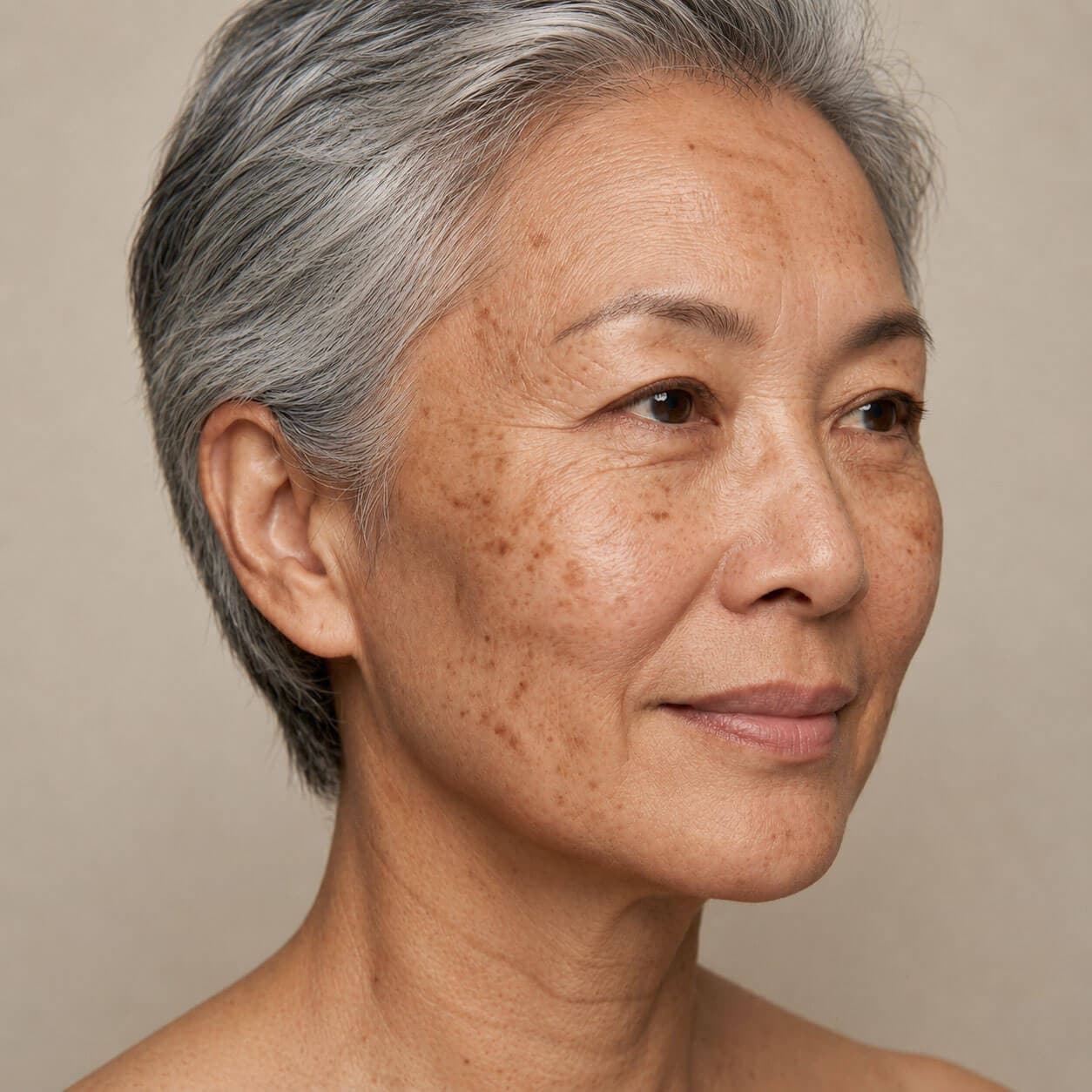
Pigmentation
Pigmentation is one of the most-asked-about, most-misunderstood skin concerns. Here's what's happening in your skin and the slow, evidence-led routine that actually fades it.
Related ingredients
Citations
- Lin FH, et al. Ferulic acid stabilizes a solution of vitamins C and E and doubles its photoprotection of skin. J Invest Dermatol. 2005;125(4):826–832. — PMID 16185284
- Murray JC, et al. A topical antioxidant solution containing vitamins C and E stabilized by ferulic acid provides protection for human skin against damage caused by ultraviolet irradiation. J Am Acad Dermatol. 2008;59(3):418–425. — PMID 18603326
- Lin JY, et al. UV photoprotection by combination topical antioxidants vitamin C and vitamin E. J Am Acad Dermatol. 2003;48(6):866–874. — PMID 12789176