
Titanium Dioxide
A mineral sunscreen filter and white pigment. Excellent for UV protection in the right formula, but texture, white cast, and skin feel decide whether people use it consistently.
At a glance
What Titanium Dioxide does for skin, and how to read the practical safety signals.
- Sunscreen role: Titanium dioxide is a mineral UV filter used in SPF products, often alongside zinc oxide or organic filters.
- Texture reality: It can leave a white or grey cast, especially in higher-mineral formulas and on deeper skin tones.
- Safety nuance: Dermal-penetration studies generally show little meaningful penetration through healthy, intact skin.
- Type
- Mineral UV filter
- Rating
- Pregnancy
- Considered safe
- Comedogenic rating
- 0/5 (Won't clog pores)
- Vegan
- Yes
- Suited skin types
- All skin types
On this page
The short answer
Titanium dioxide is a mineral UV filter and white pigment.
On ingredient lists you may see Titanium Dioxide, TiO2, or CI 77891. In sunscreen, it helps protect skin from ultraviolet radiation. In makeup and creams, it can add opacity, coverage, and a lighter colour.
The ingredient is useful. The formula around it decides whether you will use it every day.
What the evidence actually shows
Regulatory sunscreen role. The FDA has proposed titanium dioxide, along with zinc oxide, as generally recognized as safe and effective for sunscreen use at concentrations up to 25%[1]. That does not mean every titanium dioxide sunscreen feels elegant. It means the filter has a strong regulatory safety and effectiveness foundation in the United States.
Skin penetration nuance. A 2010 dermal-penetration study[2] tested sunscreen formulas containing nano- and submicron-size titanium dioxide particles and found no significant penetration through intact normal epidermis. The TGA's literature review[3] similarly concluded that titanium dioxide and zinc oxide nanoparticles in sunscreens either do not penetrate or minimally penetrate the stratum corneum and underlying skin layers in the majority of studies.
That is the sensible safety frame: intact skin is a strong barrier, and sunscreen particles mostly stay where sunscreen needs to work - on and near the surface.
Why it can leave a white cast
Titanium dioxide is white.
That sounds obvious, but it explains a lot of sunscreen frustration. Mineral particles scatter visible light, so formulas can look pale, grey, or chalky on the skin. Smaller particle sizes and better dispersion can reduce that cast, but they do not magically make every mineral sunscreen invisible.
If your sunscreen looks ghostly, your skin is not doing anything wrong. The formula is showing you its physics.
Where it fits in a routine
Titanium dioxide belongs in the protection step.
You may see it in:
- mineral sunscreens
- hybrid sunscreens
- tinted SPF products
- foundations and concealers
- powders
- colour cosmetics
For rosacea-prone skin or very reactive skin, mineral filters can be helpful when chemical sunscreens sting. The guide to choosing sunscreen for rosacea goes deeper into that trade-off.
For acne-prone skin, titanium dioxide itself is rarely the whole breakout story. Texture, residue, waxes, oils, film formers, sweat, and removal habits often matter more. If SPF seems to clog you, read the guide on breakouts after sunscreen before abandoning daily protection.
How to choose a formula
Judge the finished product.
Look for:
- a texture you will use every morning
- enough slip that you do not rub your face red
- a tint if white cast bothers you
- broad-spectrum protection
- water-resistant labeling if you sweat or swim
- an oil-free or non-comedogenic claim if you clog easily
Those label terms are starting points, not promises. Your real skin response still wins.
When it will not help
Titanium dioxide will not:
- treat acne
- fade pigmentation by itself
- repair the skin barrier
- guarantee a sunscreen will not pill
- make a heavy formula feel light
- replace reapplication on long UV-exposure days
If your SPF rolls into little flakes, the product pilling entry and the guide to sunscreen pilling will be more useful than blaming one mineral filter.
The practical takeaway
My goal with this guide was to gather the useful science on titanium dioxide in one place, so you can stop hunting for the next clever fix and focus on a simple, effective routine.
That is also why I made the Danish Skin Care Kit: a calm routine built around documented ingredients, and one that has helped more than 100,000 people with problem skin. If even the smallest question is still nagging you, send me an email at info@danishskincare.com.
Common questions
What does Titanium Dioxide do in skincare?
In skincare, titanium dioxide is mainly used as a mineral UV filter in sunscreen and as a white pigment or opacifier in makeup and creams.
Is Titanium Dioxide good for sensitive skin?
It can be. Mineral sunscreens with titanium dioxide are often useful for sting-prone skin, but the finished formula still decides comfort, cast, and breakout risk.
Does Titanium Dioxide clog pores?
Titanium dioxide itself is not usually the comedogenic problem. For acne-prone skin, judge the whole sunscreen or makeup formula, including texture, oils, waxes, and removal.
Reading a real label?
Scan a product to see how it is formulated
Upload a photo of the ingredient list and get a quick ingredient-by-ingredient read against the evidence-led database.
Skin conditions it actively helps with
Where the published evidence puts Titanium Dioxide on the short list of active ingredients worth reaching for.
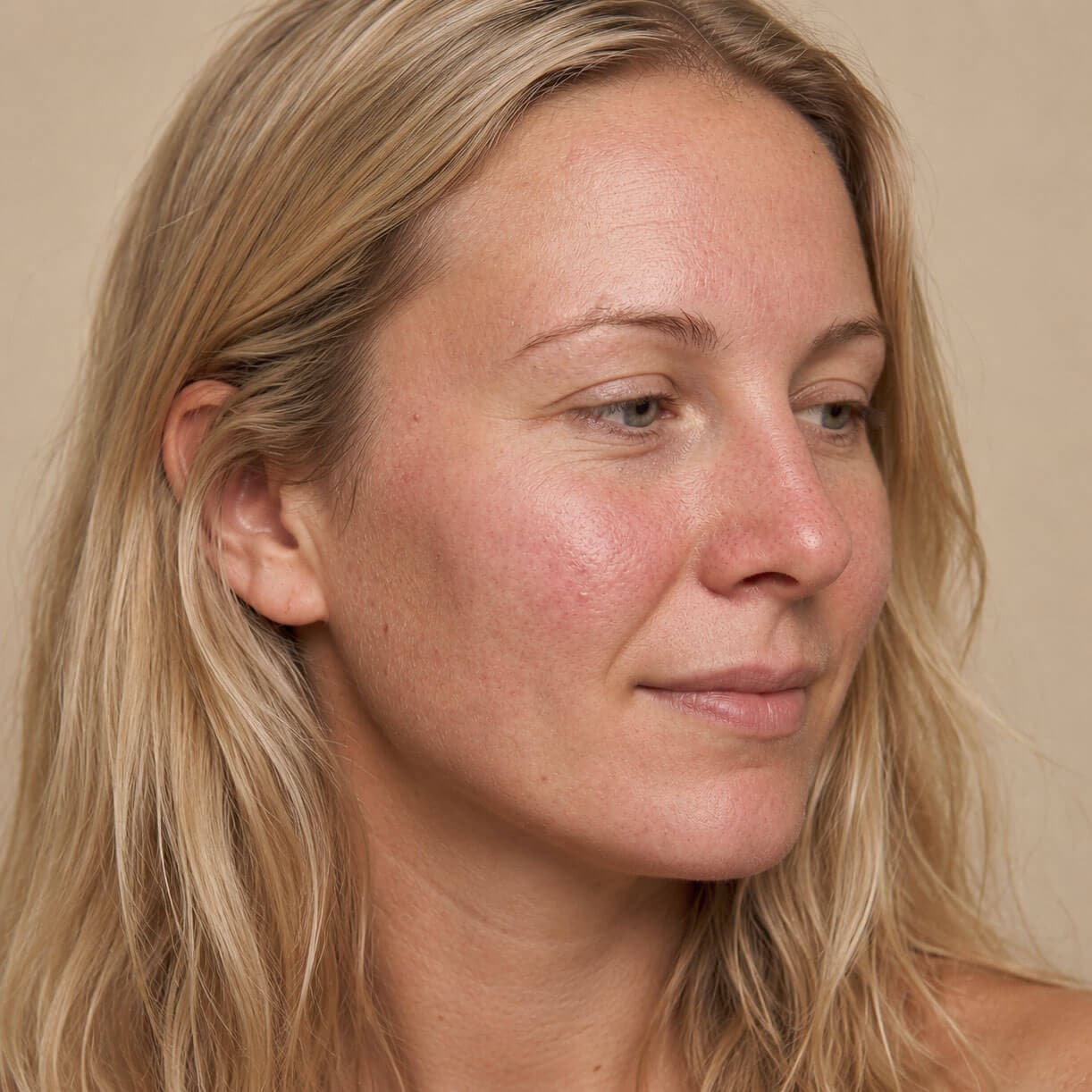
Sensitive skin
"Sensitive" is a symptom, not a diagnosis. Learn what drives reactive skin, the routine that calms it, and what to leave out.
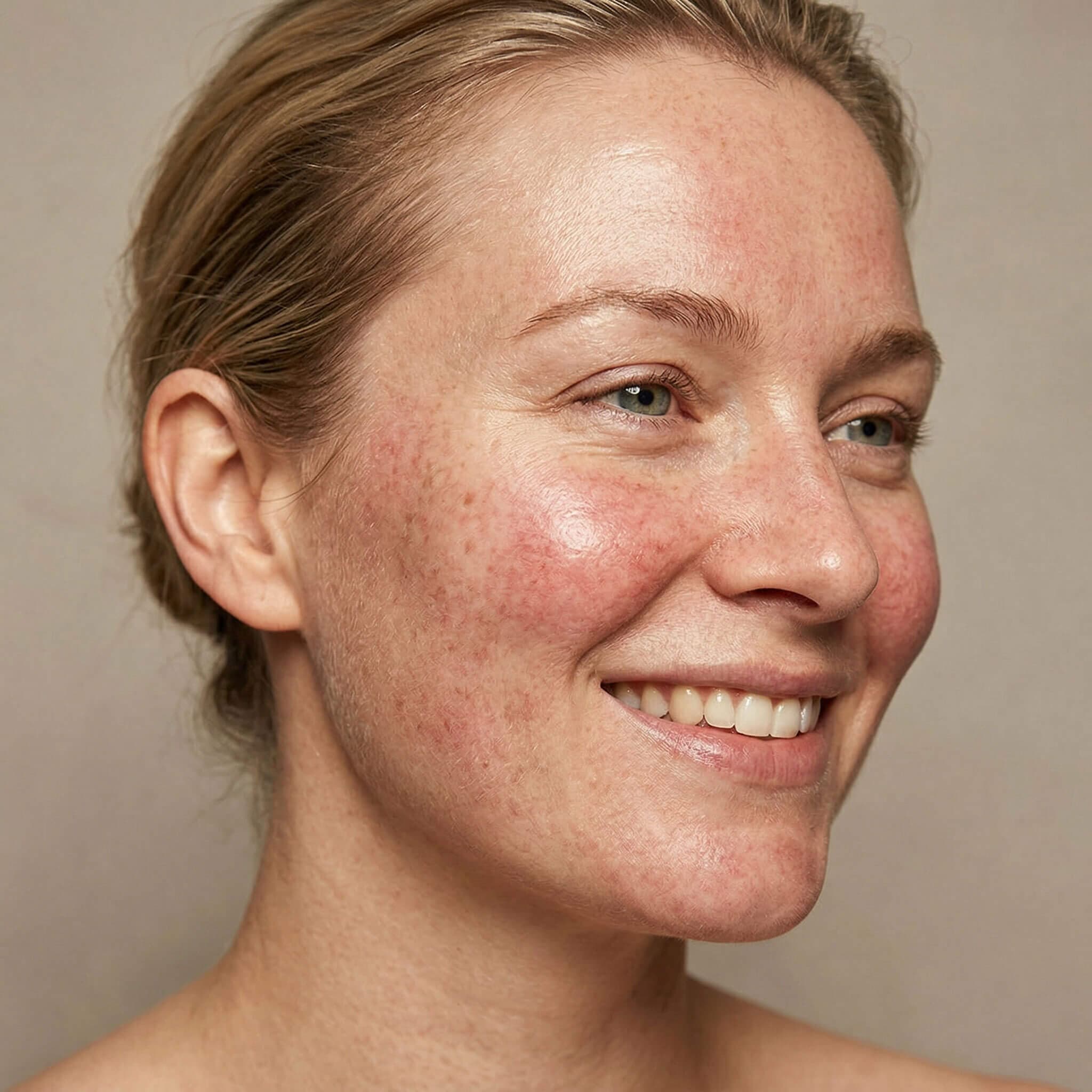
Rosacea and redness
Rosacea is a chronic inflammatory condition, not a temporary flush. Here's what causes it, what calms it, and the routine that doesn't make the reactivity worse.
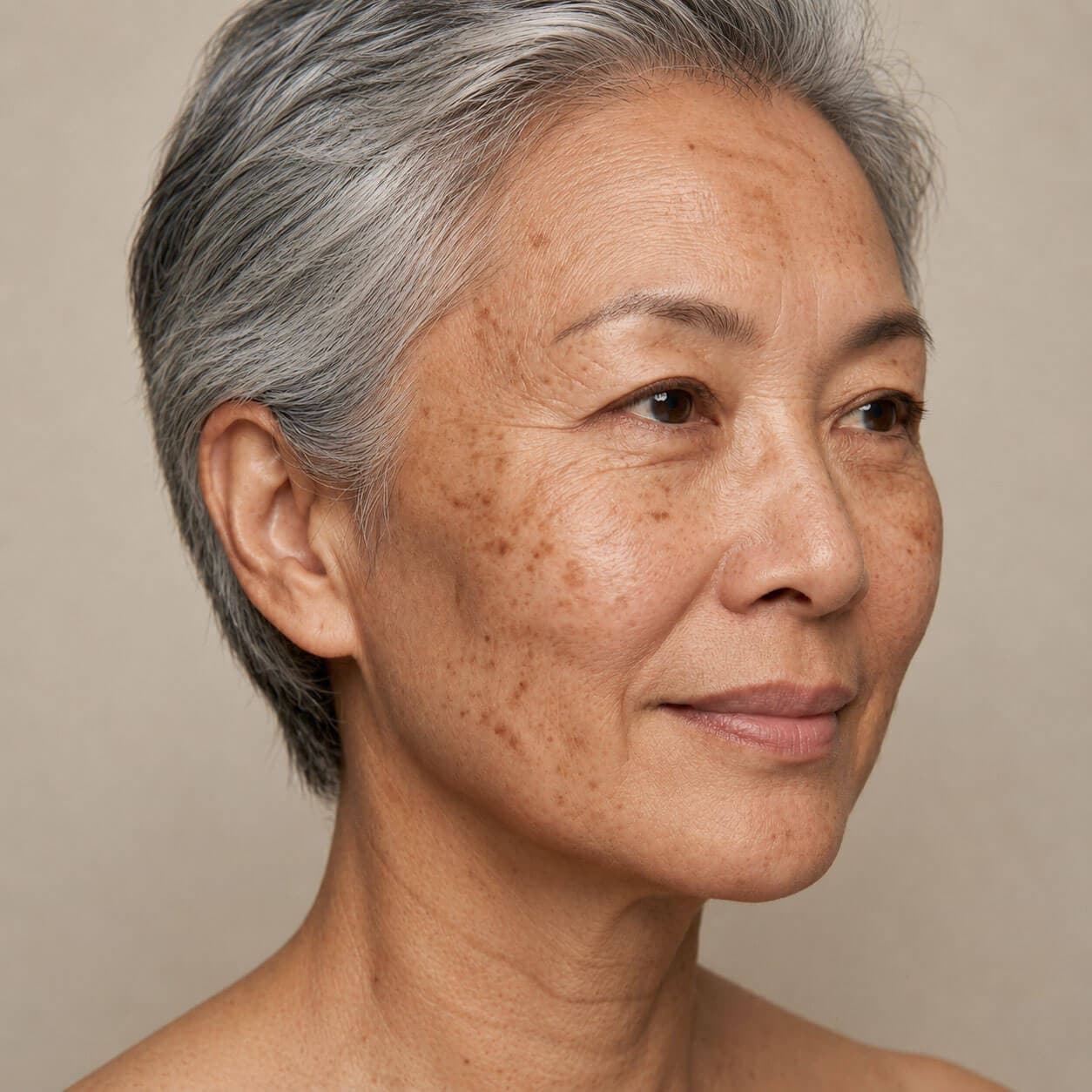
Pigmentation
Pigmentation is one of the most-asked-about, most-misunderstood skin concerns. Here's what's happening in your skin and the slow, evidence-led routine that actually fades it.

Acne and blemishes
A clear-headed guide to acne: what's actually happening in your skin, what the evidence says works, and a simple routine that doesn't make things worse.
Related ingredients
Citations
- U.S. Food and Drug Administration. Questions and Answers: FDA posts deemed final order and proposed order for over-the-counter sunscreen. — FDA
- Sadrieh N, Wokovich AM, Gopee NV, et al. Lack of significant dermal penetration of titanium dioxide from sunscreen formulations containing nano- and submicron-size TiO2 particles. Toxicol Sci. 2010;115(1):156-166. — PMID 20156837
- Therapeutic Goods Administration. Literature review on the safety of titanium dioxide and zinc oxide nanoparticles in sunscreens. — TGA