
Rosacea on the nose: redness, vessels, bumps and thickening
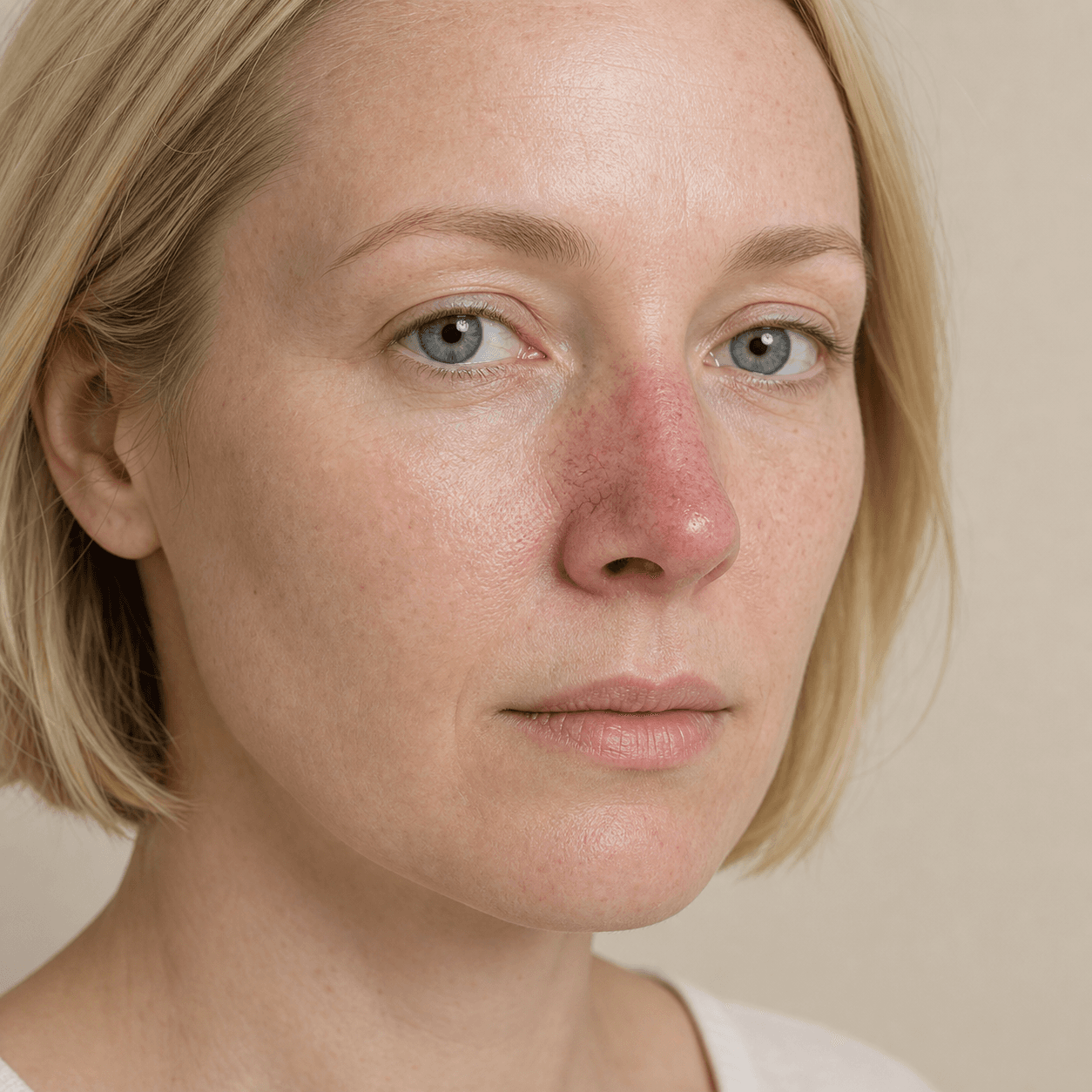
Rosacea on the nose can mean flushing, persistent redness, visible vessels, bumps, or skin thickening. Learn the clues and when a dermatologist matters.
On this page
The nose gets blamed for an impressive number of things.
It is too oily, too red, too bumpy, too shiny, full of "blackheads" that may be normal sebaceous filaments, and somehow expected to tolerate pore strips, squeezing, scrubs, acids, and close inspection under bathroom lighting.
My own problem-skin years involved oiliness, clogged pores, acne, and irritation. I have not had rosacea as my diagnosis, so I will not pretend a red nose in my past proves anything about yours. What I have learned from helping readers is that nose redness becomes easier to manage when we stop treating every sign as the same problem.
The short answer
Rosacea on the nose can show up as:
- temporary flushing
- persistent red, brown-red, or violet colour change
- burning, warmth, stinging, or swelling
- fine visible blood vessels
- red bumps or pustules
- progressive thickening or a changing nose contour
Most people with rosacea do not develop every sign. A red nose does not automatically mean rosacea, and ordinary skincare cannot treat all of these structures.
Why rosacea often affects the nose
Rosacea favours the central face: the nose, cheeks, chin, and forehead. NIAMS describes it as a long-term inflammatory condition that commonly causes redness and rash on the nose and cheeks[1].
The nose has a dense supply of blood vessels and sebaceous glands. When rosacea drives vascular reactivity, inflammation, or tissue change, the area makes those changes easy to notice.
That visibility does not make the skin dirty. It makes the nose a very public place for a chronic skin condition.
Sign 1: flushing that comes and goes
Early rosacea may look like a nose that turns red easily with:
- hot rooms or showers
- exercise
- sun or wind
- alcohol
- spicy food
- stress or embarrassment
- very hot food and drinks
The colour may fade after the trigger passes. Over time, some people notice that it takes longer to settle. Track the pattern before banning every enjoyable part of life. The goal is to find repeated triggers, not to live inside a climate-controlled bubble.
Sign 2: persistent redness or colour change
When colour remains between flushing episodes, it may reflect persistent erythema. On light skin this often looks pink or red. On deeper skin it may look brown-red, violet, dusky, or be easier to feel as warmth and burning than to see.
Persistent colour deserves an assessment, especially if it arrives with visible vessels, pustules, eye irritation, or swelling. The guide to redness around the nose compares rosacea with perioral dermatitis, seborrheic dermatitis, acne, and simple irritation.
Sign 3: visible vessels
Fine red or purple lines at the sides of the nose are called telangiectasia. They are small widened vessels near the skin surface.
A gentle routine can make the surrounding skin less irritated. It cannot reliably erase a vessel that stays widened. Dermatologists may use vascular laser or intense pulsed light for suitable people, with device choice and settings adjusted for skin tone and the exact vessel pattern.
Please do not scrub harder to "improve circulation." The vessel is not there because the nose forgot to exfoliate.
Sign 4: papules and pustules
Rosacea can produce red bumps and pus-filled spots that resemble acne. A useful clue is the company they keep: background redness, flushing, burning, and few blackheads.
Prescription options may include azelaic acid, ivermectin, metronidazole, or other clinician-selected treatments, depending on the exact phenotype. These medicines target inflammatory lesions; they do not all remove fixed vessels or reverse thickened tissue.
If the nose has blackheads, whiteheads, and oily congestion without flushing or burning, acne may be part of the picture. You can also have acne and rosacea together. Skin remains committed to administrative complexity.
Sign 5: thickening and rhinophyma
Skin thickening on the nose is called rhinophyma. It may begin with more obvious pores, uneven texture, swelling, firmness, or small contour changes before becoming advanced.
AAD guidance stresses that earlier phyma assessment matters because medication may help slow early change, while more established thickening becomes harder to treat[2]. Advanced rhinophyma may need procedural treatment to remove excess tissue and restore contour.
A systematic review describes rhinophyma as thickening of nasal skin with overgrowth involving sebaceous glands and connective tissue[3]. It also found no proven causal relationship with alcohol. That matters because the old "drinker’s nose" stereotype is medically lazy and personally cruel.
Rhinophyma is more common in men, but anyone with changing nasal tissue deserves proper care.
What skincare can reasonably do
Keep the non-prescription routine calm:
- Cleanse with lukewarm water and fingertips.
- Pat around the nostrils instead of rubbing.
- Use a comfortable moisturiser if the skin feels tight.
- Wear a sunscreen you tolerate when outdoors.
- Skip pore strips, scrubs, brushes, and squeezing.
- Introduce only one active change at a time.
This routine can reduce irritation and support treatment tolerance. It cannot close a fixed vessel, diagnose pustules, or remodel thickened nasal tissue.
Modern management matches the treatment to the sign present: vascular treatment for persistent redness or vessels, anti-inflammatory therapy for papules and pustules, eye-specific care for ocular disease, and medical or procedural options for phyma[4].
When to see a dermatologist
Book a qualified dermatologist if:
- the nose stays red or painful for weeks
- pustules repeatedly return
- visible vessels or flushing are worsening
- the eyes feel gritty, red, swollen, or light-sensitive
- the nose becomes firmer, bumpier, wider, or changes shape
- the diagnosis is uncertain
Get urgent care for sudden severe swelling, breathing difficulty, spreading painful redness, fever, or eye symptoms with vision change.
My calm advice is to stop fighting the nose as one cosmetic object. Name the sign, reduce irritation, and use the right professional tool when skincare reaches its limit. Earlier clarity is kinder than months of squeezing, guessing, and hoping a changing nose will negotiate with a serum.
People also ask
What does rosacea on the nose look like?
It may look like easy flushing, persistent red or darker colour, fine visible vessels, burning, swelling, or acne-like bumps. Less commonly, the skin becomes progressively thicker and changes the nose contour.
Does a red nose mean rosacea?
No. Irritation, seborrheic dermatitis, perioral dermatitis, acne, cold weather, allergy, infection, and other causes can also redden the nose. A repeating pattern and proper examination matter.
Can skincare remove visible vessels on the nose?
Skincare can reduce irritation around visible vessels but does not reliably close vessels that remain widened. A dermatologist may discuss vascular laser or light treatment when appropriate.
Is rhinophyma caused by alcohol?
No causal link between alcohol and rhinophyma has been proven. Alcohol can trigger flushing in some people with rosacea, but blaming a changing nose on drinking is inaccurate and stigmatizing.
Keep reading
Citations
- National Institute of Arthritis and Musculoskeletal and Skin Diseases. Rosacea: Symptoms, Causes, & Risk Factors.NIAMS
- American Academy of Dermatology Association. Rosacea: Diagnosis and treatment.AAD
- Wetzig T, et al. A systematic review and current recommendation for treatment of rhinophyma. Laryngorhinootologie. 2021;100(4):263-271.PMID 33111293
- Thiboutot D, et al. Standard management options for rosacea: The 2019 update by the National Rosacea Society Expert Committee. J Am Acad Dermatol. 2020;82(6):1501-1510.PMID 32035944