
Rosacea and weather changes: a calm seasonal plan
Heat, cold, wind, and rapid temperature changes can trigger rosacea differently. Learn how to adjust your routine without reorganising life around the forecast.
On this page
My own irritated skin used to react to weather as if it had received a personal complaint from the atmosphere.
Cold wind made it tight. A warm train made it red. Then I would wash my face too hot and somehow blame December for all three decisions. I did not have rosacea, so my experience is not a diagnosis story. It did teach me that weather rarely works alone.
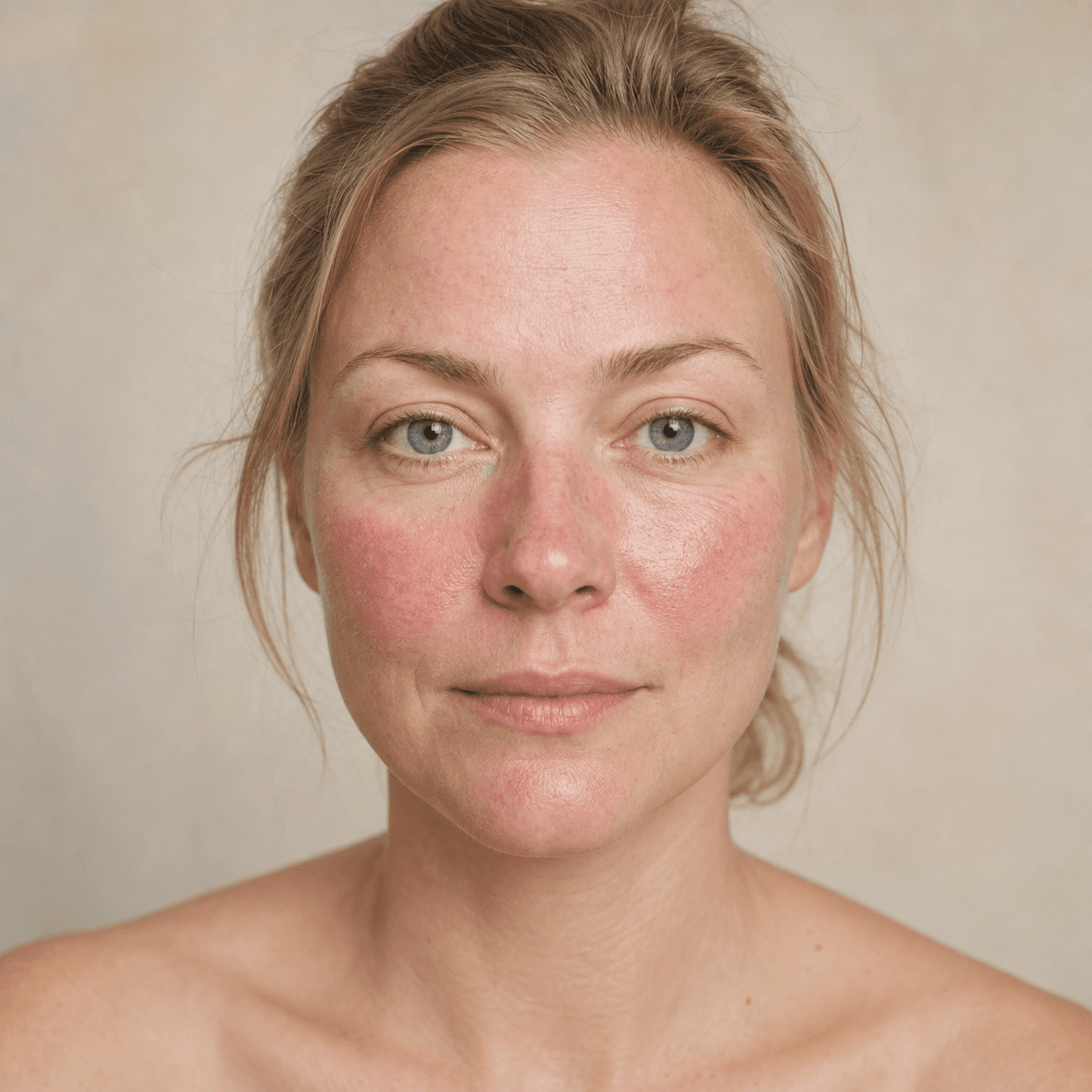
For rosacea-prone skin, the difficult part is often the switch: cold street to heated shop, summer pavement to air conditioning, windy commute to hot shower. Your face experiences the whole journey, not one tidy weather icon.
The short answer
Heat, cold, wind, low humidity, and rapid temperature changes can all trigger rosacea in some people.
They do not affect everyone equally. One face flares in July heat, another in January wind, and a third mainly reacts when moving between the two extremes. The American Academy of Dermatology lists overheating, cold, and wind among common triggers and recommends practical protection rather than total avoidance[1].
Your task is not to defeat weather. It is to identify the part your skin dislikes and reduce the shock where reasonably possible.
Why temperature can show up so quickly
The face helps the body exchange heat. Blood vessels widen and narrow as temperature and nervous-system signals change.
Rosacea involves more reactive vascular and sensory behaviour. A small physiology study found stronger sympathetic nerve responses and faster skin blood-flow changes during trigger tests in people with rosacea than controls[2]. That does not make every red cheek a disease flare. It helps explain why a normal temperature adjustment can become unusually visible or uncomfortable.
The same person may respond differently depending on stress, sleep, alcohol, exercise, hormones, or an already irritated barrier. If poor sleep seems to lower your threshold, the separate guide to rosacea and sleep gives that overlap proper space.
Cold and wind: protect without overheating
Cold air can feel sharp on reactive skin, while wind increases physical exposure and water loss. Covering the face can help, but a rough scarf rubbing the cheeks creates its own problem.
Try:
- a soft, smooth scarf below the eyes
- a moisturiser applied before the skin feels tight
- a hood or hat that reduces direct wind
- shorter exposure during severe cold when practical
- gradual warming indoors
Avoid standing directly over a heater or washing a cold face with hot water. Both feel satisfying for thirty seconds and can produce a much louder temperature swing.
Dry air and the barrier
Weather is also a barrier question. A scientific review found that low humidity and temperature changes can affect skin barrier function, especially in already dry or dermatitis-prone skin[3]. Rosacea is not dermatitis, but tight, dry, reactive skin still notices a stressed outer layer.
A 2023 indoor-winter study found changes in facial roughness and redness after several hours in heated, low-humidity conditions[4]. It was not a rosacea treatment study. Its useful lesson is smaller: indoor air belongs in the weather conversation.
At home or work:
- move away from direct radiators or fan heaters
- use a comfortable humidifier only if it can be cleaned properly
- shorten hot showers
- moisturise after gentle cleansing
- pause the extra peel, scrub, or strong active when skin stings
A moisturiser is a mixture, not a list of heroic ingredients. The guide to emulsion stability explains why texture, spread, and a dependable formula matter for skin that already has a low tolerance for surprises.
Heat and humidity: cool the body, not only the face
Hot weather increases skin blood flow. Humidity can make sweat evaporate less efficiently, so you stay warm longer. The response does not require fear of summer; it requires a few unglamorous adjustments.
- choose shade and cooler times for errands or exercise
- wear light layers you can remove
- use a fan or air conditioning when available
- sip cool water
- put a cool damp cloth around the neck
- let a hot face settle before cleansing
Do not press ice directly onto the cheeks. Extreme cold is still an extreme, and rosacea-prone skin is not famous for enjoying plot twists.
The difficult transition: outside to inside
If the flare starts after entering a building, the transition may matter more than the outdoor temperature.
On a cold day, loosen the scarf and coat soon after coming inside. Step away from the doorway heater. Give the face a few minutes before adding hot coffee, a hot meal, or a hot wash to the stack.
On a hot day, cool gradually. Aggressive air conditioning pointed directly at the face can feel drying, while rubbing away sweat adds friction. Blot gently and use the routine you already tolerate.
Build a tiny seasonal plan
Write four lines before the season gets difficult:
- My likely trigger: for example, cold wind or overheated rooms.
- My first adjustment: a soft scarf, lighter layers, or moving away from direct heat.
- My steady routine: mild cleanser, prescribed treatment, and familiar moisturiser.
- My escalation point: symptoms that mean I contact a dermatologist.
This plan is more useful than buying a “winter routine” and a “summer routine” containing twelve different products. Change texture or frequency when comfort requires it, but keep enough of the routine stable that you can tell what helped.
When professional care matters
See a qualified dermatologist if redness remains after you are back in a comfortable environment, papules or pustules keep appearing, visible vessels progress, the face becomes painful or swollen, or eye symptoms such as grittiness and light sensitivity develop.
Weather management can reduce triggers. It does not replace treatment for active rosacea, and it should not shrink your life to the distance between home and a thermostat.
My calm advice: respect the forecast, then live your day. Use layers, reduce direct wind and heat, support the barrier, and let professional care carry the part that a scarf cannot solve.
People also ask
Can weather changes trigger rosacea?
Yes, heat, cold, wind, and rapid temperature changes can trigger some people's rosacea. The useful pattern is individual, so track what happens instead of avoiding every kind of weather.
Why does my face flush when I come inside from the cold?
Moving quickly from cold air into a heated room changes skin temperature and blood flow. Rosacea-prone facial vessels and nerves may respond with a stronger or longer flush.
Is humid or dry weather better for rosacea?
Neither is universally better. Dry air may increase tightness and barrier stress, while hot humid weather may increase heat and sweating. Comfort and your own pattern matter.
When does weather-related redness need a dermatologist?
Get assessed when redness persists indoors, bumps or visible vessels progress, the skin is painful or swollen, eye symptoms appear, or you are unsure whether the problem is rosacea.
Keep reading
Citations
- American Academy of Dermatology Association. How to prevent rosacea flare-ups.AAD
- Metzler-Wilson K, et al. Augmented supraorbital skin sympathetic nerve activity responses to symptom trigger events in rosacea patients. J Neurophysiol. 2015;114(3):1530-1537.PMID 26133800
- Engebretsen KA, et al. The effect of environmental humidity and temperature on skin barrier function and dermatitis. J Eur Acad Dermatol Venereol. 2016;30(2):223-249.PMID 26449379
- Lee HJ, et al. Effects of winter indoor environment on the skin: Unveiling skin condition changes in Korea. Skin Res Technol. 2023;29(6):e13361.PMC10264749