Rosacea and menopause: hot flashes, flushing and skin care
Menopause hot flashes and rosacea can overlap without being the same problem. Learn how to read flushing, calm the skin, and know when medical care matters.
On this page
Midlife skin can make two ordinary mirrors feel like different people.
One morning the face looks settled. That evening a hot flash rolls through, the cheeks turn bright, the nose burns, and a moisturiser that behaved yesterday suddenly feels far too interesting.
My own skin history is acne, oiliness, clogged pores, dehydration, and irritation. I have not experienced menopause or rosacea, and I will not borrow that authority. What I have heard from many customers and readers is the frustration of having hormonal heat and reactive skin discussed as if one tidy explanation covers both.
It does not.
The short answer
Menopausal hot flashes and rosacea flares can overlap because both may involve facial warmth, flushing, and visible colour change. They are not the same condition.
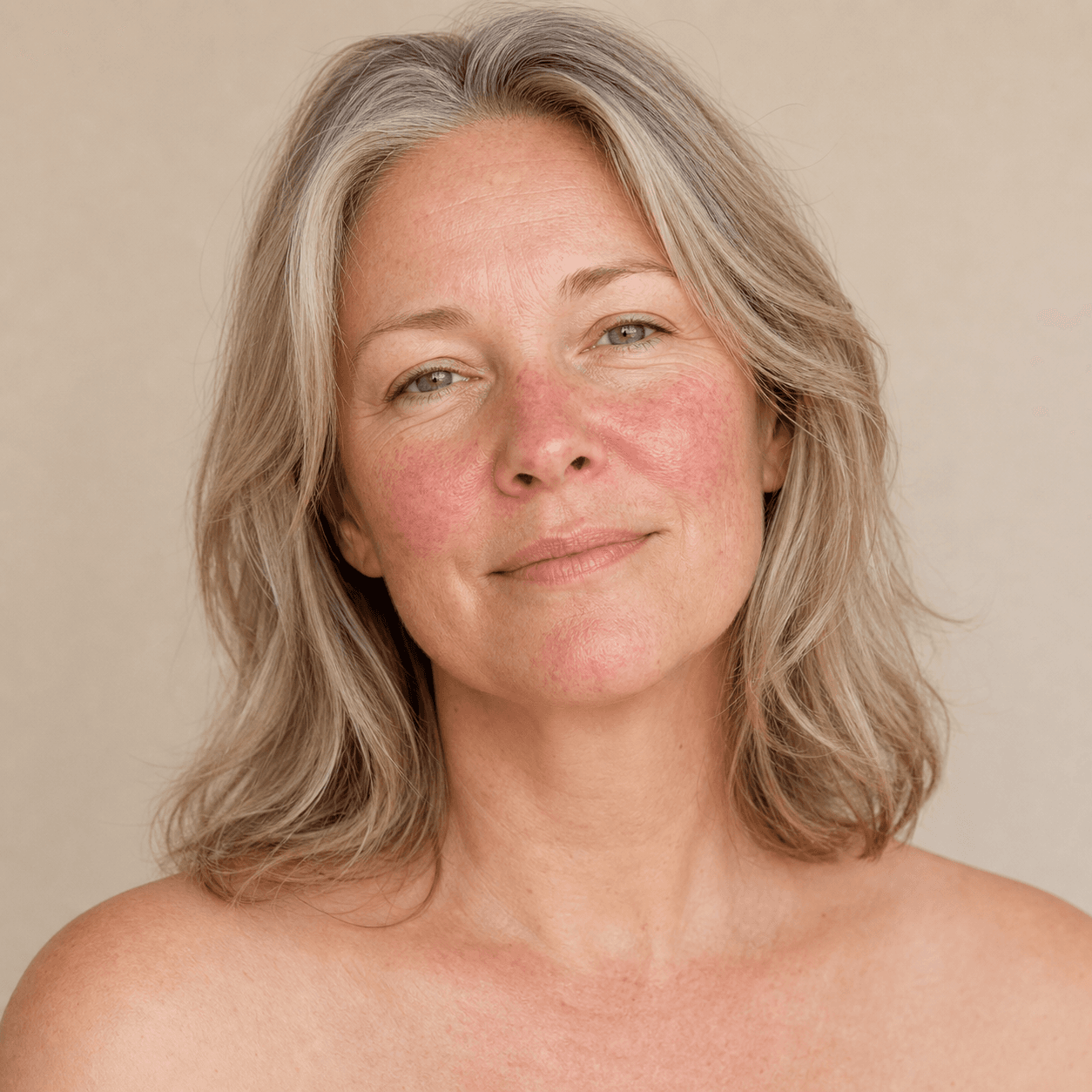
A hot flash is a thermoregulatory event. It often starts suddenly across the face, neck, and chest, may bring sweating or a racing heartbeat, and usually settles within minutes. Rosacea is a chronic inflammatory skin condition that can leave longer-lasting central-face redness, burning, visible vessels, acne-like bumps, or eye irritation.
You can have one, the other, or both. Menopause does not automatically explain every red face, and rosacea does not explain every wave of body heat.
Why menopause can bring sudden flushing
During the menopause transition, falling and fluctuating estradiol affects the brain circuits that regulate body temperature. A 2025 physiology review[1] describes how changes involving KNDy neurons can trigger heat-loss responses, including sweating and widening of skin blood vessels.
That vasodilation is why a hot flash becomes visible. Blood flow rises near the skin surface while the body tries to release heat. The face, neck, and upper chest can turn warm or red very quickly.
This is not weak skin, and it is not something a stronger cleanser can wash away.
Where rosacea enters the picture
Rosacea-prone facial vessels and sensory nerves are already more reactive than average. Heat is a common trigger, so a hot flash may stack with the same vascular sensitivity that reacts to hot showers, exercise, warm rooms, spicy meals, alcohol, or stress.
Clues that rosacea may be present alongside hot flashes include:
- central-face redness that remains after the body heat passes
- burning, stinging, or tenderness between episodes
- fine visible vessels around the cheeks or nose
- red bumps or pustules without many blackheads
- recurring eye dryness, grittiness, redness, or swollen eyelids
- a trigger pattern that also includes sun, wind, skincare, alcohol, or heat
The rosacea triggers guide helps you track those patterns without building a life around avoidance.
Does menopause make rosacea worse?
The honest answer is: it may for some people, but the evidence is still developing.
A 2024 observational study of perimenopausal women with rosacea reported clinical differences and proposed that lower oestrogen might contribute to more erythematotelangiectatic features[2]. That is interesting, but it does not prove that declining oestrogen causes rosacea or predicts what will happen to one person's skin.
A broader 2025 systematic review found the relationship even less tidy: acne and rosacea often improved after menopause in the included literature, while findings around menopausal hormone therapy were limited and inconsistent[3]. In other words, the internet's confident hormone story is ahead of the data.
Treat your own pattern as real. Do not turn it into a universal rule.
A simple way to separate the episodes
For two to four weeks, note:
- where the warmth begins: face only, or chest and neck too
- whether sweating or chills follow
- how long the heat lasts
- how long the facial redness remains
- bumps, burning, visible vessels, or eye symptoms
- sleep, stress, room temperature, exercise, alcohol, and spicy food
- changes in menstrual cycle or menopause symptoms
- any new skincare or medication
A photo in the same neutral light can help. You are not building a medical dissertation. You are giving your clinician something more useful than "my face sometimes goes strange."
The calm skincare routine during a hot, reactive phase
Keep the routine steady enough to read:
- Cleanse gently. Use lukewarm water and fingertips. Skip face brushes and long hot showers.
- Moisturise for comfort. Choose a simple formula and stop if it repeatedly burns.
- Use sun protection you tolerate. Sun can worsen rosacea and pigmentation; comfort matters because the product has to be worn.
- Pause active-ingredient experiments. A hot, reactive week is a poor time to test three acids and a new retinoid.
- Cool the environment, not the face aggressively. Adjustable clothing, a fan, cool drinks, and a less heated bedroom may help comfort. Ice directly on the skin can irritate it.
If the face is already burning and rough, the rosacea flare reset gives a short calm-down plan. If you need a sustainable baseline after that, use the rosacea skincare routine.
Should hormone therapy be part of the skin plan?
Menopausal hormone therapy can be effective for suitable people with bothersome vasomotor symptoms, but it is not a rosacea medicine. The decision belongs with a qualified menopause clinician who can review symptoms, age, medical history, personal risk, and treatment preferences.
Do not start, stop, or change hormone treatment because a skincare article promises calmer cheeks. Skin may be part of the conversation, but it should not hijack the whole medical decision.
When to get professional help
Ask a dermatologist about facial redness that persists between heat episodes, recurrent pustules, visible vessels that concern you, skin thickening, or eye symptoms. NIAMS advises medical care for rosacea eye irritation because untreated ocular disease can damage the eye[4].
Ask a menopause-qualified clinician when hot flashes or night sweats disrupt sleep, work, or daily life. Seek urgent medical care for flushing with chest pain, fainting, difficulty breathing, or another sudden severe symptom.
My practical takeaway: treat the heat and the skin as two overlapping conversations. Keep skincare calm, track the timing, and bring the pattern to the right clinician. Midlife is complicated enough without making every warm cheek solve itself.
People also ask
Can menopause cause rosacea?
The relationship is not simple enough to say menopause directly causes rosacea. Hot flashes can overlap with or aggravate facial flushing, while current studies on hormones and rosacea remain limited and sometimes inconsistent.
How can I tell a hot flash from a rosacea flare?
A hot flash often arrives suddenly across the upper body and face, with sweating, and settles within minutes. Rosacea may leave longer-lasting central-face redness, burning, visible vessels, bumps, or eye symptoms. Both can happen together.
Does hormone therapy treat rosacea?
Hormone therapy is not a rosacea treatment. Decisions about menopausal hormone therapy should be based on your overall symptoms, health history, benefits, and risks with a qualified clinician.
When should menopausal facial flushing be checked?
Seek care when flushing is new or severe, persists between episodes, includes bumps or eye symptoms, disrupts sleep or daily life, or comes with symptoms such as chest pain, fainting, or unexplained weight loss.
Keep reading
Citations
- Gombert-Labedens M, et al. Effects of menopause on temperature regulation. Temperature (Austin). 2025;12(2):130-155.PMID 40330614
- Yang F, Wang L, Jiang X. Clinical characteristics of rosacea in perimenopausal women. Skin Res Technol. 2024;30(1):e13542.PMID 38221784
- Roster K, et al. Menopause and Common Dermatoses: A Systematic Review. Am J Clin Dermatol. 2026;27:79-102.PMID 41331233
- National Institute of Arthritis and Musculoskeletal and Skin Diseases. Rosacea: Diagnosis, Treatment, and Steps to Take.NIAMS