
Mineral Oil
A purified, stable oil used to soften skin and slow water loss. Cosmetic-grade mineral oil is far less scary than internet folklore suggests, but its rich feel is not everyone's favourite texture.
At a glance
What Mineral Oil does for skin, and how to read the practical safety signals.
- Mineral oil usually appears on INCI lists as Paraffinum Liquidum.
- It sits mostly on the surface and helps reduce water loss rather than acting like a treatment active.
- Cosmetic-grade mineral oil is highly refined; safety concerns usually come from confusing it with industrial petroleum.
- Type
- Occlusive emollient
- Rating
- Pregnancy
- Considered safe
- Comedogenic rating
- 0/5 (Won't clog pores)
- Vegan
- Yes
- Suited skin types
- Dry,Sensitive,Mature,Combination
On this page
The short answer
Mineral oil is a purified, stable oil used in skincare to soften the skin and slow water loss.
On an INCI list, you will usually see it as Paraffinum Liquidum.
It is not a glamorous active. It will not clear acne, fade pigmentation, or teach your skin better manners. It is an occlusive and emollient support ingredient - useful when skin is dry, rough, or needs a protective surface layer.
What the evidence shows
Dermal penetration. A 2017 review[1] of mineral oils and waxes used in cosmetics found no evidence that these ingredients become systemically available through normal dermal use. In plain English: cosmetic mineral oil mostly stays where a surface-protective ingredient should stay.
Cosmetic safety. A 2019 review[2] explains that mineral oils used in European cosmetics must meet purity requirements, and that highly refined mineral oils and waxes have a long history of safe cosmetic use. That sentence matters because "petroleum-derived" online often gets flattened into "bad", which is not how cosmetic chemistry works.
Comedogenicity. A 2005 paper[3] reviewed human comedogenicity testing and argued that cosmetic-grade mineral oil should not be treated as pore-clogging by default. Older fear often came from animal models and low-quality ingredient lists, not from the way a well-refined cosmetic grade behaves on human skin.
That is the honest mineral oil story: safe and useful when refined properly, but texture-dependent.
How it works on skin
Mineral oil helps by forming a light, oily film over the skin surface.
That film can:
- reduce water leaving the skin
- soften rough patches
- make creams and balms glide better
- protect chapped or wind-dry areas
- support a damaged skin barrier while it calms down
It is related in function to petrolatum, but petrolatum is usually thicker and more ointment-like. Mineral oil feels more fluid, which is why it shows up in lotions, cleansing oils, body products, and some rich face creams.
Is mineral oil good for acne-prone skin?
Sometimes. Not always.
The ingredient itself is not the villain people make it out to be. But acne-prone skin often dislikes heavy, greasy, slow-to-absorb textures, especially if the whole formula is rich and occlusive.
If your skin clogs easily, judge the finished product:
- Does it feel heavy after 20 minutes?
- Does it sit exactly where your blackheads or closed comedones form?
- Does it trap sweat, sunscreen, or makeup residue because cleansing is too weak?
- Is the formula fragranced or packed with other potential irritants?
For many people with dry skin, mineral oil can be comfortable. For very oily, congestion-prone skin, lighter emollients such as squalane or silicones like dimethicone may be easier to use daily.
Where it fits in a routine
Use mineral-oil-rich products where the texture makes sense:
- on dry patches
- in body moisturisers
- in lip balms
- in cleansing balms or oils that rinse properly
- short term when the barrier feels raw or windburned
If you use a mineral-oil-rich balm on the face, apply it after water-binding ingredients like glycerin or a normal moisturiser. Occlusives work best when there is comfort underneath them to help hold in.
When it will not help
Mineral oil will not treat acne, rosacea flushing, pigmentation, or wrinkles on its own.
It also will not make a chaotic routine gentle. A rich occlusive layer over too many acids can make irritation feel trapped and louder. If your skin is already stinging, simplify first.
The practical takeaway
My goal with this guide was to gather the useful science on mineral oil in one place, so you can stop hunting for the next clever fix and do the simple, effective things your skin needs.
That is also why I made the Danish Skin Care Kit: a calm routine built around documented ingredients, and one that has helped more than 100,000 people with problem skin. If even the smallest question is still nagging you, send me an email at info@danishskincare.com.
Common questions
Is mineral oil the same as Paraffinum Liquidum?
Yes. Paraffinum Liquidum is the INCI name you usually see for cosmetic mineral oil.
Does mineral oil clog pores?
Cosmetic-grade mineral oil is not automatically comedogenic in human testing. Texture still matters, so very oily or congestion-prone skin may prefer lighter formulas.
Is mineral oil toxic in skincare?
Cosmetic mineral oil is highly refined and regulated. Safety concerns usually come from confusing cosmetic-grade material with industrial petroleum.
Reading a real label?
Scan a product to see how it is formulated
Upload a photo of the ingredient list and get a quick ingredient-by-ingredient read against the evidence-led database.
I recommend these products

Danish Skin Care uses lighter moisturising ingredients instead of a mineral-oil-heavy finish, so daily barrier support feels easier for problem skin.

The Kit is a simple baseline if you use mineral-oil-rich balms only on very dry patches or lips and want the rest of the routine to stay light.
Skin conditions it actively helps with
Where the published evidence puts Mineral Oil on the short list of active ingredients worth reaching for.

Dry skin
Dry skin is usually a barrier problem, not simply a water problem. Here's the difference between dry and dehydrated, why it matters, and the routine that actually helps.
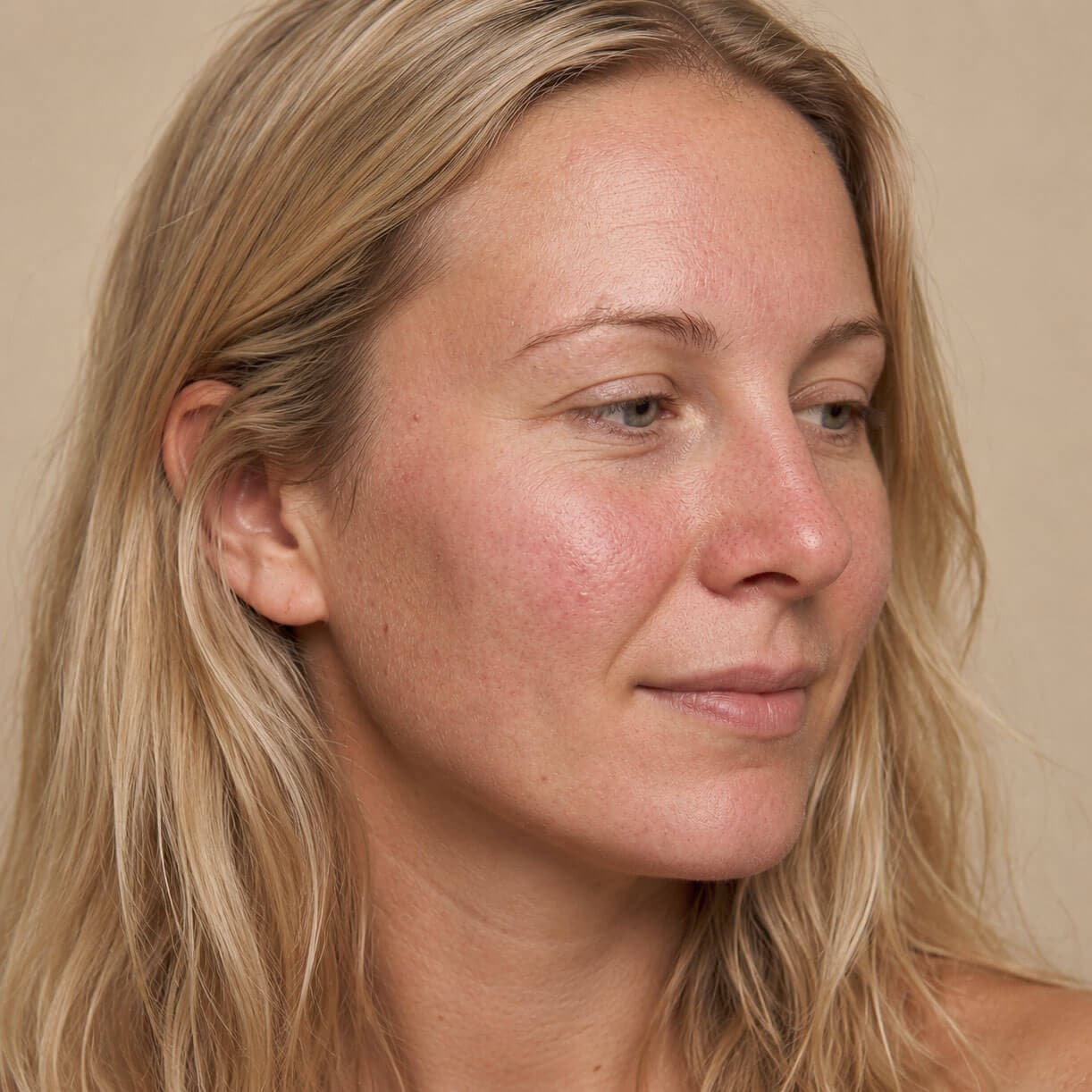
Sensitive skin
"Sensitive" is a symptom, not a diagnosis. Learn what drives reactive skin, the routine that calms it, and what to leave out.

Signs of ageing
Wrinkles, sallowness, slack tone, and uneven pigment all share the same drivers. Here's the unglamorous routine that genuinely slows them.
Related ingredients
Citations
- Petry T, Bury D, Fautz R, et al. Review of data on the dermal penetration of mineral oils and waxes used in cosmetic applications. Toxicol Lett. 2017;280:70-78. — PMID 28789996
- Chuberre B, Araviiskaia E, Bieber T, Barbaud A. Mineral oils and waxes in cosmetics: an overview mainly based on the current European regulations and the safety profile of these compounds. J Eur Acad Dermatol Venereol. 2019;33 Suppl 7:5-14. — PMID 31591730
- DiNardo JC. Is mineral oil comedogenic? J Cosmet Dermatol. 2005;4(1):2-3. — PMID 17134413