
Magnesium Ascorbyl Phosphate
A water-soluble vitamin C derivative with human pigmentation data, but less overall proof than well-formulated L-ascorbic acid.
At a glance
What Magnesium Ascorbyl Phosphate does for skin, and how to read the practical safety signals.
- Magnesium ascorbyl phosphate is a more stable vitamin C derivative, often used when low-pH L-ascorbic acid feels too sharp.
- The best human evidence is for pigmentation support, especially in specific MAP formulas - not instant brightening.
- It still needs sunscreen, patience, and a complete routine around it.
- Type
- Antioxidant
- Rating
- Pregnancy
- Considered safe
- Comedogenic rating
- 0/5 (Won't clog pores)
- Vegan
- Yes
- Suited skin types
- All skin types
On this page
The short answer
Magnesium ascorbyl phosphate is a water-soluble vitamin C derivative. You will often see it shortened to MAP.
It is used when formulators want vitamin C-style antioxidant and pigmentation support without the very low pH that makes classic L-ascorbic acid tricky for some skin.
That does not make MAP a secret upgrade. It makes it a gentler, more formulation-friendly option with less overall evidence.
What the evidence actually shows
Vitamin C biology. A 2017 review[1] explains why vitamin C matters in skin: it works as an antioxidant, supports collagen biology, and plays a role in pigmentation pathways. That is the big vitamin C story. MAP is one way formulators try to deliver that story more comfortably.
Pigmentation data for MAP. A 1996 study[2] tested magnesium L-ascorbyl-2-phosphate in lab models and in people with hyperpigmentation. The 10% MAP cream significantly lightened pigmentation in 19 of 34 patients with chloasma or senile freckles, while the paper also found MAP absorption into the epidermis.
That is useful evidence, but it is not a blank cheque for every MAP serum on a shelf. Formula, concentration, packaging, and sunscreen habits matter.
Newer delivery work. A 2022 split-face clinical study in melasma patients[3] tested MAP in vesicular gels. The ethosomal gel showed a clinically and statistically significant melanin decrease after one month, while the niosomal gel showed significant decrease after six months.
The practical reading is calm: MAP can be a real pigmentation-support ingredient in smart delivery systems. It is still slow skincare, not a spot eraser.
MAP vs L-ascorbic acid
L-ascorbic acid is the better-documented form of topical vitamin C. It is also fussy: low pH, stability challenges, oxidation, and a higher chance of stinging on sensitive or over-exfoliated skin.
MAP is usually easier to tolerate because it can live in less acidic formulas. That is the reason many people look for it.
The trade-off:
- L-ascorbic acid: stronger evidence, more demanding formula.
- Magnesium ascorbyl phosphate: gentler feel, promising but thinner evidence.
If your skin loves L-ascorbic acid, there is no need to switch because MAP sounds more modern. If low-pH vitamin C makes your face feel like it has received bad news, MAP may be a kinder route.
Where it fits in a routine
MAP usually fits best in the morning or evening after cleansing and before moisturiser, depending on the formula.
Keep the rest of the routine simple:
- gentle cleanser
- MAP or another pigmentation-support step
- moisturiser if needed
- daily sunscreen in the morning
If your goal is pigmentation, sunscreen is not optional background music. It is the main instrument. Brightening ingredients work poorly when UV keeps asking the skin to make more pigment.
When MAP will not help
MAP will not clear active acne, replace sunscreen, remove deep melasma quickly, or undo irritation from an overloaded routine.
It is also not the only sensible vitamin C alternative. Niacinamide, tranexamic acid, azelaic acid, and sunscreen may be better fits depending on the person and the formula.
The practical takeaway
My goal with this guide was to gather the useful science on magnesium ascorbyl phosphate in one place, so you can stop hunting for the next clever fix and do the simple, effective things your skin actually needs.
That is also why I made the Danish Skin Care Kit: a calm routine built around documented ingredients, and one that has helped more than 100,000 people with problem skin. If even the smallest question is still nagging you, send me an email at info@danishskincare.com.
Common questions
Is magnesium ascorbyl phosphate better than L-ascorbic acid?
Not better overall. It is usually gentler and easier to formulate, but L-ascorbic acid has the deeper evidence base for topical vitamin C. MAP is a reasonable alternative when low-pH vitamin C is too irritating.
Can magnesium ascorbyl phosphate fade dark spots?
It may help some hyperpigmentation over time, especially in well-designed formulas. The evidence is promising but formula-dependent, so sunscreen and patience still matter.
Can sensitive skin use magnesium ascorbyl phosphate?
Often, yes. MAP is commonly used in less acidic formulas than pure L-ascorbic acid. Still patch test if your barrier is reactive.
Reading a real label?
Scan a product to see how it is formulated
Upload a photo of the ingredient list and get a quick ingredient-by-ingredient read against the evidence-led database.
I recommend these products

We do not currently make a magnesium ascorbyl phosphate product. The Optimizer is our alternative pigmentation-support step with azelaic acid and niacinamide.

The Kit keeps the daily base simple: cleanser, treatment, moisturiser, and SPF so antioxidant or pigmentation steps are not doing all the work alone.
Skin conditions it actively helps with
Where the published evidence puts Magnesium Ascorbyl Phosphate on the short list of active ingredients worth reaching for.
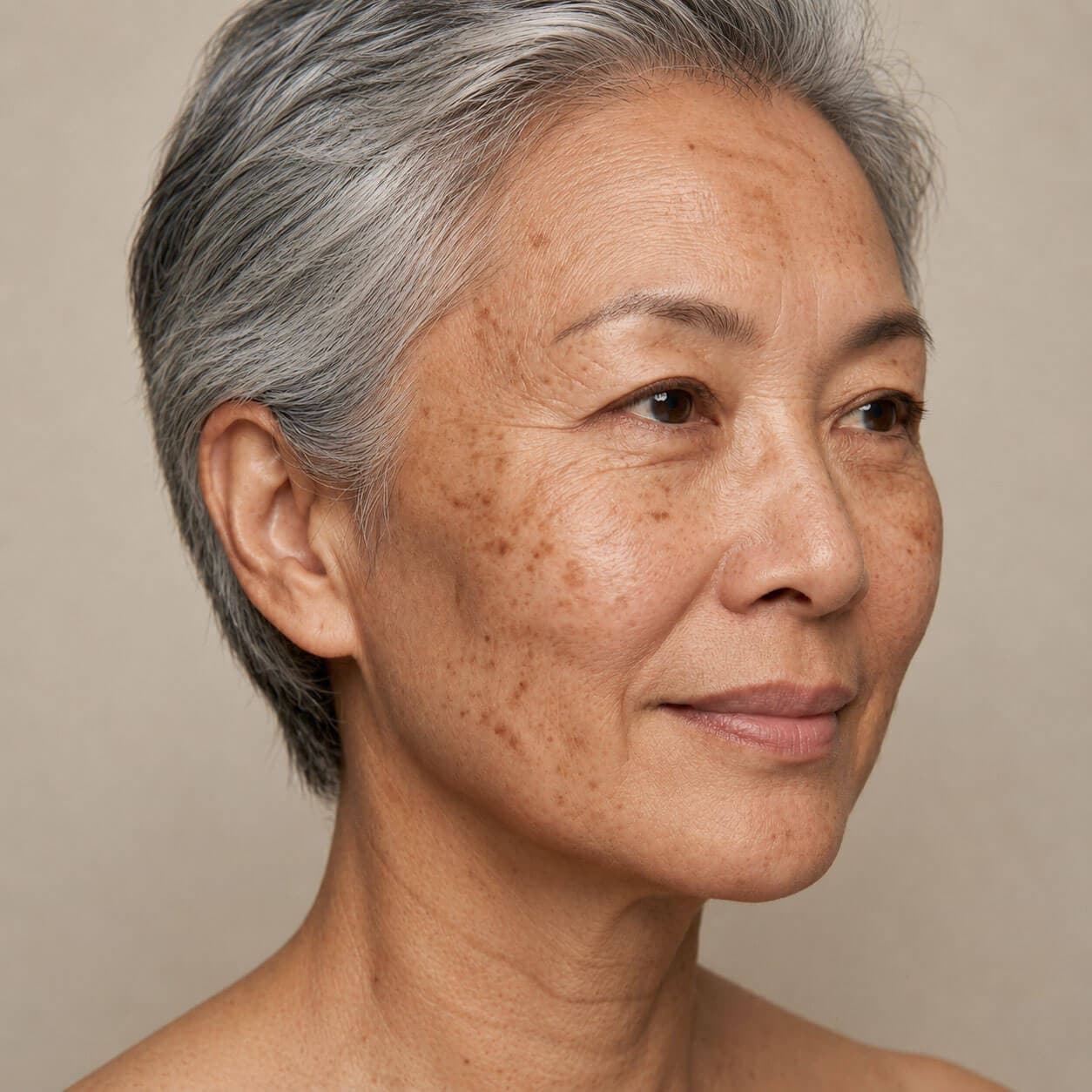
Pigmentation
Pigmentation is one of the most-asked-about, most-misunderstood skin concerns. Here's what's happening in your skin and the slow, evidence-led routine that actually fades it.

Signs of ageing
Wrinkles, sallowness, slack tone, and uneven pigment all share the same drivers. Here's the unglamorous routine that genuinely slows them.
Sensitive skin
"Sensitive" is a symptom, not a diagnosis. Learn what drives reactive skin, the routine that calms it, and what to leave out.
Related ingredients
Citations
- Pullar JM, Carr AC, Vissers MCM. The Roles of Vitamin C in Skin Health. Nutrients. 2017;9(8):866. — PMID 28805671
- Kameyama K, Sakai C, Kondoh S, et al. Inhibitory effect of magnesium L-ascorbyl-2-phosphate (VC-PMG) on melanogenesis in vitro and in vivo. J Am Acad Dermatol. 1996;34(1):29-33. — PMID 8543691
- Kandil SM, Soliman II, Diab HM, Bedair NI, Mahrous MH, Abdou EM. Magnesium ascorbyl phosphate vesicular carriers for topical delivery; preparation, in-vitro and ex-vivo evaluation, factorial optimization and clinical assessment in melasma patients. Drug Deliv. 2022;29(1):534-547. — PMID 35156490