
Ammonium lactate
A salt of lactic acid used in lotions for dry, rough, and thickened skin. It can hydrate and soften keratin, but stronger formulas may sting irritated skin.
At a glance
What Ammonium lactate does for skin, and how to read the practical safety signals.
- Main job: Binds water and helps loosen compacted surface keratin in rough, dry skin.
- Common context: Often discussed in 12% lotions for xerosis and keratosis pilaris, though formula strength varies.
- Best fit: Large rough body areas that need moisture and gradual smoothing rather than scrubbing.
- Type
- Acid
- Rating
- Pregnancy
- Discuss with a clinician
- Comedogenic rating
- 0/5 (Won't clog pores)
- Vegan
- Yes
- Suited skin types
- All skin types
On this page
The short answer
Ammonium lactate is the ammonium salt of lactic acid. In skincare and medicated lotions, it helps bind water and loosen compacted keratin.
That combination makes it useful for rough, dry body skin and keratosis pilaris. It is not an instant peel and it does not cure KP. Think steady softening, not a dramatic before-and-after by Friday.
What the evidence shows
Dry-skin improvement. A double-blind study compared 12% ammonium lactate with 5% lactic acid lotion in moderate to severe xerosis. The ammonium lactate formula reduced dry-skin severity more during three weeks of treatment and during the following no-treatment period[1].
That result belongs to two complete lotions, not to ingredient names floating alone on a label.
Compared with urea. A later small study compared 12% ammonium lactate lotion with 40% urea cream for moderate to severe xerosis. Both improved the skin, while the high-strength urea formula worked faster on several measures at day 14[2]. This does not make one ingredient universally better. Forty percent urea is a very different strength and texture from an ordinary moisturiser.
Keratosis pilaris context. A 12-week trial found that 10% lactic acid and 5% salicylic acid creams both improved KP, with mild local irritation as the main adverse effect[3]. The trial studied lactic acid rather than ammonium lactate, so it supports the ingredient family and keratolytic approach, not a claim that every ammonium lactate lotion will perform identically.
A systematic review of KP treatments also found a mixed evidence base across topicals and procedures[4]. The honest conclusion is useful but modest: ammonium lactate is a sensible option for rough, dry, bumpy skin when the formula is tolerated.
How ammonium lactate works
The ingredient has two jobs that fit together.
As a humectant, lactate helps the outer skin hold water. Better-hydrated keratin becomes more flexible and less rough.
As a keratolytic, the formula helps loosen the compacted cells that make scales and follicle plugs feel stubborn. That is especially relevant for body KP, where the problem sits around many small hair follicles over a large area.
The ammonium salt changes formulation behaviour and pH compared with applying free lactic acid. It is still an active acidic lotion, not plain moisturiser wearing a scientific name.
How to use it
For rough arms, thighs, or legs:
- Apply to clean skin after a short lukewarm shower.
- Start every other evening or a few times per week.
- Use a thin, even layer over the rough area.
- Increase only when the skin remains comfortable.
- Reduce use once texture is controlled; KP often needs maintenance.
Do not combine it with a scrub, rough mitt, another strong acid, and a retinoid on the same evening simply because the bumps are stubborn. Stubborn skin plus a crowded routine usually produces irritated stubborn skin.
The guides to facial KP and KP in darker skin explain why face strength and pigment risk need extra care.
Why it can sting
Ammonium lactate is more likely to sting when skin is:
- cracked or scraped
- freshly shaved or waxed
- inflamed from folliculitis
- over-exfoliated
- affected by active eczema or dermatitis
- exposed to too much product too often
A brief mild tingle can happen. Persistent burning, swelling, hives, blistering, or worsening rash is a stop signal. Rinse, return to plain moisturiser, and seek medical advice when the reaction is significant.
If bumps are painful or pus-filled, do not assume they are ordinary KP. The comparison of KP and folliculitis gives a safer decision path.
Face, pregnancy, and other practical questions
Many ammonium lactate products are designed for the body. A face may tolerate a lower-strength, well-formulated option, but a strong body lotion can feel sharp around the cheeks, nose, lips, and eyes. Keep it away from the immediate eye area and do not improvise treatment for an uncertain facial rash.
Pregnancy advice depends on the formulation. The US label for a 12% ammonium lactate lotion reports no adequate controlled studies in pregnant women and advises use only when clearly needed.[5] Ask your clinician whether your specific product, strength and treatment area are appropriate during pregnancy or breastfeeding.
Ammonium lactate is not automatically animal-derived despite the word “lactate.” Manufacturers can use synthetic or fermentation-derived sources. If vegan sourcing matters, confirm with the product maker.
The practical takeaway
Ammonium lactate earns a place in body care because it does two ordinary jobs well: hydration and gradual keratin softening.
My goal with this guide was to gather the useful science in one place, so you can stop chasing the next clever fix and focus on a simple, effective routine.
That is also why I made the Danish Skin Care Kit: the routine I created after helping more than 100,000 people with problem skin. It keeps smoothing and barrier support measured rather than aggressive. If a question is still nagging you, email me at info@danishskincare.com.
Common questions
What does ammonium lactate do for skin?
It acts as a humectant and keratolytic, helping skin hold water while loosening compacted keratin in dry, rough, or bumpy areas.
Is ammonium lactate good for keratosis pilaris?
It is a reasonable body-lotion option because lactic-acid-based keratolytics and moisturising care can improve KP texture. It manages the bumps rather than curing the tendency.
Why does ammonium lactate sting?
Acidic lotions can sting cracked, inflamed, freshly shaved, or over-exfoliated skin. Reduce frequency, avoid broken skin, and stop if irritation persists or worsens.
Can I use ammonium lactate on my face?
Some formulas may be suitable, but many 12% body lotions are too strong or inelegant for reactive facial skin. Use a face-appropriate product and avoid the immediate eye area.
Reading a real label?
Scan a product to see how it is formulated
Upload a photo of the ingredient list and get a quick ingredient-by-ingredient read against the evidence-led database.
I recommend these products

The Kit does not rely on ammonium lactate. It follows the same useful principle: combine measured smoothing with moisturiser and a routine the skin can tolerate.
Skin conditions it actively helps with
Where the published evidence puts Ammonium lactate on the short list of active ingredients worth reaching for.
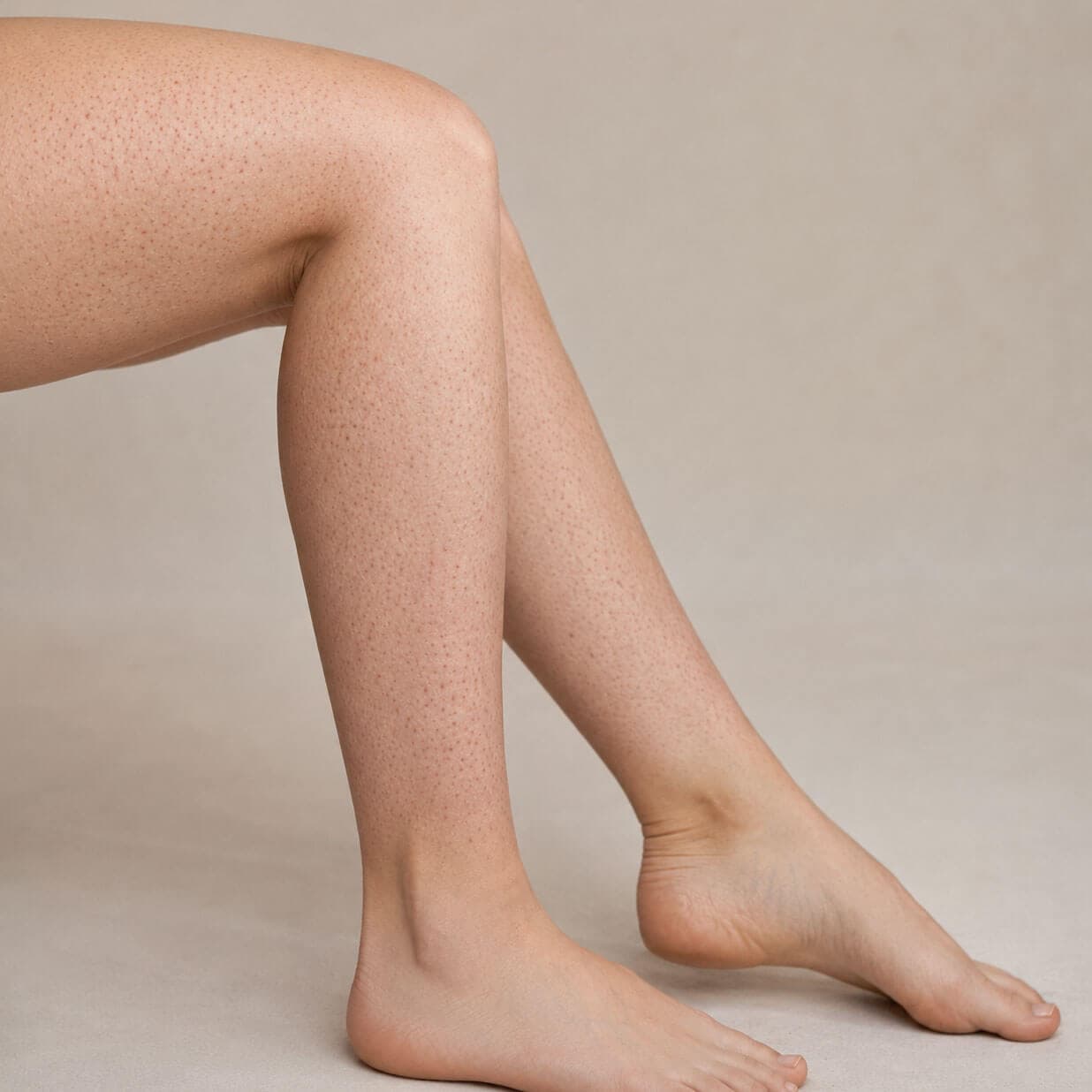
Keratosis pilaris ("chicken skin")
Keratosis pilaris (KP) is the small bumps on the backs of arms, thighs, and sometimes face. Here's what causes it, why scrubs make it worse, and what actually softens it.

Dry skin
Dry skin is usually a barrier problem, not simply a water problem. Here's the difference between dry and dehydrated, why it matters, and the routine that actually helps.
Related ingredients
Citations
- Rogers RS 3rd, Callen J, Wehr R, Krochmal L. Comparative efficacy of 12% ammonium lactate lotion and 5% lactic acid lotion in the treatment of moderate to severe xerosis. J Am Acad Dermatol. 1989;21(4 Pt 1):714-716. doi:10.1016/s0190-9622(89)70242-5. — PMID 2808786
- Ademola J, Frazier C, Kim SJ, Theaux C, Saudez X. Clinical evaluation of 40% urea and 12% ammonium lactate in the treatment of xerosis. Am J Clin Dermatol. 2002;3(3):217-222. — PMID 11978141
- Kootiratrakarn T, Kampirapap K, Chunhasewee C. Epidermal permeability barrier in the treatment of keratosis pilaris. Dermatol Res Pract. 2015;2015:205012. — PMID 25802513
- Maghfour J, Ly S, Haidari W, Taylor SL, Feldman SR. Treatment of keratosis pilaris and its variants: a systematic review. J Dermatolog Treat. 2022;33(3):1231-1242. — PMID 32886029
- DailyMed. Ammonium Lactate Lotion, 12%, prescribing information. Updated July 17, 2023. — DailyMed