Rosacea and stress: break the flushing spiral
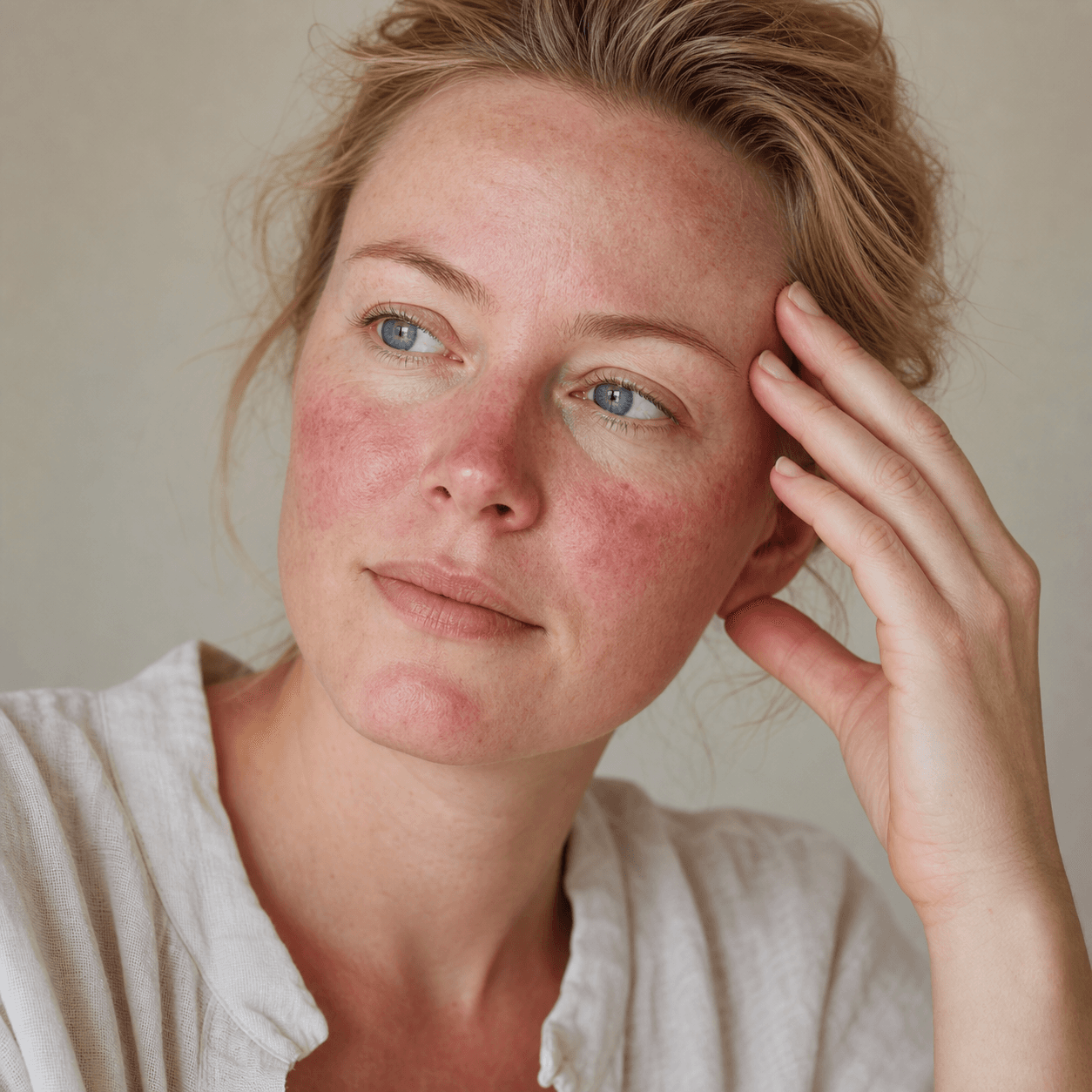
Stress can trigger rosacea flushing, while flares create more stress. Learn how to interrupt that loop without blaming yourself or rebuilding your routine.
On this page
Problem skin has a rude sense of timing.
My own acne and irritation rarely felt most cooperative before a photograph, a date, or an important meeting. Then I would notice the skin, tense up, check it again, and create a small emotional feedback loop in front of the mirror.
Rosacea was not my diagnosis. Still, readers and customers describe a sharper version of that loop: stress makes the face feel hot, the visible flush creates more stress, and someone eventually says “try to relax” as if calm were a prescription cream.
The short answer
Stress can trigger or intensify rosacea flushing in some people. It can also make burning, heat, and visible redness feel harder to cope with.
The relationship runs both ways:
- a stressful event activates the nervous system
- body heat and facial blood flow may rise
- reactive facial vessels and nerves make the flush more obvious
- noticing the flare creates embarrassment or worry
- the extra stress keeps attention locked on the face
This does not mean stress is the root cause of rosacea. It does not mean you can think your way out of a chronic inflammatory skin condition. It means the nervous system is one practical part of the flare picture.
Why stress can show up on the face
When the body meets stress, the sympathetic nervous system prepares it to respond. Heart rate, sweating, temperature regulation, and blood-vessel behaviour can change.
Rosacea-prone facial skin already tends to have more reactive vascular and sensory signalling. A small 2015 physiology study found heightened sympathetic nerve responses to physical and cognitive stressors in participants with rosacea compared with controls[4]. The study does not prove that every deadline causes a flare. It gives a plausible biological reason why stress can become visible so quickly.
Common situations include:
- public speaking
- conflict
- rushing between appointments
- poor sleep before a demanding day
- hot crowded transport
- anxiety about the face being watched
Several triggers often arrive together. A stressful presentation in an overheated room after hot coffee is not one clean variable. Skin refuses to respect research design during office hours.
Stress is a trigger, not a personal failure
The American Academy of Dermatology includes stress among common rosacea triggers and recommends finding personal ways to reduce it[1]. That is useful when translated into practical choices. It becomes unhelpful when people hear: “Your skin is red because you are too emotional.”
Rosacea has vascular, immune, nerve, barrier, microbial, genetic, and environmental parts. The 2019 global ROSCO recommendations treat the condition by its presenting features and recognise that burden can be substantial even when a clinician judges the visible disease as mild[2].
You did not fail at relaxation. You noticed a trigger in a condition you did not choose.
The flushing spiral
The social side matters because rosacea lives on the face.
You may wonder whether colleagues think you are embarrassed, whether a stranger assumes you drank alcohol, or whether makeup will hold. That self-monitoring can turn one warm cheek into an all-day mental task.
A 2024 systematic review and meta-analysis covering data from more than 13,000 people found that rosacea was associated with lower health-related quality of life, and that treatment improved quality-of-life measures[3]. The point is not a statistic about sadness. It is permission to treat the emotional burden as part of care rather than vanity.
What to do during a stress flush
You do not need an emergency eleven-step routine.
Try this sequence:
- Reduce heat. Step into a cooler room, loosen a scarf or warm collar, and move away from a radiator or direct sun.
- Sip cool water. Avoid pressing ice directly onto reactive skin.
- Stop checking every minute. Repeated mirror or camera checks keep attention attached to the symptom.
- Keep hands off. Rubbing, massaging, and splashing the face again and again add friction.
- Use the routine you already tolerate. If cleansing is needed, use lukewarm water and a mild cleanser. Apply a simple moisturiser if the skin feels tight.
- Follow prescribed care. Do not change prescription frequency during a stressful afternoon without the prescriber.
The rosacea flare guide gives a fuller reset when symptoms last beyond the stressful moment.
Reduce the stress load without turning calm into homework
Stress management does not have to become another performance.
Pick one action that fits the situation:
- take five slower breaths with a longer exhale before entering the room
- arrive ten minutes earlier so rushing does not stack with heat
- choose a seat near a window or door in warm spaces
- keep cool water nearby
- break a demanding task into a first five-minute step
- take a short walk in a comfortable temperature
- protect sleep during weeks when possible triggers pile up
These steps are not rosacea treatments. They lower the conditions that make a stress flush more likely or more difficult to ride out.
The separate rosacea trigger guide can help you track whether stress is a repeated signal or simply the explanation you reach for when the pattern is unclear.
Keep skincare boring during stressful weeks
Stress often creates product impulsivity. Skin flares, an algorithm serves seven anti-redness recommendations, and the bathroom shelf becomes a group project.
Keep the base stable:
- gentle cleansing
- moisturiser that already feels comfortable
- prescribed treatment as directed
- daytime sun protection you already tolerate
- no new scrub, peel, mask, or strong active during the flare
A stable routine makes it easier to see whether stress, heat, sleep, weather, or a product is driving the change. It also protects the barrier while life is already asking enough.
When professional care matters
See a qualified dermatologist if redness stays between flares, papules or pustules keep returning, visible vessels are progressing, the eyes feel gritty or light-sensitive, or you are not sure the condition is rosacea.
Talk with a qualified mental-health professional when skin worry leads to avoiding work, school, dating, photographs, exercise, or social contact; when mirror checking feels hard to control; or when anxiety or low mood is affecting sleep and daily life.
Medical treatment and psychological support are not competing explanations. One can calm the skin signs; the other can reduce how much space those signs take up in your day.
My calm conclusion is this: respect stress as a possible trigger, but do not turn it into blame. Cool the body, steady the routine, treat active rosacea properly, and ask for support when the loop becomes bigger than your bathroom can solve.
People also ask
Can stress cause a rosacea flare?
Stress is a common trigger for some people and can intensify flushing or heat. It does not cause every flare, and having a flare does not mean you managed stress badly.
How do I calm stress-related rosacea redness?
Reduce overheating, move somewhere cool, sip cool water, keep hands off the face, and use your usual gentle routine. Avoid scrubbing, ice directly on skin, or adding several new calming products at once.
Does anxiety cause rosacea?
Anxiety does not explain rosacea by itself. Rosacea is a chronic inflammatory condition with vascular, nerve, immune, barrier, microbial, genetic, and environmental factors. Anxiety may trigger or amplify symptoms in some people.
When should stress and rosacea need professional help?
See a dermatologist for persistent redness, bumps, eye symptoms, or unclear diagnosis. Seek mental-health support when worry about your skin causes avoidance, panic, low mood, or interferes with work, sleep, eating, or relationships.
Keep reading
Citations
- American Academy of Dermatology Association. How to prevent rosacea flare-ups.AAD
- Schaller M, et al. Recommendations for rosacea diagnosis, classification and management: update from the global ROSacea COnsensus 2019 panel. Br J Dermatol. 2020;182(5):1269-1276.PMID 31392722
- Yang CS, et al. Health-related Quality of Life of Patients with Rosacea: A Systematic Review and Meta-analysis of Real-world Data. Dermatol Ther (Heidelb). 2024;14(9):2469-2484.PMID 38916178
- Metzler-Wilson K, et al. Augmented supraorbital skin sympathetic nerve activity responses to symptom trigger events in rosacea patients. J Neurophysiol. 2015;114(3):1530-1537.PMID 26133800