Rosacea and makeup: wear and remove it with less irritation
Makeup can camouflage rosacea redness without becoming another flare trigger. Learn how to choose light formulas, apply with less friction, and remove them gently.
On this page
One of the quieter frustrations I hear from people with rosacea is that makeup can feel like a choice between two uncomfortable options: show redness you would rather cover, or risk making the face sting while covering it.
I understand the irritation side from my own problem-skin years, although rosacea was not my diagnosis. When skin already feels hot, every extra pass with a brush can feel like sanding a very small table. After helping more than 100,000 people with problem skin, my practical view is simple: makeup is allowed. The technique and the formula need to respect the face underneath.
The short answer
You can wear makeup with rosacea.
Choose a light formula that spreads easily, use the least product that gives the coverage you want, and remove it without scrubbing. A green corrector may visually soften red areas, while a yellow tone can help with some discolouration. Neither treats rosacea; both are forms of cosmetic camouflage.
The American Academy of Dermatology says makeup is an option for people with rosacea and notes that green-tinted concealer can camouflage redness[1]. The important second half of that advice is tolerance: reactive skin can still dislike a makeup formula.
Wanting coverage is not vanity
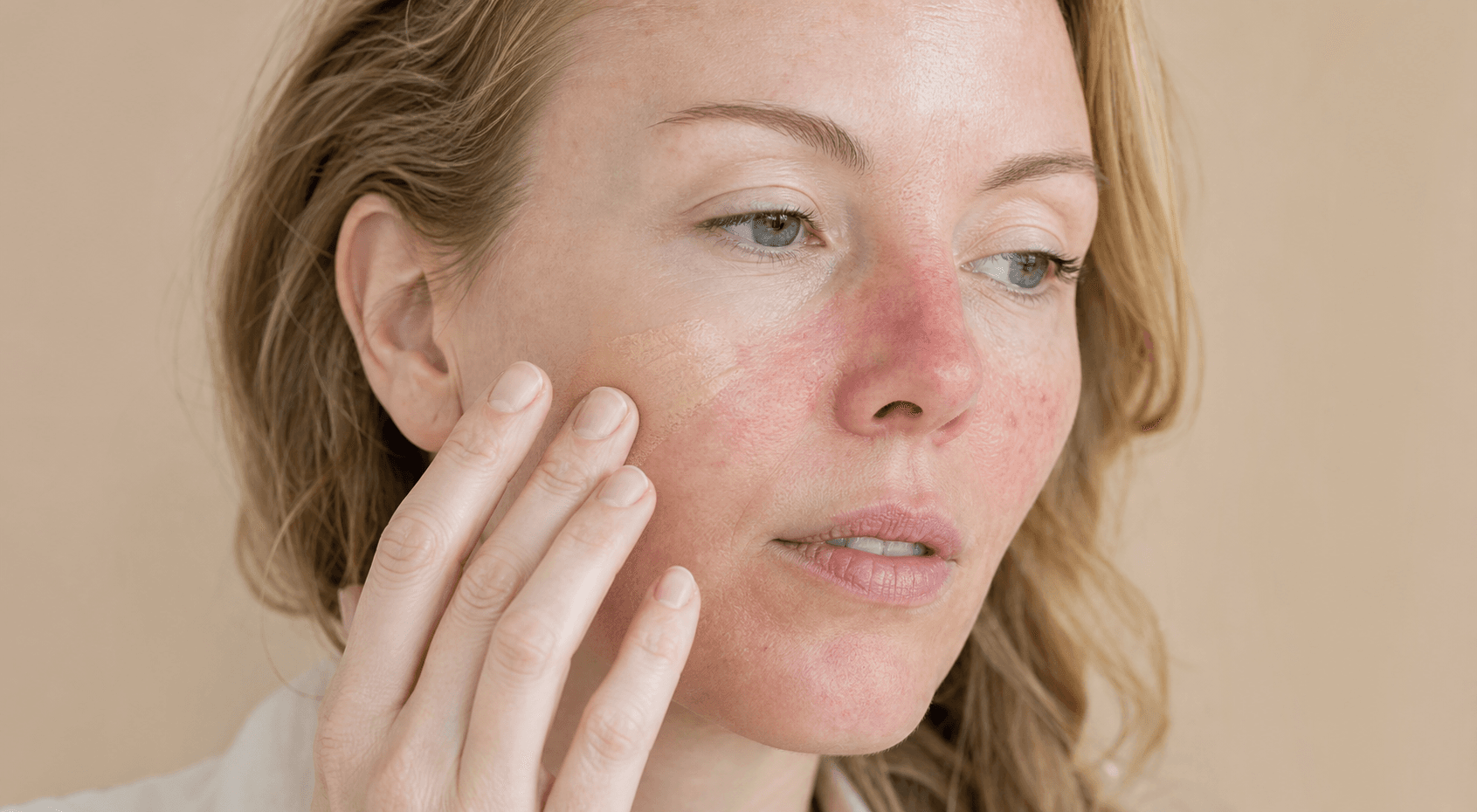
Visible redness can affect confidence, work, photographs, and the amount of explaining someone feels forced to do.
In a survey of 708 people with clinician-diagnosed rosacea, persistent facial redness and flushing were among the most bothersome signs, and redness affected quality of life across severity levels[4]. That survey was industry-funded and most respondents were white women, so it does not describe everyone. It still confirms something readers tell me often: colour on the face can carry an emotional weight that outsiders underestimate.
A systematic review of 18 studies found that cosmetic camouflage was associated with improved quality-of-life measures in people with visible skin conditions[3]. Makeup is not medical treatment, but feeling more comfortable in public is a legitimate result.
Build a calm base before makeup
Makeup usually behaves better when the skin underneath is comfortable.
If you use a prescription rosacea treatment, follow its instructions and let it dry before the next layer. Add a fragrance-free moisturiser when your routine needs one, then give it time to settle. The goal is a smooth surface, not five slippery layers competing for space.
When moisturiser pills under makeup, adding more primer rarely solves the physics. Use thinner layers and wait between them. If the face is actively burning, swollen, or unusually rough, consider skipping non-essential makeup that day rather than trying to cover a flare with more friction.
Choose makeup by removal as well as application
People often judge foundation only by the finish in the mirror. Rosacea-prone skin also needs to consider the evening.
The AAD recommends a light liquid foundation that spreads easily and advises caution with waterproof makeup and heavy foundations that need determined removal[2]. That does not make every powder gentle or every waterproof mascara forbidden. It gives you a useful shopping question:
Can I apply and remove this without rubbing my face red?
Look for:
- fragrance-free formulas when possible
- a texture that spreads with light pressure
- enough pigment that you do not need six passes
- packaging and tools you can keep clean
- a finish you genuinely like, because an unloved product becomes bathroom clutter
Words such as “hypoallergenic,” “sensitive,” and “non-comedogenic” are starting points, not guarantees. Patch-test a new product away from the centre of the face, then try it on a small facial area before a full day.
Green corrector: useful, not compulsory
Green sits opposite red in basic colour theory, so a thin green tint can make redness look less prominent.
That tint may come from pigments such as chromium oxide greens, though the ingredient list and shade system vary. Apply a tiny amount only where colour correction is useful. If the face turns grey or green, the corrector has stopped being subtle and started auditioning for a different job.
You can place normal foundation or concealer over it if desired. Some people prefer a yellow-toned concealer, a tinted moisturiser, or no corrector at all. The best choice is the one that gives enough visual comfort with the fewest layers.
Fingers, sponge, or brush?
There is no universally rosacea-safe tool.
Clean fingertips warm a product and can spread it with little equipment. A damp soft sponge can press on thin layers, but it must be washed and allowed to dry. A very soft brush can work if you use light strokes and keep it clean.
The problem is repeated pressure, not the moral character of the tool. Avoid stiff buffing brushes, dry sponges dragged across flaky areas, and the urge to polish foundation into every pore.
Use this method:
- Place small dots on the areas that need coverage.
- Press or glide outward with minimal pressure.
- Pause before adding another layer.
- Stop if warmth, itching, or stinging builds.
Remove makeup without the second flare
Start by giving the product time to dissolve.
For light makeup, one rosacea-friendly cleanser may be enough. For long-wear eye or lip makeup, hold a suitable remover against the area briefly, then wipe with a light movement. Cleanse the rest of the face once with fingertips and lukewarm water.
Cotton pads, cloths, and double cleansing are not automatically wrong. They become a problem when the same area receives pass after pass because the product will not move.
Pat dry. Apply your prescribed treatment as directed and a simple moisturiser if needed. There is no prize for making the face squeaky clean.
When makeup irritation needs a closer look
Stop the new product if you develop persistent itching, swelling, scaling, weeping, or a rash that spreads beyond your usual redness. That pattern may be irritant or allergic contact dermatitis rather than an ordinary rosacea flush.
Eye burning, gritty eyes, light sensitivity, eyelid swelling, or blurred vision also deserve qualified care because ocular rosacea and product reactions need different decisions.
A dermatologist can help when every base product stings, the redness is changing, or you are unsure what you are covering. Makeup should give you more freedom, not become a daily endurance test.
My practical rule is to keep the coverage you enjoy and remove the friction you do not need. A calm face under a thin layer of makeup is a much better goal than a flawless finish that costs the rest of the evening.
People also ask
Can I wear makeup if I have rosacea?
Yes. Makeup does not automatically worsen rosacea. Choose a formula that spreads easily, test it first, apply with little friction, and remove it gently.
Is green concealer good for rosacea redness?
A small amount can visually neutralise redness. It camouflages colour rather than treating rosacea, and the complete formula still needs to suit reactive skin.
What foundation texture is best for rosacea?
AAD guidance favours light liquid formulas that spread easily, while some people prefer a fine powder. Comfort, coverage, and easy removal matter more than a universal texture.
How should I remove makeup from rosacea-prone skin?
Loosen it with a mild remover or gentle cleanser, use fingertips and lukewarm water, and pat dry. Waterproof or heavy products may require more rubbing, so reserve them for when they are truly useful.
Keep reading
- Ingredient · chromium oxide greens
- Ingredient · dimethicone
- Ingredient · silica
- Ingredient · titanium dioxide
- Condition · rosacea
- Condition · sensitive skin
- Read · rosacea skincare routine
- Read · rosacea friendly cleanser
- Read · what not to use on rosacea
- Read · rosacea and retinol
- Read · how to calm rosacea flare
Citations
- American Academy of Dermatology Association. 7 rosacea skin care tips dermatologists recommend.AAD
- American Academy of Dermatology Association. How to prevent rosacea flare-ups.AAD
- Kornhaber R, Visentin D, Thapa DK, et al. Cosmetic camouflage improves quality of life among patients with skin disfigurement: A systematic review. Body Image. 2018;27:98-108.PMID 30212716
- Baldwin HE, Harper J, Baradaran S, Patel V. Erythema of Rosacea Affects Health-Related Quality of Life: Results of a Survey Conducted in Collaboration with the National Rosacea Society. Dermatol Ther (Heidelb). 2019;9(4):725-734.PMID 31512178