
Retinaldehyde
A retinoid one conversion step closer to retinoic acid than retinol, with solid evidence for photoaging and rosacea-prone skin when you want retinoid results with less guesswork.
At a glance
What Retinaldehyde does for skin, and how to read the practical safety signals.
- Faster conversion: Converts to retinoic acid in one step, unlike retinol's two-step path.
- Photoaging: Clinical profilometry shows measurable improvement in sun-damaged skin texture.
- Rosacea-friendly retinoid: One of the few retinoids studied specifically in rosacea-prone skin.
- Type
- Retinoid
- Rating
- Pregnancy
- Discuss with a clinician
- Comedogenic rating
- 1/5 (Low clogging risk)
- Vegan
- Yes
- Suited skin types
- All skin types
On this page
The short answer
Retinaldehyde — often labelled retinal on product packaging — is a retinoid that sits one metabolic step closer to retinoic acid than retinol. Your skin converts retinol to retinaldehyde first, then to retinoic acid, the molecule that actually drives cell turnover. Retinaldehyde skips the first leg of that journey.
If retinol has ever felt like a promising ingredient with a frustrating onboarding period, retinaldehyde is often the version people reach for when they want retinoid results without quite as much "why is my chin flaking like a croissant?"
That is not a free pass to go hard on night one. It is still a retinoid. Your skin still needs time.
What the evidence actually shows
Photoaging and texture. Creidi's profilometric study compared topical retinaldehyde and retinoic acid on sun-damaged skin[1]. Both improved surface roughness and fine lines. Retinaldehyde delivered meaningful change with less of the early irritation that makes people quit retinoids in week two.
Rosacea. This is where retinaldehyde gets interesting. Vienne's study in rosacea-prone skin found retinaldehyde reduced erythema and inflammatory lesions without the flare pattern some people see with stronger retinoic acid[2]. For readers managing rosacea who still want renewal, that matters. I have not personally lived with rosacea, but I have watched enough customers cycle through "gentle" products that did nothing and "active" products that made everything redder. Retinaldehyde sits in a rare middle ground.
Acne support. Pechère's work on topical retinoids highlighted retinaldehyde's antibacterial activity against Cutibacterium acnes (formerly P. acnes)[3]. It is not a replacement for salicylic acid on clogged pores, but the overlap with acne and post-breakout texture is real.
How to use it
- Concentration: Most cosmetic formulas sit around 0.05–0.1%. Higher is not automatically better if your barrier is already tired.
- When: Night only. Retinoids and morning sun are not friends unless you are serious about SPF.
- Frequency: Start twice weekly for two to three weeks, then every other night, then nightly if your skin stays calm.
- Application order: Cleanse, wait until skin is dry, pea-sized amount, then moisturiser on top if you want a buffer.
If peeling or stinging shows up, drop frequency before you drop the product. The goal is a routine you can still use in month three.
Where it fits in a routine
Retinaldehyde plays well with barrier support and poorly with ingredient stacking for its own sake:
- Niacinamide: useful in the same routine to soften retinoid-related irritation.
- Allantoin, hyaluronic acid, and urea: comfort layers that keep the retinoid usable.
- Morning vitamin C and SPF: vitamin C in the AM, retinaldehyde at night is the sensible split.
- Same-night strong acids: alternate evenings with salicylic acid or AHAs rather than layering everything at once.
There is no prize for the most complicated evening shelf. Consistency beats intensity.
When it won't help
Retinaldehyde is not a spot treatment, not a prescription-strength answer for severe cystic acne, and not something to reach for on broken, stinging, or freshly lasered skin. Heal first, act second.
It also will not replace sunscreen for pigmentation or signs of ageing. Retinoids remodel; they do not undo UV damage you keep adding.
If you are pregnant or trying to conceive, skip retinaldehyde entirely and use bakuchiol or azelaic acid instead.
My goal with this guide was to gather the useful science on retinaldehyde in one place, so you can stop hunting for the next clever fix and do the simple, effective things your skin actually needs.
That is also why I made the Danish Skin Care Kit: a calm routine built around documented ingredients, and one that has helped more than 100,000 people with problem skin. If even the smallest question is still nagging you, send me an email at info@danishskincare.com.
Common questions
Is retinaldehyde stronger than retinol?
It converts to retinoic acid in one step instead of two, so many people notice results sooner at equivalent tolerability. That does not mean you should skip the slow build-up. Irritation still scales with frequency and formula.
Can I use retinaldehyde if I have rosacea?
Possibly, with care. A dedicated rosacea study showed retinaldehyde improved erythema and papules without the flare risk seen with some retinoic acid formulas. Start low, patch test, and stop if your skin protests.
Is retinaldehyde safe in pregnancy?
No. Like retinol and prescription retinoids, retinaldehyde is a vitamin A derivative and should be avoided during pregnancy. Bakuchiol or azelaic acid are the usual swaps in that window.
Reading a real label?
Scan a product to see how it is formulated
Upload a photo of the ingredient list and get a quick ingredient-by-ingredient read against the evidence-led database.
I recommend these products

Our nightly retinol moisturiser sits in the same vitamin A family. Retinaldehyde fans often pair it with barrier buffers like urea and allantoin in this formula.

Azelaic acid and niacinamide for the redness and pigmentation overlap that retinoids alone do not fully cover.

The Kit packages a retinoid-friendly routine with morning SPF and a buffered nightly moisturiser.
Skin conditions it actively helps with
Where the published evidence puts Retinaldehyde on the short list of active ingredients worth reaching for.
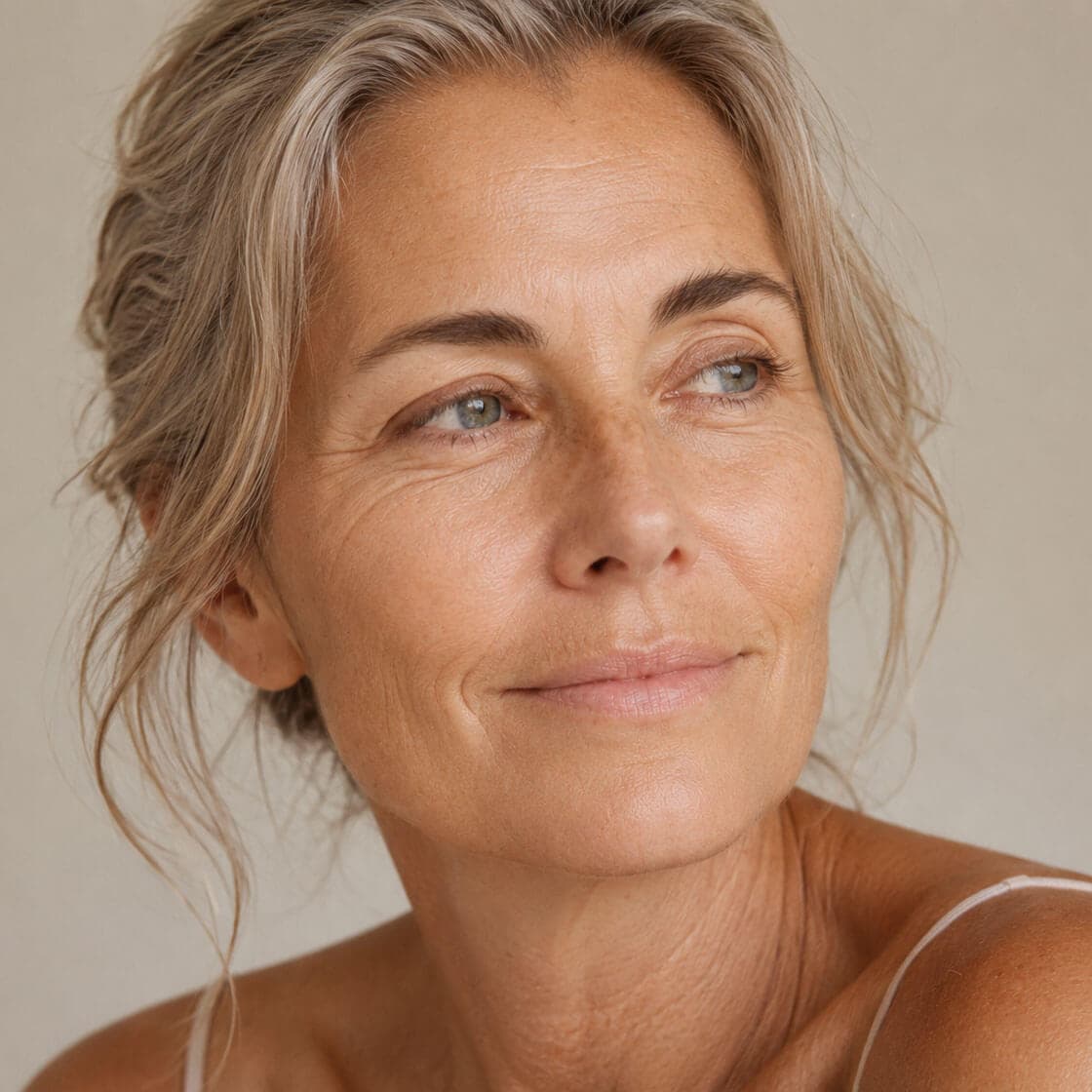
Signs of ageing
Wrinkles, sallowness, slack tone, and uneven pigment all share the same drivers. Here's the unglamorous routine that genuinely slows them.
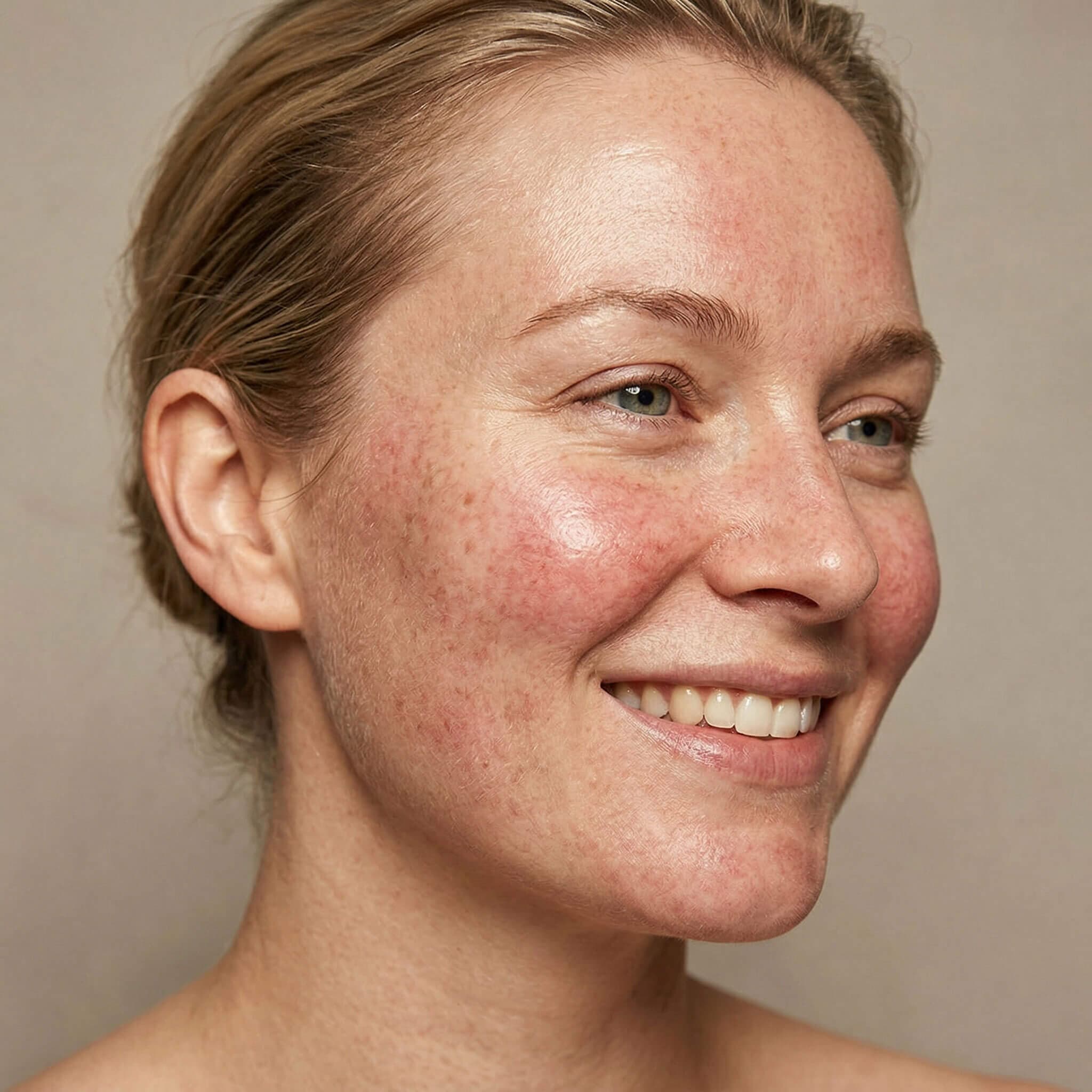
Rosacea and redness
Rosacea is a chronic inflammatory condition, not a temporary flush. Here's what causes it, what calms it, and the routine that doesn't make the reactivity worse.
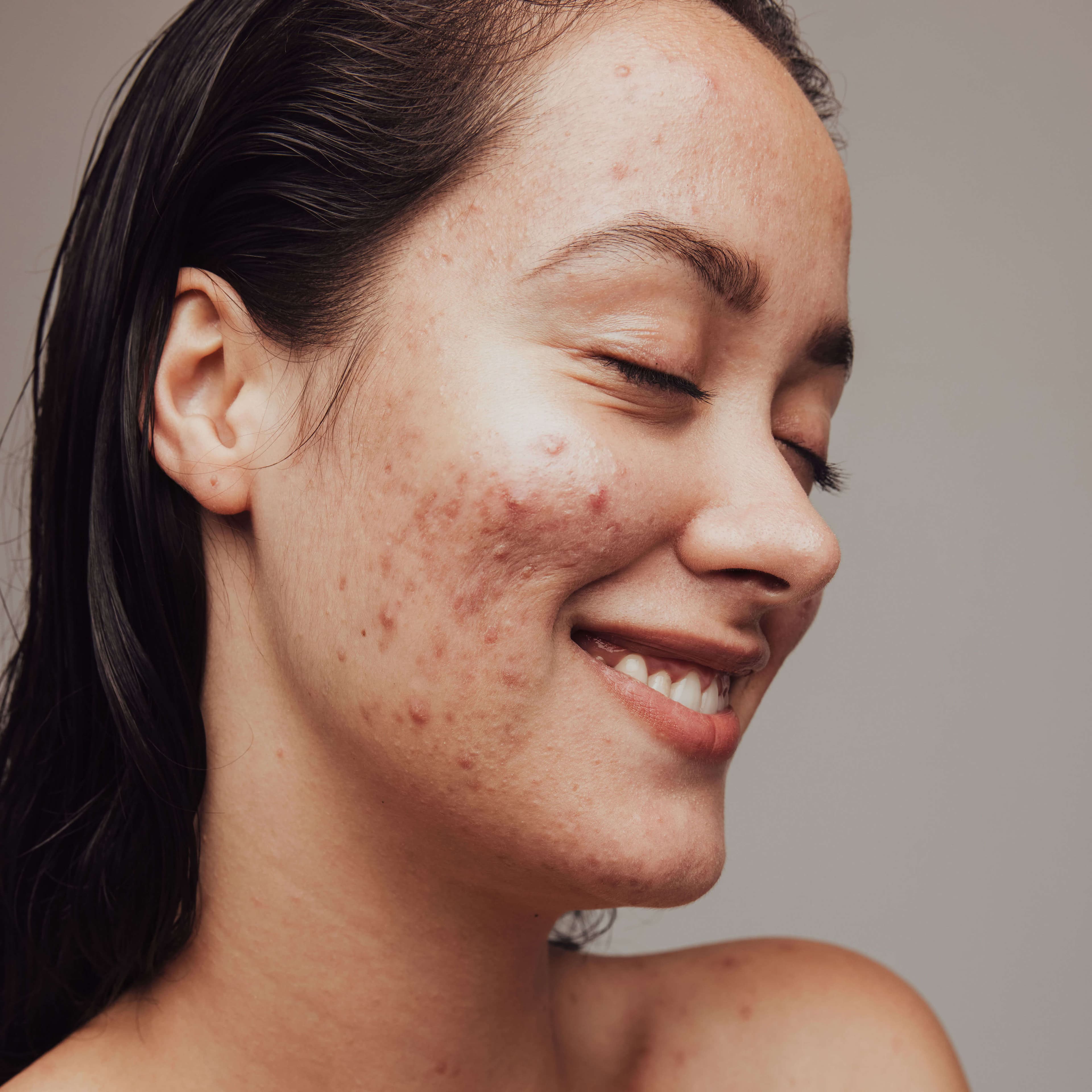
Acne and blemishes
A clear-headed guide to acne: what's actually happening in your skin, what the evidence says works, and a simple routine that doesn't make things worse.
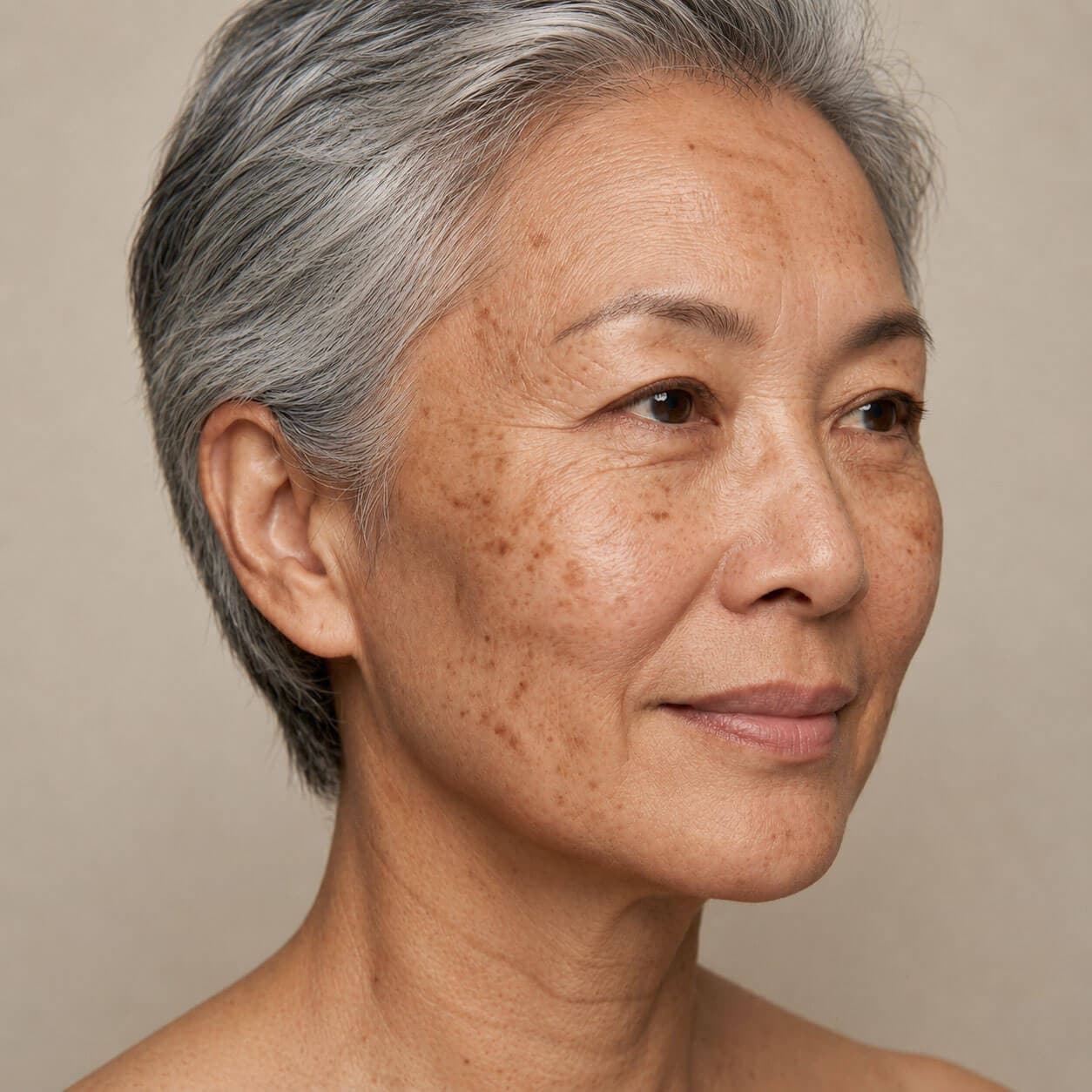
Pigmentation
Pigmentation is one of the most-asked-about, most-misunderstood skin concerns. Here's what's happening in your skin and the slow, evidence-led routine that actually fades it.
Related ingredients
Citations
- Creidi P, et al. Profilometric evaluation of photodamage after topical retinaldehyde and retinoic acid treatment. J Am Acad Dermatol. 1998;39(6 Pt 2):S96–S103. — PMID 9843009
- Vienne MP, et al. Retinaldehyde alleviates rosacea. Dermatology. 1999;199 Suppl 1:53–6. — PMID 10473962
- Pechère M, et al. The antibacterial activity of topical retinoids: the case of retinaldehyde. Dermatology. 2002;204(2):153–5. — PMID 12218231